Pioneer CS-E731 (1976)
They don’t make ’em like this anymore—massive presence, bold engineering, and a footprint that demands respect.
Overview
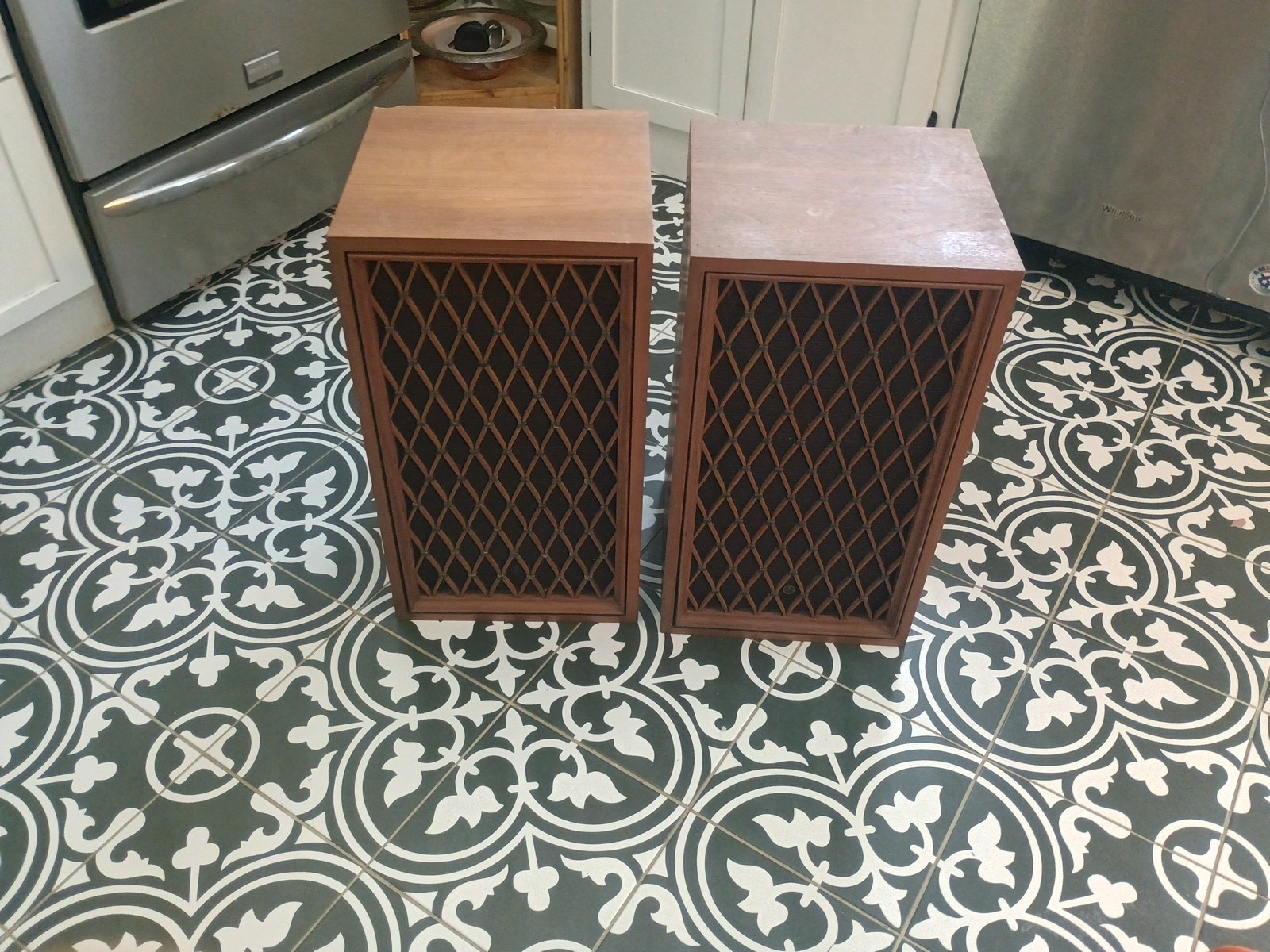
The Pioneer CS-E731 isn’t just another box from the 1970s—it’s a statement. Released in 1976, this is a 3-way, 3-driver loudspeaker system built like a tank and voiced like a concert hall. Forget delicate bookshelf curios; this is a floor-standing presence designed to fill rooms with unapologetic sound. While some sources describe it as a 4-speaker system, the most consistent technical data identifies it as a 3-way configuration with discrete drivers handling low, mid, and high frequencies. Built in Belgium, the CS-E731 carries the weight—literally and sonically—of Pioneer’s commitment to high-end audio during a period when European manufacturing played a key role in their global output.
This isn’t a speaker for the faint of heart. At first glance, its size and design scream “serious hi-fi,” and that’s exactly what it was meant to be. Marketed as a high-end classic even in its later years, the CS-E731 earned labels like "High-End Klassiker" from European dealers, and owners consistently report units in excellent working condition decades later. Listings describe them as “vintage super etat,” “very good appearance (almost like new),” and “perfect technically,” suggesting robust build quality and long-term reliability when stored properly.
But let’s be clear: this is not a modern speaker. It doesn’t have the polished neutrality of today’s reference designs, nor does it benefit from advanced materials science or computer-optimized crossovers. What it does have is character—bold dynamics, a commanding midrange, and a sense of scale that many modern speakers still chase. It was built to be paired with 100-watt amplifiers, which was serious power in 1976, and its 8-ohm impedance makes it a stable match for most tube and solid-state gear of the era.
Specifications
| Manufacturer | Pioneer |
| Product type | 3-way, 3-driver loudspeaker system; Infinite Baffle Type Loudspeaker |
| Production location | Produced in Belgium. |
| Power handling | max 100 Watt |
| Nominal power | 50W |
| Music power | 100W |
| Impedance | 8 ohms |
| Frequency response | 30 to 20,000 Hz |
| Sensitivity | 89dB |
| Enclosure type | Infinite baffle |
| Woofer | 300mm carbon fibre blend |
| Midrange | 65mm dome type |
| Tweeter | 25mm dome type |
| Crossover frequency | 600, 5000 Hz |
| Dimensions | 380 x 660 x 306 mm (W x H x D) |
| Weight | 19 kg |
| Recommended Amplifier | 100W |
Key Features
Infinite Baffle Design
One of the CS-E731’s most distinctive traits is its infinite baffle enclosure type—a design choice that diverges from the more common bass reflex systems of the time. Unlike ported cabinets that use tuned vents to enhance low-frequency output, infinite baffle systems rely on sealed, rigid enclosures to control driver movement and minimize phase distortion. This approach often results in tighter, more accurate bass at the expense of ultimate output, and it requires a well-designed driver and airtight construction. The fact that Pioneer implemented this in a consumer model speaks to their engineering confidence.
Driver Configuration
The speaker uses a 3-way layout with a 300mm carbon fibre blend woofer handling the lows, a 65mm dome midrange for vocal clarity, and a 25mm dome tweeter for the highs. The use of carbon fibre blend in the woofer cone was relatively advanced for 1976, offering a favorable balance of stiffness and damping—critical for reducing cone breakup and maintaining linearity under high excursions. Dome-type midrange and tweeter drivers suggest a focus on smooth off-axis response and reduced distortion, especially in the critical vocal range.
Crossover & Integration
With crossover points at 600 Hz and 5000 Hz, the CS-E731 divides the audio spectrum thoughtfully: the woofer handles only the deepest fundamentals and lower harmonics, the midrange covers the heart of the music (including most vocals), and the tweeter takes over above 5 kHz where human hearing is most sensitive to harshness. A well-executed crossover at these points would allow each driver to operate within its optimal range, contributing to a cohesive and natural soundstage.
Build and Terminals
At 19 kg per cabinet, the CS-E731 feels substantial without being unwieldy. The dimensions—380 mm wide, 660 mm tall, and 306 mm deep—make it suitable for placement on solid stands or directly on the floor, though its infinite baffle design means it doesn’t require the rear clearance that bass reflex models often need. Some units have been modified with upgraded terminals, including replacements using high-quality banana plugs from Dynavox, indicating that owners value both performance and convenience in connectivity.
Collectibility & Value
The Pioneer CS-E731 currently trades in the range of €140 to €225 for a pair, based on recent listings. This pricing reflects its status as a functional vintage component rather than a rare museum piece. Units are typically sold as pairs and often include both speakers and grilles, with descriptions noting “minimal signs of use” and “very good appearance (almost like new).” Functionality is consistently reported as excellent, with one listing confirming “The speakers function very well.”
While not a forgotten relic, the CS-E731 occupies a niche among collectors who appreciate Belgian-made Pioneer gear and infinite baffle designs. Its value is stable, and given the robust construction and replaceable components (like terminals), it’s a speaker that can be maintained rather than replaced. However, no data exists on original pricing, common failures, or long-term maintenance issues—so buyers should inspect units carefully, especially for signs of driver fatigue or cabinet seal degradation, which could affect the infinite baffle performance.
eBay Listings



As an eBay Partner, we earn from qualifying purchases. This helps support our independent vintage technology research.
Related Models
- Pioneer CS-811 (1979)
- Pioneer KH-3500 (1979)
- Pioneer CS-53 (1978)
- Pioneer CS-545 (1979)
- Pioneer CS-66 (1979)
- Akai AM-2850 (1975)
- Akai AP-206 (1975)
- Nakamichi BX-1 (1985)
- Acoustic Research research-ar-17 (1978)
- Acoustic Research AR-19 (1994)