Pioneer CS-777 (1983–1984)
They don’t roar like a flagship, but these unassuming French-built boxes from Pioneer have a way of sticking around—partly because they actually sound good, and partly because everyone forgets to throw them out.
Overview
You’ve seen them: a pair of chunky, black, slightly dated bookshelf speakers with a trio of cone drivers and a midrange level knob that no one ever touches. The Pioneer CS-777 isn’t flashy, but it’s not trying to be. Built in France during a time when Pioneer was flooding the mid-fi market with competent, affordable gear, the CS-777 landed squarely in the “good enough to live with, good enough to keep” category. These were never part of the Famous Series—the SPEC or HPM lines that audiophiles still chase today—but they weren’t disposable either. Designed with mass-market appeal in mind, they balanced aesthetics and performance for living rooms where hi-fi mattered, but not at the cost of the mortgage.
At 520mm tall, they’re more standmount than bookshelf, and their 300mm depth means they’ll eat into your space. But that size pays off: a 20cm woofer in a 3-way bass reflex enclosure gives them a reach down to 45Hz, which was respectable for a non-flagship in the early '80s. They were part of a system ecosystem—the Pioneer X-A 7 among them—paired with the SA-740 amp and TX-540 tuner, suggesting they were meant to be the centerpiece of a coherent, off-the-shelf setup. No exotic materials, no radical engineering—just wood cabinets, cone drivers, and a design that said, “We’re here to play music, not make a statement.”
And play music they do. Owners report a clarity in the mids and highs that still holds up, especially for vocals and acoustic instruments. The 90dB sensitivity means they’re easy to drive—even lower-powered receivers from the era can push them to satisfying levels. But they’re not neutral. Retrospective opinions often describe the sound as forward or bright, with some noting a tendency toward boominess in the lower mids if placed too close to walls. They won’t replace a pair of KEF LS3/5As for critical listening, but for casual enjoyment, they’ve aged with more grace than you’d expect.
Specifications
| Manufacturer | Pioneer |
| Enclosure Type | 3 way bass reflex |
| Power Handling (RMS) | 60 Watts |
| Frequency Response | 45Hz - 20kHz |
| Crossover Frequency | 2kHz, 5kHz |
| Sensitivity | 90dB |
| Nominal Impedance | 6 Ohms |
| Drivers | Woofer 20cm cone, Midrange 7.7cm cone, Tweeter 6.6cm cone |
| Dimensions | 300 x 520 x 230mm (Width x Height x Depth) |
| Weight | 6.5kg / 14.3lbs |
Key Features
Adjustable Midrange and Tweeter Levels
One of the more unusual touches for a speaker at this price point is the presence of level controls for both the midrange and tweeter. These aren’t subtle trim pots buried behind the binding posts—they’re right there on the front baffle, just below the midrange driver. In theory, this lets you tailor the tonal balance to your room or taste. In practice, most owners leave them flat, but their existence suggests Pioneer gave some thought to real-world placement issues. If your room is overly reflective, dialing back the tweeter a hair might take the edge off. If the midrange feels thin, a slight boost could help. It’s a rare bit of user agency in an otherwise fixed design.
Wood Cabinet Construction
The cabinet is made of wood, not particleboard or plastic, which was not a given in mass-market speakers of the early '80s. This contributes to a more rigid enclosure, reducing unwanted resonance. The finish is utilitarian—black vinyl wrap, likely—nothing luxurious, but it holds up. The weight (6.5kg each) speaks to a build that’s more substantial than it looks. These aren’t flimsy boxes you’d worry about poking a finger through.
High Sensitivity for Easy Driving
At 90dB, the CS-777 is efficient—enough that even modest amplifiers can make them sing. This was a smart move for a speaker aimed at system buyers who might be running a 30-watt per channel integrated amp. You don’t need brute force to get decent volume, which also means less strain on older electronics. That efficiency is one reason owners report these speakers still sounding good decades later—when properly maintained, they don’t demand much to deliver.
Historical Context
Launched in 1983 and produced through 1984, the CS-777 arrived during a period when Pioneer was aggressively expanding its presence in the mid-tier audio market. These weren’t flagship models—those belonged to the Famous Series, like the SPEC-1 or HPM-100, which featured advanced driver materials and crossover designs. Instead, the CS-777 was positioned as a solid, attractive option for consumers building a complete system without stepping into high-end pricing.
They shared the market with other mid-fi standouts of the era, though no direct competitors are documented in the fact sheet. A larger contemporary, the CS-9030, suggests a tiered lineup where the CS-777 served as a slightly more compact alternative. Being part of system packages like the X-A 7 and later the X-D 200 CD series meant they were often sold as part of a matched set, ensuring compatibility and simplifying setup for less technical buyers.
Collectibility & Value
The CS-777 is not a collector’s darling, but it’s not forgotten. Market value is all over the place: recent sales show pairs going for as little as $50 and as much as $450. That volatility tells you everything—most people don’t care, but occasionally, someone values them highly, maybe for restoration, nostalgia, or system matching. There’s no established premium for original condition or rare colors; black is the only confirmed finish, and it’s not rare.
The biggest mechanical issue is predictable: the woofer surrounds are foam, and after 40 years, they’re almost certainly disintegrated. This is the single most common failure point. When the foam crumbles, you lose bass and get a flapping sound at low volumes. The fix? Refoaming. It’s a common service, and kits are available. Once restored, the speakers often return to their original performance—some say even better, with tighter bass response.
There’s also lingering uncertainty about the crossovers. No verified data exists on their components or construction, but forum users have asked whether they might need recapping. Without official schematics or teardowns, it’s a gray area. If you’re buying a pair that’s been sitting in a garage since 1987, assume both the woofers and crossovers may need attention. That’s the cost of ownership—but also the opportunity. A refoamed, cleaned-up CS-777 can still deliver satisfying sound for very little investment.
Original pricing has not been confirmed. Conflicting reports cite 228 DM and 248 DM from different sources, but without resolution, it’s best to say the data is uncertain. What’s clear is that these were not premium-priced speakers at launch.
eBay Listings


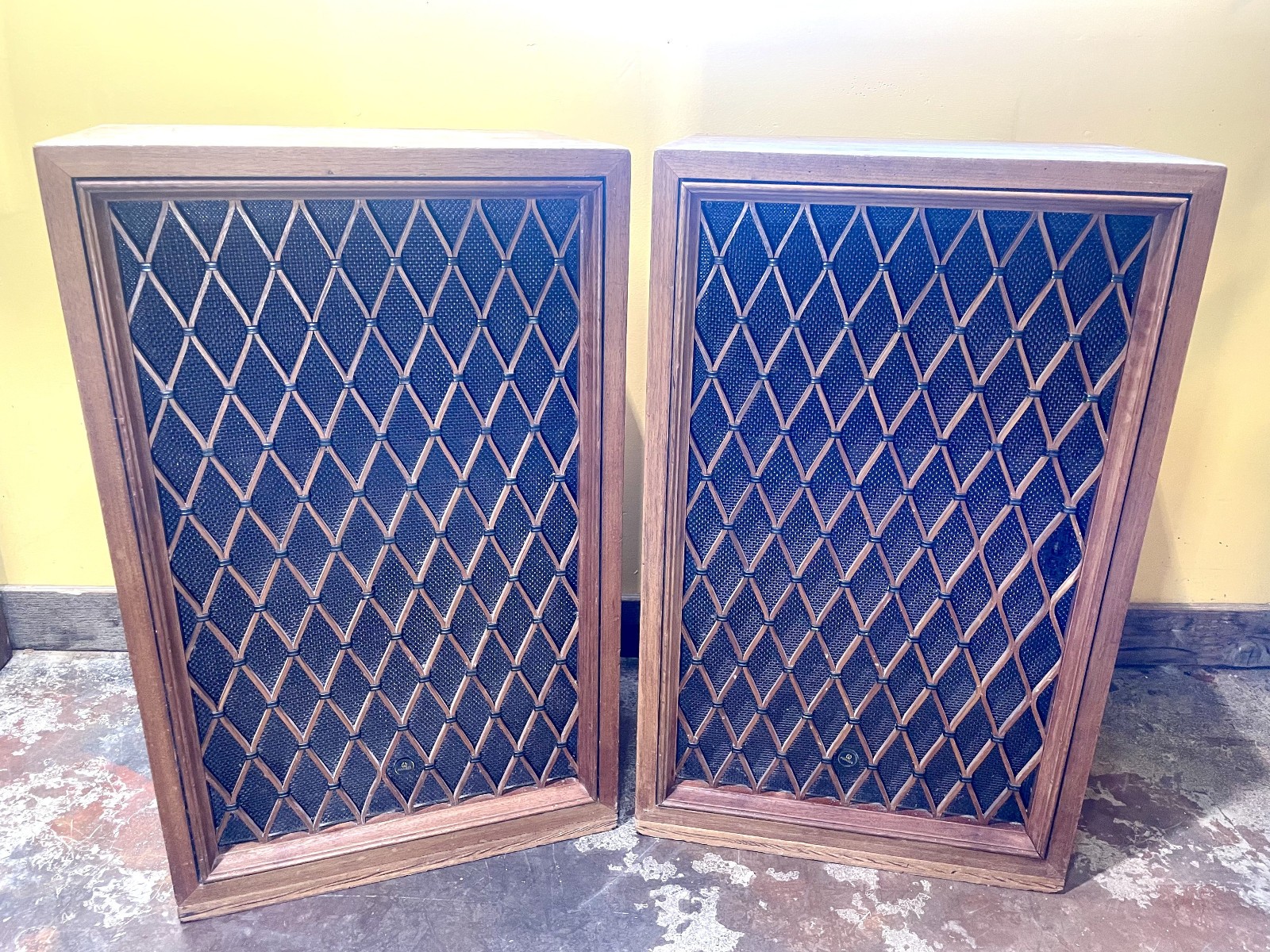
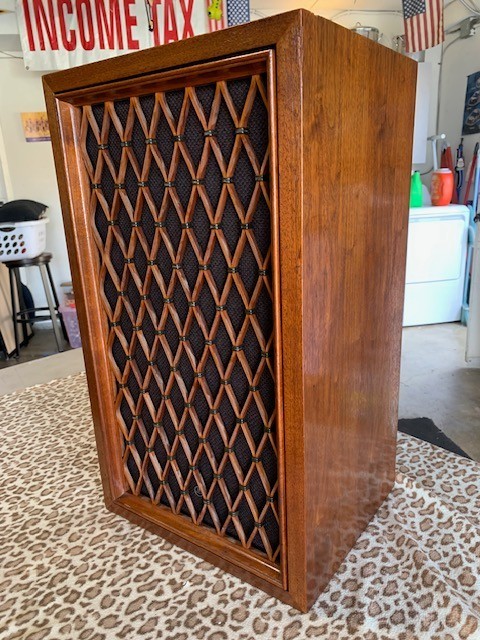
As an eBay Partner, we earn from qualifying purchases. This helps support our independent vintage technology research.