Pioneer CS-A770 (1980)
The Pioneer CS-A770 is a vintage loudspeaker model released by Pioneer in 1980 as part of their CS (Compact Speaker) series. Though often mistaken for a floor-standing model due to its substantial size, the CS-A770 is technically a large bookshelf speaker designed for high-fidelity audio reproduction in home audio systems of the late 1970s and early 1980s. It represents a period when Japanese audio manufacturers were pushing the boundaries of speaker design, combining advanced engineering with elegant aesthetics to meet the growing demand for high-quality stereo sound.
Design and Build Quality
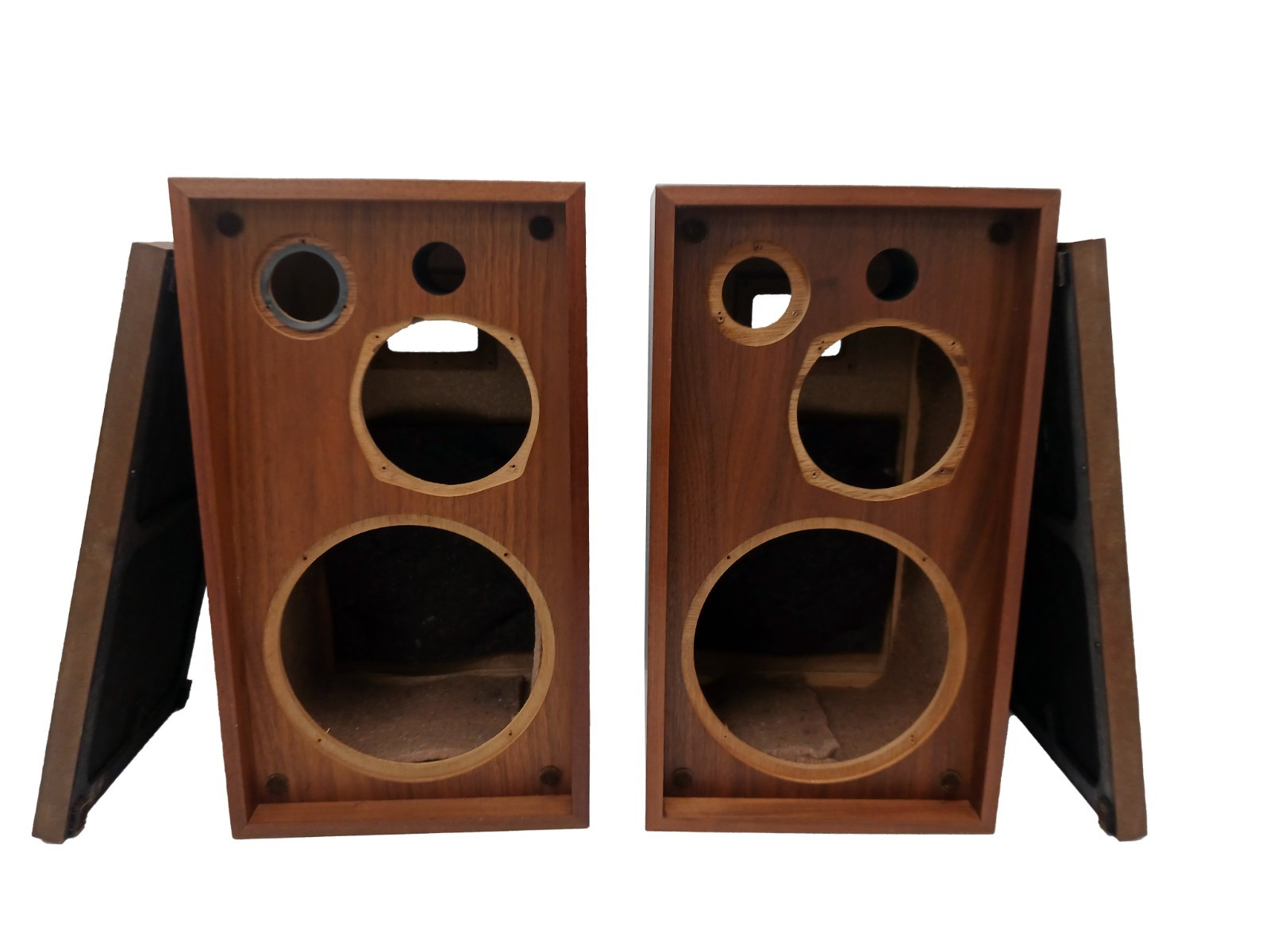
The CS-A770 features a classic 3-way, 4-driver configuration, which was relatively sophisticated for its time. This setup includes a 30 mm fabric dome tweeter for high-frequency reproduction, a 50 mm midrange driver for vocal and instrumental clarity, and two 165 mm polypropylene cone woofers for robust bass response. The dual woofers enhance low-frequency output and efficiency, allowing the speaker to deliver a surprisingly full sound despite its bookshelf form factor.
The cabinet is constructed from medium-density fiberboard (MDF) with a real wood veneer finish, available in both walnut and rosewood options. This gave the CS-A770 a premium, furniture-grade appearance that blended well with the decor of the era. The front baffle is slightly curved, contributing to both aesthetic appeal and improved acoustic dispersion. The speaker is magnetically shielded, making it safe to place near CRT televisions or other sensitive electronics—a notable feature at the time.
The bass-reflex enclosure design uses a rear-firing port to extend low-frequency response and increase efficiency. This design choice allows the CS-A770 to produce bass down to 45 Hz, which is impressive for a speaker of its size. The internal crossover network is carefully tuned to 500 Hz (between woofer and midrange) and 4.5 kHz (between midrange and tweeter), ensuring smooth transitions across the frequency spectrum.
Performance and Sound Characteristics
With a sensitivity rating of 88 dB and a nominal impedance of 8 ohms, the CS-A770 is relatively easy to drive and pairs well with a wide range of amplifiers from the era, including vintage receivers from Pioneer, Denon, Yamaha, and Kenwood. The recommended amplifier power is between 20 and 90 watts, with a maximum handling capacity of 90 watts, making it suitable for both moderate and high-volume listening.
The sound signature of the CS-A770 is balanced and natural, leaning slightly toward warmth without sacrificing clarity. The dual woofers provide a solid bass foundation, while the dedicated midrange driver ensures that vocals and acoustic instruments are rendered with precision and presence. The fabric dome tweeter delivers smooth, non-fatiguing highs, avoiding the harshness that some metal dome tweeters of the period were prone to.
In stereo setups, the CS-A770 offers a wide soundstage and good imaging, allowing listeners to pinpoint the placement of instruments within the recording. This makes them particularly well-suited for jazz, classical, and vocal-centric music. While not designed for home theater use, they can still serve as excellent front speakers in a vintage-centric audio system.
Historical Context and Market Position
The early 1980s were a golden era for stereo audio, with consumers increasingly investing in high-quality home systems. Pioneer was a major player during this time, known for both their receivers and speakers. The CS series was positioned as a mid-to-high-tier line, offering better performance than entry-level models while remaining more affordable than flagship offerings.
The CS-A770 sat near the top of the CS lineup, above models like the CS-A550 and CS-A660. It competed with similar offerings from Sony, JBL, and Technics, often winning praise for its build quality and sonic balance. Unlike some contemporaries that emphasized bass-heavy sound for pop music, the CS-A770 aimed for accuracy and musicality, appealing to audiophiles and critical listeners.
Compatibility and Modern Use
Despite being over 40 years old, the CS-A770 remains a sought-after speaker among vintage audio enthusiasts. Their 8-ohm impedance and moderate sensitivity make them compatible with modern amplifiers, including tube amps and integrated solid-state models. However, due to their age, original units may require maintenance—common issues include degraded foam surround on the woofers, dried-out crossover components, and worn binding posts.
Replacement parts and reconing services are available through specialty audio restoration shops, allowing owners to restore the speakers to like-new condition. Upgrading the internal wiring and replacing the crossover capacitors can also improve performance and reliability.
For modern listeners, the CS-A770 offers a window into the sound of the early 1980s—a time when high-fidelity audio was becoming accessible to the mainstream. They are not as bass-heavy or dynamically punchy as modern speakers, but they excel in musical coherence and tonal balance.
Legacy and Collectibility
Today, the Pioneer CS-A770 is considered a classic. While not as widely recognized as some flagship models from the era, it has developed a loyal following among vintage audio collectors. Its combination of elegant design, solid build, and refined sound ensures its place in the pantheon of quality Japanese speakers from the 1980s.
Units in good condition—especially those with original grilles, undamaged veneer, and functioning drivers—can command prices ranging from $150 to $300 per pair on the secondhand market, depending on location and restoration status.
In summary, the Pioneer CS-A770 is a well-engineered, sonically pleasing speaker that reflects the high standards of its time. Whether used as part of a vintage stereo setup or restored as a collector’s item, it continues to deliver a listening experience that many find more engaging and musical than many modern equivalents. For those exploring the world of classic audio, the CS-A770 is a worthy candidate and a testament to Pioneer’s legacy in speaker design.
eBay Listings



As an eBay Partner, we earn from qualifying purchases. This helps support our independent vintage technology research.
Related Models
- Pioneer CS-811 (1979)
- Pioneer KH-3500 (1979)
- Pioneer CS-53 (1978)
- Pioneer CS-545 (1979)
- Pioneer CS-66 (1979)
- Akai AM-2850 (1975)
- Akai AP-206 (1975)
- Nakamichi BX-1 (1985)
- Acoustic Research research-ar-17 (1978)
- Acoustic Research AR-19 (1994)