Pioneer A A9 MK2 (1987-1989)
Specifications
| Feature | Specification |
| Year of Production | 1987-1989 |
| Power Specifications | 80W per channel into 8Ω (stereo), 100W per channel into 4Ω |
| Impedance | 4-16Ω |
| Sensitivity | Unknown |
| Key Features | Dual mono construction, direct coupling, non-switching amplifier circuit, massive toroidal transformer, gold-plated terminals, motorized volume control, independent power supplies per channel |
Historical Significance
When Pioneer launched the A A9 MK2 in 1987, they weren’t just releasing another amplifier—they were making a statement. As the flagship of their elite Elite series, this beast stood at the apex of Japanese audio engineering in the late '80s. Every circuit, every component, every bolt-down plate screamed precision. Built like a tank and designed like a laboratory instrument, the A A9 MK2 wasn’t just powerful—it was a declaration of intent from a company pushing the limits of what integrated amplifiers could be.
Sound Signature
Neutrality with soul—that’s the A A9 MK2’s calling card. It delivers sound with surgical clarity, yet never feels sterile. Bass is taut and commanding, effortlessly controlling difficult loads. The soundstage stretches wide and deep, placing instruments with pinpoint accuracy. Transients snap with authority, capturing the attack of a snare or pluck of a bass string in vivid detail. This isn’t an amp that adds color; it reveals what’s already there, making it a favorite among purists and critical listeners who demand transparency.
Maintenance and Restoration Tips
Time takes its toll, even on legends. The motorized volume control, while slick when new, can gum up or wear out—cleaning or replacement is often needed. Electrolytic capacitors from this era are nearing or past their lifespan, so a full recap is highly recommended for both performance and safety. Relay contacts may oxidize, causing crackles or dropouts, and the original indicator bulbs tend to burn out. A well-serviced A A9 MK2 isn’t just reliable—it sings like it did in '87.
Collectibility and Market Value
- Market Value: $800-$1,500 depending on condition and cosmetic appearance
- Collectibility Rating: 8/10
eBay Listings


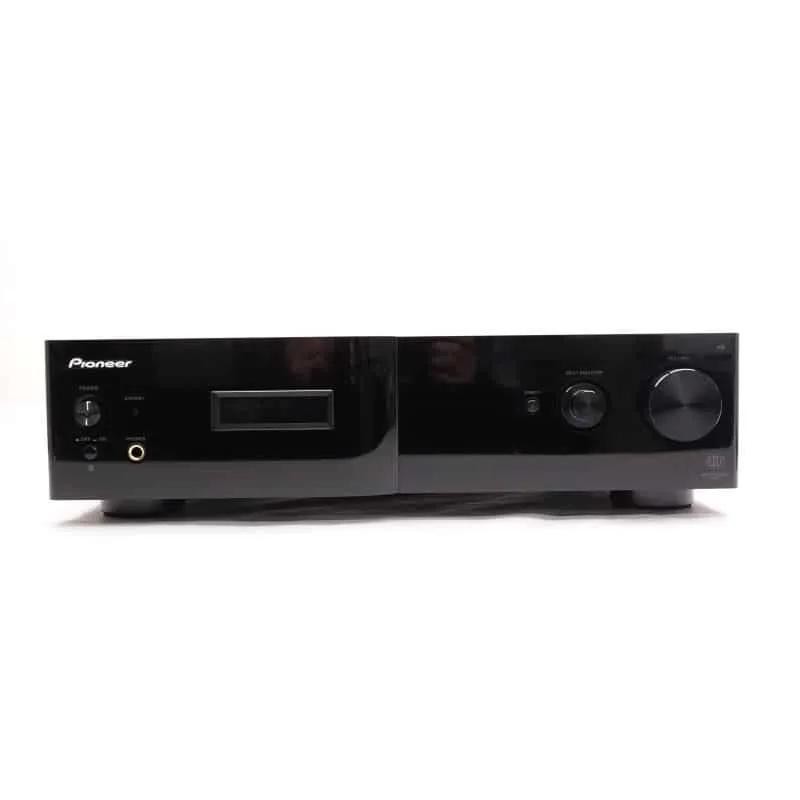

As an eBay Partner, we earn from qualifying purchases. This helps support our independent vintage technology research.
Related Models
- Pioneer CS-811 (1979)
- Pioneer KH-3500 (1979)
- Pioneer CS-53 (1978)
- Pioneer CS-545 (1979)
- Pioneer CS-66 (1979)
- Akai AM-2850 (1975)
- Akai AP-206 (1975)
- Nakamichi BX-1 (1985)
- Acoustic Research research-ar-17 (1978)
- Acoustic Research AR-19 (1994)