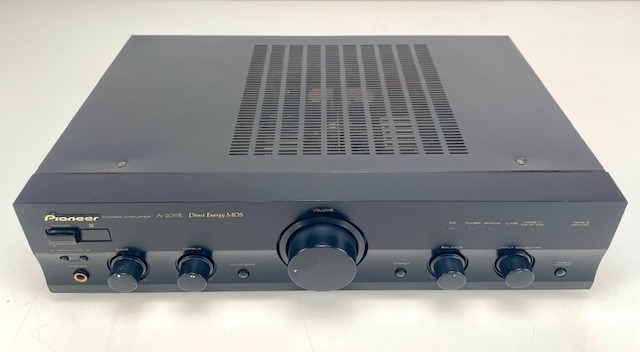
Pioneer A 403R (1988-1990)
Pioneer A 403R (1988-1990)
Specifications
| Year of Production | 1988-1992 |
| Power Output | 45 watts per channel into 8 ohms (20Hz-20kHz, 0.008% THD), 70 watts per channel into 4 ohms |
| Frequency Response | 5Hz-100kHz (+0, -3dB) |
| Total Harmonic Distortion | 0.008% (rated power) |
| Input Sensitivity/Impedance | 150mV/47kΩ (line), 2.5mV/47kΩ (MM phono) |
| Signal-to-Noise Ratio | 96dB (line), 74dB (MM phono) |
| Key Features | Direct coupling amplifier design, non-switching amplifier circuit, MM phono stage, tone controls, loudness switch, dual power supply, gold-plated RCA terminals |
Historical Significance
This little tank was part of Pioneer's 'R' series refresh in the late 80s, and it marked a real turning point. While it looked like just another black box from the outside, Pioneer was packing in serious tech from their higher-end lines. The A-403R represented their full-on push into high-current, low-feedback designs for the mid-market. It was the amp that made you realize you didn't need to spend a fortune to get grip, control, and a dose of that Pioneer refinement. It sat right in the sweet spot of their lineup, offering a taste of the good life without the champagne budget.
Sound Signature
Let's cut to the chase: the A-403R is a workhorse with manners. It's clean, detailed, and surprisingly powerful for its rating—it drives a wide range of speakers without breaking a sweat. The bass is tight and controlled, not flabby or overblown. The highs are smooth, maybe even a touch rolled-off compared to some razor-sharp competitors, which makes it incredibly easy to listen to for hours. It's not the last word in absolute transparency, but what you get is a slightly warm, utterly musical, and forgiving character. It's the kind of amp that makes your average CD collection sound good and your great records sound fantastic. The phono stage is a nice bonus, too—quiet and capable enough that you won't feel an immediate urge to replace it.
Maintenance and Restoration Tips
These are generally robust, but they're pushing 35 years old now. The first thing to check is the protection relay; a dirty contact is the most common cause of one channel dropping out. A few cycles of the power switch might clear it temporarily, but a proper cleaning or replacement is the real fix. The volume and selector pots will almost certainly be scratchy—a good blast of Deoxit is your best friend here. Internally, the main power supply capacitors are the usual suspects for aging. Replacing them often brings back a sense of dynamics and weight that you didn't realize was missing. The indicator bulbs are standard grain-of-wheat types and are easy to swap if you're handy with a soldering iron. Just take your time—the boards are dense.
Collectibility and Market Value
This is where the A-403R shines. It's a sleeper hit. You can regularly find them for between $100 and $250, which is an absolute steal for the performance on offer. Condition is everything—a mint unit with the original box and manuals will command the top end, while a scuffed-up worker will be at the bottom. Its collectibility rating is a solid 5/10: not rare enough to be a trophy piece, but increasingly recognized by enthusiasts in the know as one of the best value propositions from the era. If you find one at a fair price, buy it. You won't regret it.
eBay Listings



As an eBay Partner, we earn from qualifying purchases. This helps support our independent vintage technology research.
Related Models
- Pioneer CS-811 (1979)
- Pioneer KH-3500 (1979)
- Pioneer CS-53 (1978)
- Pioneer CS-545 (1979)
- Pioneer CS-66 (1979)
- Akai AM-2850 (1975)
- Akai AP-206 (1975)
- Nakamichi BX-1 (1985)
- Acoustic Research research-ar-17 (1978)
- Acoustic Research AR-19 (1994)