Pioneer CS-7100 (1979)
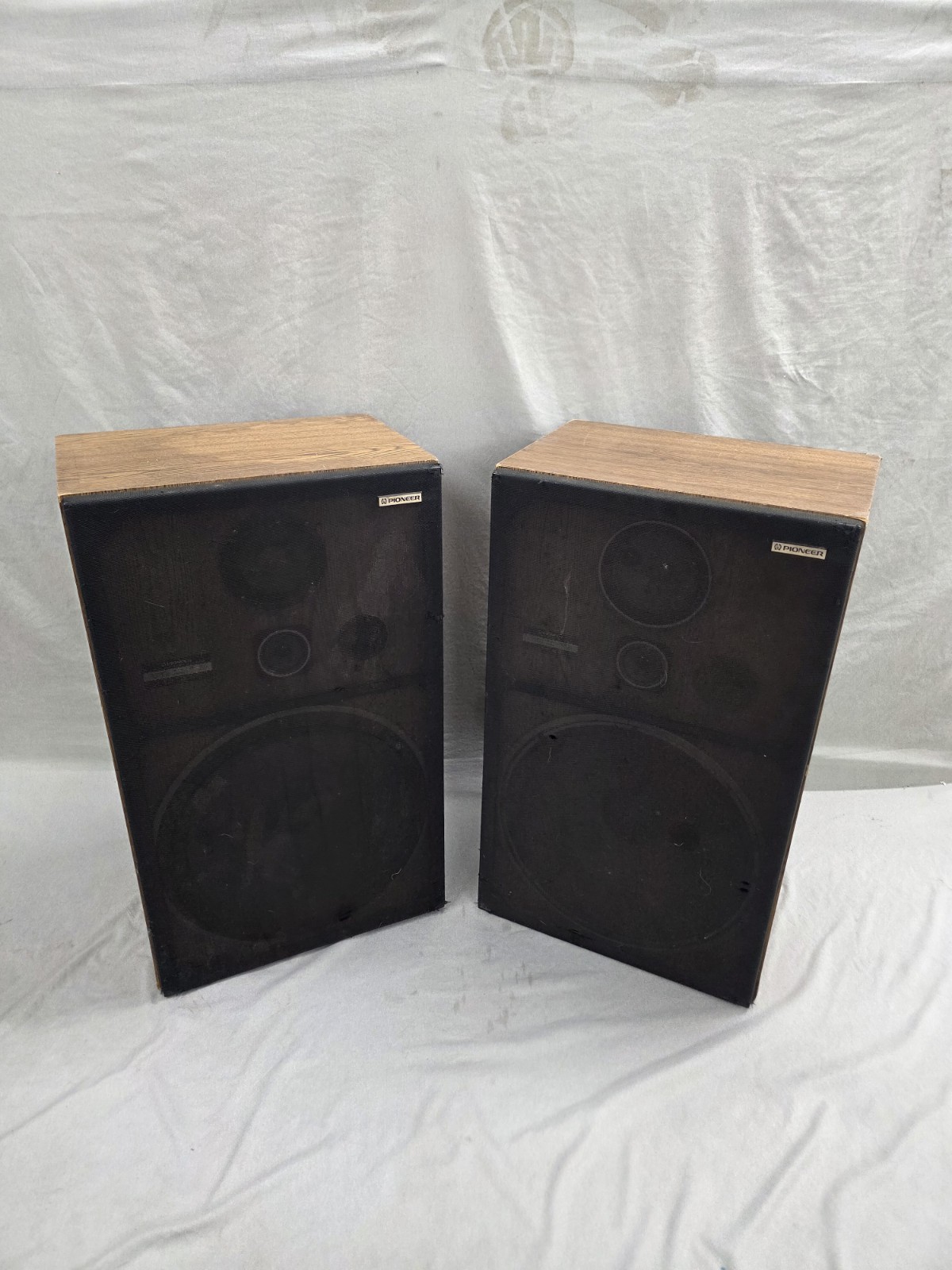
The Pioneer CS-7100 is a pair of floor-standing loudspeakers introduced in 1979 during the golden age of high-fidelity audio equipment. Part of Pioneer’s premium CS (Custom Series) line, the CS-7100 was designed for audiophiles seeking a powerful, detailed, and room-filling sound experience. With their distinctive aesthetic and robust engineering, these speakers represent a hallmark of late 1970s Japanese audio craftsmanship and remain sought after by vintage audio enthusiasts today.
Design and Build Quality
Standing at approximately 40 inches tall, the CS-7100 features a slim, elegant cabinet with a gently curved front baffle and a classic wood-grain vinyl finish—typically in a rich walnut or rosewood tone. The cabinet is constructed from medium-density fiberboard (MDF) with internal bracing to reduce resonance and cabinet vibration, a notable feature for its time. The front-firing design includes a removable cloth grille secured by hidden magnets, giving the speaker a clean, uncluttered look when in use.
The physical dimensions of the CS-7100 are 101.5 cm (H) × 23 cm (W) × 30 cm (D), making them suitable for medium to large listening rooms. Weighing around 22 kg (48.5 lbs) per speaker, the substantial mass contributes to acoustic stability and reduced cabinet coloration. The rear panel includes a single pair of gold-plated binding posts, allowing for secure connections with bare wire, spades, or banana plugs.
Driver Configuration and Acoustic Performance
The CS-7100 employs a three-way, four-driver configuration, designed to deliver a balanced and dynamic frequency response. The driver array consists of:
- One 300 mm (12-inch) polypropylene cone woofer for deep, controlled bass reproduction. This large-diameter driver is housed in a bass-reflex enclosure with a rear-firing port, enhancing low-frequency extension and efficiency.
- One 75 mm (3-inch) midrange driver with a soft dome design, optimized for clear vocal and instrumental reproduction in the critical midrange frequencies.
- Two 25 mm (1-inch) dome tweeters—one facing forward and one angled upward—creating a wide dispersion pattern and enhanced stereo imaging. The dual tweeter setup was a signature feature of many high-end Pioneer speakers of the era, designed to improve high-frequency presence and spatial realism.
The crossover network is a passive design with components carefully selected to ensure smooth driver integration. The crossover points are typically set at 500 Hz (woofer to midrange) and 4 kHz (midrange to tweeter), although exact values may vary slightly depending on production batch. The network includes inductors, capacitors, and resistors of audiophile-grade quality for the time, contributing to a coherent sonic signature.
Frequency Response and Efficiency
The CS-7100 offers a frequency response range of 35 Hz to 20 kHz, making it capable of reproducing deep bass and crisp highs without the need for a subwoofer in most environments. Its sensitivity is rated at 91 dB (1W/1m), indicating high efficiency—this means the speakers respond well to lower-powered amplifiers, including vintage tube and solid-state receivers common in the late 1970s and early 1980s.
With a nominal impedance of 8 ohms and a maximum power handling of 120 watts, the CS-7100 is compatible with a wide range of amplification equipment. However, due to the large woofer and bass-reflex design, they perform best when paired with amplifiers delivering at least 50–100 watts per channel for optimal dynamics and control.
Sonic Characteristics
Owners and reviewers consistently praise the CS-7100 for its warm, full-bodied sound signature with a slight emphasis on the midrange—ideal for vocal-centric music like jazz, blues, and acoustic rock. The bass is punchy and extended, though not as tight or fast as modern high-end designs, reflecting the speaker engineering philosophies of the era. The dual tweeters contribute to a spacious soundstage, with excellent imaging and a sense of airiness in the upper frequencies.
These speakers excel with analog sources such as vinyl records and FM radio, where their forgiving nature helps smooth out minor imperfections in recordings. They also handle early digital sources (like CD players from the 1980s) with grace, avoiding the harshness that some vintage speakers exhibit with bright digital audio.
Place in Pioneer’s Lineup
The CS-7100 was positioned in the upper tier of Pioneer’s speaker range in the late 1970s, below only the flagship CS-99A and CS-77A models. It shared design DNA with these higher-end models, including the dual-tweeter array and high-sensitivity tuning, making it a cost-effective way to experience flagship-level sound.
Pioneer’s Custom Series was marketed toward serious listeners and custom installers, emphasizing performance, reliability, and aesthetic integration into home environments. The CS-7100 was often paired with Pioneer’s high-end receivers like the SX-1980 and amplifiers such as the SA-7800, forming a complete high-fidelity system.
Legacy and Collectibility
Today, the Pioneer CS-7100 is considered a classic example of vintage Japanese speaker design. While not as rare as some of Pioneer’s limited-production models, well-maintained pairs are increasingly difficult to find due to age-related wear—particularly foam surround degradation on the woofers and midrange drivers. Replacement foam kits are available from specialty audio restoration suppliers, making refurbishment a viable option for collectors.
In the secondhand market, the CS-7100 typically sells for $300–$600 per pair, depending on condition and originality. Fully restored units with upgraded components command higher prices, especially when sold with original documentation and grilles.
Tips for Buyers and Restorers
- Inspect the drivers: Check for torn surrounds, damaged cones, or voice coil rub. Replacing foam surrounds is common but should be done by an experienced technician.
- Test with vintage gear: These speakers shine when paired with tube amplifiers or high-quality solid-state receivers from the 1970s–1980s.
- Placement matters: Position the speakers at least 1–2 feet from the wall to optimize bass response and imaging. Toe-in can be adjusted to fine-tune the soundstage.
- Consider bi-wiring: Although the CS-7100 has a single terminal, some enthusiasts modify the crossover to allow bi-wiring for improved dynamic control.
Conclusion
The Pioneer CS-7100 stands as a testament to the innovation and craftsmanship of late-1970s audio engineering. With their elegant design, high sensitivity, and engaging sound, they remain a compelling choice for vintage audio enthusiasts and those seeking a warm, musical listening experience. Whether used as part of a restored classic system or integrated into a modern setup, the CS-7100 delivers timeless performance that continues to impress decades after its debut.
eBay Listings


As an eBay Partner, we earn from qualifying purchases. This helps support our independent vintage technology research.
Related Models
- Pioneer CS-811 (1979)
- Pioneer KH-3500 (1979)
- Pioneer CS-53 (1978)
- Pioneer CS-545 (1979)
- Pioneer CS-66 (1979)
- Akai AM-2850 (1975)
- Akai AP-206 (1975)
- Nakamichi BX-1 (1985)
- Acoustic Research research-ar-17 (1978)
- Acoustic Research AR-19 (1994)