Pioneer PL-710 (1976)
The Pioneer PL-710 is a vintage belt-drive turntable introduced in 1976 as part of Pioneer’s mid-to-high-end audio equipment offerings during the golden era of analog audio. While not as widely discussed today as some of its contemporaries from brands like Technics or Denon, the PL-710 represents a well-engineered, reliable, and sonically capable turntable that exemplifies the design philosophies of 1970s Japanese hi-fi manufacturing.
Design and Build Quality
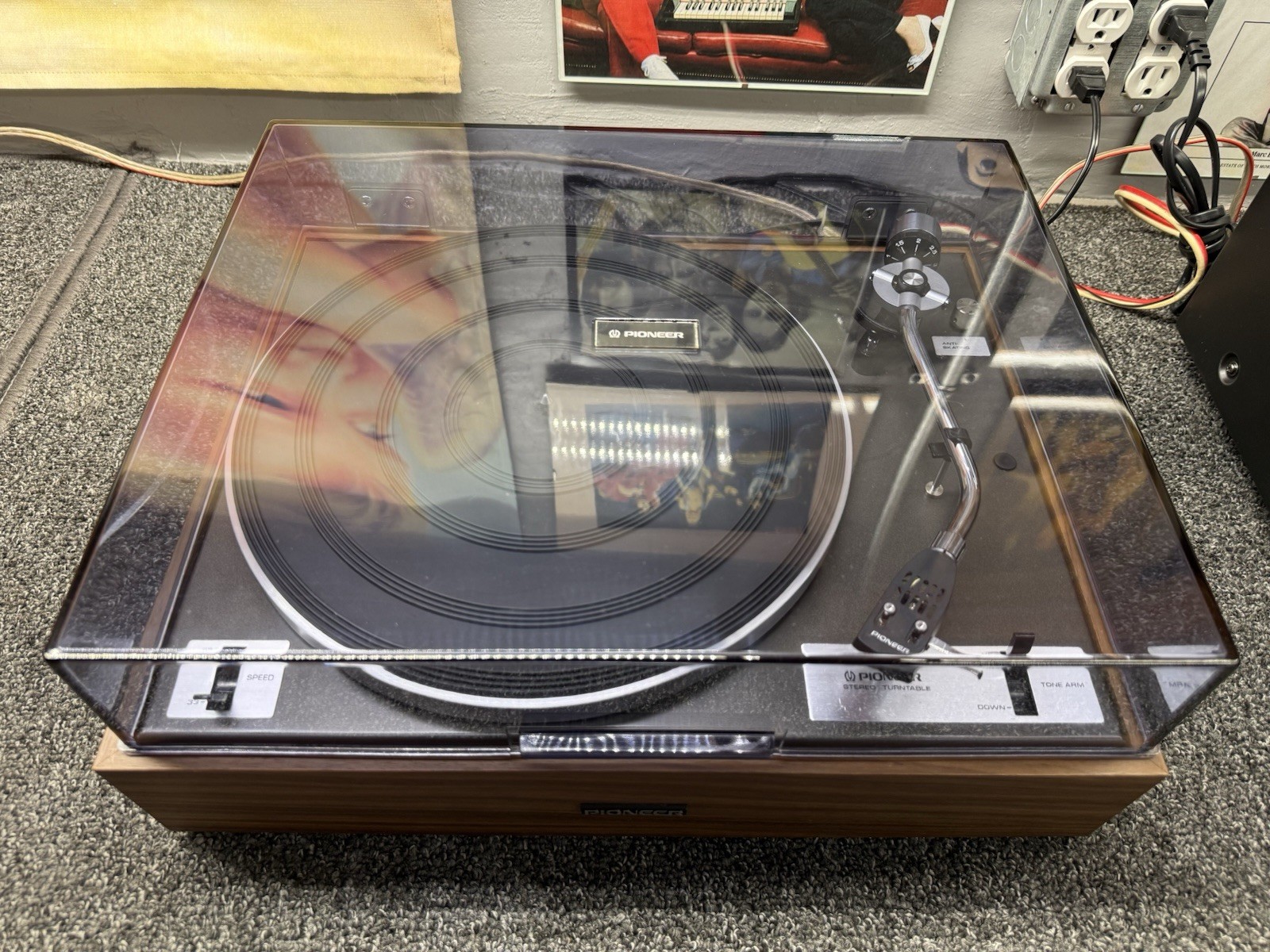
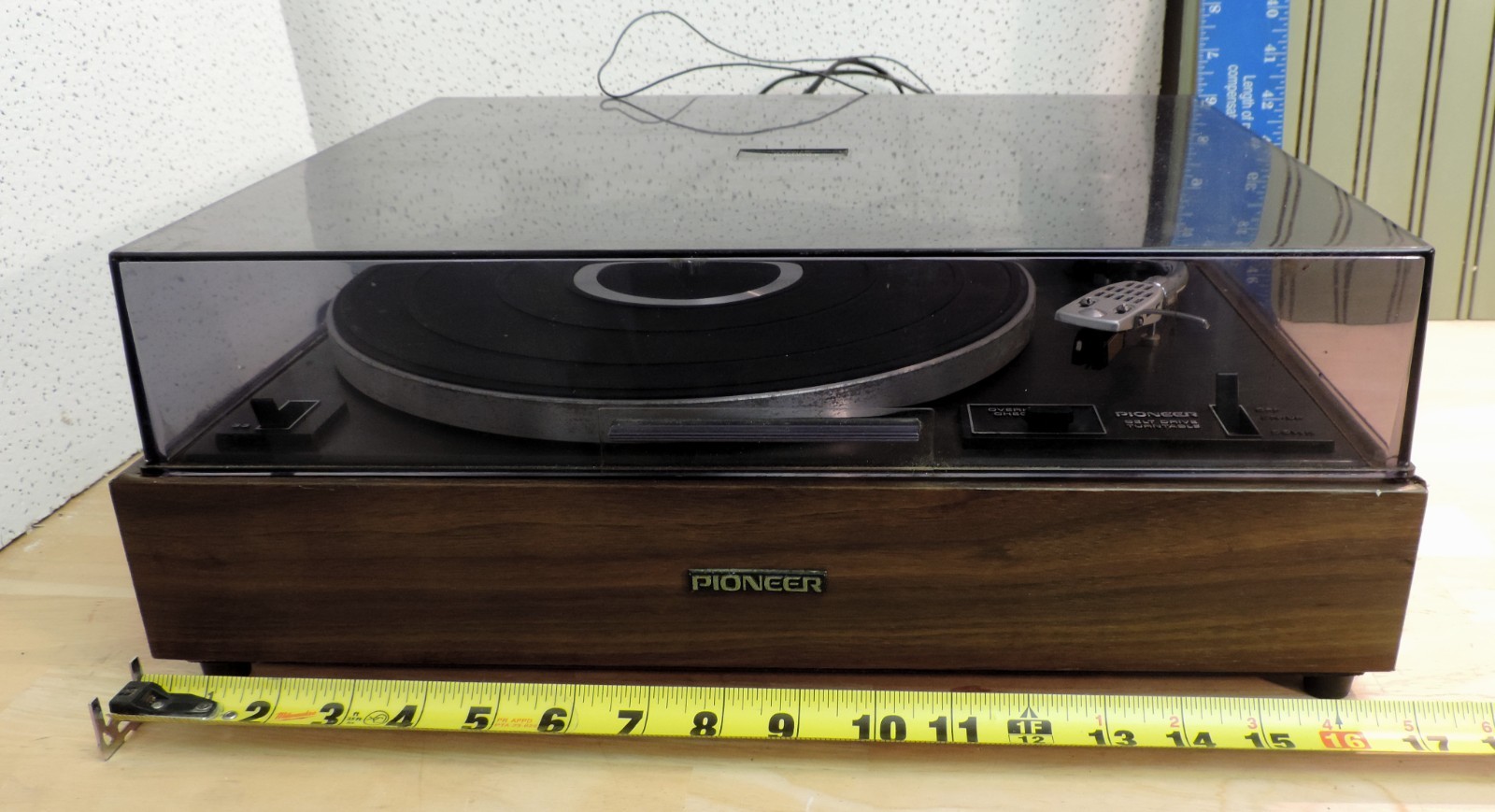
The Pioneer PL-710 features a sleek, minimalist design typical of mid-1970s audio components. Housed in a sturdy chassis with a matte black finish and a brushed aluminum front panel, the turntable exudes a sense of understated elegance. The plinth is constructed from dense particleboard with a vibration-dampening laminate, contributing to a stable platform that minimizes resonance. Rubber feet isolate the unit from external vibrations, enhancing playback stability.
One of the standout features of the PL-710 is its belt-drive system, which uses a high-torque DC motor coupled with a precision rubber belt to drive the aluminum platter. This design reduces motor noise transmission and provides smooth, consistent rotation—critical for accurate vinyl playback. The platter itself is a die-cast aluminum unit with a felt mat, offering sufficient mass to maintain rotational inertia and reduce wow and flutter.
The turntable supports both 33⅓ and 45 RPM playback speeds, selected via a mechanical switch on the front panel. Speed accuracy is maintained through a quartz-locked phase control system, a notable feature for its time. This system uses a strobe light and markings on the platter's edge to allow users to visually verify and fine-tune rotational speed, ensuring long-term consistency.
Tonearm and Cartridge
The PL-710 is equipped with a straight, static-balanced tonearm made of lightweight aluminum tubing. The arm features a gimbal-type bearing system that allows for smooth vertical and horizontal movement, essential for accurate tracking. Anti-skate force is adjustable via a calibrated dial, and vertical tracking force (VTF) is set using a counterweight on the rear of the arm.
While the PL-710 was often sold without a cartridge, many units were paired with Pioneer’s own high-compliance magnetic cartridges, such as the Pioneer SP-1003 or SP-1004. These moving magnet (MM) cartridges offered good tracking ability and a balanced frequency response, making them suitable for a wide range of musical genres. The tonearm’s effective length is approximately 220mm, with a recommended overhang achieved using a standard two-point protractor.
The tonearm also includes a detachable headshell, allowing users to upgrade or swap cartridges easily—a feature appreciated by audiophiles and enthusiasts. The headshell connects via standard four-pin clips, ensuring compatibility with a wide range of aftermarket cartridges.
Electrical and Mechanical Features
Internally, the PL-710 uses a regulated DC power supply to drive the motor, minimizing speed fluctuations caused by line voltage variations. The quartz lock system operates on a separate circuit, using a small neon strobe lamp and a frequency reference derived from the AC mains (or an internal crystal oscillator in some regional variants). This ensures that the turntable maintains precise speed over extended periods, a significant advantage over non-quartz models.
The platter bearing is a precision-machined brass and steel assembly, designed for low friction and long-term durability. Early reports from users and service manuals indicate that the bearing system is sealed and pre-lubricated, requiring no maintenance under normal conditions.
A hinged dust cover is included, made of clear acrylic with a soft-close mechanism to prevent slamming. While functional, some users have noted that the cover can resonate at high volumes, suggesting that removal during playback may improve sonic performance.
Performance and Sound Characteristics
In terms of sonic performance, the Pioneer PL-710 delivers a warm, balanced sound signature typical of well-tuned analog systems from the 1970s. The belt-drive design contributes to a low noise floor, allowing subtle details in recordings to emerge clearly. Bass response is tight and controlled, while the midrange remains natural and uncolored—ideal for vocal and acoustic recordings.
The turntable’s low wow and flutter specifications (typically rated at less than 0.025% WRMS) ensure pitch stability, making it suitable for both casual listening and critical auditioning. When properly set up, the PL-710 tracks records with minimal distortion, even on warped or older vinyl.
While not as rigid or inert as some contemporary high-end turntables like the Technics SL-1200 series, the PL-710 holds its own in the mid-tier market. Its combination of quartz speed control, solid build, and user-friendly design made it a favorite among discerning listeners who valued accuracy and reliability.
Market Position and Legacy
Released in 1976, the PL-710 occupied a middle ground in Pioneer’s turntable lineup, positioned above entry-level models like the PL-510 but below flagship offerings such as the PL-900. It competed directly with models from Sony, Yamaha, and Kenwood, all of which were producing similarly equipped turntables during this period.
Despite its technical merits, the PL-710 never achieved the iconic status of some of its peers. This may be due in part to Pioneer’s stronger reputation in receivers and speakers at the time, rather than turntables. Additionally, the rise of direct-drive technology—popularized by Technics—shifted consumer preferences toward faster-starting, more durable turntables, particularly for DJ and broadcast use.
Nevertheless, the PL-710 has gained a quiet following among vintage audio enthusiasts. Its reliability, ease of servicing, and analog warmth make it a compelling choice for those building a classic hi-fi system. Replacement belts and stylus assemblies are still available through specialty audio parts suppliers, and the turntable’s modular design allows for straightforward restoration.
Conclusion
The Pioneer PL-710 is a well-crafted, no-frills turntable that exemplifies the quality and attention to detail that characterized Japanese audio engineering in the 1970s. While it may lack the flash or innovation of some of its contemporaries, it delivers consistent, high-fidelity performance with minimal maintenance.
For collectors and audiophiles seeking a reliable analog source component, the PL-710 represents excellent value. When paired with a quality cartridge and integrated into a well-matched system, it can deliver a listening experience that rivals more famous models. Its quartz speed control, solid construction, and user-friendly design ensure that it remains a functional and enjoyable part of any vintage audio setup.
Though categorized today as a lesser-known model, the Pioneer PL-710 deserves recognition as a competent, durable, and sonically satisfying turntable from a pivotal era in audio history.
eBay Listings

As an eBay Partner, we earn from qualifying purchases. This helps support our independent vintage technology research.
Related Models
- Pioneer PL-15R (1975)
- Pioneer PL-250 (1979)
- Pioneer PL-40 (1977)
- Pioneer PL-514 (1978)
- Pioneer PL-516 (1978)
- Luxman PD-272 (1983)
- Garrard 2025tc (1968)
- Onkyo CP-1010 (1976)
- Pioneer PL-61 (1973)
- Pioneer PL-6A (1977)