Pioneer PL-71 (1974)
When the PL-71 hit in 1974, it wasn’t just another turntable—it was Pioneer’s statement piece, a no-compromise deck built like a vault and engineered to out-think its rivals.
Overview
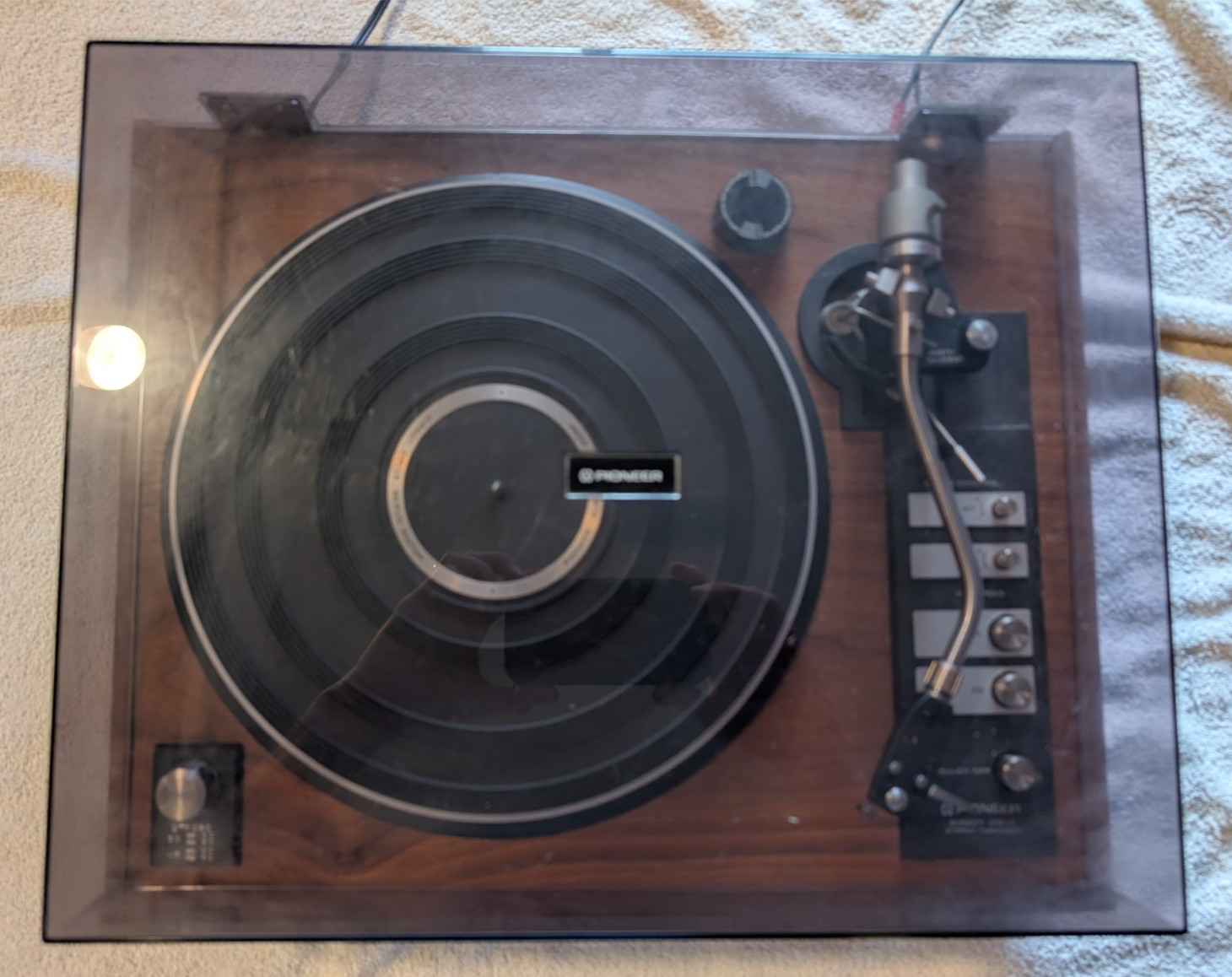
The Pioneer PL-71 isn’t the kind of turntable that sneaks up on you. From the moment you lay eyes on its real walnut veneer and brushed metal base, you know it’s serious hardware. Introduced in 1974, this fully manual, direct-drive turntable wasn’t just part of Pioneer’s lineup—it was the lineup’s peak, their top-of-the-line offering at a time when Japanese engineering was reshaping high-fidelity audio. It wasn’t flashy, but it didn’t need to be. This was a machine built for precision, stability, and long-term performance, the kind of deck you set up once and forget about—except when you’re too busy listening to notice anything else.
What sets the PL-71 apart isn’t just its specs—it’s the philosophy behind them. While some manufacturers were chasing automation or cost savings, Pioneer doubled down on mechanical integrity. The result? A 11kg beast of a turntable with a double-layer plinth, a rigid metal sub-chassis, and a suspension system that isolates the critical components from external vibration without relying on springs for the motor or tonearm. Instead, it uses large shock absorbers in the feet and a meticulously damped structure to keep everything rock-steady. It’s not just heavy; it’s thoughtfully heavy.
And then there’s the arm. Oh, the arm. Owners and reviewers alike keep coming back to it: the Acos-made, static-balance, S-shaped tonearm with a 224mm effective length and 14.5mm overhang. It’s described as “super sensitive,” “nice,” and by one forum veteran, “the 71’s ace card.” With an effective mass of around 17g before the headshell and a design optimized for light tracking pressures (0.5g and up), it’s a match for high-end moving magnet and moving coil cartridges alike. Reviewers have paired it successfully with the Shure V15 III, Denon DL-103, Dynavector DV XX2 MkII, and even the notoriously demanding Ortofon SPU and Decca Super Gold—some calling it “easily the best analogue front end I’ve owned.”
Specifications
| Manufacturer | Pioneer |
| Model | PL-71 |
| Production Year | 1974 |
| Type | fully manual, direct-drive turntable |
| Drive Method | direct drive |
| Motor | brushless DC servo controlled direct-drive motor |
| Speeds | 33-1/3 and 45 rpm |
| Speed Control Range | ±3% |
| Wow and Flutter | 0.045% WRMS |
| Rumble | -65dB (DIN B) |
| Platter | 310mm aluminium alloy diecast |
| Platter Weight | 1.5kg |
| Tonearm | static-balance type, s-shaped pipe arm |
| Effective Length | 224mm |
| Overhang | 14.5mm |
| Tracking Error | less than 2° per record radius |
| Cartridge Weight Range | 4 to 32g |
| Arm Effective Mass | something like 17g before you add a headshell |
| Power Requirements | AC 110, 120, 130, 220 and 240 V 60 or 50 Hz |
| Power Consumption | 5.2 W max |
| Dimensions | 480 x 185 x 415mm |
| Weight | 11kg |
Key Features
The Plinth: Built Like a Tank, Finished Like Furniture
The PL-71’s plinth isn’t just wood and metal slapped together—it’s a double-construction system with a real walnut veneer cabinet sitting atop a rigid black metal base. This isn’t for looks alone; the metal bottom provides a stable, non-resonant foundation for the sprung feet, while the wood enclosure gives it that warm, high-end aesthetic. The motor and tonearm are both rigidly coupled to the chassis, a design choice that eliminates floating sub-assemblies in favor of brute-force stability. Acoustic feedback? Not here. The four large shock absorbers in the feet do the work instead, isolating the entire assembly from floor vibrations.
The Motor: Servo-Controlled Precision
At the heart of the PL-71 is a brushless DC servo-controlled direct-drive motor—no belts, no wear, just consistent torque and speed. It pre-dates phase-locked loop (PLL) technology, relying instead on an LC tank circuit for speed reference and a feedback system built around a single power transistor operating at about 30 volts. The motor control board, hidden under a black cover, includes trim pots, switches, and speed control potentiometers that allow for fine adjustment. It’s an analog solution to a digital-era problem, and it works: wow and flutter are measured at an exceptional 0.045% WRMS, and rumble is buried at -65dB (DIN B).
The Tonearm: Where the Magic Happens
If the PL-71 has a soul, it lives in the tonearm. Made by Acos, it’s a static-balance, S-shaped stainless steel pipe with a 9mm outer diameter and a remarkably thin 0.5mm wall thickness. It’s medium mass, yes, but its real trick is responsiveness. Designed for light tracking pressures, it tracks cleanly from 0.5g up, and its oil-damped cueing device lifts and lowers with buttery smoothness—no bounce, no wobble. The headshell is a lightweight plug-in type with a rubber damper and quick-release collar, making cartridge swaps easy. And because it’s rigidly mounted to the chassis, there’s no flex or resonance to muddy the signal path.
Usability: Manual, Yes—But Thoughtfully So
This is a fully manual turntable: no auto-start, no auto-return. You place the arm, you cue the record, you lift it when it’s done. But Pioneer didn’t cut corners on ergonomics. The anti-skating control is calibrated from 0 to 4 grams, the tracking force dial reads directly from 0 to 4 grams, and the lateral balancer uses an angled bar with a sliding weight—simple, precise, and repeatable. The arm rest is height-adjustable, the cueing is damped, and the strobe light (switchable between 33 and 45) works with bumps on the platter’s edge to let you fine-tune speed with the included speed fine adjuster. Even the dustcover is clever: semi-transparent, with spring-loaded hinges that let it stop at any angle or be removed entirely.
Historical Context
In 1974, Pioneer wasn’t just competing—they were leading. The PL-71 wasn’t merely another model in a catalog; it was the flagship of their turntable division, the best they had to offer. At a time when direct-drive technology was still proving itself against belt-drive purists, Pioneer bet big on precision engineering and mechanical integrity. The PL-71 was their answer to the Linn LP12 and other high-end decks: a no-nonsense, overbuilt machine that prioritized stability and accuracy over automation. It didn’t try to be everything—it just tried to be perfect at what it did. And for a brief moment, it was.
Collectibility & Value
Today, the PL-71 is a sought-after deck among analog enthusiasts, not because it’s rare, but because it’s good. Owners report paying as little as £78 and as much as £300 for working units, depending on condition and provenance. One former Pioneer employee even admitted he chose the PL-71 for his personal system when it was current—high praise from someone who had access to everything.
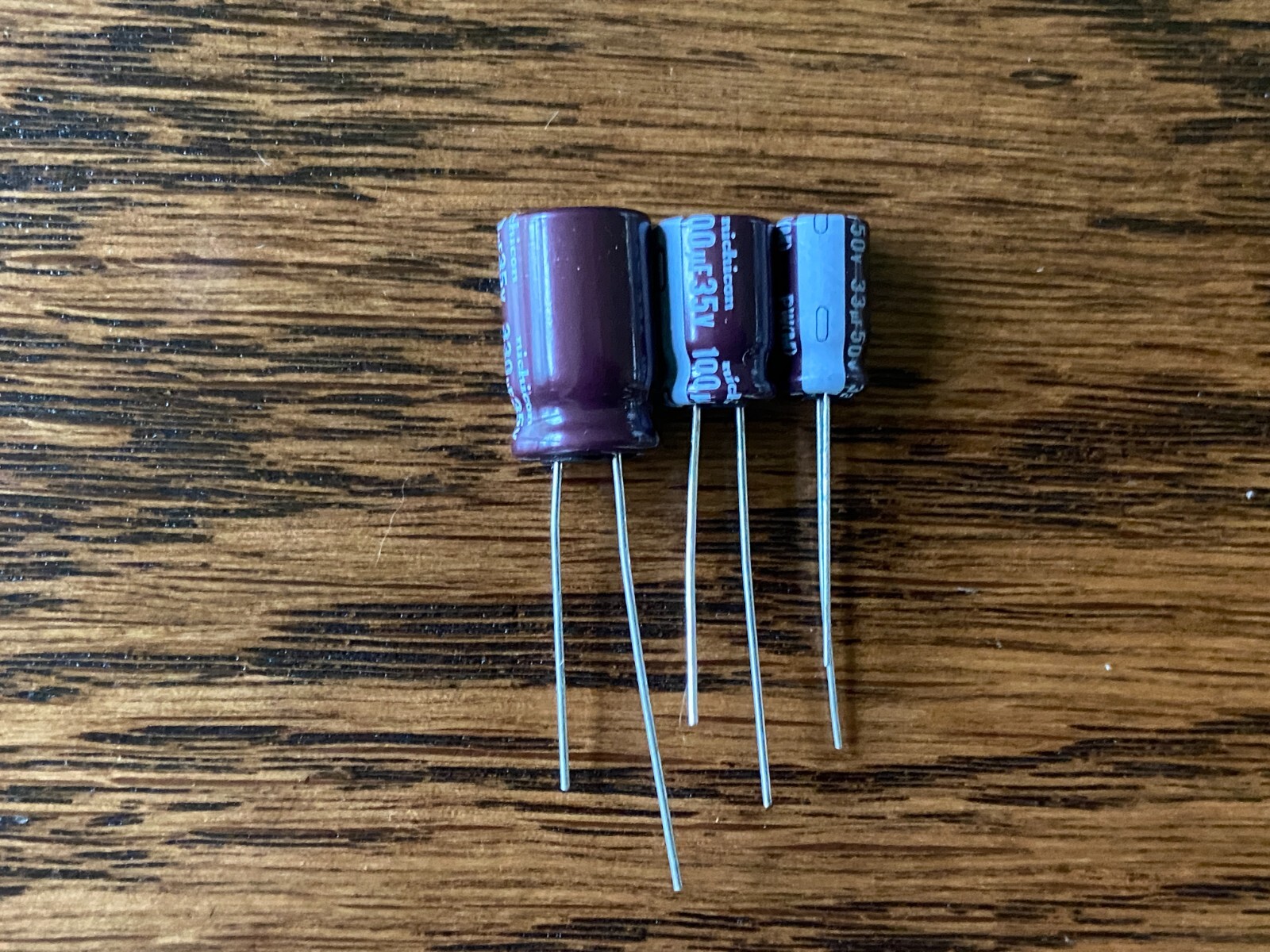
But like any 50-year-old machine, it has its quirks. The most common issue? Dried-out cue arm fluid, which can make lifting and lowering sticky. It’s an easy fix. More serious are speed control problems, often traced to dirty potentiometers, failing micro switches, or leaky capacitors in the power supply. The fix? Recapping the power and motor control boards, cleaning the pots with contact cleaner (like Caig Deoxit D5), and lubricating them with something like Faderlube F5. It’s not trivial, but it’s manageable—and the payoff is a turntable that performs like new.
One word of advice from owners: always play it with the dustcover on. Multiple users report a noticeable improvement in sound—tighter bass, less hash—when the cover is closed. Whether it’s damping resonance or shielding from static, the effect is real.
eBay Listings

As an eBay Partner, we earn from qualifying purchases. This helps support our independent vintage technology research.
Related Models
- Pioneer PL-15R (1975)
- Pioneer PL-250 (1979)
- Pioneer PL-40 (1977)
- Pioneer PL-514 (1978)
- Pioneer PL-516 (1978)
- Luxman PD-272 (1983)
- Garrard 2025tc (1968)
- Onkyo CP-1010 (1976)
- Pioneer PL-61 (1973)
- Pioneer PL-6A (1977)