Pioneer PL-70LII (1978)
The Pioneer PL-70LII is a vintage belt-drive turntable introduced in 1978 as part of Pioneer’s mid-tier turntable series during the golden era of analog audio. Though often overshadowed by higher-end models like the PL-1200 or the professional-grade PL-518, the PL-70LII carved out a reputation among audiophiles and casual listeners alike for its reliable performance, clean design, and excellent value for money. It represents a time when Japanese manufacturers like Pioneer, Sony, Technics, and Yamaha were driving innovation in home audio, making high-fidelity sound accessible to a broader audience.
Design and Build Quality
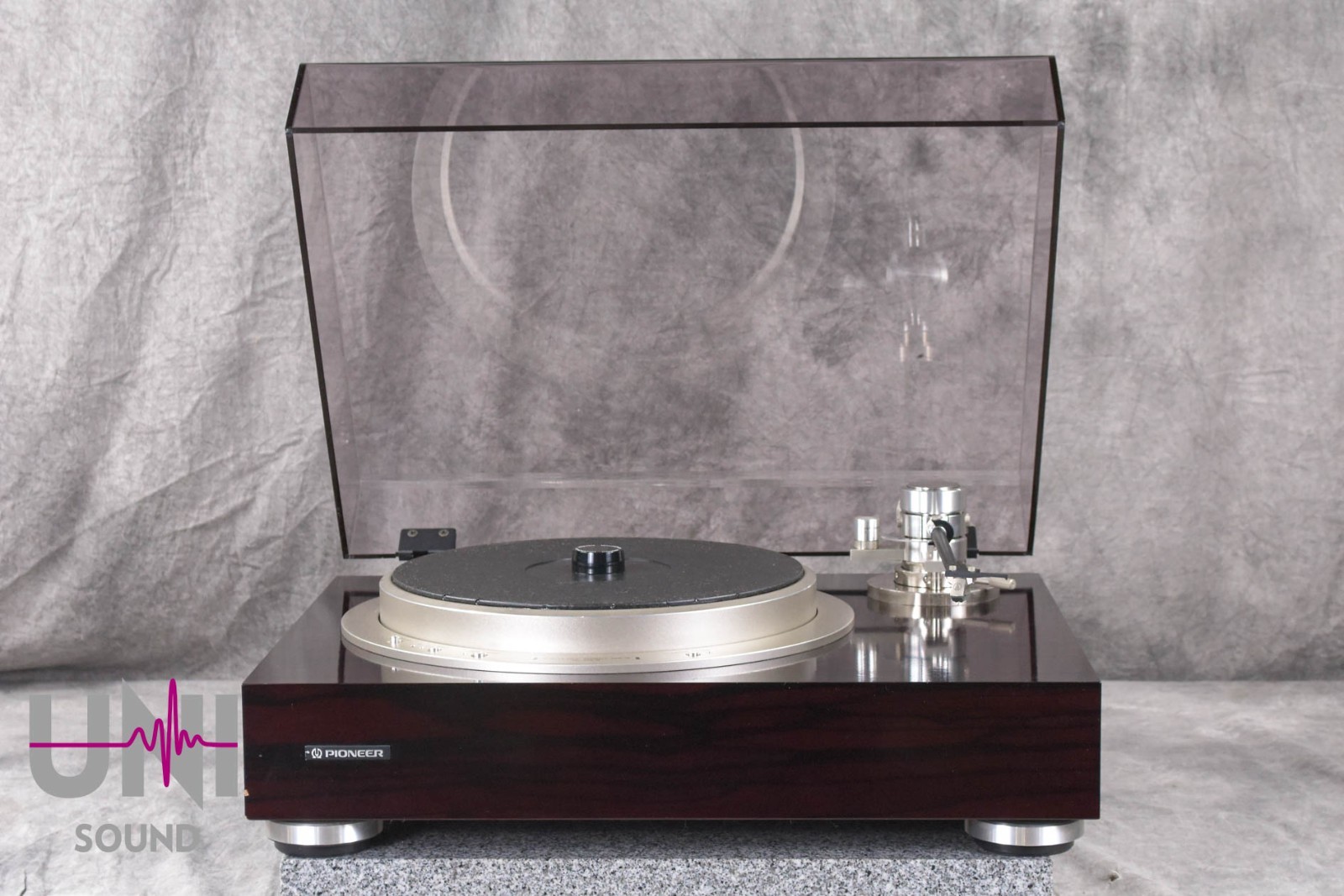
The PL-70LII features a minimalist, functional design typical of late 1970s Japanese audio equipment. Housed in a sleek black plinth with a brushed aluminum front panel, the turntable exudes a professional aesthetic. It measures approximately 450 mm (W) × 156 mm (H) × 360 mm (D) and weighs around 6.5 kg (14.3 lbs), giving it a stable and vibration-resistant foundation—important for accurate vinyl playback.
The platter is a 300 mm (11.8 in) die-cast aluminum unit, which provides good mass for consistent rotational speed and reduced wow and flutter. It is driven by a high-torque synchronous motor via a rubber belt, minimizing motor noise transmission to the stylus. The motor itself is mounted off-center and isolated from the main chassis to further reduce vibration.
One of the standout features of the PL-70LII is its S-shaped tonearm, a 9-inch (228 mm) aluminum alloy tube with hydraulic damped manual cueing. The tonearm includes adjustable tracking force (0.5 to 2.5 grams) and anti-skate control, allowing users to fine-tune performance based on their cartridge and record condition. The arm rests on low-friction bearings, ensuring smooth movement across the record surface.
Playback Features
The PL-70LII supports both 33-1/3 and 45 RPM playback speeds, selected via a mechanical switch on the front panel. Speed accuracy is maintained by a crystal-controlled oscillator circuit, which ensures minimal speed variation—Pioneer advertised a wow and flutter level of less than 0.08%, which was impressive for a turntable in its class.
Unlike some of its fully automatic siblings, the PL-70LII is a semi-automatic turntable. This means the user must manually place the tonearm on the record (cueing), but the tonearm automatically lifts and returns to its rest at the end of the side. This hybrid approach offers greater control over record placement while still providing convenience at the end of playback.
The turntable includes a built-in strobe light on the plinth's edge, used in conjunction with markings on the platter to verify and adjust rotational speed. Users can fine-tune speed using a small adjustment knob accessible from the front or side, depending on model revision. This level of user serviceability was common in higher-quality turntables of the era and is appreciated by vintage audio enthusiasts today.
Cartridge and Audio Performance
The PL-70LII was typically shipped without a cartridge, allowing users to choose their preferred phono pickup. However, some bundled packages included the Pioneer HM-80E or HM-90E moving magnet (MM) cartridge. These cartridges offered good tracking ability and a balanced frequency response, making them suitable for a wide range of music genres.
With a properly aligned cartridge and correct setup, the PL-70LII delivers a warm, detailed analog sound with low background noise. The belt-drive system effectively isolates motor vibrations, resulting in a clean signal path. The tonearm’s geometry and low resonance design contribute to accurate stereo imaging and minimal distortion.
Many users report that the PL-70LII performs exceptionally well when paired with modern moving magnet or moving coil cartridges, especially when used with a high-quality phono preamp. Its rigid construction and precision engineering allow it to hold its own even by today’s analog standards.
Setup and Maintenance
Setting up the PL-70LII requires careful attention to leveling, tonearm alignment, and cartridge installation. The turntable features adjustable rubber-damped feet that allow for precise leveling on uneven surfaces. A spirit level is recommended during setup to ensure optimal performance.
The belt, being a rubber component, may degrade over time if the turntable has been in storage. Replacement belts are readily available from specialty audio vendors and are easy to install—typically a 6.5 mm wide belt with a circumference of approximately 920 mm. Regular cleaning of the platter, stylus, and record surface is advised to maintain sound quality.
Lubrication of the tonearm lift mechanism and motor bearings may be necessary after decades of use, though the original engineering was robust enough that many units still operate smoothly without intervention.
Market Position and Legacy
In the late 1970s, the PL-70LII was positioned as a step above entry-level turntables but below the high-end professional models. It competed with offerings like the Technics SL-1200MK2 (in its later years), the Sony PS-LX3, and the Yamaha GT-3000. While not designed for DJ use, its solid construction and accurate speed control made it a favorite among home audiophiles and semi-professional users.
Pioneer’s PL series was known for combining advanced engineering with user-friendly features, and the PL-70LII exemplifies this philosophy. It lacks the direct-drive technology of some competitors but makes up for it with excellent vibration damping and speed stability.
Today, the PL-70LII is sought after by collectors and vintage audio enthusiasts for its reliability and sound quality. It is not as rare as some limited-run models, but well-maintained units in good condition can command prices between $200 and $400 on the secondhand market, depending on accessories and included cartridge.
Conclusion
The Pioneer PL-70LII stands as a testament to the high standards of Japanese audio engineering in the 1970s. While it may not have the fame of the Technics 1200 series or the luxury of a Linn Sondek, it delivers excellent performance for its era and remains a practical choice for those building a vintage hi-fi system. Its semi-automatic operation, precision speed control, and robust build make it a reliable analog source that continues to satisfy listeners over four decades later.
Whether you're a vinyl newcomer exploring classic gear or a seasoned collector restoring a period-correct setup, the PL-70LII offers a compelling blend of performance, durability, and vintage charm. With proper care and a good cartridge, it can serve as the heart of a warm, engaging listening experience—proving that great design never truly goes out of style.
eBay Listings



As an eBay Partner, we earn from qualifying purchases. This helps support our independent vintage technology research.
Related Models
- Pioneer PL-15R (1975)
- Pioneer PL-250 (1979)
- Pioneer PL-40 (1977)
- Pioneer PL-514 (1978)
- Pioneer PL-516 (1978)
- Luxman PD-272 (1983)
- Garrard 2025tc (1968)
- Onkyo CP-1010 (1976)
- Pioneer PL-61 (1973)
- Pioneer PL-6A (1977)