Pioneer PL-70L (1978)
The Pioneer PL-70L is a vintage belt-drive turntable introduced in 1978 as part of Pioneer’s mid-tier turntable series during the golden era of analog audio. Though not as widely discussed as some of its contemporaries from Technics or Sony, the PL-70L represents a thoughtful design approach focused on performance, durability, and accessible high-fidelity sound. It was marketed toward audiophiles and serious music listeners who wanted a reliable, well-engineered turntable without stepping into the ultra-premium price bracket.
Design and Build Quality
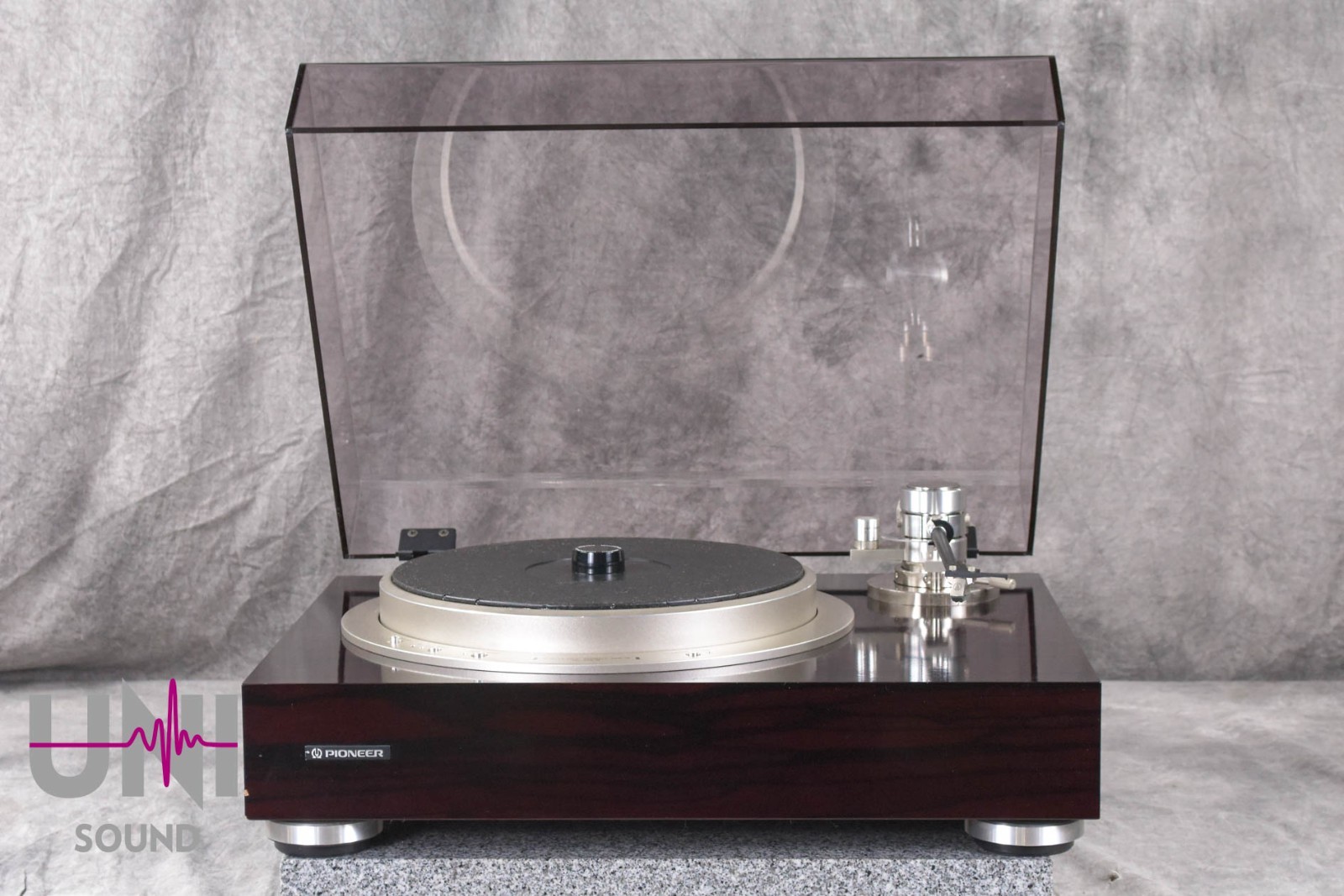
The Pioneer PL-70L features a sleek, minimalist design typical of late 1970s Japanese audio equipment. Housed in a sturdy wooden plinth with a black vinyl finish, the turntable exudes a sense of solidity and craftsmanship. The plinth is designed to minimize resonance, helping to reduce unwanted vibrations that can color the audio signal. Measuring approximately 440 mm (W) × 156 mm (H) × 360 mm (D) and weighing around 6.5 kg, the PL-70L has substantial mass for its class, contributing to stable operation and reduced feedback.
The turntable uses a belt-drive system, which isolates the platter from motor vibrations—critical for maintaining low wow and flutter and ensuring clean playback. The drive motor is a low-noise, hysteresis-synchronous type, designed for consistent rotational speed. Speed accuracy is maintained within ±0.3%, a solid specification for a turntable of this era.
The platter is a two-piece die-cast aluminum design, which provides excellent mass and damping characteristics. It spins on a precision-staked ball bearing, ensuring smooth and quiet rotation. The inclusion of a felt mat helps protect records and further dampens surface noise.
Tonearm and Cartridge
One of the standout features of the PL-70L is its S-shaped tonearm, which is made from precision extruded aluminum tubing. The tonearm is statically balanced and features adjustable tracking force (via a calibrated counterweight) and anti-skate control. It has a 9-inch effective length with a tracking force range of 0 to 5 grams, allowing compatibility with a wide range of moving magnet (MM) cartridges.
The original factory-fitted cartridge is the Pioneer P-70L, a moving magnet (MM) type with an elliptical stylus. It outputs approximately 5 mV at 1 kHz with 5 cm/sec velocity and has a frequency response of 20 Hz to 20 kHz. The stylus tip radius is 0.7 x 0.23 mil, optimized for accurate groove tracking and extended record life. While not a high-end cartridge by modern standards, the P-70L delivers warm, balanced sound with good clarity and moderate detail retrieval—well-suited for the analog playback expectations of the late 1970s.
The tonearm includes a detachable headshell, making cartridge upgrades straightforward. This modularity was a significant advantage, allowing users to upgrade to higher-performance cartridges such as the Shure M97xE, Audio-Technica AT120E, or other popular MM models of the era.
Operational Features
The PL-70L is a fully manual turntable, meaning users must manually place the tonearm on the record and lift it at the end of playback. There is no auto-stop, auto-return, or cueing mechanism. While this may seem inconvenient by modern standards, many audiophiles appreciate the tactile engagement and control that manual operation provides.
Speed selection is handled via a mechanical switch on the front panel, allowing users to choose between 33-1/3 RPM and 45 RPM. A strobe mark on the platter edge and a corresponding LED lamp on the front allow for precise speed calibration under standard 60 Hz lighting conditions (for North American models). The turntable was also available in 50 Hz versions for European markets, with adjusted strobe markings.
The base includes adjustable rubber feet to level the turntable and isolate it from external vibrations. While not featuring advanced suspension like high-end direct-drive models, the combination of mass, isolation feet, and belt-drive design results in commendable vibration resistance.
Audio Performance
In terms of sound, the PL-70L delivers a smooth, warm, and musical presentation—characteristic of many Japanese turntables from this period. Bass response is tight and well-defined, thanks to the stable platter and low rumble noise (measured at less than 60 dB). The midrange is natural and slightly lush, making it particularly well-suited for vocals, jazz, and acoustic recordings. High frequencies are extended but not overly bright, avoiding listener fatigue during extended listening sessions.
Wow and flutter are rated at 0.08% WRMS, which is excellent for a belt-drive turntable of this class and ensures pitch stability and rhythmic accuracy. Channel separation is around 30 dB at 1 kHz, contributing to a decent stereo image and soundstage depth.
Connectivity and Compatibility
As a passive turntable, the PL-70L does not have a built-in preamp. It requires connection to an external phono preamplifier or a receiver with a dedicated phono input. The output is via standard RCA phono jacks, located on the rear panel. A detachable RCA cable is included, terminating in a four-pin DIN connector at the turntable end, which plugs into the rear panel.
Due to its standard 9-inch tonearm and headshell design, the PL-70L is compatible with a wide range of third-party cartridges and styli. Upgrading the cartridge can significantly improve performance, especially in terms of detail retrieval and dynamic range.
Legacy and Collector’s Value
While Pioneer is better known for its receivers, amplifiers, and later DVD players, the PL-70L remains a respected model among vintage turntable enthusiasts. It was part of a broader family of Pioneer turntables, including the higher-end PL-90 and the more basic PL-50, positioning the PL-70L as a balanced option in terms of price and performance.
Today, the PL-70L is sought after by collectors and analog enthusiasts looking for a reliable, serviceable turntable from the late 1970s. Its mechanical simplicity makes it relatively easy to restore—common maintenance tasks include replacing the belt (which can dry out over time), cleaning the platter and tonearm, and reconditioning the bearings.
In excellent working condition, the PL-70L typically sells in the $150–$250 range on the secondhand market, depending on geographic region and included accessories. Fully restored units with upgraded cartridges can command higher prices, especially when bundled with original packaging and documentation.
Conclusion
The Pioneer PL-70L is a well-crafted, no-frills turntable that exemplifies the quality and attention to detail that characterized Japanese audio manufacturing in the 1970s. While it may lack the automation and high-tech features of later models, its solid build, accurate speed control, and warm sonic character make it a rewarding choice for vinyl lovers.
Whether used as a daily driver or as part of a vintage audio restoration project, the PL-70L offers a genuine analog experience with minimal fuss. For those exploring the world of vintage turntables, it stands as a reliable and musically satisfying entry—a quiet achiever from Pioneer’s analog heyday.
eBay Listings



As an eBay Partner, we earn from qualifying purchases. This helps support our independent vintage technology research.
Related Models
- Pioneer PL-15R (1975)
- Pioneer PL-250 (1979)
- Pioneer PL-40 (1977)
- Pioneer PL-514 (1978)
- Pioneer PL-516 (1978)
- Luxman PD-272 (1983)
- Garrard 2025tc (1968)
- Onkyo CP-1010 (1976)
- Pioneer PL-61 (1973)
- Pioneer PL-6A (1977)