Pioneer PL-707 (1978)
The Pioneer PL-707 is a vintage belt-drive turntable introduced in 1978 as part of Pioneer’s mid-to-high-end audio equipment series. Though not as widely documented as some of its contemporaries, the PL-707 stands out for its thoughtful engineering, reliable performance, and elegant design typical of Japanese audio manufacturers during the late 1970s. Designed for audiophiles and casual listeners alike, the PL-707 delivers analog warmth with mechanical precision, making it a sought-after model among collectors and vinyl enthusiasts today.
Design and Build Quality
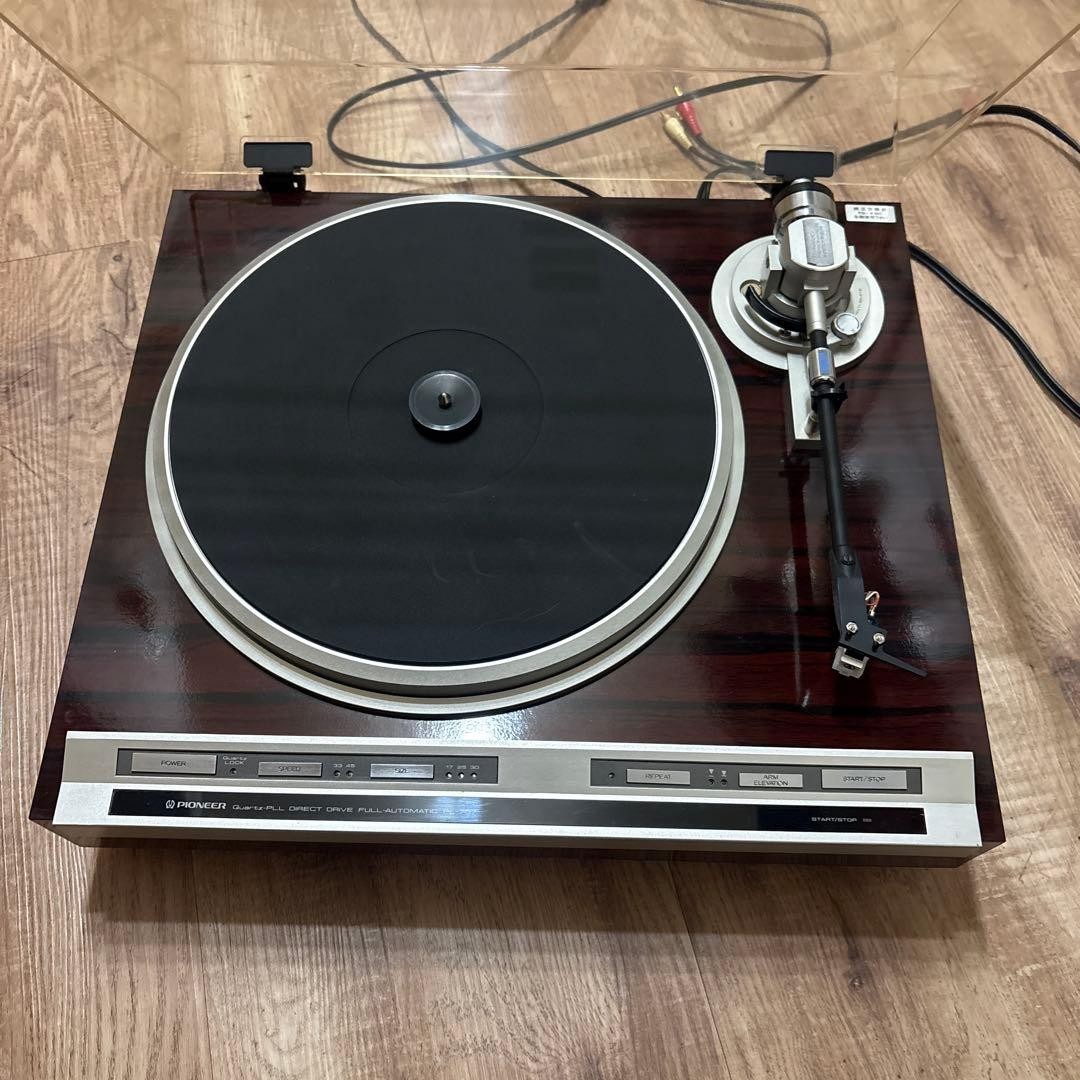
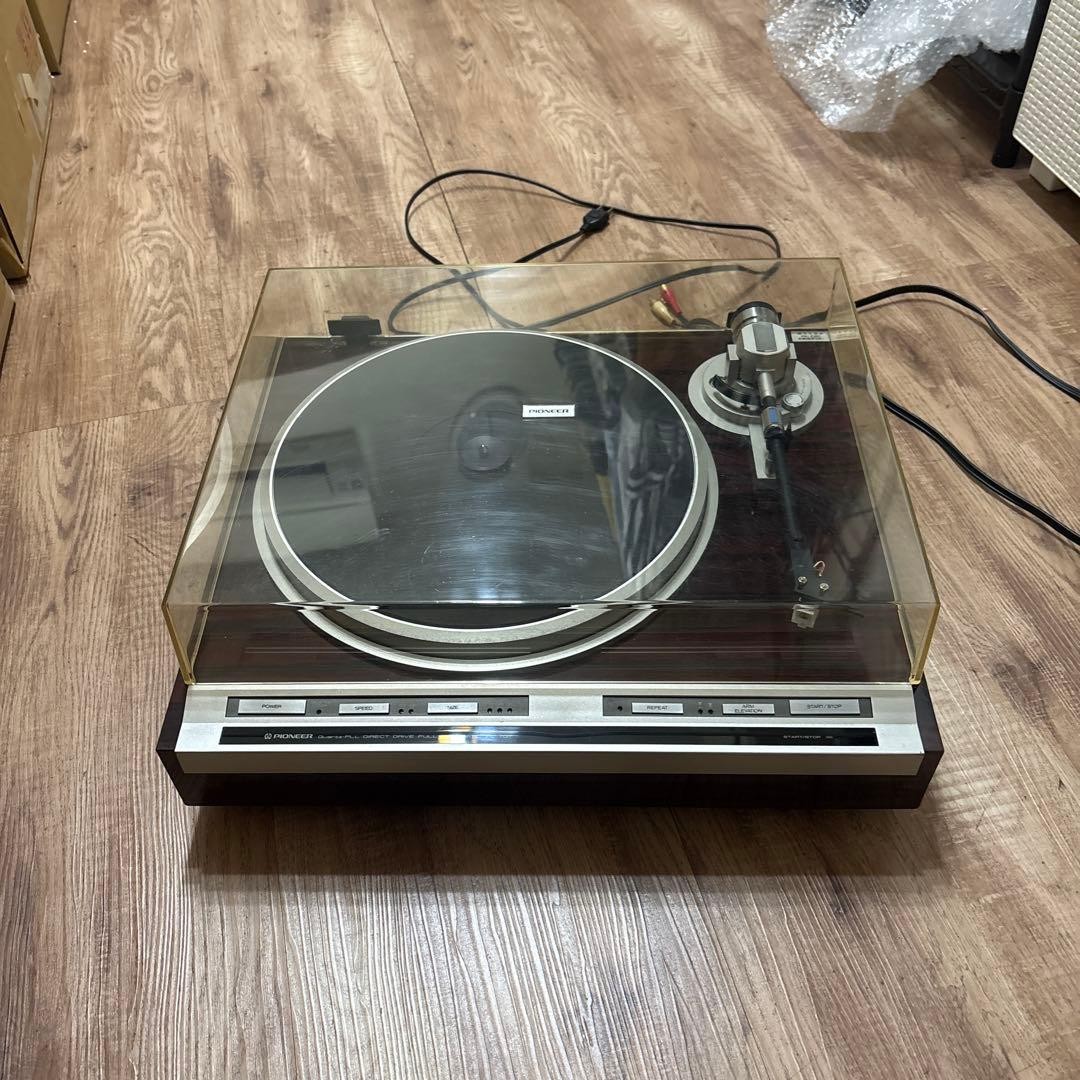
The Pioneer PL-707 features a sleek, minimalist design with a black matte finish and brushed aluminum front panel, consistent with the aesthetic trends of the era. The chassis is constructed from rigid medium-density fiberboard (MDF) with a laminated top layer, providing excellent resistance to resonance and vibration—critical factors in achieving high-fidelity sound reproduction. The turntable weighs approximately 10.5 kg (about 23 lbs), contributing to its stability during playback.
One of the standout features of the PL-707 is its manual operation. Unlike fully automatic models that lower and lift the tonearm automatically, the PL-707 requires the user to manually cue and place the tonearm over the record. This semi-automatic design appeals to purists who prefer greater control over the playback process and often results in reduced mechanical noise and improved tracking accuracy.
The plinth houses a low-vibration DC motor connected to the sub-platter via a high-quality rubber belt. This belt-drive system isolates motor noise from the platter, ensuring a quiet background and clean audio signal. The platter itself is made of die-cast aluminum, weighing around 1.8 kg, which contributes to excellent rotational inertia and speed stability. A felt mat is included to dampen vibrations between the record and platter surface.
Tonearm and Cartridge
The PL-707 is equipped with a straight, static-balanced tonearm made of lightweight aluminum alloy. The tonearm features a universal SME-style headshell mount, allowing users to upgrade or replace the cartridge easily. It has a standard effective length of 230 mm and a tracking force range of 0 to 3 grams, adjustable via a calibrated counterweight. Anti-skating is controlled by a precision spring mechanism, ensuring balanced force across the record groove and minimizing wear on both stylus and vinyl.
From the factory, the PL-707 was typically paired with the Pioneer SP-200MM moving magnet (MM) cartridge. This cartridge offers a vertical output of 4.5 mV and a frequency response range of 20 Hz to 20 kHz. It features an elliptical stylus tip, which provides improved high-frequency detail and reduced groove wear compared to spherical tips. While not considered exotic by today’s standards, the SP-200MM was a solid mid-tier performer in its time and remains serviceable for casual listening.
Speed Accuracy and Drive System
The turntable supports two standard speeds: 33⅓ and 45 RPM. Speed selection is made via a manual pulley adjustment—users must physically move the drive belt between two steps on the motor pulley. While less convenient than electronic speed switching, this method ensures mechanical simplicity and long-term reliability.
Speed accuracy is maintained through a precision quartz-locked sub-chassis system. The PL-707 includes a strobe light on the front right edge of the plinth and reference marks on the platter’s edge for visual speed calibration. When illuminated by the strobe, the markings appear stationary under correct speed conditions, allowing for fine-tuning if necessary. This attention to speed stability was a hallmark of higher-end turntables of the period.
Isolation and Vibration Control
Pioneer employed a three-point suspension system in the PL-707 to isolate the critical components—platter, tonearm, and sub-chassis—from external vibrations. The sub-chassis, which supports the platter and tonearm, is mounted on three sprung dampers housed within the main chassis. This design decouples the sensitive parts from floor-borne vibrations and acoustic feedback, resulting in a cleaner, more focused sound.
The feet are made of rubber with threaded inserts, allowing for precise leveling. Proper leveling is essential for optimal performance, especially given the suspended sub-chassis design. Users are advised to place the turntable on a sturdy, flat surface and use a spirit level to ensure even setup.
Connectivity and Setup
As a turntable, the PL-707 does not have built-in amplification or speakers. It outputs a phono-level signal via dual RCA jacks located at the rear of the unit. These connect to a phono preamplifier or a receiver with a dedicated phono input. The tonearm wiring is internal and terminates in a standard four-pin DIN connector at the base, which then links to the RCA output jacks via a short cable.
Setting up the PL-707 requires careful attention to detail. Users must install the belt, balance the tonearm, set the tracking force, and adjust anti-skate. A protractor is recommended for aligning the cartridge in the headshell to ensure optimal azimuth and alignment. While the setup process may seem daunting to beginners, it is relatively straightforward with basic tools and patience.
Performance and Sound Characteristics
In operation, the PL-707 delivers a warm, musical presentation with good detail retrieval and solid stereo imaging. The belt-drive system and suspended sub-chassis contribute to a low noise floor, allowing subtle nuances in recordings to emerge. Bass response is tight and well-controlled, while the midrange remains natural and uncolored. High frequencies are smooth without being overly bright, making the PL-707 well-suited for extended listening sessions.
Its manual operation encourages a more engaged listening experience—users must lift, cue, and place the arm carefully, fostering a deeper connection with the music. This tactile interaction is part of the charm of vintage turntables like the PL-707.
Legacy and Collectibility
While Pioneer is perhaps better known for its receivers and speakers from the 1970s and 1980s, the PL-707 represents a strong entry in the company’s turntable lineup. It competes favorably with contemporaries from Technics, Sony, and Yamaha in terms of build quality and performance. However, due to lower production volumes and less aggressive marketing, the PL-707 remains somewhat under the radar compared to models like the Technics SL-1200.
Today, the PL-707 is appreciated by collectors and analog enthusiasts for its reliability, serviceability, and classic design. Replacement parts such as belts and stylus tips are still available, and the use of a standard headshell simplifies upgrades. With proper maintenance—lubrication of the suspension, belt replacement every 5–7 years, and stylus cleaning—the PL-707 can continue to perform well for decades.
Conclusion
The Pioneer PL-707 is a well-engineered, no-frills turntable that exemplifies the quality and craftsmanship of late-1970s Japanese audio design. Its combination of a suspended sub-chassis, precision tonearm, and robust build makes it a capable analog source for both vintage systems and modern setups. While it lacks the automation and convenience of some contemporary models, its manual operation and high-fidelity performance appeal to those who value authenticity and control in their listening experience. For anyone exploring vintage turntables, the PL-707 deserves serious consideration as a reliable and sonically rewarding choice.
eBay Listings

As an eBay Partner, we earn from qualifying purchases. This helps support our independent vintage technology research.
Related Models
- Pioneer PL-15R (1975)
- Pioneer PL-250 (1979)
- Pioneer PL-40 (1977)
- Pioneer PL-514 (1978)
- Pioneer PL-516 (1978)
- Luxman PD-272 (1983)
- Garrard 2025tc (1968)
- Onkyo CP-1010 (1976)
- Pioneer PL-61 (1973)
- Pioneer PL-6A (1977)