Pioneer CS-701A (1977)
The Pioneer CS-701A is a vintage floor-standing loudspeaker introduced in 1977 as part of Pioneer’s high-fidelity speaker series during the golden era of analog audio. Designed for audiophiles and home stereo enthusiasts, the CS-701A exemplifies the craftsmanship, acoustic engineering, and aesthetic sensibilities characteristic of late 1970s Japanese audio equipment. With its elegant woodgrain vinyl finish, robust build quality, and balanced sound signature, the CS-701A remains a sought-after model among collectors and vintage audio aficionados.
Design and Build
Standing at approximately 38 inches tall, the CS-701A is a three-way, bass-reflex floor-standing speaker. Its cabinet is constructed from medium-density fiberboard (MDF) with a real wood veneer or high-quality woodgrain vinyl finish, depending on the production batch. The speaker features a trapezoidal cabinet design, which helps reduce internal standing waves and cabinet resonance, resulting in cleaner sound reproduction. The front baffle is slightly angled, improving time alignment between drivers and enhancing stereo imaging.
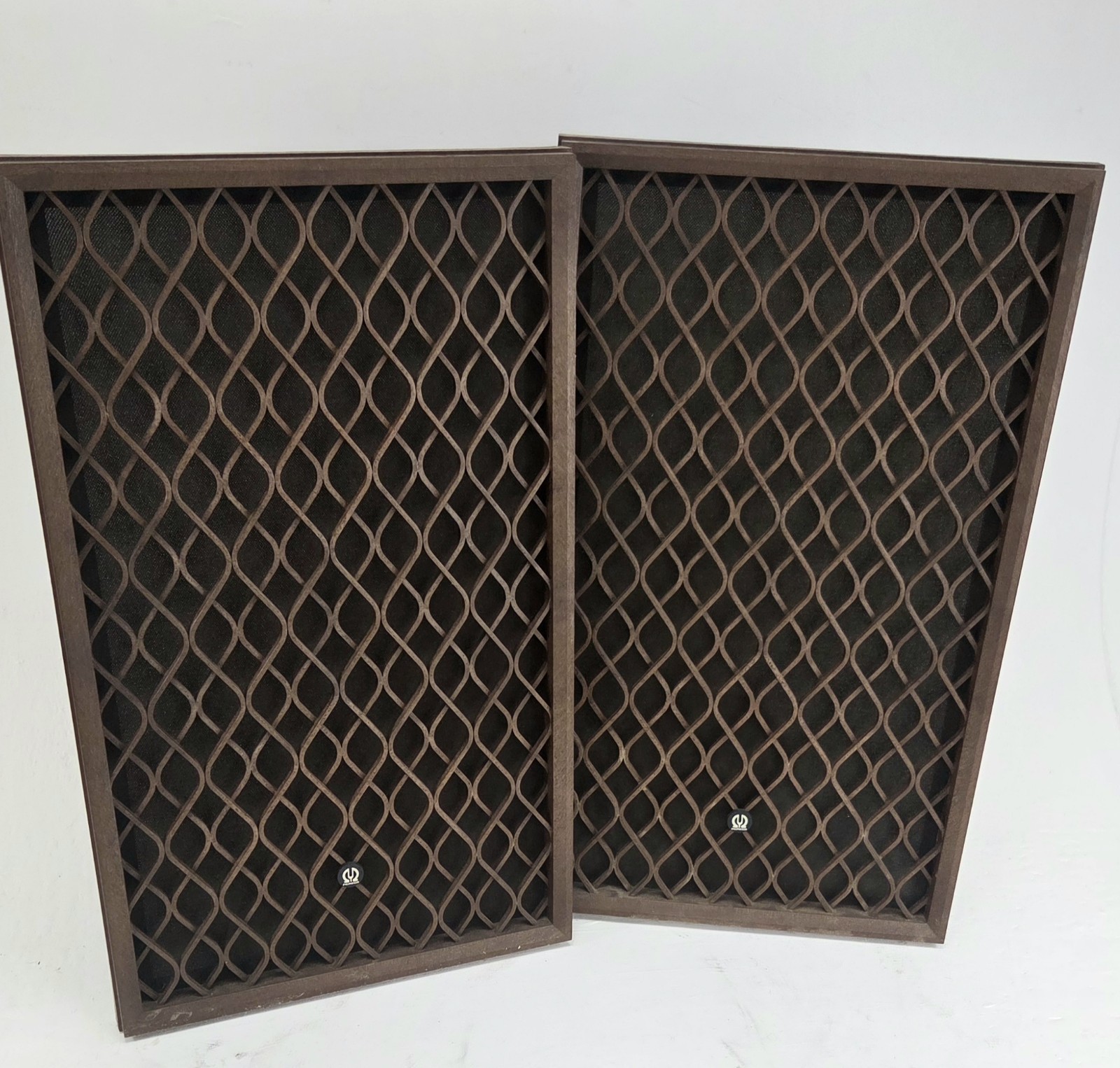
The grille is made of acoustically transparent black fabric stretched over a molded plastic frame, secured magnetically or with clips depending on the model revision. The rear panel includes a bass-reflex port for extended low-frequency response and a pair of gold-plated binding posts capable of accepting bare wire, spade connectors, or banana plugs. The overall weight of each speaker is around 45 pounds, a testament to its solid construction and internal bracing.
Driver Configuration
The CS-701A employs a three-way driver configuration, meaning it uses separate drivers for low, mid, and high frequencies. This design allows for greater clarity and detail across the audio spectrum compared to two-way systems.
- Woofer: A single 12-inch (30 cm) polypropylene cone woofer handles bass frequencies. The cone is reinforced for rigidity and features a rubber surround for durability and smooth excursion. The large magnet structure ensures strong control over the cone movement, contributing to tight and dynamic bass response.
- Midrange: A 5-inch (12.5 cm) paper cone midrange driver is mounted in a separate vertical enclosure within the main cabinet. This isolation helps minimize interference from the woofer and improves vocal and instrumental clarity. The midrange driver is tuned to deliver a natural, warm tonality that complements the overall sonic character of the speaker.
- Tweeter: A 1-inch (2.5 cm) soft dome tweeter is responsible for high-frequency reproduction. Positioned above the midrange driver, it uses ferrofluid damping to reduce distortion and extend high-frequency response up to 20 kHz. The tweeter is protected by a small metal grille and is designed to deliver smooth, non-fatiguing highs.
The crossover network, located internally, is a passive design with components selected for phase coherence and driver protection. It typically divides frequencies at around 500 Hz between the woofer and midrange, and at approximately 5 kHz between the midrange and tweeter. The crossover uses high-quality capacitors, inductors, and resistors, reflecting Pioneer’s commitment to audio fidelity during this period.
Acoustic Performance
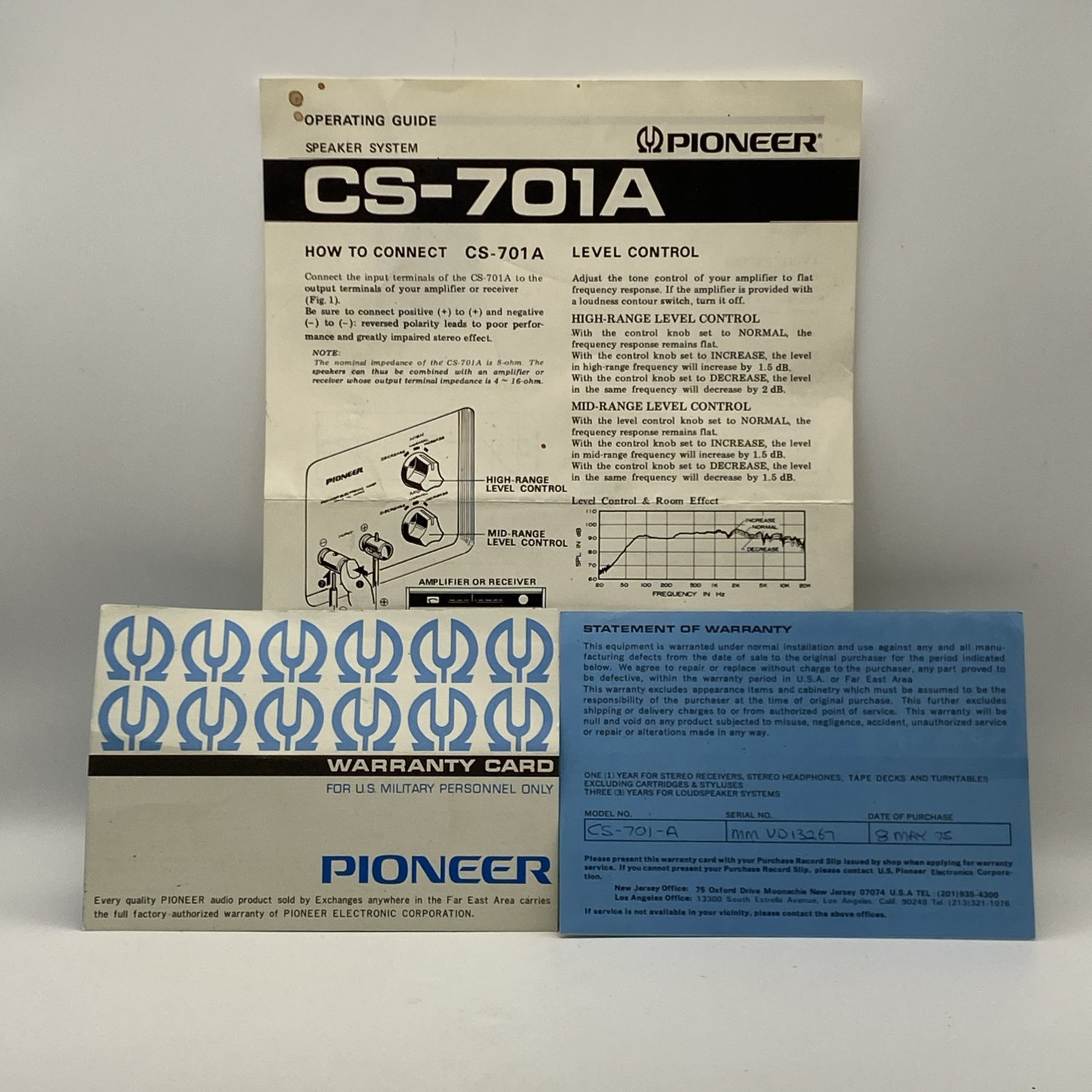
The CS-701A is rated at 100 watts peak power handling, with a nominal impedance of 8 ohms, making it compatible with a wide range of vintage and modern amplifiers. Its sensitivity is approximately 89 dB (1W/1m), which is moderate by today’s standards but sufficient for use in medium to large rooms with amplifiers delivering 30–100 watts per channel.
Frequency response ranges from 35 Hz to 20,000 Hz, offering deep bass extension for a speaker of its era. The bass-reflex port is tuned to enhance low-end output around 40 Hz, providing a sense of fullness and impact without requiring a separate subwoofer. In practice, the CS-701A delivers a warm, musical sound with a slightly forward midrange—ideal for vocals, jazz, and classical recordings.
Stereo imaging is impressive for a speaker of its size and age. The angled baffle and careful driver alignment contribute to a wide and stable soundstage. When properly positioned—ideally away from walls and with slight toe-in—the CS-701A can create a lifelike auditory experience, especially with well-recorded acoustic music.
Historical Context and Legacy
The late 1970s marked a period of rapid innovation in consumer audio. Pioneer, already established as a leader in receivers and speakers, aimed to deliver high-performance systems at accessible price points. The CS-701A was positioned as a premium floor-standing model, often paired with Pioneer’s SX and SA series receivers such as the SX-1980 or SA-7800.
It was part of a larger family of speakers that included the CS-901A (a larger flagship model) and smaller bookshelf variants like the CS-501A. The CS-701A was marketed as a “full-range acoustic suspension speaker,” although it is technically a bass-reflex design—a common marketing nuance of the time.
Production of the CS-701A continued into the early 1980s before being succeeded by newer models incorporating updated materials and design philosophies. Despite its age, the CS-701A has maintained a loyal following. Its combination of vintage aesthetics, solid build, and warm sonic signature makes it a favorite for retro stereo setups.
Restoration and Modern Use
Many CS-701A units still in use today benefit from restoration, particularly in the form of driver reconing and crossover component replacement. Over time, the foam surrounds on the woofer and midrange drivers can deteriorate, leading to reduced bass response and distortion. Replacing these with modern rubber or foam surrounds can restore original performance.
Similarly, aging capacitors in the crossover may drift in value or fail, affecting tonal balance. Upgrading these components can improve clarity and reliability. However, purists often prefer to maintain originality, especially if the speakers are in good condition.
In modern systems, the CS-701A pairs well with tube amplifiers or vintage solid-state receivers, enhancing their natural warmth. They can also be integrated into hybrid setups with modern amplification, though care should be taken to avoid overpowering them with high-current digital amps that may not match their tonal character.
Conclusion
The Pioneer CS-701A stands as a testament to the quality and ambition of 1970s Japanese audio engineering. More than four decades after its release, it continues to deliver engaging, musical sound with a vintage charm that modern speakers often lack. Whether used as part of a restored classic stereo system or appreciated as a piece of audio history, the CS-701A remains a respected and beloved speaker among vintage audio enthusiasts. Its enduring appeal lies not only in its performance but in its embodiment of an era when form, function, and fidelity were meticulously balanced in pursuit of the perfect sound.
eBay Listings


As an eBay Partner, we earn from qualifying purchases. This helps support our independent vintage technology research.
Related Models
- Pioneer CS-811 (1979)
- Pioneer KH-3500 (1979)
- Pioneer CS-53 (1978)
- Pioneer CS-545 (1979)
- Pioneer CS-66 (1979)
- Akai AM-2850 (1975)
- Akai AP-206 (1975)
- Nakamichi BX-1 (1985)
- Acoustic Research research-ar-17 (1978)
- Acoustic Research AR-19 (1994)