Pioneer CS-444 (1978)
The Pioneer CS-444 is a vintage bookshelf loudspeaker introduced by Pioneer in the late 1970s, specifically around 1978. Though not as widely documented as some of Pioneer’s flagship models from that era, the CS-444 holds a quiet reputation among vintage audio enthusiasts for its solid build quality, warm tonal balance, and classic aesthetic design. As part of Pioneer’s broader CS (Classic Series) speaker lineup, the CS-444 was designed to offer high-fidelity sound reproduction for home stereo systems during a golden age of analog audio.
Design and Build Quality
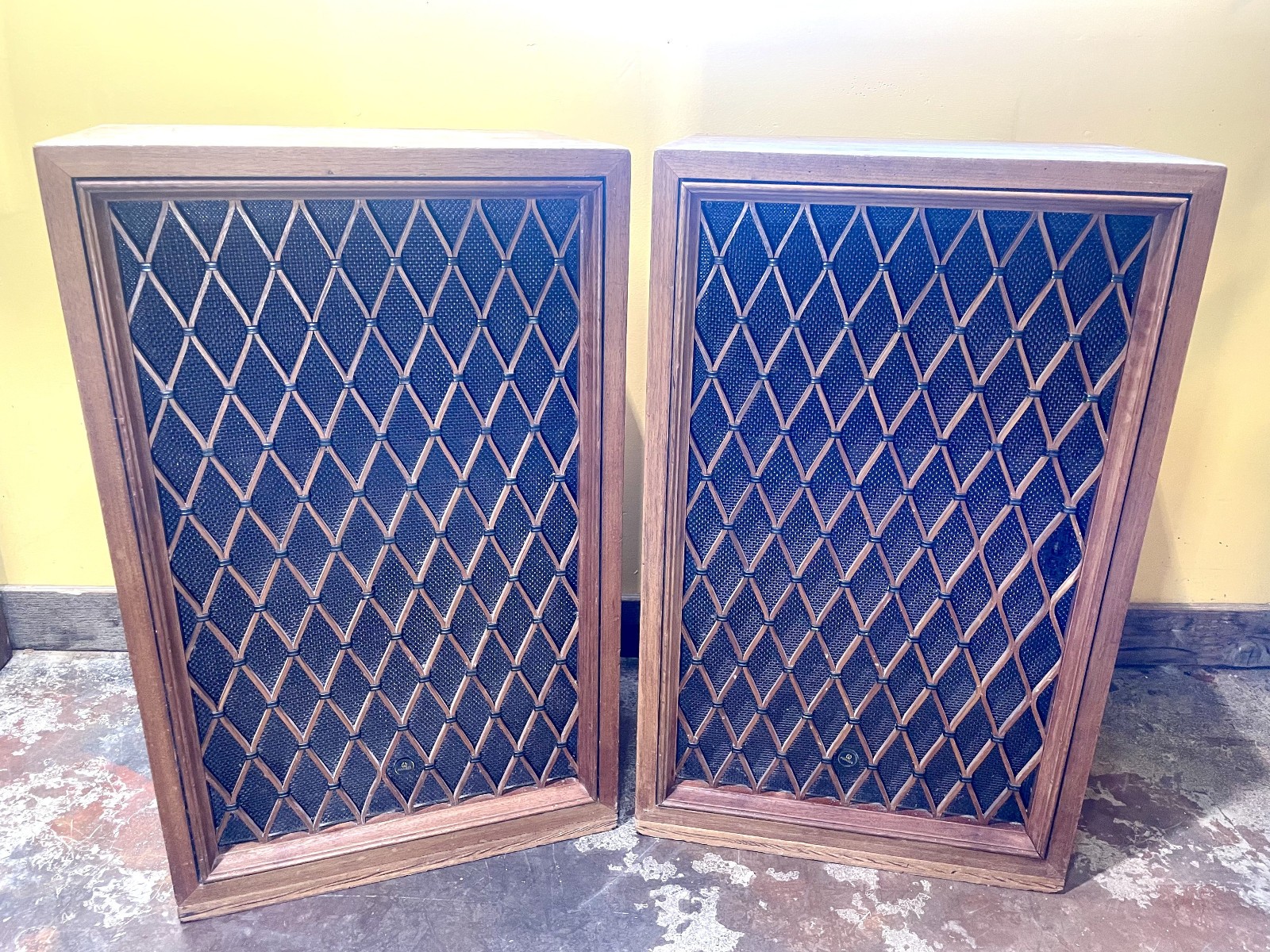
The CS-444 features a compact, two-way bookshelf design with a sealed (acoustic suspension) enclosure, a hallmark of Pioneer’s engineering philosophy at the time. The cabinet is constructed from medium-density fiberboard (MDF) with a real wood veneer finish, typically offered in a rich walnut or mahogany woodgrain pattern. This finish, combined with a black cloth grille and a minimalist front baffle, gives the speaker a timeless, elegant appearance that blends well with both retro and modern interiors.
Measuring approximately 11.8 inches in height, 6.7 inches in width, and 8.3 inches in depth, the CS-444 is well-suited for smaller rooms or desktop listening setups. The sealed enclosure design contributes to tight, controlled bass response, making it ideal for near-field listening and environments where deep bass extension is not the primary concern.
Driver Configuration and Acoustics
The CS-444 employs a two-way driver configuration consisting of a 6.5-inch woofer and a 1-inch dome tweeter. The woofer is made with a paper cone treated for rigidity and damping, paired with a rubber surround to ensure longevity and consistent performance. This driver is responsible for delivering midrange clarity and lower mid-bass frequencies, offering a natural and warm tonal character typical of Japanese speaker design from the 1970s.
The dome tweeter is mounted above the woofer and is designed to reproduce frequencies above 3 kHz with smooth extension up to around 20 kHz. It uses a soft dome material—likely silk or a similar fabric composite—which helps minimize harshness and sibilance, contributing to a relaxed and listener-friendly high-frequency response. The crossover network, located internally, is a passive 2nd-order design that ensures a seamless transition between the woofer and tweeter.
The nominal impedance of the CS-444 is 8 ohms, making it compatible with a wide range of vintage and modern amplifiers, including tube amps and solid-state receivers from the 1970s and 1980s. Its sensitivity is rated at approximately 86 dB (1W/1m), which is moderate by today’s standards, meaning it performs best when paired with amplifiers delivering between 20 and 80 watts per channel.
Performance and Sound Characteristics
The Pioneer CS-444 is best described as a speaker with a warm, slightly laid-back tonal balance. It emphasizes midrange clarity and vocal presence, making it particularly well-suited for jazz, classical, and vocal-centric music. The bass response, while not deep due to the compact sealed enclosure, is tight and well-controlled, avoiding the boominess that can plague ported designs.
Midrange performance is where the CS-444 truly shines. Instruments such as acoustic guitars, pianos, and human voices are rendered with a natural timbre and excellent spatial coherence. The tweeter adds a smooth top-end sparkle without becoming fatiguing during extended listening sessions—ideal for late-night music enjoyment without harshness.
Stereo imaging is surprisingly good for a speaker of this size and era. When properly positioned—ideally on stands or shelves at ear level and spaced apart in a symmetrical layout—the CS-444 creates a wide and stable soundstage. Depth and instrument separation are respectable, though not on par with modern high-end bookshelf models.
Historical Context and Market Position
During the 1970s, Pioneer was establishing itself as a major player in the global audio market, competing with brands like Sony, Yamaha, and Kenwood. The CS series was positioned as a mid-to-upper-tier line of speakers aimed at audiophiles and serious music lovers who valued both performance and aesthetics. The CS-444 likely sat in the middle of this range, offering a balance of price, performance, and build quality.
While not as famous as the larger floor-standing models like the CS-99A or the later S series, the CS-444 benefited from Pioneer’s investment in research and development during this period. The company was actively refining driver materials, crossover designs, and cabinet construction techniques, all of which are evident in the CS-444’s thoughtful engineering.
Compatibility and System Pairing
The CS-444 pairs exceptionally well with vintage receivers from the same era. Models such as the Pioneer SX-1980, Kenwood KT-9500, or Yamaha CR-850V complement the speaker’s sonic character with ample power and a neutral to slightly warm tonal balance. However, the speaker is also capable of integrating into modern systems, especially when used with low-powered tube amplifiers or high-quality integrated amps that emphasize musicality over sheer power.
For vinyl enthusiasts, the CS-444 works beautifully with turntable setups using a quality MM/MC phono preamp. Its ability to render the warmth and dynamics of analog recordings makes it a favorite among collectors of classic jazz and rock LPs.
Restoration and Maintenance Tips
Finding a pair of CS-444 speakers in good condition today requires some diligence. Common issues include deteriorated foam surrounds on the woofer, which can lead to distorted bass or rattling. Replacing the foam with modern butyl rubber surrounds is a common and effective restoration step that can breathe new life into aging units.
The internal crossover components, while generally reliable, may benefit from inspection and possible capacitor replacement if the speakers sound dull or lack high-frequency detail. Original grilles are often missing or damaged, but custom replacements can be made using standard speaker grille fabric.
Cleaning the wood veneer should be done with a soft, dry cloth or a mild wood cleaner—avoid harsh chemicals that could damage the finish. Over time, the wood can develop a rich patina that enhances the speaker’s vintage appeal.
Legacy and Collectibility
While the Pioneer CS-444 never achieved superstar status, it remains a respected model among vintage audio collectors. Its understated design, solid performance, and association with Pioneer’s golden era give it lasting appeal. In recent years, interest in vintage Japanese audio gear has surged, and well-maintained CS-444 units occasionally appear on auction sites and audio forums, often fetching between $150 and $300 per pair, depending on condition.
In summary, the Pioneer CS-444 is a classic example of 1970s Japanese speaker design—thoughtful, balanced, and built to last. It may not have the raw power or deep bass of modern speakers, but its musicality, charm, and vintage elegance make it a rewarding choice for audiophiles who appreciate the warmth and character of analog-era audio equipment. Whether used as part of a retro stereo system or integrated into a modern setup, the CS-444 continues to deliver a listening experience that transcends its modest specifications.
eBay Listings



As an eBay Partner, we earn from qualifying purchases. This helps support our independent vintage technology research.
Related Models
- Pioneer CS-811 (1979)
- Pioneer KH-3500 (1979)
- Pioneer CS-53 (1978)
- Pioneer CS-545 (1979)
- Pioneer CS-66 (1979)
- Akai AM-2850 (1975)
- Akai AP-206 (1975)
- Nakamichi BX-1 (1985)
- Acoustic Research research-ar-17 (1978)
- Acoustic Research AR-19 (1994)