Pioneer PL-35 (1978)
The Pioneer PL-35 is a vintage belt-drive turntable introduced in 1978 as part of Pioneer’s growing line of high-fidelity audio components during the golden era of analog sound. While not as widely documented as some of its more premium siblings like the PL-510 or PL-530, the PL-35 occupies a respected niche among collectors and audiophiles seeking reliable, no-frills turntables from the late 1970s. Designed with simplicity and performance in mind, the PL-35 delivers solid sonic characteristics and mechanical stability, making it a worthwhile addition to any vintage audio setup.
Design and Build Quality
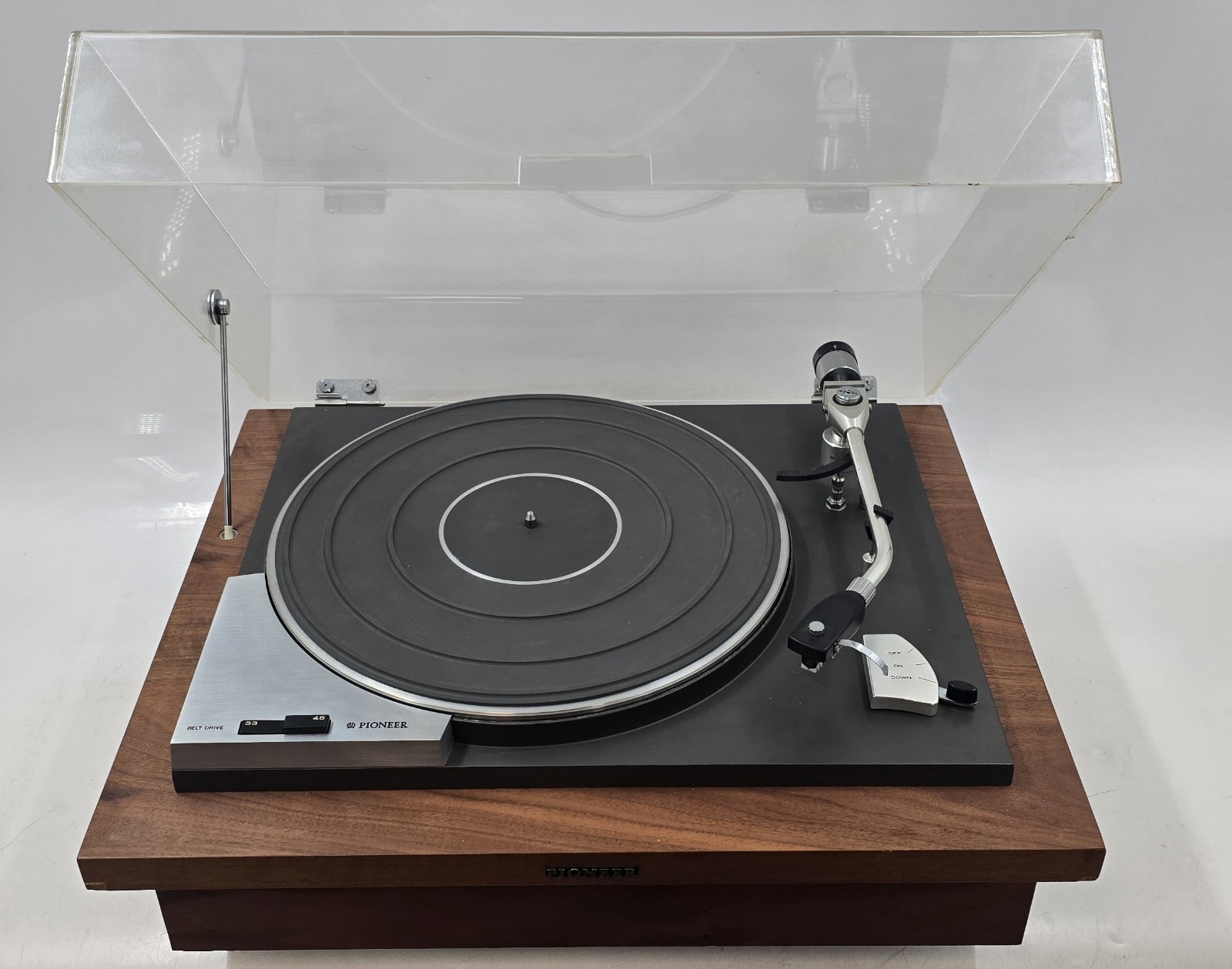
The Pioneer PL-35 features a minimalist yet functional design typical of Japanese audio equipment from the late 1970s. Housed in a sleek, low-profile wooden cabinet—usually finished in matte black or walnut veneer—the turntable exudes a classic aesthetic that blends well with other vintage gear. The plinth is constructed from medium-density fiberboard (MDF) with internal damping to reduce resonance, a thoughtful design choice that helps isolate the tonearm and cartridge from external vibrations.
One of the standout features of the PL-35 is its belt-drive system, which uses a high-torque DC motor coupled with a rubber belt to drive the aluminum platter. This setup ensures smooth, consistent rotation with minimal motor noise transferred to the stylus, resulting in lower background noise and improved audio fidelity. The platter itself is die-cast aluminum, providing good mass for speed stability, and is topped with a rubber mat to secure the record in place.
The turntable operates manually, meaning users must lift and place the tonearm by hand—there is no automatic play or return function. While this may seem outdated to modern listeners, many analog enthusiasts appreciate the tactile control and reduced mechanical complexity that manual operation offers.
Tonearm and Cartridge
The PL-35 is equipped with a pivoted straight tonearm made of aluminum tubing, approximately 9 inches in length. The tonearm features adjustable counterweight for precise tracking force calibration, a VTA (vertical tracking angle) adjustment collar, and anti-skate control—essential features for optimizing cartridge performance and minimizing record wear.
At the factory, the turntable was typically fitted with the Pioneer P-72E moving magnet (MM) cartridge, a modest but competent transducer for its time. The P-72E offers a tracking force of 1.5 grams, an output voltage of around 4.0 mV, and frequency response from 20 Hz to 20 kHz. While not a high-end cartridge by today’s standards, it delivers warm, balanced sound with decent detail retrieval, especially when paired with a quality preamp.
Replacement styli for the P-72E are still available from specialty audio retailers, and many users choose to upgrade to modern MM cartridges such as the Audio-Technica AT95E or Ortofon 2M Red for improved clarity and tracking.
Technical Specifications
- Turntable Type: Manual, belt-drive
- Speeds: 33⅓ and 45 RPM (manually selected via pulley adjustment)
- Motor: DC servo-controlled motor
- Drive System: Belt-drive
- Platter: Die-cast aluminum, 300 mm diameter
- Tonearm: 9-inch straight aluminum, pivoted
- Effective Arm Length: ~228 mm
- Overhang: Adjustable via headshell
- Cartridge: Pioneer P-72E (factory installed)
- Tracking Force: 1.0–2.0 grams (adjustable)
- Anti-Skate: Continuously variable
- Signal-to-Noise Ratio: >60 dB
- Wow and Flutter: <0.25% (weighted)
- Dimensions: 450 mm (W) × 360 mm (D) × 145 mm (H)
- Weight: 7.5 kg (approx.)
Performance and Sound Characteristics
The Pioneer PL-35 delivers a smooth, warm analog sound signature that is characteristic of well-designed turntables from the era. Its belt-drive system effectively isolates motor vibrations, contributing to a quiet background and stable pitch. The die-cast platter provides excellent rotational inertia, helping maintain consistent speed even during dynamic passages.
In practical listening tests, the PL-35 handles a wide range of musical genres with composure. Jazz and classical recordings benefit from its natural tonal balance and decent soundstage imaging. Rock and pop records are rendered with punchy bass and clear midrange, though the top end can sound slightly rolled-off compared to modern cartridges.
One of the turntable’s strengths is its low wow and flutter, a testament to the precision of its motor control and belt-drive design. This makes it particularly suitable for critical listening and vinyl archiving. Additionally, the adjustable tonearm geometry allows users to fine-tune setup for optimal cartridge alignment, reducing distortion and record wear.
Setup and Maintenance
Setting up the PL-35 requires a bit of patience, especially for first-time users. Proper alignment of the tonearm using a protractor (such as the Baerwald or Stevenson method) is essential for minimizing tracking error. The counterweight must be adjusted to achieve the recommended tracking force (1.5g for the P-72E), and anti-skate should be set to match.
Regular maintenance includes cleaning the platter and rubber belt, checking belt tension, and ensuring the motor runs smoothly. Over time, the original belt may dry out or stretch, leading to speed instability. Replacing it with a high-quality aftermarket belt (available from several vintage audio suppliers) can restore performance.
The turntable does not include a built-in preamp, so it must be connected to an external phono preamplifier before feeding into a line-level input on a receiver or amplifier. This is standard for high-fidelity turntables of the era and allows users to pair the PL-35 with modern phono stages for improved sound quality.
Legacy and Collectibility
While the Pioneer PL-35 was not marketed as a flagship model, it represents a well-engineered, mid-tier turntable from a respected brand. During the late 1970s, Pioneer was aggressively expanding its presence in the global hi-fi market, and models like the PL-35 helped solidify its reputation for reliability and value.
Today, the PL-35 is sought after by collectors of vintage audio gear, particularly those restoring period-correct systems or exploring analog sound on a budget. Its simple design, ease of servicing, and solid performance make it a practical choice for beginners and experienced users alike.
Compared to more famous contemporaries like the Technics SL-1200 or the Dual CS series, the PL-35 may lack some of the advanced features or cult status, but it holds its own in terms of build quality and musicality. With a modest upgrade to the cartridge and a new belt, it can deliver performance that rivals more expensive models.
Conclusion
The Pioneer PL-35 is a quietly competent turntable from the late 1970s that exemplifies the era’s commitment to analog fidelity and mechanical precision. Though overshadowed by more prominent models, it offers excellent value for vintage audio enthusiasts seeking a reliable, well-built player with authentic period charm. Whether used as a daily driver or as part of a curated retro setup, the PL-35 continues to deliver the warm, engaging sound that only vinyl can provide. With proper care and minor upgrades, it remains a worthy contender in the world of vintage turntables.
eBay Listings



As an eBay Partner, we earn from qualifying purchases. This helps support our independent vintage technology research.
Related Models
- Pioneer PL-15R (1975)
- Pioneer PL-250 (1979)
- Pioneer PL-40 (1977)
- Pioneer PL-514 (1978)
- Pioneer PL-516 (1978)
- Luxman PD-272 (1983)
- Garrard 2025tc (1968)
- Onkyo CP-1010 (1976)
- Pioneer PL-61 (1973)
- Pioneer PL-6A (1977)