Pioneer XL-1550 (1978)
The Pioneer XL-1550 is a high-fidelity direct-drive turntable introduced in 1978 as part of Pioneer’s premium XL series. Designed during the golden era of analog audio, the XL-1550 was engineered to deliver exceptional speed accuracy, low wow and flutter, and superior vibration resistance—hallmarks of top-tier turntables from the late 1970s. Though not as widely recognized as some of its contemporaries from brands like Technics or Denon, the XL-1550 represents a serious effort by Pioneer to compete in the audiophile turntable market with a feature-rich, precision-built product.
Design and Build Quality
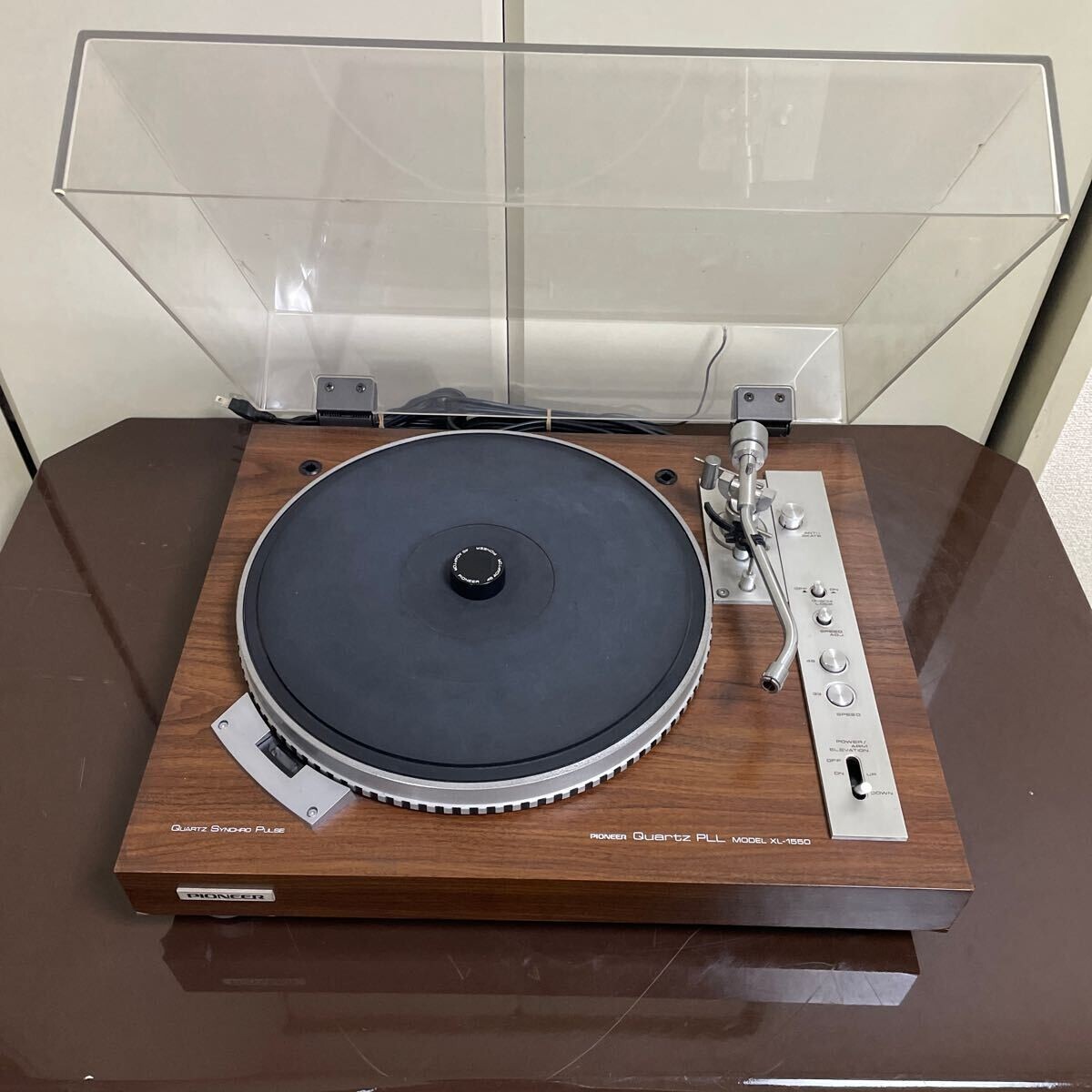
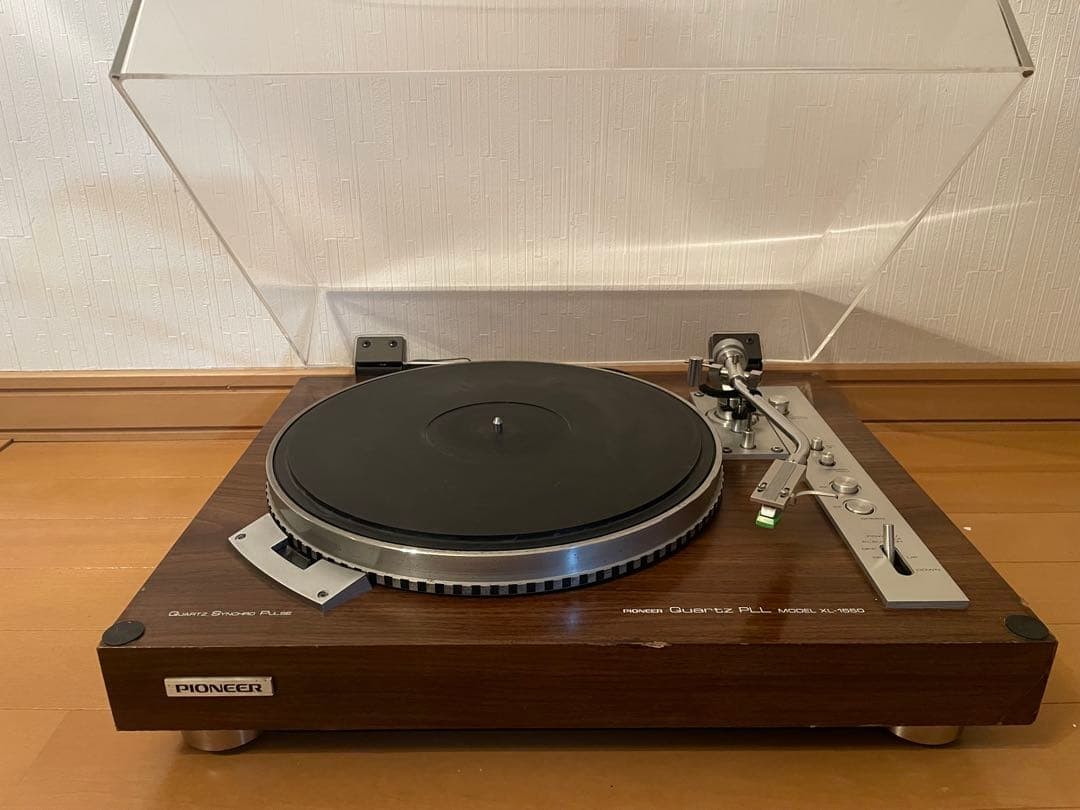
The Pioneer XL-1550 features a robust, heavy-duty construction designed to minimize resonance and ensure stable playback. It employs a direct-drive motor system, a technology that was gaining popularity at the time due to its ability to maintain consistent rotational speed without the potential degradation associated with belt-driven systems. The plinth is constructed from dense composite materials, contributing to its substantial weight and resistance to external vibrations. The turntable includes a thick, die-cast aluminum platter, which enhances rotational inertia and contributes to stable speed performance.
One of the standout design elements is the S-shaped tonearm, a 9-inch aluminum alloy arm with precision bearings and adjustable counterweight and anti-skate controls. The arm is statically balanced and features a damped lift mechanism, allowing for smooth cueing. While not as advanced as the gimbal or linear-tracking arms found on some high-end models of the era, the tonearm on the XL-1550 is well-regarded for its tracking accuracy and low resonance characteristics.
Motor and Speed Control
At the heart of the XL-1550 is a high-torque, brushless direct-drive motor. This motor is electronically regulated to maintain precise speed control across both 33⅓ and 45 RPM settings. Pioneer implemented a phase-locked loop (PLL) speed control system, which continuously monitors and corrects the rotational speed, ensuring minimal deviation. This results in a wow and flutter rating of less than 0.025%, a figure that rivals or exceeds many contemporary turntables from more famous brands.
The turntable features quartz-locked speed calibration, allowing users to fine-tune playback speed using a small adjustment knob and a strobe light integrated into the chassis. The strobe illuminates markings on the edge of the platter, enabling visual verification of speed accuracy. This level of precision made the XL-1550 appealing not only to audiophiles but also to semi-professional users and broadcasters who required reliable, repeatable performance.
Features and Functionality
The Pioneer XL-1550 supports both stereo and mono cartridges and is compatible with a wide range of moving magnet (MM) and moving coil (MC) designs. It includes a switchable phono preamp, a rare and valuable feature for a turntable of this class, allowing direct connection to line-level inputs on receivers or amplifiers without the need for an external phono stage. This dual functionality made the XL-1550 more versatile than many competing models.
The turntable also includes an automatic stop function. Once the tonearm reaches the end of the record, it triggers a mechanism that lifts the arm and powers down the platter. While not fully automatic in the sense of auto-start (the user must still manually cue the record), this semi-automatic operation was considered advanced for its time and added convenience for everyday use.
Another notable feature is the inclusion of a hinged dust cover with a felt-lined underside. While the cover helps protect the platter and tonearm from dust, some users have noted that it can resonate at certain frequencies, potentially affecting sound quality. As a result, many audiophiles choose to remove or replace the cover for critical listening sessions.
Sound Quality and Performance
The Pioneer XL-1550 is praised for its neutral, detailed sound signature. The direct-drive system provides excellent transient response and rhythmic stability, making it particularly well-suited for classical, jazz, and acoustic recordings where timing and clarity are paramount. The high-mass platter and rigid chassis contribute to a low noise floor, allowing subtle details in the music to emerge.
Tracking ability is strong, with the tonearm capable of handling cartridges with recommended tracking forces between 1.0 and 2.0 grams. Users have reported success with a variety of cartridges, including the Shure M97xE, Audio-Technica AT150MLX, and vintage Grado models. However, due to the tonearm’s effective mass, it pairs best with cartridges in the medium compliance range.
Market Position and Legacy
Released in 1978, the XL-1550 was positioned as a flagship turntable in Pioneer’s consumer audio lineup. It competed directly with models like the Technics SL-1200MK2, the Sony PS-X series, and the Denon DP-300F. While Pioneer was better known for its receivers and speakers during this period, the XL-1550 demonstrated the company’s commitment to high-end analog playback.
Despite its technical merits, the XL-1550 did not achieve the same level of commercial success or long-term cult status as some of its rivals. This may be due in part to Pioneer’s relatively smaller presence in the turntable market and the overwhelming popularity of Technics’ professional DJ-focused models. As a result, the XL-1550 is now a somewhat rare find, particularly in fully functional condition.
Maintenance and Availability Today
Today, the Pioneer XL-1550 is sought after by vintage audio enthusiasts and collectors. Because it relies on electronic speed control and a complex motor system, it requires careful maintenance. Common issues include degraded capacitors in the power supply, worn motor brushes (though the motor is brushless, some internal components may still degrade), and dried lubricants in the cueing mechanism.
Replacement parts are scarce, and service manuals are difficult to find, making repairs challenging. However, the turntable’s modular design allows for some component-level troubleshooting by experienced technicians. Enthusiasts often recommend recalibrating the speed and cleaning the platter and tonearm bearings when acquiring a used unit.
The original cartridge included with some versions was the Pioneer PL-15, a decent MM cartridge for its time but easily outperformed by modern or even vintage aftermarket options. Most users opt to upgrade the cartridge for improved fidelity.
Conclusion
The Pioneer XL-1550 stands as a testament to the engineering ambition of late-1970s Japanese audio manufacturers. With its direct-drive motor, quartz speed lock, and semi-automatic operation, it offered a compelling package for serious listeners. While it may not have achieved the fame of its competitors, it remains a capable and well-built turntable that delivers excellent sound quality when properly maintained.
For collectors and analog enthusiasts, the XL-1550 represents a hidden gem in Pioneer’s audio legacy—a high-performance turntable that deserves greater recognition for its technical sophistication and musicality. In an era where vinyl is experiencing a resurgence, the XL-1550 offers a vintage yet reliable entry into high-fidelity analog playback.
eBay Listings


As an eBay Partner, we earn from qualifying purchases. This helps support our independent vintage technology research.
Related Models
- Pioneer PL-15R (1975)
- Pioneer PL-250 (1979)
- Pioneer PL-40 (1977)
- Pioneer PL-514 (1978)
- Pioneer PL-516 (1978)
- Luxman PD-272 (1983)
- Garrard 2025tc (1968)
- Onkyo CP-1010 (1976)
- Pioneer PL-61 (1973)
- Pioneer PL-6A (1977)