Pioneer PL-15 (1973)
The Pioneer PL-15 is a vintage belt-drive turntable introduced by Pioneer in 1973 as part of their growing line of consumer audio equipment during the golden era of analog playback. Though not as widely documented as some of Pioneer’s higher-end models like the PL-550 or PL-990, the PL-15 holds a quiet reputation among collectors and audiophiles for its solid build, minimalist design, and dependable performance. As a manual turntable, it requires the user to lower the tonearm by hand and lift it at the end of playback, offering a hands-on experience that many vinyl enthusiasts appreciate today.
Design and Build Quality
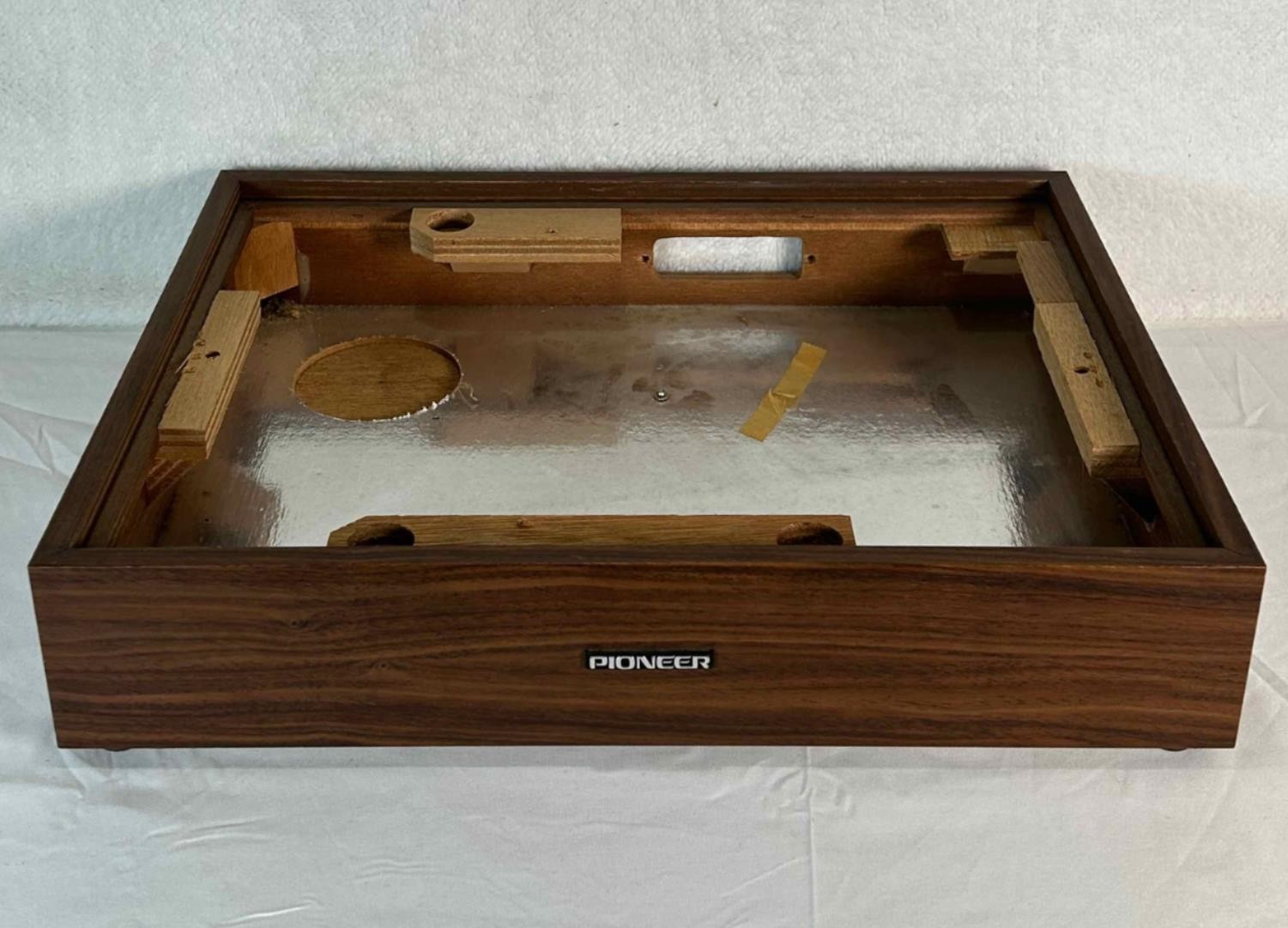
The PL-15 features a compact, low-profile design typical of early 1970s Japanese turntables. Housed in a sturdy wooden cabinet with a black vinyl finish, the unit exudes a classic aesthetic that blends well with vintage stereo systems. The plinth is made from medium-density fiberboard (MDF), providing a stable base that helps isolate the turntable from external vibrations. A removable dust cover with a hinged design protects the record and tonearm when not in use.
Measuring approximately 14.5 x 5.5 x 15 inches (W x H x D), the PL-15 is relatively small compared to full-sized turntables of the era, making it ideal for space-conscious setups. Despite its modest footprint, the internal construction is well thought out, with attention paid to minimizing resonance and ensuring consistent platter rotation.
Drive System and Platter
The PL-15 uses a belt-drive system, which is powered by a low-vibration DC motor. Belt-drive turntables are prized for their ability to reduce motor noise transmission to the stylus, resulting in cleaner audio playback with lower background hum. The motor drives a rubber belt connected to a sub-platter, which in turn rotates the main aluminum platter. The platter itself weighs approximately 1.2 kg (2.6 lbs), contributing to stable rotational speed and good inertia.
Speed accuracy is maintained through a precision quartz-locked circuit, a feature that was considered advanced for mid-tier turntables in the early 1970s. The PL-15 supports two standard playback speeds: 33⅓ and 45 RPM. Speed selection is done manually via a belt positioning system—users must physically move the belt to a different step on the motor pulley to switch between speeds.
Tonearm and Cartridge
The turntable is equipped with a straight aluminum tonearm with a effective length of about 8.5 inches. The arm features manual cueing, meaning there is no automatic lift or drop mechanism. Users must carefully lower the stylus onto the record using the cueing lever, a process that encourages mindful handling and reduces the risk of record damage when done properly.
The original cartridge fitted on the PL-15 was typically a Pioneer-supplied moving magnet (MM) type, such as the Pioneer P-75E or a similar OEM model. These cartridges offered a balanced frequency response with moderate tracking ability, usually requiring a tracking force of around 1.5 to 2.0 grams. The tonearm’s counterweight allows for precise adjustment of tracking force, and anti-skate is manually adjustable via a small dial at the base of the tonearm.
Frequency response for the stock cartridge setup is estimated at 20 Hz – 20 kHz, with a channel separation of around 25 dB at 1 kHz. While not matching the specs of high-end cartridges of the time, this setup delivers warm, musical playback well-suited for jazz, classical, and rock recordings.
Audio Performance
As a product of its time, the PL-15 delivers a smooth and natural analog sound. The combination of the belt-drive system, well-damped plinth, and decent stock cartridge results in low surface noise and minimal resonance. Users report a slightly warm tonal balance, with a smooth midrange and soft high frequencies—characteristics that make it forgiving with older or slightly worn records.
The turntable’s signal-to-noise ratio is consistent with other mid-tier models of the 1970s, providing a clean background that allows musical detail to emerge. While it lacks the ultra-low wow and flutter of more expensive direct-drive models, the PL-15 maintains speed stability within acceptable limits—typically measured at less than 0.2% RMS wow and flutter.
Connectivity and Compatibility
As a turntable, the PL-15 does not have built-in amplification or speakers. It outputs a phono-level signal via dual RCA connectors located on the rear panel. This means it must be connected to a stereo receiver or preamplifier with a dedicated phono input to boost the signal to line level. If used with modern equipment lacking a phono stage, an external phono preamp is required.
The turntable comes with a standard 4-pin DIN connector for the tonearm wiring, which connects internally to the headshell. The headshell itself uses a standard 0.5-inch mount, making it compatible with a wide range of aftermarket cartridges and styluses. This modularity allows users to upgrade the sound significantly by installing modern MM or even moving coil (MC) cartridges with appropriate step-up transformers.
Accessories and Included Components
The original PL-15 package included the turntable unit, a 45 RPM spindle adapter, a felt record mat, and basic setup instructions. Some versions may have included a removable hinged dust cover with a plastic latch. The power supply is external, connecting via a low-voltage DC input—typically 12V—from a wall-wart adapter.
Legacy and Collectibility
While the Pioneer PL-15 was not marketed as a high-end audiophile turntable, it occupies a niche among vintage audio enthusiasts who appreciate reliable, no-frills analog playback. Its build quality and thoughtful engineering reflect Pioneer’s commitment to accessible yet well-made audio gear during the 1970s.
Today, the PL-15 is not particularly rare, but working units in good condition are becoming harder to find. It is often sought after for restoration projects or as a secondary turntable in a vintage setup. Its compatibility with modern cartridges and phono stages makes it a practical choice for those wanting a classic look with upgraded sound.
Conclusion
The Pioneer PL-15 stands as a testament to the craftsmanship and innovation of early 1970s Japanese audio engineering. Though overshadowed by more famous models, it delivers solid performance, ease of use, and a classic aesthetic that continues to appeal to vinyl lovers. Whether used as a daily driver or as part of a period-correct stereo system, the PL-15 offers a genuine analog experience with the reliability Pioneer became known for. For collectors and casual listeners alike, it remains a quietly impressive piece of audio history.
eBay Listings


As an eBay Partner, we earn from qualifying purchases. This helps support our independent vintage technology research.
Related Models
- Pioneer PL-15R (1975)
- Pioneer PL-250 (1979)
- Pioneer PL-40 (1977)
- Pioneer PL-514 (1978)
- Pioneer PL-516 (1978)
- Luxman PD-272 (1983)
- Garrard 2025tc (1968)
- Onkyo CP-1010 (1976)
- Pioneer PL-61 (1973)
- Pioneer PL-6A (1977)