Pioneer PL-1250 (1978)
The Pioneer PL-1250 is a belt-driven, manual turntable introduced in 1978 as part of Pioneer’s growing range of high-fidelity audio equipment during the golden era of vinyl. Though not as widely discussed as some of its contemporaries from Technics or Sony, the PL-1250 earned a reputation among audiophiles and casual listeners alike for its reliable performance, minimalist design, and excellent value for money. It was positioned as a mid-tier offering in Pioneer’s turntable catalog, sitting between entry-level models and the more advanced PL-510 and PL-530 series.
Design and Build Quality
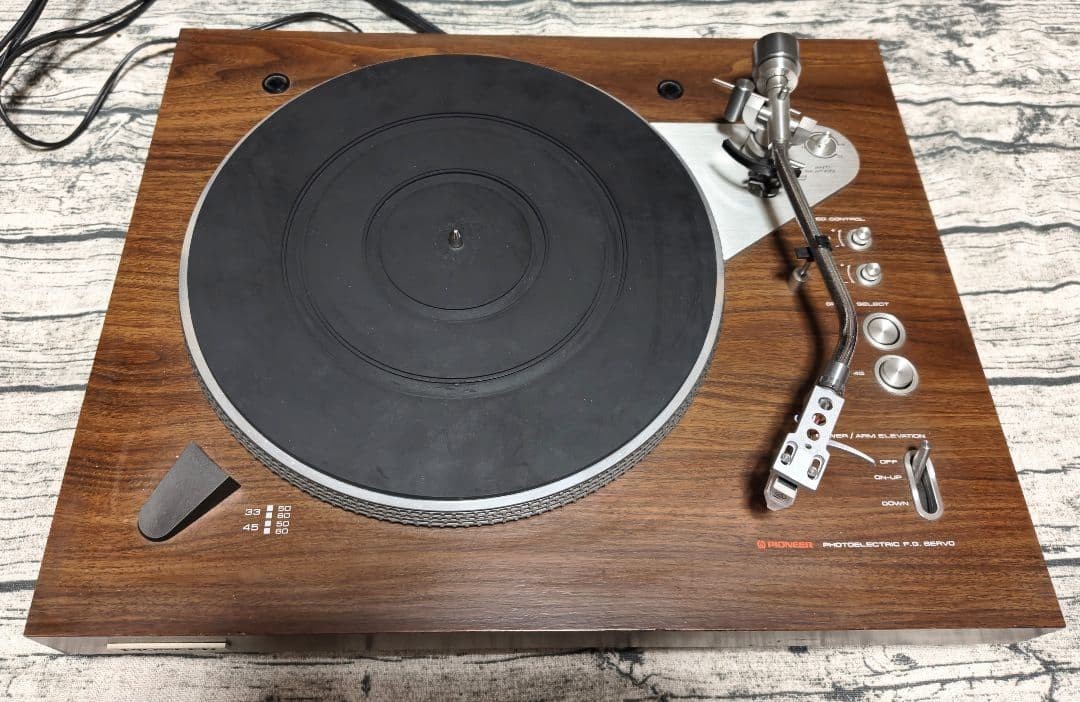
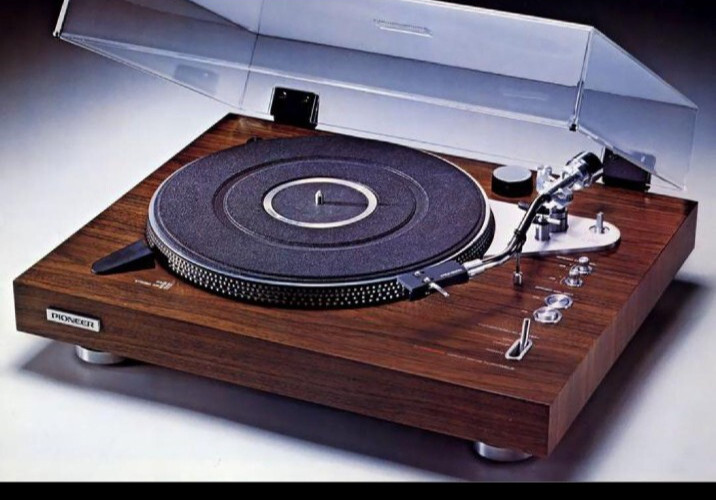
The PL-1250 features a sleek, minimalist design typical of late 1970s Japanese audio equipment. Housed in a sturdy wooden plinth with a matte black finish, the turntable exudes a sense of understated elegance. The plinth is designed to minimize resonance and vibration, contributing to improved sound clarity. Measuring approximately 450 mm (W) × 156 mm (H) × 360 mm (D) and weighing around 6.5 kg, the PL-1250 strikes a balance between portability and stability.
The turntable uses a rigid MDF (medium-density fiberboard) base with a felt-covered steel platter, which helps dampen unwanted vibrations. The 300 mm platter is driven by a high-torque synchronous motor via a rubber belt, ensuring smooth and consistent rotation. This belt-drive system isolates the platter from motor noise, a significant advantage over direct-drive turntables in terms of reducing audible interference.
The tonearm is a straight, static-balanced design with a length of approximately 230 mm. It features adjustable tracking force (via a calibrated counterweight) and anti-skate control, allowing users to fine-tune the cartridge’s performance. The arm is manually operated—there is no automatic lift or return mechanism, which keeps the design simple and reduces potential mechanical failure points.
Performance and Technical Specifications
The PL-1250 supports three playback speeds: 33⅓, 45, and 78 RPM, making it versatile for a wide range of vinyl records, including older shellac pressings. Speed accuracy is maintained by a quartz-locked system, ensuring minimal wow and flutter—Pioneer rated the wow and flutter at less than 0.025%, which was impressive for a manual turntable in its class.
The turntable’s signal-to-noise ratio is rated at over 70 dB, thanks in part to the low-vibration motor and well-damped plinth. The tonearm has a vertical tracking angle (VTA) that can be adjusted by adding or removing shims under the tonearm base, although this is a less convenient method compared to modern height-adjustable gimbals.
The PL-1250 came factory-equipped with the Pioneer SP-232 MM (moving magnet) cartridge, which offered a tracking force of 1.5 grams and an output voltage of 4.0 mV at 1 kHz. The cartridge provided a warm, balanced sound with decent detail retrieval, suitable for jazz, classical, and rock recordings. However, many users have since upgraded to higher-performance cartridges such as the Audio-Technica AT95E or Shure M97xE for improved fidelity.
Setup and Usability
Setting up the PL-1250 requires some technical know-how, as it is a fully manual turntable. Users must level the plinth using the adjustable rubber feet, balance the tonearm, set the tracking force, and adjust anti-skate to match the cartridge’s specifications. While not plug-and-play by modern standards, this level of user involvement appeals to vinyl enthusiasts who enjoy fine-tuning their setup.
The platter is easily removable for cleaning or belt replacement. The belt itself is a rubber O-ring that wraps around the motor pulley and the underside of the platter. Over time, the belt may degrade and require replacement—a common maintenance task for belt-driven turntables of this era. Replacement belts are still widely available and easy to install.
The front panel is minimal, featuring only a power indicator light and a speed selection switch. There are no electronic start/stop functions—the user must manually place the tonearm on the record and lift it off at the end of playback. This manual operation ensures a tactile, engaging listening experience.
Place in Pioneer’s Turntable Lineup
In the late 1970s, Pioneer was expanding its presence in the high-fidelity audio market, competing with brands like Technics, Sony, and Yamaha. The PL-1250 was part of a broader family of turntables that included the fully automatic PL-1000 and the higher-end PL-510, which featured a linear-tracking tonearm. While the PL-1250 lacked the automation and advanced features of its siblings, it offered excellent build quality and sonic performance at a more accessible price point.
It was often bundled with Pioneer’s integrated amplifiers and bookshelf speakers as part of complete stereo systems, making it a popular choice for consumers building their first high-quality audio setups. Its reliability and ease of maintenance contributed to its longevity in both home and educational environments.
Legacy and Collector’s Value
Today, the Pioneer PL-1250 is regarded as a solid, no-frills turntable that represents the craftsmanship and engineering values of its time. While it may not command the same collector’s prices as a Technics SL-1200, it remains a favorite among vintage audio enthusiasts for its durability and upgrade potential. With a new belt, a cleaned platter, and a modern cartridge, the PL-1250 can deliver performance that rivals many modern turntables in the $300–$500 range.
Its straightforward design makes it an excellent candidate for restoration, and parts such as headshells, counterweights, and dust covers are still available through online audio forums and specialty retailers. Some users have even retrofitted the PL-1250 with external phono preamps and upgraded power supplies to further enhance performance.
Conclusion
The Pioneer PL-1250 is a testament to the quality and value that Japanese audio manufacturers delivered during the 1970s. As a manual, belt-driven turntable, it offers a hands-on vinyl experience that many modern users find refreshing. Its combination of solid construction, accurate speed control, and upgrade-friendly design ensures that it remains a relevant and enjoyable component in today’s analog audio world.
Whether you’re a collector seeking a well-built vintage turntable or a newcomer looking for an affordable entry into vinyl, the Pioneer PL-1250 is a worthy contender. It may not have the fame of some of its peers, but it delivers consistent performance, timeless design, and the kind of mechanical reliability that only well-engineered analog gear can provide.
eBay Listings


As an eBay Partner, we earn from qualifying purchases. This helps support our independent vintage technology research.
Related Models
- Pioneer PL-15R (1975)
- Pioneer PL-250 (1979)
- Pioneer PL-40 (1977)
- Pioneer PL-514 (1978)
- Pioneer PL-516 (1978)
- Luxman PD-272 (1983)
- Garrard 2025tc (1968)
- Onkyo CP-1010 (1976)
- Pioneer PL-61 (1973)
- Pioneer PL-6A (1977)