Pioneer PL-120 (1978)
The Pioneer PL-120 is a vintage belt-drive turntable introduced in 1978 as part of Pioneer’s mid-tier home audio lineup during the golden era of analog audio. Though not as widely documented as some of its contemporaries, the PL-120 represents a period when Japanese manufacturers like Pioneer, Sony, and Technics were refining turntable engineering to deliver high fidelity at accessible price points. The PL-120 stands out for its minimalist design, reliable performance, and thoughtful engineering, making it a sleeper favorite among analog enthusiasts and collectors of vintage audio gear.
Design and Build Quality
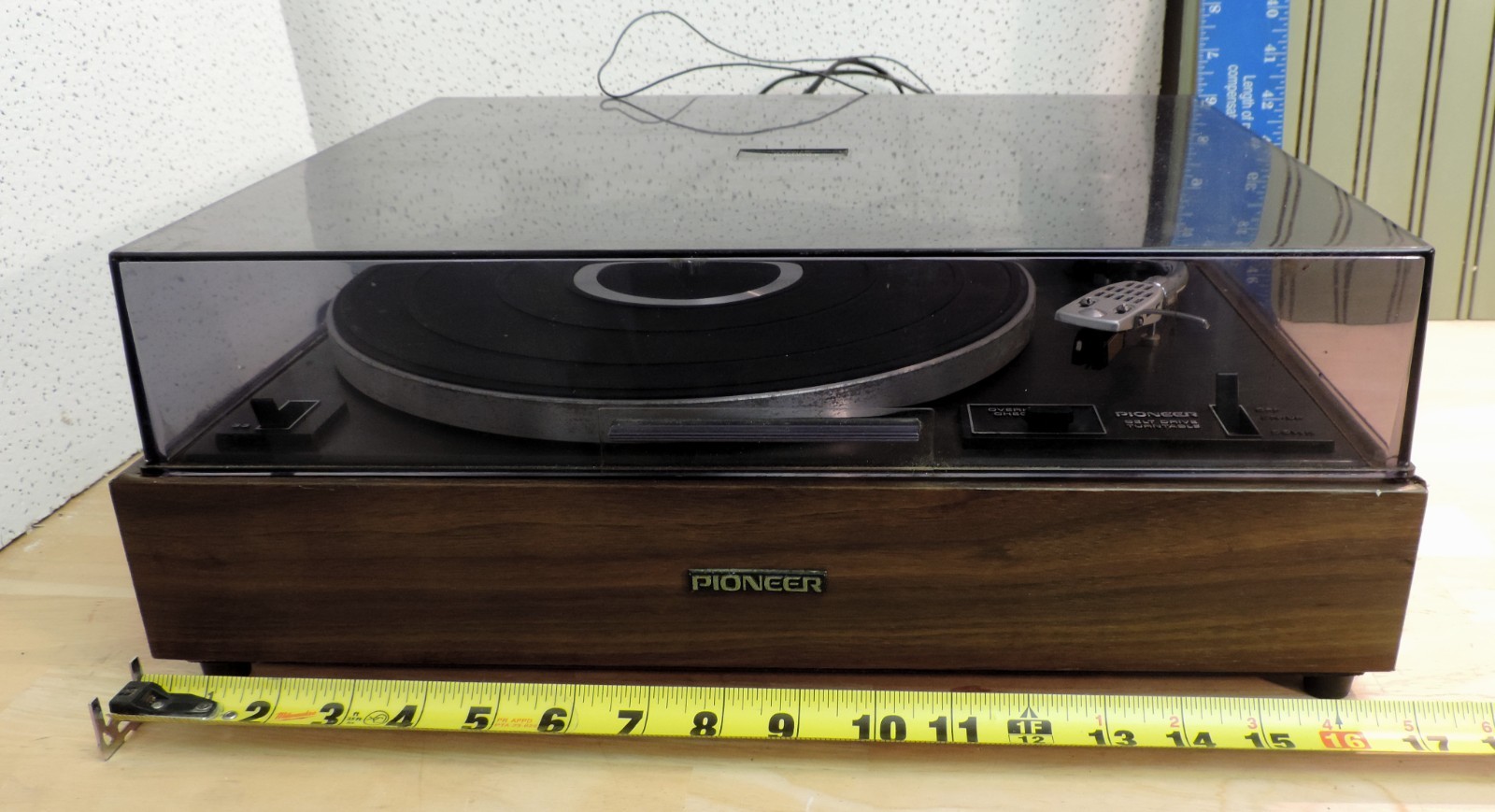
The Pioneer PL-120 features a classic, understated design typical of late 1970s audio equipment. Housed in a sleek wooden cabinet—often finished in a warm walnut veneer—the turntable exudes a timeless aesthetic that blends well with vintage and modern setups alike. The plinth is rigid and well-damped, helping to minimize resonance and vibration that could affect sound quality. At approximately 12 pounds (5.4 kg), the PL-120 has a solid heft, contributing to its stability during playback.
The turntable employs a belt-drive system, which is known for reducing motor noise and delivering smooth, consistent platter rotation. The drive motor is electronically regulated to maintain accurate speed, minimizing wow and flutter. The 33⅓ and 45 RPM speeds are selected via a simple mechanical switch on the front panel, and speed accuracy is generally within ±0.3%, which was competitive for its class at the time.
The platter itself is made of die-cast aluminum, a material chosen for its balance of mass and rigidity. It’s topped with a rubber mat to provide grip and dampen surface noise. The platter sits on a precision spindle and bearing system designed for low friction and long-term durability. While not featuring advanced isolation systems like some high-end models, the PL-120’s feet are made of rubber to provide basic decoupling from the supporting surface.
Tonearm and Cartridge
One of the standout features of the PL-120 is its straight, aluminum tonearm. Measuring approximately 9 inches in length, the tonearm is statically balanced and features adjustable tracking force via a calibrated counterweight. It includes anti-skate control, allowing users to fine-tune tracking performance and reduce inner-groove distortion. The arm’s construction emphasizes rigidity and low resonance, contributing to accurate stereo imaging and detail retrieval.
The PL-120 was typically shipped with a factory-mounted cartridge, often a Pioneer-supplied moving magnet (MM) type such as the Pioneer SP-100E or a similar OEM model. These cartridges offered decent performance out of the box, with a frequency response ranging from 20 Hz to 20 kHz and a tracking force recommendation of 1.5 to 2.0 grams. While not in the league of high-end cartridges, they provided a warm, balanced sound signature that complemented the musicality of vinyl playback.
For audiophiles looking to upgrade, the tonearm’s effective mass and geometry make it compatible with a wide range of aftermarket MM cartridges, including popular models from Audio-Technica, Ortofon, and Shure. Users have reported success pairing the PL-120 with cartridges like the AT-95E and OM-5, which can significantly enhance clarity and dynamic range.
Operation and User Experience
The Pioneer PL-120 is a fully manual turntable, meaning users must manually lower the tonearm onto the record and lift it at the end of playback. While this may seem inconvenient by modern standards, many vinyl enthusiasts appreciate the tactile engagement and control it offers. The cueing mechanism is smooth and well-damped, allowing for precise placement without record damage.
The start-up sequence is straightforward: engage the desired speed, place the record on the platter, cue the tonearm, and begin playback. The platter reaches full speed in about 10 seconds, thanks to the efficient belt-drive system. The absence of automation keeps the mechanical design simple and reliable, reducing the likelihood of long-term failure.
A hinged dust cover is included, protecting the platter and tonearm when not in use. While functional, the cover can transmit vibrations if touched during playback, so careful placement is recommended. Some users opt to remove it entirely or replace it with a weighted, hinged alternative for better isolation.
Audio Performance
In terms of sound quality, the Pioneer PL-120 delivers a warm, musical presentation that many associate with vintage analog gear. Bass response is tight and well-defined, thanks to the stable platter and low wow/flutter. Midrange clarity is excellent, making vocals and acoustic instruments sound natural and engaging. High frequencies are smooth without being overly bright, avoiding the harshness sometimes found in budget turntables of the era.
When properly set up—particularly with correct azimuth, VTF, and anti-skate—the PL-120 reveals a surprising level of detail and soundstage depth. Its performance holds up well against more famous contemporaries like the Technics SL-1200 (not to be confused with the later DJ-focused models) and the Sony PS-LX series, especially when paired with a quality phono preamp and modern audio chain.
Serviceability and Maintenance
Like all belt-drive turntables from this era, the PL-120 requires periodic maintenance. The most common service item is belt replacement, as the original rubber belt can degrade over time, leading to speed instability or slippage. Replacement belts are widely available and easy to install with basic tools. Lubrication of the main bearing may also be necessary after decades of use, though the original factory lubricant often remains effective if the unit has been stored properly.
The tonearm bearings should be checked for smooth movement, and the cartridge alignment can be improved using a protractor for optimal tracking. Keeping the stylus clean with a soft brush or cleaning fluid is essential for preserving both record and cartridge life.
Legacy and Collectibility
While the Pioneer PL-120 never achieved the iconic status of some of its peers, it has gained a quiet reputation among vintage audio aficionados for its reliability and honest sound. It’s not commonly found in high-end audiophile circles, but it’s increasingly sought after by collectors and casual listeners who appreciate well-built, no-frills turntables from the 1970s.
Its relative obscurity means that units can often be found at reasonable prices in the secondhand market, especially compared to more hyped models. However, condition varies widely, so buyers should inspect the belt, platter, and cartridge carefully before purchasing.
Conclusion
The Pioneer PL-120 is a solid, no-nonsense turntable that exemplifies the quality and value that Japanese manufacturers brought to the hi-fi market in the late 1970s. While it lacks the flash and automation of some high-end models, its thoughtful design, durable construction, and pleasing sonic character make it a worthy addition to any analog setup. Whether used as a daily driver or as part of a vintage audio restoration project, the PL-120 remains a testament to an era when form, function, and fidelity were carefully balanced in home audio design. For those exploring the world of vintage turntables, the Pioneer PL-120 is a hidden gem worth discovering.
eBay Listings


As an eBay Partner, we earn from qualifying purchases. This helps support our independent vintage technology research.
Related Models
- Pioneer PL-15R (1975)
- Pioneer PL-250 (1979)
- Pioneer PL-40 (1977)
- Pioneer PL-514 (1978)
- Pioneer PL-516 (1978)
- Luxman PD-272 (1983)
- Garrard 2025tc (1968)
- Onkyo CP-1010 (1976)
- Pioneer PL-61 (1973)
- Pioneer PL-6A (1977)