Otari DTR-7 (1992)
Otari's "simple" DAT machine. That means a professional deck with balanced XLR I/O, AES/EBU, and a rack-mount chassis, priced at $1,848.
Overview
The DTR-7 is what you get when a company that builds multitracks and mastering decks makes a DAT machine for the facility down the street instead of the living room. Otari's own distributor copy in the period literature says it plainly: the DTR-7 was "designed specifically for professional applications," conforming to the basic R-DAT format established by the EIAJ/DAT conference. This is not a consumer deck with a pro badge glued on. The back panel shows it, and Otari's advertising leaned on exactly that.
The connectivity is more than most DAT decks of the era offered. The DTR-7 carries active balanced inputs and outputs on XLR, digital AES/EBU on XLR, and S/PDIF on RCA. Studio Sound (March 1992, p.18) reported that switchable AES/EBU-S/PDIF was standard on the new R-DAT Series, with an optional interchangeable board available to conform the interface to S/PDIF-II. For a studio patching the deck into a console or a digital chain, the balanced XLR analog I/O is what keeps it in the rack and out of a drawer.
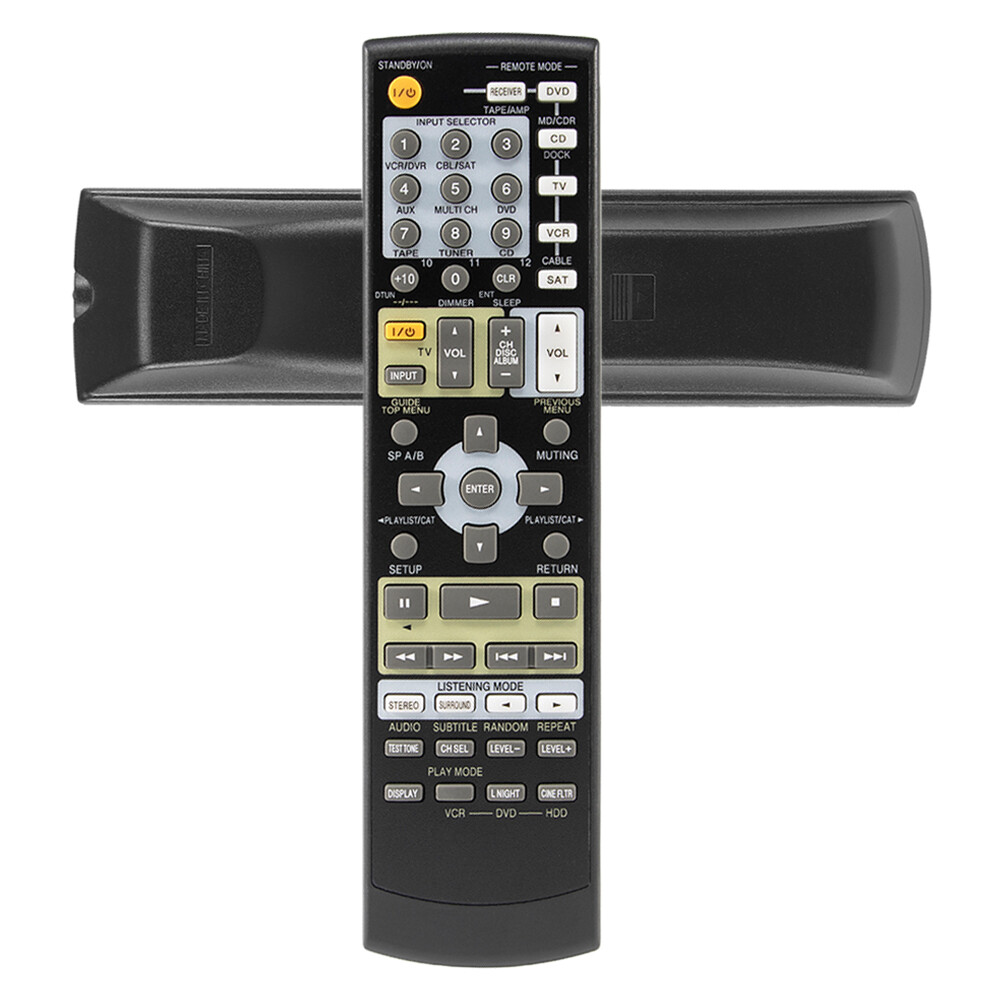
Conversion is handled by one-bit A/D and D/A converters, according to the distributor specification sheet. Sampling frequencies cover the three majors - 48, 44.1, and 32 kHz. The 32 kHz long-play mode doubles recording time on a standard tape, which helps when you're archiving or logging rather than mastering. Digital recording auto-selects the incoming sampling frequency. There's also a full index-writing function for Start IDs, program number codes, and END codes, plus a standard optical remote control. That comes in handy when the deck is buried in a rack three spaces deep.
That rack depth is literal. The DTR-7 comes with its own rack-mount adapter and occupies three rack spaces. Metering is done with 20-segment digital meters with a peak-hold function, so you can see the peak you missed, not just the peak you caught. SCMS is incorporated on the S/PDIF connectors. That's a copy-protection limit you need to know about if you plan to shuttle material between consumer and pro gear.
Pricing landed at a manufacturer's list of $1,848.00, per the distributor literature. It was positioned as the entry point to Otari's professional R-DAT range. Studio Sound (June 1992, p.53) called the DTR-7 "Otari's entry-level" machine in a range whose flagship, the DTR-90, added a four-head transport with read-after-write, individual channel record capability, and an optional timecode facility, with the CB-149 edit controller complementing it. The DTR-7 is the deck you bought when you needed professional I/O and solid conversion but didn't need confidence monitoring or frame-accurate editing. The DTR-90 is a different tool for a different job.
For collectors and facility engineers today, the DTR-7 is a purpose-built professional DAT with the connector set to work in a modern rack. The caveats are the usual DAT caveats. The format itself is the maintenance story, and the DTR-7's value depends entirely on the condition of its transport and heads. The fact sheet doesn't document head life or service intervals for this model, so buyers should check transport condition first and everything else second. What the documentation does confirm is the design: balanced I/O, AES/EBU, one-bit conversion, and a rack-mount chassis.
eBay Listings



As an eBay Partner, we earn from qualifying purchases. This helps support our independent vintage technology research.