Onkyo TX-4500MKII: The Tuner That Defined an Era of High-Fidelity Radio
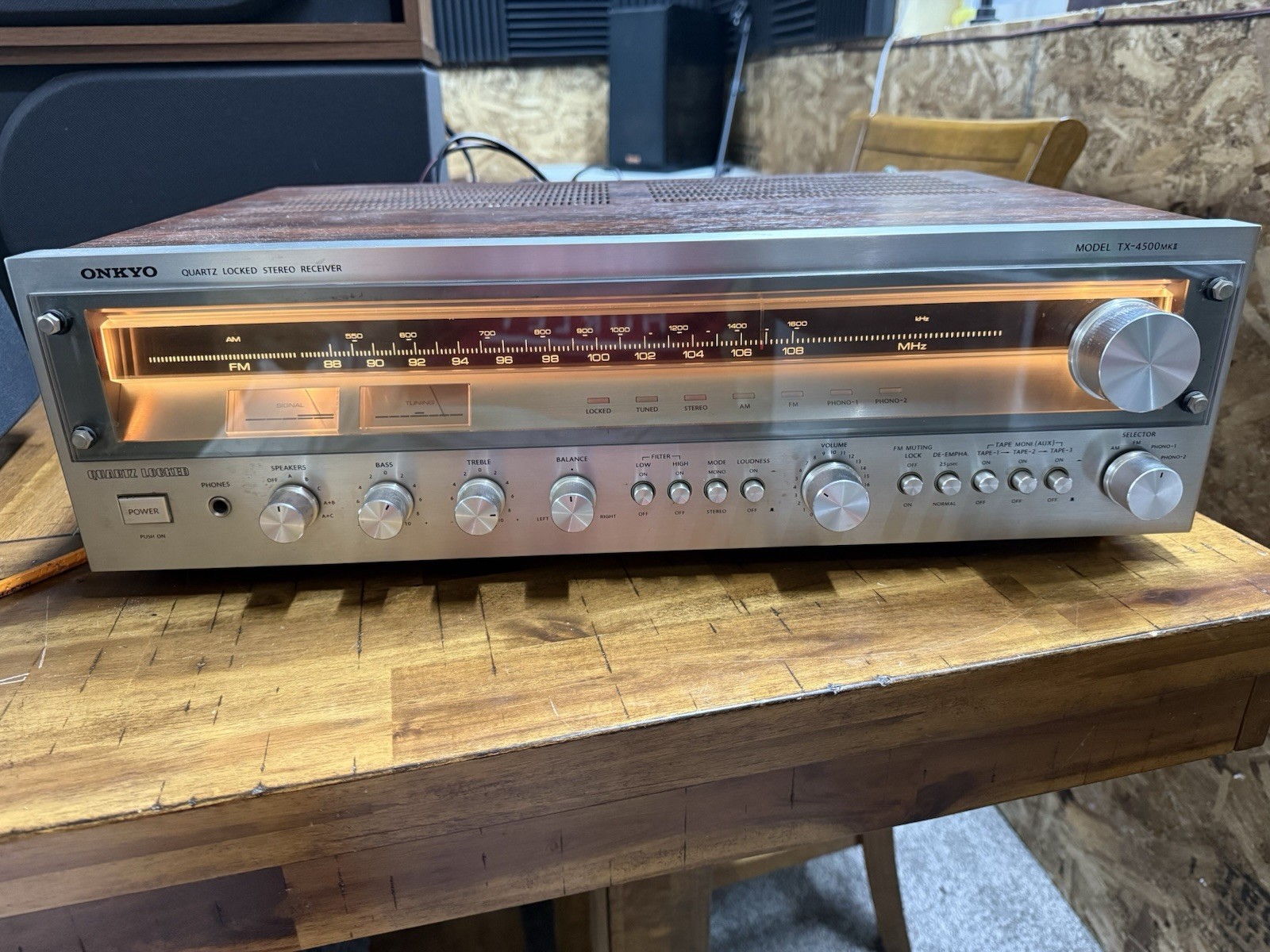
In the mid-1970s, as the golden age of FM broadcasting reached its peak, audiophiles demanded more than just amplification—they wanted pristine, crystal-clear radio reception that could match the fidelity of their turntables and tape decks. Enter the Onkyo TX-4500MKII, a masterfully engineered FM tuner and preamplifier hybrid that represented the pinnacle of Onkyo’s analog tuner design. Released in 1975, the TX-4500MKII wasn’t just another component in a stereo rack; it was a statement of intent from a company committed to delivering broadcast audio with the same seriousness as playback.
Though often categorized simply as a "tuner," the TX-4500MKII transcends that label. It combines a high-performance FM section with a full-featured preamplifier, making it a rare hybrid that could serve as the heart of a minimalist high-fidelity system. During a time when integrated receivers dominated the market, Onkyo chose to go a different route—offering audiophiles a dedicated tuner with serious audio control capabilities, including tone controls, input selection, and volume regulation. This design philosophy catered to purists who already owned a separate power amplifier or wanted to build a modular, upgradeable system.
Technical Specifications
The TX-4500MKII was built to military-grade standards, using high-quality components and a rigid, vibration-resistant chassis. Its dual functionality as both a tuner and preamp made it a versatile centerpiece in any 1970s-era audio setup.
| Specification | Detail |
| Model | TX-4500MKII |
| Year of Release | 1975 |
| Manufacturer | Onkyo Corporation, Japan |
| Category | FM Tuner / Preamplifier Hybrid |
| Tuner Type | Superheterodyne, Double Conversion |
| Frequency Range | 87.5–108 MHz |
| IF Frequencies | 10.7 MHz (1st), 450 kHz (2nd) |
| Tuning Method | Analog dial with illuminated pointer |
| Signal-to-Noise Ratio | 70 dB (typical) |
| Stereo Separation | 40 dB at 1 kHz |
| Total Harmonic Distortion | <0.1% (preamp section) |
| Output Level | 0.35V (tuner), 2V (preamp outputs) |
| Input Options | 3 line-level (RCA) |
| Output Options | Main out, tape out, tuner out |
| Tone Controls | Bass, Treble (±12 dB at 100Hz/10kHz) |
| Power Output | 40W per channel (when paired with amp) |
| Impedance | 8Ω (recommended load) |
| Power Supply | 120V AC, 60 Hz (North American models) |
| Dimensions | 430 mm (W) × 140 mm (H) × 330 mm (D) |
| Weight | 11.5 kg (25.3 lbs) |
Sound Characteristics and Performance
The TX-4500MKII was engineered for sonic transparency and exceptional stereo imaging. Its double-conversion superheterodyne design minimized interference and image frequency problems, a common issue in crowded FM bands. This allowed for remarkably clean reception, even in urban environments with strong signal overlap.
The tuner section featured a high-gain RF amplifier and a precision-lapped tuning capacitor, ensuring smooth, accurate dial tracking. Once locked onto a station, the stereo decoder delivered a wide soundstage with excellent channel separation—crucial for capturing the spatial dynamics of live FM broadcasts.
But the real magic lies in the preamplifier stage. Unlike many tuners of the era that treated audio controls as an afterthought, the TX-4500MKII’s preamp used discrete transistor circuitry with low-noise design principles. The result? A warm, detailed midrange, extended highs without harshness, and a solid low end that preserved the integrity of orchestral and rock broadcasts alike. The tone controls were musical rather than clinical, allowing subtle shaping without muddying the signal.
When paired with a high-quality power amplifier—such as the contemporaneous Onkyo M-5000 or even a Marantz PM-660—the TX-4500MKII could deliver a listening experience that rivaled today’s digital streaming in emotional impact, especially with well-produced FM content from the 1970s.
Notable Features and Innovations
The TX-4500MKII stood out for several forward-thinking design choices:
- Dual Functionality: Combining a high-end tuner with a full preamp was rare in 1975. This allowed users to bypass the tuner section entirely and use it as a standalone preamplifier.
- Illuminated Tuning Dial: A large, easy-to-read analog dial with a soft blue backlight made station hunting intuitive and visually appealing.
- High Selectivity and Sensitivity: With a front-end filter system and low-noise amplification, the TX-4500MKII could pull in weak stations with remarkable clarity.
- Tape Monitoring and Bypass: It featured a full tape loop with monitor switching, allowing users to record FM broadcasts while listening to other sources.
- Solid Build Quality: Heavy steel chassis, gold-plated RCA jacks, and high-quality potentiometers ensured durability and signal integrity.
Common Issues and Maintenance
Like all vintage electronics, the TX-4500MKII requires some care after nearly 50 years. Common issues include:
- Dried-up Electrolytic Capacitors: The power supply and audio coupling capacitors may need replacement to restore optimal performance and prevent hum or distortion.
- Dusty or Worn Pots: The volume and tone controls can develop crackling noises. Cleaning with contact cleaner often helps, but replacement may be necessary.
- Tuning Capacitor Lubrication: The large tuning capacitor can become stiff or noisy. A careful application of tuner-specific lubricant (never general-purpose oil) can restore smooth operation.
- Rubber Drive Belts (if applicable): Some variants used rubber belts for tuning mechanisms; these degrade over time and may need replacement.
Regular cleaning of connectors and proper ventilation are essential. Given its hybrid nature, it’s wise to have the unit serviced by a technician familiar with vintage analog circuitry before extended use.
Current Market Value and Collectibility
The Onkyo TX-4500MKII is not as widely recognized as some of its contemporaries—like the Yamaha TU-3000 or Sony ST-555ES—but it has a growing cult following among vintage tuner enthusiasts. Well-maintained units in good cosmetic and working condition typically sell for $250–$400 on the secondary market, with fully restored examples commanding higher prices.
Its collectibility stems from its rarity, dual functionality, and superb build quality. While not as flashy as some Japanese tuners with digital readouts (which came later), the TX-4500MKII represents the peak of analog tuner design—where craftsmanship met performance.
Conclusion and Legacy
The Onkyo TX-4500MKII is more than a relic of FM’s golden age—it’s a testament to a time when radio was an art form, and audio equipment was built to last. Its combination of high-fidelity tuning, thoughtful preamplifier design, and robust construction makes it a standout in Onkyo’s vintage lineup.
For the modern audiophile, the TX-4500MKII offers a unique opportunity: to experience FM radio as it was meant to be heard—warm, dynamic, and emotionally engaging. Whether used as a tuner, a preamp, or both, it remains a rewarding component for those who appreciate the craftsmanship of 1970s Japanese audio engineering.
In an age of digital silence and compressed streams, the Onkyo TX-4500MKII reminds us that sometimes, the most powerful sound comes not from a file, but from the airwaves.
eBay Listings


As an eBay Partner, we earn from qualifying purchases. This helps support our independent vintage technology research.
Related Models
- Onkyo SC-1500 (1978)
- Onkyo TA-2047 (1976)
- Onkyo TA-2500 (1973)
- Onkyo A-812XG (1980)
- Onkyo TX-6500 (1977)
- Luxman L-530 (1975)
- Luxman R-404 (1975)
- Luxman RV-371 (1975)
- Luxman SQ-38U (1975)
- Luxman T-14 (1972)