Onkyo TA-2047 (1985–1987)
It doesn’t shout for attention, but once you hit play, you’ll hear why some keep coming back to this unassuming deck for its clarity and precision.
Overview
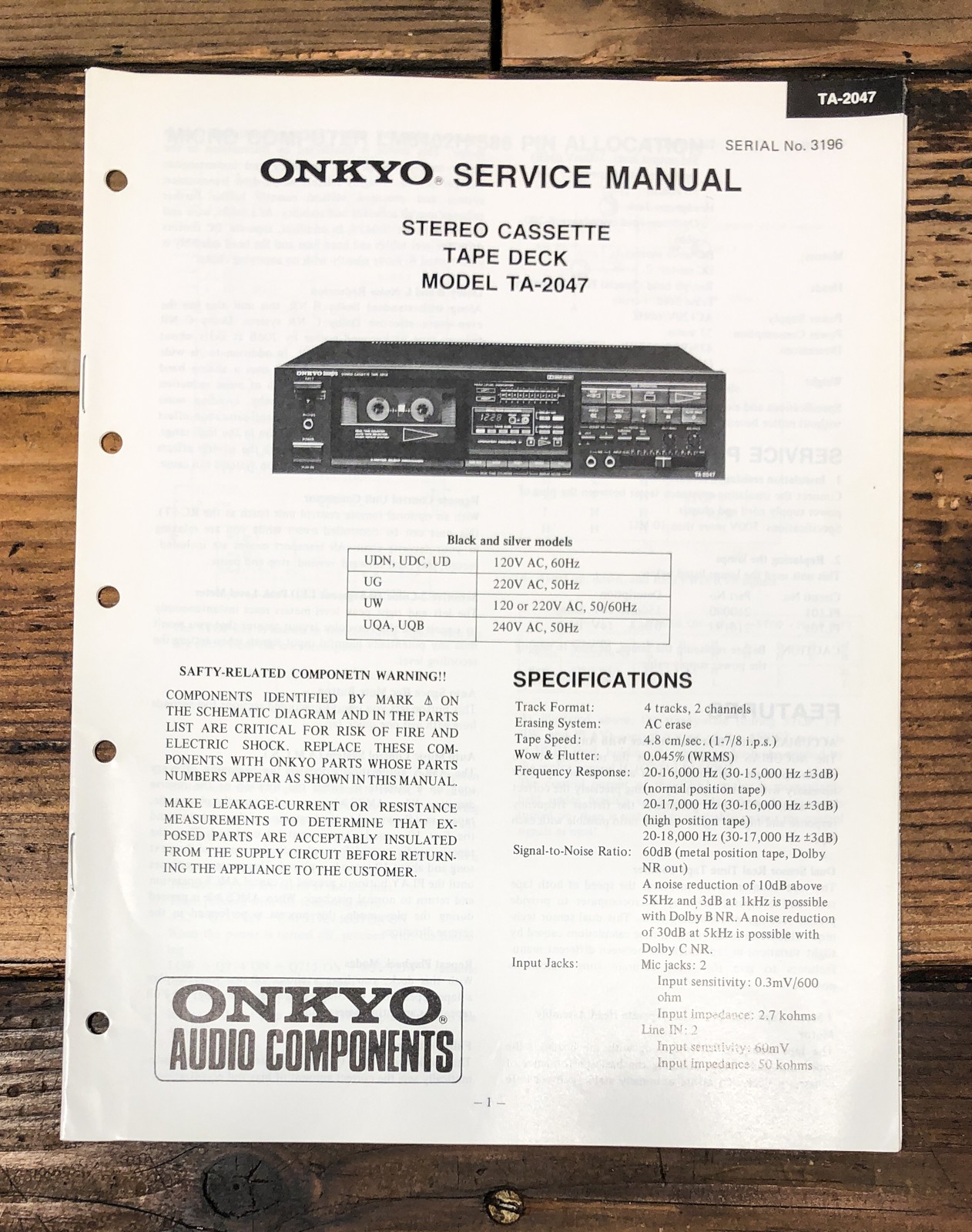
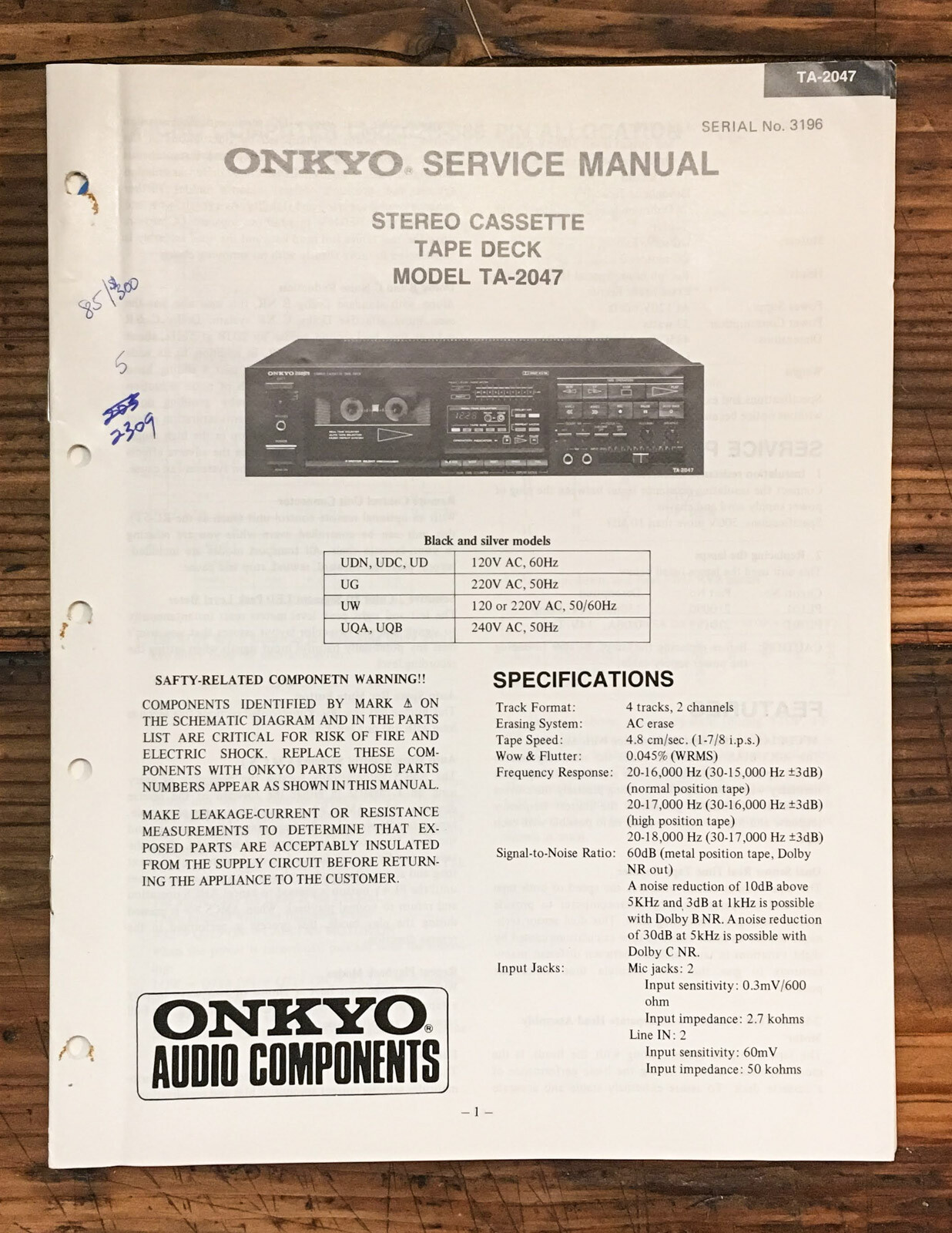
The Onkyo TA-2047 is a stereo cassette tape deck manufactured by Onkyo from 1985 to 1987. It’s not a showpiece or a technological outlier, but it’s the kind of machine that earns quiet loyalty from those who actually use it. Built with a focus on consistency and usability, it represents a mature phase in cassette deck design—where automation, accuracy, and solid engineering converged without the need for excessive fanfare. This was a time when the cassette format had reached a peak in fidelity, and the TA-2047 played its part with confidence, even if it didn’t lead the headlines.
What sets the TA-2047 apart isn’t a single headline feature, but the way it brings several high-end traits together in a cohesive, reliable package. It handles normal, chrome, and metal tapes, with automatic tape type selection that detects the tape upon insertion and applies the correct equalization settings. This works in tandem with Accubias, Onkyo’s system for optimizing recording bias, reducing guesswork during setup and ensuring consistent recordings. Combined with full logic controls and a three-motor system, the deck executes commands cleanly and returns reliably to stop, avoiding the clunky transitions that plague belt-driven or clutch-based systems.
Owners report that it delivers a sound that’s “surprisingly excellent”—punchy, clean, and detailed—with one noting it “sounds as good as my other high-end decks.” Another praised its “excellent sound quality,” suggesting that Onkyo didn’t cut corners in execution. While it may not have the name recognition of some flagship decks, its combination of smart automation, solid mechanics, and strong sonic performance has earned it a steady following among those who value function over flash. Marketed under Onkyo’s “Logic Design” philosophy, the TA-2047 emphasizes reliability and ease of use, positioning it as a serious contender in the mid-tier of the brand’s 2000 series lineup.
Specifications
| Manufacturer | Onkyo Corporation |
| Model | TA-2047 |
| Product type | Stereo Cassette Tape Deck |
| Years of manufacture | 1985 - 1987 |
| Tape Type | type I, CrO2, Metal |
| Noise Reduction | B, C |
| Frequency Response | 20-16,000 Hz (30-15,000 Hz +3dB) |
| Signal to Noise Ratio | 80dB (dolby C) |
| Wow and Flutter | 0.045% |
| Input | 60mV (line), 0.3mV (mic) |
| Motor | Three motor |
| Drive | Belt driven single-capstan transport |
| Heads | 2 heads |
| Power Supply | AC120V/60Hz |
| Power Consumption | 33 watts |
| Dimensions | 435(W) x 112(H) x 371(D)mm |
| Weight | 6.0 kg |
Key Features
Full Logic Controls & "Logic Design"
The TA-2047 was built around Onkyo’s “Logic Design” philosophy—prioritizing reliability, automation, and user-friendly operation. Full logic controls mean every function is managed electronically, eliminating mechanical linkages and clutches. This results in crisp, decisive tape handling: play starts instantly, stop halts tape movement cleanly, and the transport reliably returns to rest without overshoot. It’s the kind of refinement that doesn’t draw attention to itself until you’ve used a deck that clunks between modes.
Three-Motor Belt-Driven Transport
The transport uses a three-motor system with a belt-driven single-capstan mechanism. This setup ensures precise control over the capstan, take-up, and supply reels, minimizing mechanical slop and contributing directly to the deck’s 0.045% wow and flutter rating—among the best in its class and essential for maintaining pitch stability and tight stereo imaging. While some high-end decks used direct gear drives, the belt-driven system here is well-engineered and contributes to smoother operation, though it does mean periodic maintenance of belts and rollers as they age. The single-capstan design simplifies alignment and maintenance while still delivering excellent tape-to-head contact.
Automatic Tape Sensing & Accubias
One of the standout conveniences is the automatic tape type selection, which detects whether you’ve inserted a Type I (normal), CrO2 (chrome), or metal tape and applies the correct equalization settings. This removes the risk of mismatched configurations that can dull highs or cause distortion. It works in tandem with Accubias, Onkyo’s bias optimization system, which adjusts recording levels based on the tape’s characteristics. Users can fine-tune for maximum fidelity without manual guesswork—making it a practical choice for those regularly recording from vinyl or other analog sources.
Dolby B & C Noise Reduction
The inclusion of both Dolby B and Dolby C places the TA-2047 above entry-level models. Dolby C, in particular, provides up to 20 dB of noise reduction above about 1,000 Hz, dramatically reducing tape hiss—especially on metal tapes, where high-frequency detail is rich but so is background noise. This allows subtle reverb tails, dynamic shifts, and fine instrumental textures to come through clearly. When properly aligned, the difference is transformative, turning cassette listening into a genuinely high-fidelity experience.
Digital Features & DC Servo Motor
The digital linear tape counter with four digits allows for accurate cueing and repeatable positioning, a feature that was still relatively premium in the mid-1980s. Combined with music search functionality (inferred from digital counter use), it makes navigating tapes far more efficient. The deck also uses a DC servo motor, which provides stable speed control and contributes to the low wow and flutter. This type of motor responds quickly to load changes and maintains consistent rotation, improving overall playback accuracy. A subsonic filter is also included, eliminating low-frequency rumble from turntable sources or worn tapes, tightening the bass response without dulling the overall sound.
Serviceability & Known Issues
While the TA-2047 is built for reliability, it’s not immune to age-related wear. One documented circuit issue involves resistor R770, which has a specified value of 3.3 ohms but has been reported to fail and measure around 250 ohms when burnt out—a condition that can affect performance and should be checked during servicing. Belts, pinch rollers, and idler wheels should be inspected carefully: degraded rubber leads to poor tension, speed instability, and tracking issues. Replacement belts are available for $10, and service manuals can be purchased for prices ranging from $9 to $64, making the TA-2047 a viable candidate for restoration.
Collectibility & Value
The Onkyo TA-2047 isn’t a rare trophy, but it has developed a steady following among cassette enthusiasts who appreciate its reliable performance and high fidelity. The current market reflects this: a used unit was listed at €350 on January 23, 2025. A reconditioned unit was listed at $199 on October 20, 2025. Owners describe it as having “excellent sound quality and high quality construction,” and with parts and service manuals available, the TA-2047 remains a practical, rewarding machine to own and keep running. User comments highlight its “surprisingly excellent” sound—punchy, clean, and detailed—proving that high-end performance doesn’t always come with a high-end price tag.
eBay Listings


As an eBay Partner, we earn from qualifying purchases. This helps support our independent vintage technology research.
Related Models
- Onkyo SC-1500 (1978)
- Onkyo TA-2500 (1973)
- Onkyo A-812XG (1980)
- Onkyo TX-6500 (1977)
- Onkyo TX-6500MKII (1982)
- Luxman L-530 (1975)
- Luxman R-404 (1975)
- Luxman RV-371 (1975)
- Luxman SQ-38U (1975)
- Luxman T-14 (1972)