Onkyo A-700: A Forgotten Powerhouse of the 1970s Hi-Fi Era
In the mid-1970s, Japanese audio manufacturers were in full swing, pushing the boundaries of performance, reliability, and value in the burgeoning high-fidelity market. Among the leaders of this golden age was Onkyo, a company that had already built a reputation for engineering excellence and sonic transparency. The Onkyo A-700, introduced in 1976, stands as a compelling example of the brand’s commitment to high-performance audio during this pivotal era. Though not as widely celebrated today as some of its contemporaries from Sansui or Pioneer, the A-700 remains a hidden gem for vintage audio enthusiasts who appreciate solid engineering, clean power delivery, and a no-nonsense approach to sound reproduction.
Technical Specifications
The Onkyo A-700 was positioned as a high-end integrated amplifier in Onkyo’s lineup, offering a balance of power, precision, and flexibility for discerning listeners. Built during a time when discrete transistor designs were still dominant and before the full onset of the “spec wars,” the A-700 focused on real-world performance rather than headline-grabbing numbers.
| Specification | Detail |
| Model | A-700 |
| Year Introduced | 1976 |
| Type | Integrated Amplifier |
| Power Output | 60W per channel (8Ω, RMS, 20Hz–20kHz) |
| Total Harmonic Distortion | 0.05% (at full power) |
| Frequency Response | 20Hz – 20kHz (+0, -1dB) |
| Input Sensitivity | 2.5mV (MM), 150mV (Line) |
| Input Impedance | 47kΩ (Line), 47kΩ (MM) |
| Output Impedance | 8Ω (matched load) |
| Damping Factor | 40 |
| Signal-to-Noise Ratio | 80dB (A-weighted) |
| Tone Controls | Bass, Treble (±10dB at 100Hz/10kHz) |
| Inputs | 2x Line, 1x MM Phono |
| Outputs | Preamp Out, Tape Loop, Speaker A/B |
| Power Supply | Toroidal-derived (for improved regulation) |
| Dimensions | 430mm (W) × 145mm (H) × 355mm (D) |
| Weight | 14.5 kg (32 lbs) |
The A-700 featured a dual-mono preamp stage with discrete components and a robust push-pull output stage using high-current transistors—hallmarks of Onkyo’s design philosophy at the time. The inclusion of a toroidal-derived power supply (though not a full toroidal transformer) provided cleaner power delivery and reduced electromagnetic interference, contributing to a quieter background and improved dynamics.
Sound Characteristics and Performance
The sonic signature of the Onkyo A-700 is best described as balanced, dynamic, and authoritative. It lacks the overly warm coloration of some Japanese amps from the era, instead offering a more neutral and transparent presentation. This makes it particularly well-suited to a wide range of speakers, especially those that benefit from tight bass control and a clear midrange.
- Bass: Tight, well-defined, and punchy. The damping factor of 40 ensures good control over speaker cones, making it ideal for dynamic drivers.
- Midrange: Clear and articulate, with natural tonality. Vocals and acoustic instruments are rendered with realism and presence.
- Treble: Smooth and extended without harshness. Cymbals and high-frequency detail are resolved without becoming fatiguing.
- Soundstage: Wide and well-layered for an integrated amplifier of its time, with good imaging and separation.
While not as lush or romantic as some of the tube-like Sansui or Yamaha models, the A-700 excels in rhythm, timing, and clarity, making it a favorite among listeners who prioritize accuracy and musical engagement over euphonic warmth.
Notable Features and Innovations
The Onkyo A-700 stood out in its era for several thoughtful design choices:
- Dual Preamp Outputs and Tape Loop: Uncommon in mid-tier integrated amps, this allowed for future expansion, such as adding a graphic equalizer or external processor.
- Speaker A/B Selection: A practical feature for owners with multiple speaker pairs or listening zones.
- High-Quality Internal Wiring and Layout: Onkyo paid close attention to internal signal paths, minimizing crosstalk and preserving signal integrity.
- Heavy-Duty Heat Sinks: The large aluminum heat sinks on the rear panel not only ensured thermal stability but also contributed to the amp’s solid, premium feel.
- Precision VU Meters: While largely aesthetic, the dual VU meters added a touch of visual flair and allowed users to monitor output levels in real time.
The front panel design is classic 1970s Japanese hi-fi: clean, functional, and elegant. A large central volume knob is flanked by source selection and tone control toggles, with the VU meters positioned just above. The build quality is exceptional—thick steel chassis, high-quality potentiometers, and durable switches all point to a product built to last.
Common Issues and Maintenance
Like all vintage electronics from the 1970s, the Onkyo A-700 requires some attention if it’s to perform at its best today. Fortunately, it’s generally a reliable unit when properly maintained.
Common issues include:
- Capacitor Aging: The electrolytic capacitors in the power supply and signal path may have dried out over time. Replacing them (recapping) is often necessary to restore full performance and prevent hum or distortion.
- Oxidized Controls: The volume and tone potentiometers can become scratchy. Cleaning with contact cleaner may help, but replacement with modern equivalents is often the best long-term solution.
- Bias Drift: The output transistors require proper bias adjustment. Over time, this can drift, leading to crossover distortion or overheating.
- Dust and Corrosion: Units stored in damp or dusty environments may suffer from contact corrosion on switches and jacks.
A full service by a qualified technician—including recapping, bias adjustment, and cleaning—can bring a neglected A-700 back to like-new condition. Given the robustness of its original design, a well-maintained unit can provide decades more of reliable service.
Current Market Value and Collectibility
The Onkyo A-700 is not yet a mainstream collector’s item, but its reputation is growing among vintage audio aficionados. Units in excellent cosmetic and working condition typically sell for $250–$400, depending on region and included accessories. Fully serviced examples with replaced capacitors and clean controls command a premium.
While it may not carry the same cachet as a Marantz 2270 or a Sansui G-3300, the A-700 offers excellent value for money. It delivers performance that rivals more famous models, often at a fraction of the price. Its understated design and solid engineering make it a perfect choice for someone building a vintage system without breaking the bank.
Conclusion and Legacy
The Onkyo A-700 is a testament to the quality and ambition of Japanese hi-fi during the 1970s. It may not have the flashy branding or cult following of some of its peers, but in terms of engineering integrity, sonic performance, and build quality, it stands shoulder to shoulder with the best of its era.
For the vintage audio enthusiast, the A-700 represents a smart acquisition—a powerful, reliable, and sonically engaging amplifier that delivers far more than its modest reputation suggests. Whether you're pairing it with classic KEF speakers, AR loudspeakers, or modern high-efficiency designs, the Onkyo A-700 brings music to life with authority and grace.
In a world increasingly dominated by digital streaming and miniaturized audio, the A-700 reminds us of a time when amplifiers were built to last, designed with care, and cherished for their ability to connect us more deeply to the music we love. It may be a forgotten classic, but for those in the know, the Onkyo A-700 is a true keeper.
eBay Listings


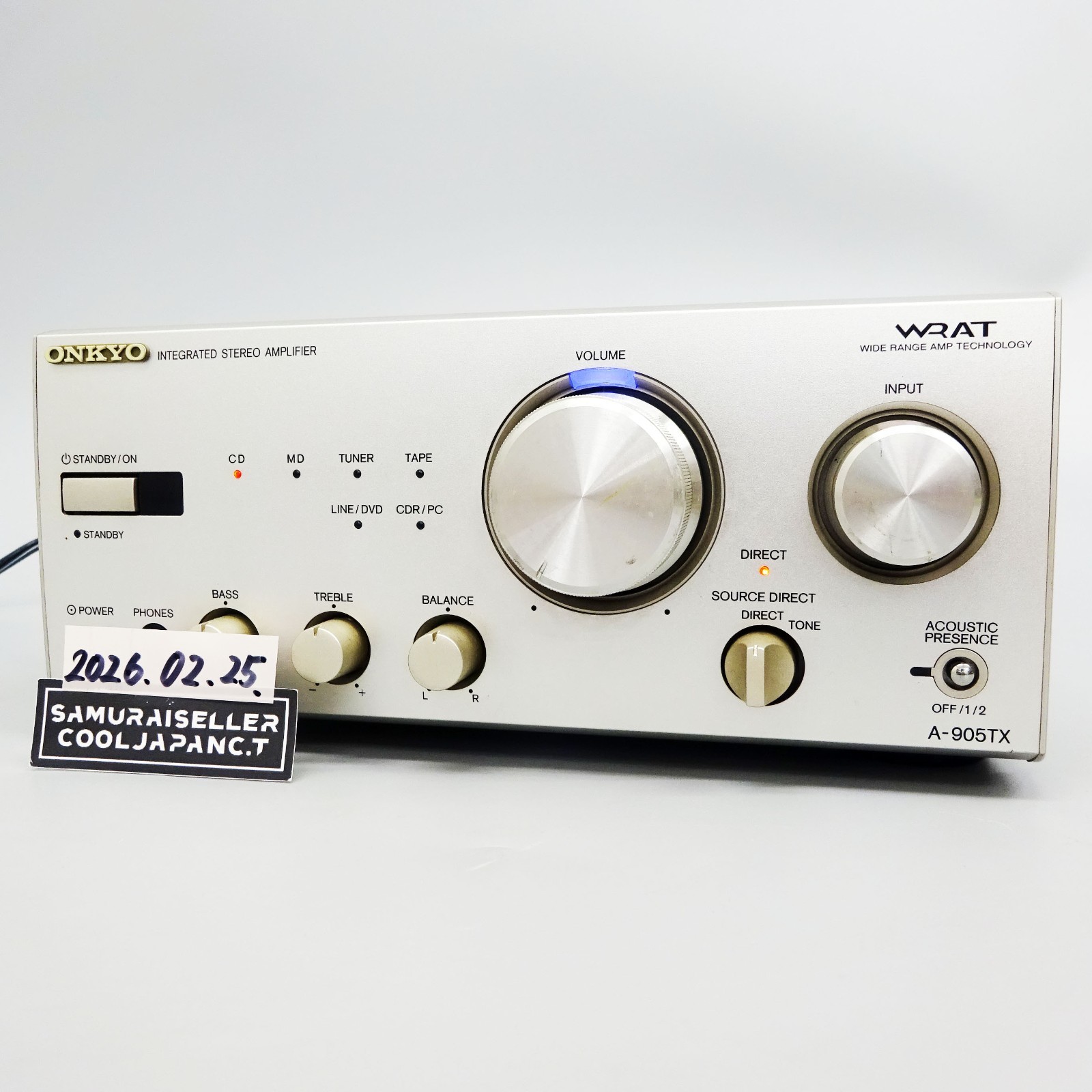
As an eBay Partner, we earn from qualifying purchases. This helps support our independent vintage technology research.
Related Models
- Onkyo SC-1500 (1978)
- Onkyo TA-2047 (1976)
- Onkyo TA-2500 (1973)
- Onkyo A-812XG (1980)
- Onkyo TX-6500 (1977)
- Luxman L-530 (1975)
- Luxman R-404 (1975)
- Luxman RV-371 (1975)
- Luxman SQ-38U (1975)
- Luxman T-14 (1972)