Onkyo A-300: A Hidden Gem from Onkyo’s Golden Era
In the mid-1970s, Japanese audio manufacturers were rapidly gaining global recognition for their ability to deliver high-performance audio equipment at competitive prices. Among these, Onkyo stood out for its commitment to engineering excellence, rugged construction, and musical fidelity. The Onkyo A-300, introduced in 1976, is a prime example of the company’s dedication to quality during this golden age of analog audio.
Though not as widely celebrated as some of its contemporaries like the Pioneer SX series or Sansui receivers, the A-300 has earned a loyal following among vintage audio enthusiasts for its understated elegance, robust build, and engaging sound signature. As an integrated amplifier—rather than a full receiver—it lacks a built-in AM/FM tuner, which gives it a cleaner signal path and allows it to focus purely on amplification. This makes the A-300 a favorite among purists who pair it with high-quality external sources like turntables and tape decks.
Technical Specifications
The Onkyo A-300 was designed with precision and reliability in mind. It features a dual-mono preamplifier stage and a high-current power amplifier section, both hallmarks of Onkyo’s design philosophy at the time. The amplifier uses discrete transistor circuitry—no integrated circuits in the signal path—contributing to its transparent and dynamic sound.
| Specification | Detail | ||
| Model | A-300 | ||
| Manufacturer | Onkyo Corporation | ||
| Year Introduced | 1976 | ||
| Type | Integrated Amplifier | ||
| Power Output | 45 watts per channel (8Ω, RMS, both channels driven) | ||
| Frequency Response | 20Hz – 20kHz (+0, -1 dB) | ||
| Total Harmonic Distortion | <0.05% (1kHz, rated power) | ||
| Input Sensitivity | 2.5 mV (MM), 150 mV (Line) | ||
| Input Impedance | 47kΩ (Line), 47kΩ | 1000pF (MM) | |
| Output Impedance | 0.1Ω (8Ω tap) | ||
| Damping Factor | >50 (1kHz, 8Ω) | ||
| Signal-to-Noise Ratio | >80 dB (IHF-A weighted) | ||
| Speaker Impedance | 4–16Ω | ||
| Inputs | 2x Line (RCA), 1x MM Phono | ||
| Outputs | 1x Preamp Out, 1x Tape Loop | ||
| Power Supply | Toroidal-style transformer (high-current) | ||
| Dimensions (W×H×D) | 430 × 145 × 330 mm (17 × 5.7 × 13 in) | ||
| Weight | 12.5 kg (27.5 lbs) | ||
| Finish | Black or Champagne (brushed aluminum front panel) |
Sound Characteristics and Performance
The Onkyo A-300 delivers a sound that is both detailed and musically engaging. It strikes a balance between analytical precision and warmth, making it equally at home with classical recordings, jazz, rock, and vocals. The phono stage, designed for moving magnet (MM) cartridges, is particularly well-regarded for its low noise and excellent tracking of vinyl grooves, allowing vintage LPs to shine with clarity and presence.
One of the standout qualities of the A-300 is its excellent bass control. Thanks to its high damping factor and robust power supply, it maintains tight, articulate low-end response even with demanding speaker loads. This makes it compatible with a wide range of vintage speakers, from efficient Klipschorns to more power-hungry AR and Advent models.
The midrange is natural and forward, giving voices and instruments a lifelike presence. High frequencies are smooth and extended without being harsh—an attribute that prevents listener fatigue during long listening sessions. Overall, the A-300 presents a slightly warm tonal balance, which many find pleasing and forgiving, especially with less-than-perfect recordings.
Notable Features and Innovations
While the A-300 may appear modest at first glance, it incorporates several design features that were advanced for its time:
- Dual-Mono Preamplifier Design: The left and right preamp stages are physically and electrically isolated to minimize crosstalk and channel interference, resulting in a wider, more stable soundstage.
- High-Current Output Stage: Utilizing multiple parallel output transistors, the A-300 can deliver strong current into low-impedance speakers, ensuring dynamic headroom and control.
- Discrete Component Construction: Unlike many competitors who began incorporating op-amps, Onkyo used discrete transistors throughout the signal path for superior linearity and sonic purity.
- Heavy-Duty Power Supply: A large, well-filtered power supply ensures stable voltage delivery, even during dynamic musical peaks.
- Gold-Plated RCA Jacks and Binding Posts: These high-quality connectors resist corrosion and ensure reliable signal transfer over decades of use.
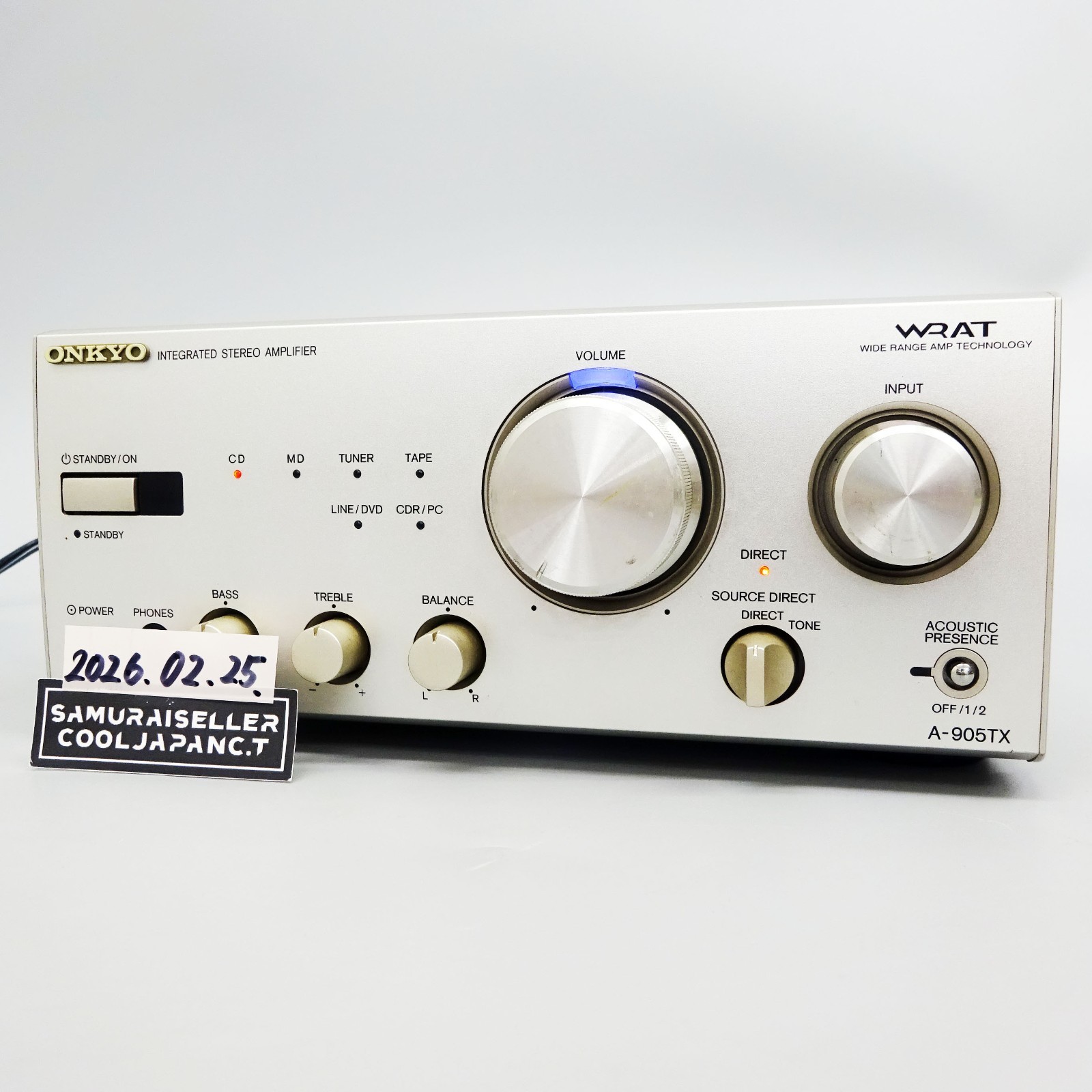
The front panel features a classic minimalist aesthetic—brushed aluminum with large, easy-to-read knobs for volume, balance, input selection, and bass/treble controls. A large VU meter in the center provides visual feedback on output levels, adding both functionality and vintage charm.
Common Issues and Maintenance
Like any vintage electronic device, the Onkyo A-300 may require some maintenance after 40+ years of use. However, it is generally known for its reliability and rugged construction.
Common issues include:
- Capacitor Aging: The electrolytic capacitors in the power supply and signal path may have dried out over time. A full recapping by a qualified technician is recommended to restore optimal performance and prevent potential damage.
- Tarnished Controls: The rotary knobs and potentiometers can become noisy due to oxidation. Cleaning with contact cleaner (e.g., DeoxIT) often resolves this, but worn pots may need replacement.
- Bias Drift: The output transistor bias may drift over time, affecting sound quality and efficiency. A professional bias adjustment is advisable during servicing.
- Dust and Oxidation: Internal dust buildup and oxidation on connectors can degrade performance. A thorough cleaning and inspection are recommended before extended use.
With proper care, the A-300 can continue to perform beautifully for decades. Its modular design and widespread availability of service manuals make it a favorite among DIY audio restorers.
Current Market Value and Collectibility
The Onkyo A-300 is not as widely collected as some of the more famous receivers of the 1970s, but its reputation among audiophiles is growing. Well-maintained or professionally restored units typically sell for $250–$400, depending on condition, finish, and included accessories.
Units in original packaging with documentation or matching-number components can command higher prices, especially in Europe and Japan, where vintage Onkyo gear is particularly prized. While not a “blue chip” collector’s item like a Marantz 2270 or Harman Kardon Citation series, the A-300 offers excellent value for money and is increasingly recognized as a high-performance amplifier that outperforms many of its more famous peers.
Conclusion and Legacy
The Onkyo A-300 may not have the name recognition of some of its contemporaries, but it embodies the best of 1970s Japanese audio engineering: solid build, musical accuracy, and thoughtful design. As an integrated amplifier, it appeals to listeners who value purity of signal and are building a source-focused analog system.
Its warm yet detailed sound, strong build quality, and relative scarcity compared to mass-market receivers make the A-300 a sleeper hit in the vintage audio world. For the discerning audiophile or collector looking for a reliable, sonically rewarding amplifier from Onkyo’s golden era, the A-300 is a compelling and often overlooked choice.
Whether you're restoring a classic audio setup or discovering vintage gear for the first time, the Onkyo A-300 deserves a place on your shortlist. It’s a testament to a time when performance, craftsmanship, and musicality came together in perfect harmony.
eBay Listings


As an eBay Partner, we earn from qualifying purchases. This helps support our independent vintage technology research.
Related Models
- Onkyo SC-1500 (1978)
- Onkyo TA-2047 (1976)
- Onkyo TA-2500 (1973)
- Onkyo A-812XG (1980)
- Onkyo TX-6500 (1977)
- Luxman L-530 (1975)
- Luxman R-404 (1975)
- Luxman RV-371 (1975)
- Luxman SQ-38U (1975)
- Luxman T-14 (1972)