Nakamichi RX-202: The Precision Pioneer of High-Fidelity Cassette Recording
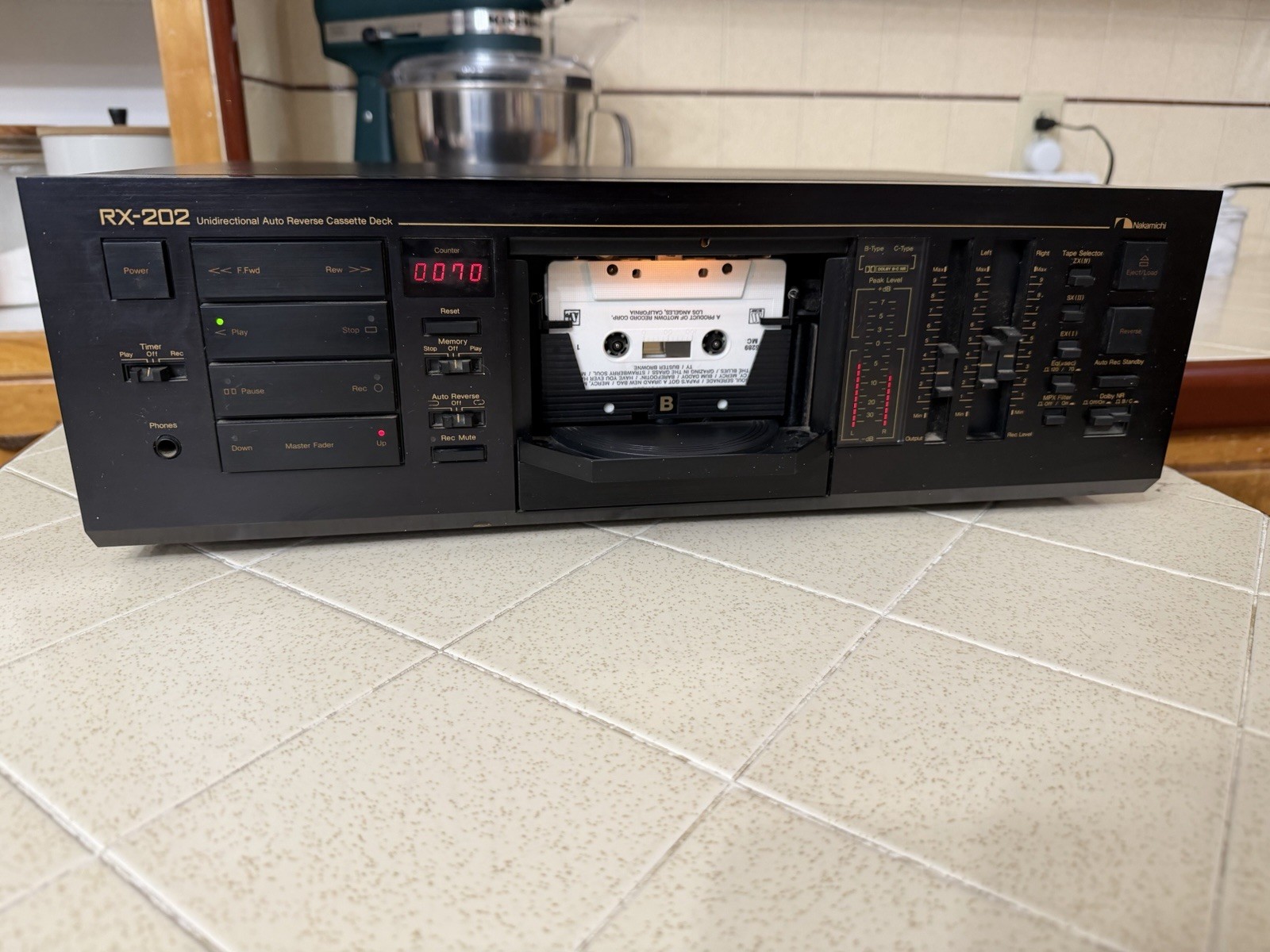
In the late 1970s, as audiophiles sought compact yet high-performance alternatives to reel-to-reel tape, the cassette format began its ascent into serious high-fidelity territory. Among the brands leading this charge, Nakamichi stood apart—renowned for engineering excellence, meticulous calibration, and an unwavering commitment to tape accuracy. The Nakamichi RX-202, introduced in 1979, emerged as a flagship cassette deck during this golden era, embodying the Japanese manufacturer’s pursuit of perfection in analog tape reproduction.
Though not as widely discussed today as the legendary Dragon or the later CR-7, the RX-202 represented a critical step in Nakamichi’s evolution—a bridge between early professional-grade cassette decks and the fully automated, azimuth-correcting marvels that would follow. It was engineered for the discerning listener and semi-professional user who demanded laboratory-grade performance from a compact cassette format.
Technical Specifications
The RX-202 was built around a dual-capstan, three-head design, a hallmark of Nakamichi’s high-end models. This configuration ensured minimal tape flutter, precise speed control, and superior head-to-tape contact—critical for maximizing the fidelity of the 1/8-inch tape format. Its construction emphasized rigidity and isolation, with a heavy chassis and precision-machined transport components.
| Specification | Detail |
| Year Introduced | 1979 |
| Format | 4-Track, 2-Channel Stereo |
| Tape Speed | 1⅞ ips (4.76 cm/s) |
| Heads | Three: Playback, Record, Erase (Ferrite) |
| Motor System | Dual direct-drive capstan motors |
| Wow and Flutter | < 0.055% (WRMS) |
| Frequency Response | 30Hz – 18kHz (with CrO₂ tape) |
| Signal-to-Noise Ratio | 66 dB (Dolby B), 72 dB (Dolby C) |
| Total Harmonic Distortion | < 1.5% |
| Input/Output | Line In/Out (RCA), Mic In (¼") |
| Recording Equalization | 120 µs (Normal), 70 µs (CrO₂/ Metal) |
| Calibration Tape Support | Yes (for level and bias adjustment) |
| Dimensions | 440 mm × 145 mm × 335 mm |
| Weight | 12.5 kg (approx. 27.5 lbs) |
| Power Requirement | 120V / 240V AC, 50/60 Hz |
The RX-202 supported both Type I (ferric) and Type II (chrome dioxide) tapes, with switchable equalization and bias settings to optimize performance across tape types. It featured manual calibration controls on the rear panel—unusual for consumer decks—allowing users to fine-tune record levels and bias for different tape brands, a feature typically reserved for studio recorders.
Sound Characteristics and Performance
The RX-202 delivered a remarkably transparent and dynamic sound for its time. Its three-head design allowed for true separate record and playback functions, meaning the playback head was dedicated solely to reproduction, ensuring optimal alignment and minimal wear. This contributed to a clarity and detail retrieval that few contemporaries could match.
Listeners praised the RX-202 for its neutral tonal balance, tight bass response, and extended high frequencies—particularly when using CrO₂ tapes and Dolby C noise reduction. The dual capstan transport virtually eliminated tape slippage and speed variation, resulting in exceptionally low wow and flutter. This made the RX-202 not only ideal for music duplication but also suitable for voice transcription and field recording where pitch stability was essential.
Compared to mass-market cassette decks of the era—which often used rubber pinch rollers and single motors—the RX-202’s direct-drive capstans and metal pinch rollers provided superior speed accuracy and long-term reliability.
Notable Features and Innovations
While the RX-202 lacked the auto-reverse or azimuth correction of later Nakamichi models, it introduced several advanced features that set it apart:
- Dual Capstan Transport: A rare feature outside of professional decks, this system used two precision capstans to maintain constant tape tension and speed, minimizing distortion and wear.
- Manual Calibration Controls: Located on the rear panel, these allowed users to adjust record level, bias, and replay equalization—crucial for achieving optimal performance with different tape formulations.
- Ferrite Heads with Long Lifespan: While not as durable as later Sendust or permalloy heads, the ferrite heads in the RX-202 were carefully aligned at the factory and offered excellent high-frequency response.
- Dolby B and C Compatibility: The inclusion of Dolby C noise reduction (a relatively new technology in 1979) gave the RX-202 a significant edge in signal-to-noise ratio, especially on softer passages and high-frequency content.
- Professional Build Quality: With a rigid steel chassis, isolated deck mechanism, and high-torque motors, the RX-202 was built to last—many units still function flawlessly today with proper maintenance.
Common Issues and Maintenance
Like all high-precision tape decks from the 1970s and 1980s, the RX-202 requires careful maintenance to perform at its best. Common issues include:
- Deterioration of Rubber Components: The tape lifters, idler tires (if present in certain submodels), and pressure pads can harden or crumble over time. Replacement with modern silicone or urethane parts is essential.
- Head Wear and Alignment: While durable, the playback and record heads can become misaligned or worn after decades of use. Professional demagnetization and alignment are recommended every few hundred hours.
- Capstan and Pinch Roller Buildup: Oxide shedding from tapes can accumulate on the capstan shafts and pinch rollers, affecting speed accuracy. Regular cleaning with isopropyl alcohol is advised.
- Capacitor Aging: The power supply and signal path capacitors may dry out over time, leading to hum, channel imbalance, or failure. A full recapping is often necessary for units that have been dormant.
Due to its semi-pro design, the RX-202 benefits from periodic servicing by a technician experienced with vintage Nakamichi equipment. Calibration tapes (such as the Nakamichi CS-1) are highly recommended for optimal setup.
Current Market Value and Collectibility
The RX-202 is not as sought-after as the Dragon or CR-7, but it holds a respected place among cassette connoisseurs and vintage audio collectors. In working condition, with recent maintenance, the RX-202 typically sells for $400–$700, depending on geographic region and cosmetic condition.
Its value is driven by:
- Rarity: Fewer units were produced compared to mainstream models.
- Build Quality: A serious piece of engineering that outlasts most consumer decks.
- Historical Significance: As a precursor to Nakamichi’s azimuth-adaptive decks, the RX-202 represents a pivotal moment in cassette evolution.
Collectors appreciate the RX-202 not just for its sound, but as a testament to an era when the cassette was pushed to its technical limits.
Conclusion and Legacy
The Nakamichi RX-202 may not have the fame of its successors, but it stands as a crucial milestone in the pursuit of high-fidelity cassette reproduction. It combined professional-grade transport mechanics with audiophile-level circuitry, offering a level of performance that few could match in 1979.
For enthusiasts today, the RX-202 is more than a nostalgic relic—it’s a functional masterpiece of analog engineering. With proper care, it remains capable of producing cassette recordings of startling clarity and depth, reminding us that the humble cassette, in the right hands, could rival open-reel in performance.
If you’re exploring the upper echelon of vintage cassette decks, the RX-202 deserves a place on your shortlist—a quiet pioneer from Nakamichi’s golden age.
eBay Listings



As an eBay Partner, we earn from qualifying purchases. This helps support our independent vintage technology research.
Related Models
- Nakamichi 1000ZXL (1985)
- Nakamichi BX-150 (1983)
- Nakamichi CR-4 (1969)
- Nakamichi 1000-II (1974)
- Nakamichi 1000ZXL-LIMITED (1985)
- Sony TC-2050SD (1978)
- Aiwa AD-F990 (1993)
- Kenwood KX-3060 (1982)
- Sony TC-2130A (1974)
- Sony TC-2220 (1972)