Nakamichi MR-1: The Apex of Analog Tape Recording
In the golden age of high-fidelity audio, few names commanded as much respect as Nakamichi. Known for pushing the boundaries of tape technology, the Japanese manufacturer reached its zenith with the release of the Nakamichi MR-1 in 1983. Not a cassette deck, nor a receiver, but a full-scale, professional-grade reel-to-reel tape recorder, the MR-1 was engineered for one purpose: to reproduce sound with unparalleled accuracy and transparency. It stands today not just as a rare artifact of analog mastery, but as a symbol of what was possible when engineering ambition met audiophile obsession.
At a time when compact cassettes were gaining popularity for home use and digital formats like the Compact Disc were on the horizon, Nakamichi doubled down on analog tape—crafting a machine that would become legendary among recording engineers, mastering studios, and the most discerning audiophiles.
Technical Specifications
The MR-1 was designed with studio-grade components and built to exacting tolerances. It supported ¼-inch tape on 10.5-inch reels and operated at two professional speeds: 7.5 ips (inches per second) and 15 ips, allowing users to balance runtime and fidelity. With its three-head configuration (separate record, playback, and erase heads), precision capstan drive system, and advanced electronics, the MR-1 delivered frequency response and dynamic range that rivaled or exceeded contemporary studio recorders.
| Specification | Detail |
| Format | ¼-inch reel-to-reel |
| Tape Speeds | 7.5 ips, 15 ips |
| Heads | Three-motor, three-head system (erase, record, playback) |
| Frequency Response | 20Hz – 20kHz ±2dB (15 ips, with 1515 oxide tape) |
| Signal-to-Noise Ratio | >72dB (A-weighted, with Dolby C) |
| Total Harmonic Distortion | <0.05% at 0dB, 1kHz |
| Wow and Flutter | <0.05% (WRMS) |
| Input/Output | Balanced XLR and unbalanced RCA |
| Recording Formats | Full-track mono, half-track stereo |
| Bias & EQ | Adjustable for different tape types (Fe, CrO₂, Metal) |
| Motors | Three direct-drive DC servos |
| Display | Analog VU meters, speed indicator, tape counter |
| Dimensions | 500 mm (W) × 210 mm (H) × 500 mm (D) |
| Weight | 32 kg (70.5 lbs) |
Built with a rigid, non-resonant chassis and isolated mechanical sections, the MR-1 minimized vibration and crosstalk—critical for maintaining signal purity. The transport system used a precision capstan and dual pinch rollers, ensuring consistent tape-to-head contact across the entire width. Unlike many consumer tape machines of the era, the MR-1 allowed for manual azimuth adjustment, giving users the ability to fine-tune playback for optimal high-frequency response.
Sound Characteristics and Performance
The sonic signature of the Nakamichi MR-1 is best described as effortlessly transparent. It doesn’t color the sound—it reveals it. When properly calibrated and paired with high-quality tape (such as Ampex 456 or BASF SM468), the MR-1 delivers a soundstage of remarkable depth and width, with pinpoint imaging and a natural tonal balance.
At 15 ips, the machine achieves a frequency response that extends well beyond the limits of human hearing, capturing the subtlest nuances of acoustic instruments and vocal textures. The low end is tight and controlled, free from the flabbiness that plagues lesser tape decks, while the highs are smooth and detailed without harshness. The signal-to-noise ratio, especially when combined with Dolby C noise reduction, approaches that of early digital recordings—yet retains the organic warmth and dynamic ease that defines analog at its best.
Many who have heard the MR-1 describe it as "disappearing" from the audio chain—its neutrality so complete that the listener becomes immersed in the music, not the medium.
Notable Features and Innovations
The MR-1 wasn’t just a high-end reel-to-reel—it was a technological showcase:
- Three-Motor Direct Drive System: Each head and the capstan were driven by independent, servo-controlled motors, eliminating mechanical crosstalk and ensuring stable speed regulation.
- Adjustable Tape Bias and EQ: Unlike fixed-bias consumer decks, the MR-1 allowed users to optimize recording settings for different tape formulations, maximizing fidelity and headroom.
- Professional Connectivity: Dual XLR and RCA inputs/outputs made it compatible with both studio and high-end home systems.
- Real-Time Tape Counter with Memory: Useful for locating specific passages during editing or live recording.
- Manual Azimuth Control: Enabled users to align the playback head for perfect high-frequency response, a feature almost unheard of in consumer machines.
- Dual VU Meters: Large, backlit analog meters provided precise level monitoring during recording.
These features positioned the MR-1 not just as a playback machine, but as a mastering-grade recorder—capable of creating first-generation tapes that could rival commercial releases in quality.
Common Issues and Maintenance
Given its age and complexity, the Nakamichi MR-1 demands careful maintenance. Common issues include:
- Deterioration of Rubber Components: Pinch rollers and idler tires can harden or crack over time, affecting tape tension and speed stability.
- Head Wear and Oxidation: Playback and record heads may require demagnetization and resurfacing. Metal particle tapes, while offering superior performance, are more abrasive and can accelerate head wear.
- Capstan Bearing Dryness: The precision capstan may seize or wobble if lubrication has dried out.
- Electronic Drift: Aging capacitors and potentiometers can lead to channel imbalance or noise.
Because of its sophisticated calibration requirements, the MR-1 is not a plug-and-play vintage machine. It benefits from a full service by a technician experienced with high-end reel-to-reel decks, including alignment, bias calibration, and demagnetization. Owners should also be prepared to source or refurbish reels of high-quality analog tape—a finite and increasingly expensive resource.
Current Market Value and Collectibility
The Nakamichi MR-1 is exceedingly rare. Unlike the more widely known Nakamichi cassette decks (like the legendary Dragon), the MR-1 was produced in limited numbers and targeted a niche market of professionals and ultra-high-end enthusiasts. As such, it rarely appears on the used market.
When units do surface—typically through audiophile forums, specialty dealers, or estate sales—they command premium prices, often ranging from $3,000 to $6,000 or more, depending on condition and completeness. Fully serviced examples with original accessories (such as calibration tapes, manuals, and dust covers) are especially prized.
Collectors value the MR-1 not only for its sound quality but as a mechanical masterpiece—a testament to an era when audio equipment was built to last and engineered without compromise. It’s a machine that appeals to both analog purists and engineering aficionados.
Conclusion and Legacy
The Nakamichi MR-1 stands as one of the greatest analog tape recorders ever made for the consumer and semi-professional market. While it arrived at a time when the audio world was shifting toward digital, it represented the absolute peak of reel-to-reel technology—a final, glorious statement of what magnetic tape could achieve.
It wasn’t just a recorder; it was a statement of philosophy: that fidelity, craftsmanship, and attention to detail matter above all else. In an age of streaming and compression, the MR-1 reminds us of the beauty of physical media, the warmth of analog, and the joy of listening with intention.
Today, it remains a holy grail for analog enthusiasts—a machine that, when properly maintained, can still outperform many modern digital recorders in musicality and realism. For those lucky enough to own or hear one, the Nakamichi MR-1 isn’t just vintage audio equipment. It’s analog perfection incarnate.
eBay Listings

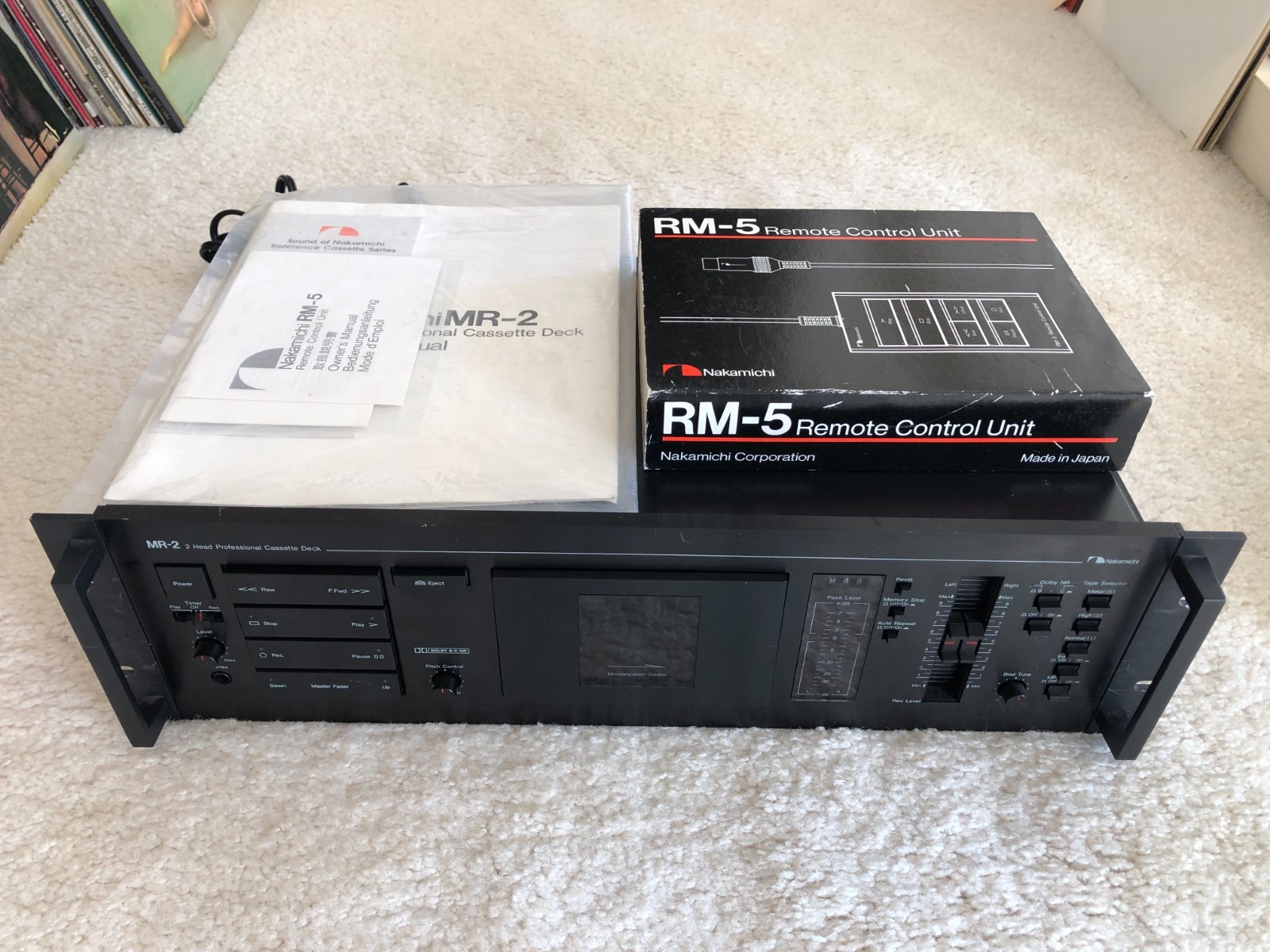

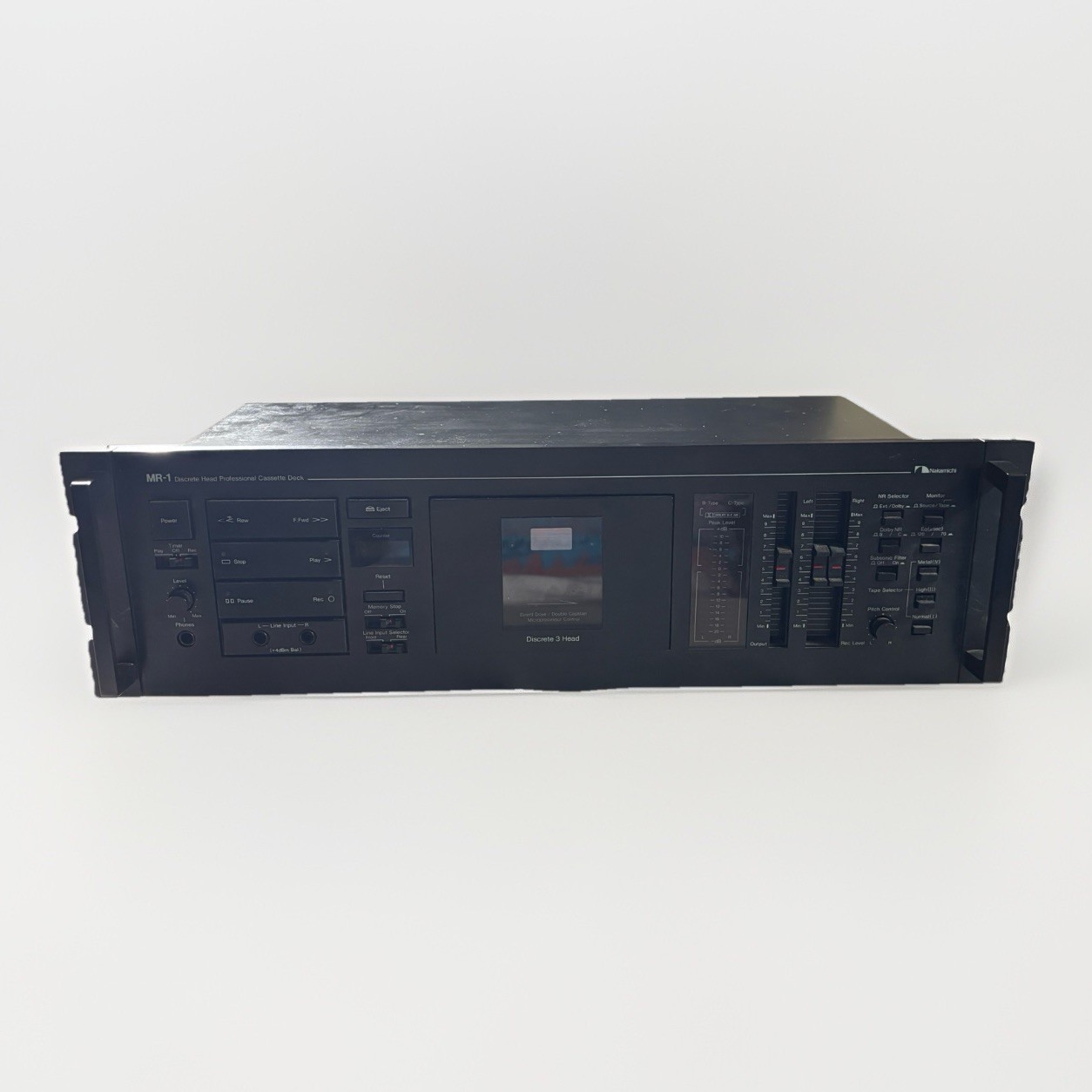
As an eBay Partner, we earn from qualifying purchases. This helps support our independent vintage technology research.
Related Models
- Nakamichi BX-1 (1985)
- Nakamichi 600-II (1977)
- Nakamichi BX-2 (1983)
- Nakamichi CR-3 (1971)
- Nakamichi CR-7 (1971)
- Akai AM-2850 (1975)
- Akai AP-206 (1975)
- Acoustic Research research-ar-17 (1978)
- Acoustic Research AR-19 (1994)
- Acoustic Research AR-1W (1954)