Nakamichi BX-2 (1980–1983)
Not flashy, never showy—just one of the cleanest, most honest cassette decks of its era, built to disappear into the music.
Overview
If you've ever chased that elusive analog clarity—the kind where vocals sit just right in the mix and cymbals don’t shred your ears—you’ve probably crossed paths with the Nakamichi BX-2 in spirit, if not in person. This isn’t the Dragon. There are no auto-reversing mechanisms, no exotic tape alignment wizardry, no cult-level mystique. But what it lacks in theatrics, it makes up for in execution: a no-nonsense, precision-built 2-head cassette deck that delivered high-end performance without the high-end price tag. Introduced in 1980 and produced through 1983, the BX-2 was positioned as a “Classic Model” in Nakamichi’s lineup, sitting between the entry-level BX-1 and the more advanced BX-3. It wasn’t trying to win beauty contests; it was built to record and play back tape with surgical accuracy, and it did so with remarkable consistency.
Owners still talk about its quiet operation, its solid transport, and that rare quality of sounding “invisible”—like the machine itself wasn’t there, just the music. It didn’t need blinking lights or chrome trim to prove its worth. Nakamichi’s own marketing put it best: “Emphasis is on sonic excellence, not bells and whistles; on clean elegant styling, not superfluous knobs.” And if you’ve ever compared a BX-2 to a similarly priced deck from Sony or Yamaha of the same era, you know exactly what they meant. It wasn’t just competitive—it often outperformed gear that cost more.
Specifications
| Type | 2-head, single compact cassette deck |
| Track System | 4-track, 2-channel stereo |
| Tape Speed | 4.8 cm/s |
| Heads | 1 x record/playback, 1 x erase |
| Motor | 1 x DC servo motor |
| Tape Type | type I, CrO2, Metal |
| Noise Reduction | Dolby B, C |
| Frequency Response | 30 Hz - 18 kHz (±3 dB) |
| Wow and Flutter | 0.04% (WRMS) |
| Signal-to-Noise Ratio | 72 dB (Dolby C), 67 dB (Dolby B), 62 dB (without Dolby) |
| Total Harmonic Distortion | 1.5% |
| Inputs | 60 mV (line), 0.25 mV (mic) |
| Outputs | 0.5V (line) |
| Power Consumption | 23W |
| Dimensions (W x H x D) | 430 x 110 x 290 mm |
| Weight | 6.5kg |
| Voltage | AC Power: 110, 120, 220, 240 V, 50/60 Hz |
| Finish/Colour | Black |
Key Features
The Heart of the Machine: Nakamichi’s Discrete Three-Stage Direct-Coupled Head Amplifier
At the core of the BX-2’s clean, transparent sound is Nakamichi’s proprietary Discrete Three-Stage Direct-Coupled Head Amplifier. This wasn’t just marketing fluff—it was a deliberate engineering choice to minimize signal degradation at the most critical stage: playback. By using discrete components instead of integrated circuits, and coupling them directly without capacitors in the signal path, Nakamichi reduced phase shift and preserved transient detail. The result? A more lifelike presentation, especially in the midrange, where vocals and acoustic instruments live.
Dolby C and the MPX Filter: Smarter Noise Reduction
The BX-2 came equipped with both Dolby B and C noise reduction, but it was the implementation of Dolby C that set it apart. Unlike B-type, which offers about 10 dB of high-frequency noise reduction, Dolby C delivers up to 20 dB above 1,000 Hz—effectively doubling the quietness of the tape. That made a real difference when recording on chrome or metal tapes, especially in quiet passages. And because FM stereo broadcasts include a 19 kHz pilot signal that can confuse Dolby circuits, the BX-2 included a switchable MPX filter to remove it, ensuring consistent noise reduction when taping from radio.
Transport Design: Logic-Controlled, But Not Flashy
The transport is a soft-touch, full-logic mechanism—meaning it uses microprocessor control to manage tape functions with minimal physical force. Press a button, and the deck responds instantly, engaging the appropriate motor and idler with precision. Unlike many decks of the era that used solenoids (which can be noisy and wear out), the BX-2’s mechanism relies on a dedicated motor and a cam with a special shape that outputs 3-bit digital information to the microcomputer. This design reduces mechanical noise and improves long-term reliability.
One quirk: fast-forward and rewind don’t use belts. Instead, they rely on an idler tire—a small rubber wheel that transfers motion from the motor to the spindles. It’s a design borrowed from Sankyo transports, and while it’s efficient, it’s also a known failure point. Over time, that tiny tire can harden, crack, or slip, leading to sluggish or uneven winding. It’s not a dealbreaker—replacements exist and the fix is well-documented—but it’s something every BX-2 owner should be aware of.
Head Design and Tape Contact: The RP-2D Advantage
The BX-2 uses a 2-head configuration: one RP-2D record/playback head and one E-2D erase head. The RP-2D is worth noting not just for its durability, but for its hyperbolic-shaped contact surface. By shaping the head’s tape-contact area to match the natural curve of the tape, Nakamichi reduced waviness in the low-frequency response—a subtle but meaningful improvement in bass clarity. It’s one of those details that doesn’t sound like much on paper, but you can hear it when comparing recordings.
Manual Controls Done Right
Everything on the BX-2 is manual—and that’s a good thing. Tape type (normal, chrome, metal), equalization (70 μs or 120 μs), bias, and recording levels all require user input. There’s no auto-sensing, no magic buttons. But that hands-on approach means you’re in control. Want to push a chrome tape a little hotter? You can. Need to tweak playback EQ for an older recording? The knobs are right there. It’s a deck for people who care about the process, not just the result.
The front panel, made of thick aluminum, feels substantial. The cassette lid and meter window are 5 mm acrylic, which resists scratching better than cheap plastic. And the LED peak level meter—showing from -30 dB to +5 dB—gives you real-time feedback without the glare of a fluorescent display.
Historical Context
The BX-2 arrived in 1980, a time when cassette decks were rapidly evolving from portable boomboxes to serious high-fidelity components. Nakamichi, already respected for its tape transport engineering, used the BX series to offer a more accessible entry into its world of precision audio. Positioned above the BX-1 and below the BX-3, the BX-2 was the sweet spot: advanced enough to satisfy serious listeners, but not so complex that it scared off casual users.
It wasn’t marketed as a flagship, but it carried the Nakamichi DNA—clean design, meticulous engineering, and a focus on sonic integrity. And while the fact sheet doesn’t name direct competitors, the message was clear: compare the BX-2 to anything in its price range. It was a quiet flex, and one that held up.
Collectibility & Value
The BX-2 was originally priced at £450—a serious investment in 1980—and today, it holds value among collectors who appreciate understated excellence. On the used market, prices typically range from $150 to $300 USD, depending on condition. A fully serviced unit with replaced belts and a cleaned head block can command the higher end, while untested or cosmetically damaged decks may sell for less. One listing in March 2025 offered a serviced BX-2 for $300, while another untested unit was priced at $75.
Common issues include a sticky eject button, worn idler tires (affecting fast-forward and rewind), and aging belts—especially the capstan motor belt, part number 0C80034A (shared with the BX-1). The power supply can also fail; one owner reported a dead 7812 IC regulator, a simple fix for anyone with basic soldering skills. But overall, the BX-2 is known for reliability, and detailed repair guides are available online.
It’s not rare in the way a Dragon is rare, but it’s not common either. Most turn up on eBay, AudioKarma, or specialty forums. If you’re restoring a vintage system or just want a no-compromise cassette deck that won’t dominate your rack, the BX-2 is a smart pick. It’s the kind of gear that doesn’t shout, but once you hear it, you can’t unhear it.
eBay Listings

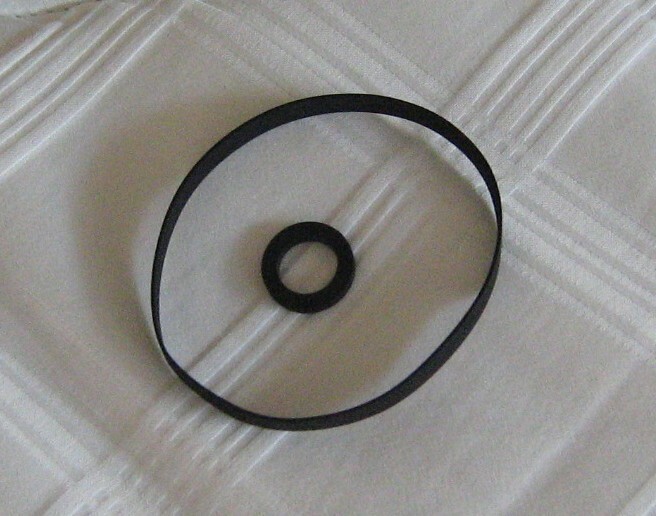


As an eBay Partner, we earn from qualifying purchases. This helps support our independent vintage technology research.
Related Models
- Nakamichi BX-1 (1985)
- Nakamichi 600-II (1977)
- Nakamichi CR-3 (1971)
- Nakamichi CR-7 (1971)
- Nakamichi MR-1 (1983)
- Akai AM-2850 (1975)
- Akai AP-206 (1975)
- Acoustic Research research-ar-17 (1978)
- Acoustic Research AR-19 (1994)
- Acoustic Research AR-1W (1954)