Nakamichi 700ZXE: The Pinnacle of Cassette Deck Engineering
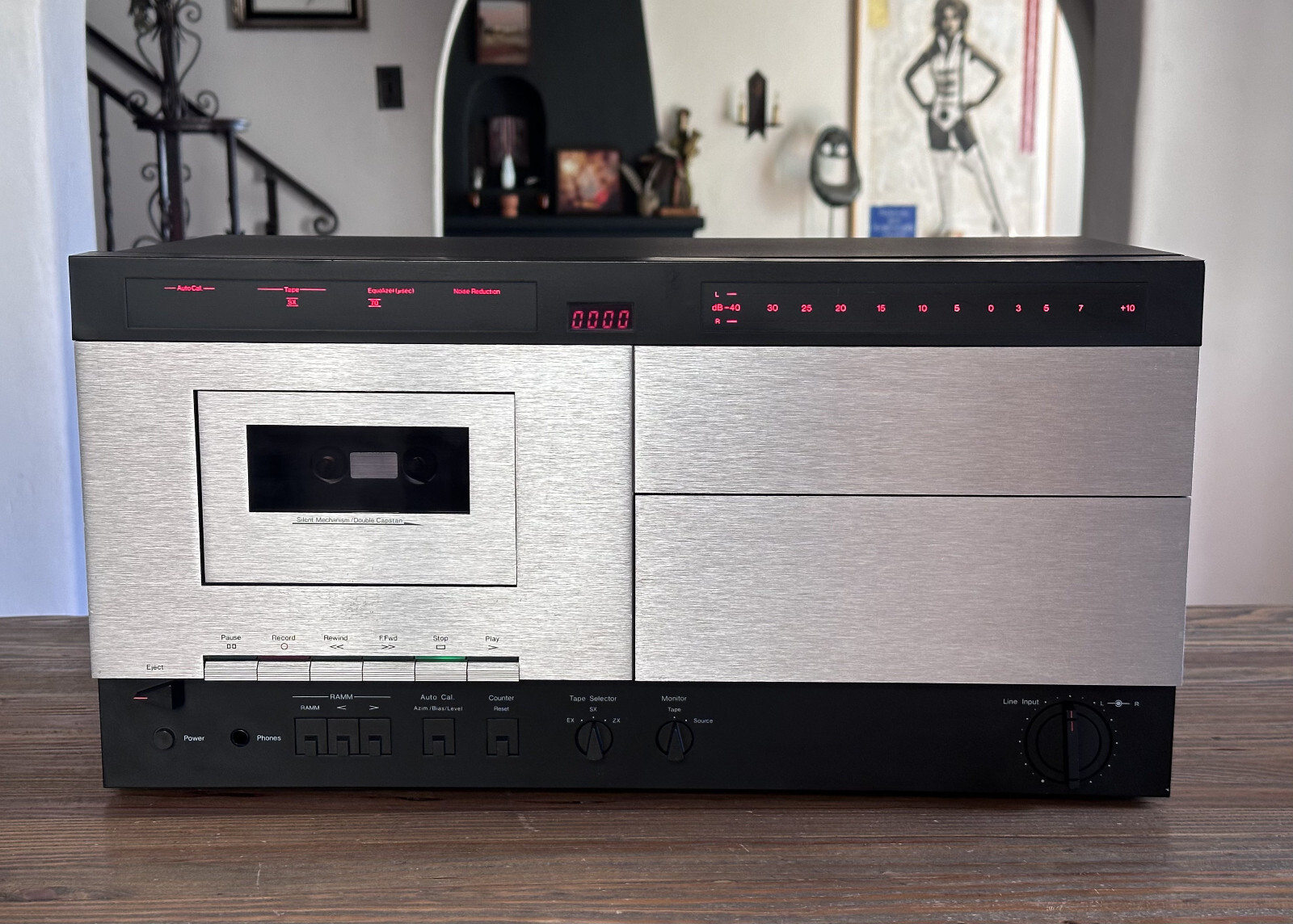
In the late 1980s, when high-fidelity audio reached a technological zenith before the digital revolution took hold, Nakamichi stood at the forefront of analog innovation. Among its legendary lineup of cassette decks, the Nakamichi 700ZXE occupies a rarefied position—not quite as famous as the iconic Dragon, but no less remarkable in its engineering ambition. Released in 1987, the 700ZXE represented the culmination of Nakamichi’s pursuit of perfect tape alignment, dynamic range, and user-friendly automation, all wrapped in a sleek, professional-grade chassis.
While overshadowed in popular lore by the auto-reversing Dragon, the 700ZXE was a no-compromise machine designed for critical listeners, mastering engineers, and audiophiles who demanded laboratory-grade accuracy from their cassette playback. It was part of Nakamichi’s elite Z-series, a line that pushed the boundaries of what analog tape could achieve in terms of frequency response, wow and flutter, and channel separation.
Technical Specifications
The 700ZXE was built around Nakamichi’s advanced tape transport and calibration systems, combining precision mechanics with intelligent electronics. Below is a detailed breakdown of its key specifications:
| Specification | Detail |
| Year Introduced | 1987 |
| Type | 3-Head, Full-Track Stereo Cassette Deck |
| Tape Speed | 1⅞ ips (4.76 cm/s) |
| Heads | Fujiwara-manufactured: Record (Permalloy), Playback (Sendust), Erase (Ferrite) |
| Motor System | Dual direct-drive capstan motors with quartz-lock speed control |
| Wow and Flutter | < 0.045% (weighted, RMS) |
| Frequency Response | 20Hz – 20kHz (±3dB) with metal tape (Dolby C) |
| Signal-to-Noise Ratio | > 72 dB (Dolby C), > 68 dB (Dolby B) |
| Total Harmonic Distortion | < 1.5% at 3% output |
| Channel Separation | > 55 dB (1 kHz), > 45 dB (10 kHz) |
| Input/Output | Line In: 150 mV, Line Out: 150 mV; 10kΩ input impedance, 1kΩ output impedance |
| Calibration System | Automatic Azimuth Correction (AAC), Auto Bias & Level Calibration |
| Tape Compatibility | Type I (Ferric), Type II (Chrome), Type IV (Metal) |
| Noise Reduction | Dolby B, C, and HX Pro support |
| Display | Vacuum Fluorescent Display (VFD) with tape status, time, and level meters |
| Dimensions | 485 mm × 146 mm × 395 mm (W×H×D) |
| Weight | 16.5 kg (36.4 lbs) |
| Power Consumption | 28 W |
Sound Characteristics and Performance
The Nakamichi 700ZXE was engineered for transparency and neutrality—qualities that made it a favorite among studio professionals and serious home tapers. Its three-head configuration allowed independent optimization of record and playback functions, ensuring that what was recorded was reproduced with minimal coloration.
The use of a Sendust playback head provided exceptional high-frequency extension and low saturation, crucial for preserving the transient detail in cymbals, strings, and vocal sibilance. Coupled with the precision capstan and dual direct-drive motors, the 700ZXE achieved remarkably low wow and flutter, rivaling reel-to-reel decks of the era.
One of the 700ZXE’s most impressive feats was its Automatic Azimuth Correction (AAC) system. Unlike most cassette decks, which suffered from fixed head alignment and thus compromised high-frequency response due to tape misalignment, the 700ZXE actively adjusted the playback head’s azimuth during operation to match the incoming tape’s recorded angle. This ensured optimal channel separation and treble response, regardless of which deck originally recorded the tape.
With metal tapes and Dolby C noise reduction, the 700ZXE could deliver a signal-to-noise ratio approaching that of early CDs, with a warm, analog richness that digital formats of the time couldn’t match. Bass was tight and well-controlled, mids were clear and natural, and highs sparkled without harshness—especially when compared to consumer-grade decks.
Notable Features and Innovations
The 700ZXE wasn’t just about sound quality—it was a showcase of late-1980s Japanese engineering prowess:
- Auto Calibration System: The deck could automatically calibrate record bias, level, and azimuth for each tape type, ensuring optimal performance without user intervention.
- Dual Capstan Drive: A rare feature outside of professional gear, this minimized tape slippage and ensured consistent tension and speed.
- HX Pro Support: By dynamically adjusting the record head’s bias during peaks, HX Pro allowed for higher headroom and reduced distortion on metal and chrome tapes.
- Solid Build Quality: The chassis was constructed from heavy-gauge steel with extensive internal damping. The entire mechanism was isolated from the outer casing to reduce microphonics and vibration.
- Professional Connectivity: Balanced XLR inputs and outputs were available on some variants (depending on region), making the 700ZXE suitable for studio integration.
Common Issues and Maintenance
As with any high-precision analog machine from the 1980s, the 700ZXE requires careful maintenance to perform at its best. Common issues include:
- Deterioration of Rubber Components: The pinch roller and idler tires can harden or crack over time, leading to speed instability. These should be replaced with modern equivalents.
- Lubrication of Transport Mechanism: The complex gear train and sliding parts require periodic cleaning and relubrication with appropriate synthetic grease.
- Head Alignment Drift: While AAC compensates for playback misalignment, the physical heads can still shift over decades. A professional alignment is recommended.
- Capacitor Aging: Electrolytic capacitors in the power supply and signal path may dry out, causing noise, channel imbalance, or failure to power on.
- AAC System Malfunction: The azimuth correction motor and sensors can fail or become gummed up, requiring cleaning or replacement.
Regular demagnetization is also essential—given the high sensitivity of the playback head, even minor magnetic buildup can dull transients and reduce clarity.
Current Market Value and Collectibility
Today, the Nakamichi 700ZXE is a sought-after piece among analog enthusiasts and vintage audio collectors. While not as instantly recognizable as the Dragon, it is respected for its technical sophistication and studio-grade performance.
In working condition, a well-maintained 700ZXE typically sells for $800 to $1,500, depending on geographic region, included accessories, and overall condition. Units with fully functional AAC systems and clean heads command premium prices. Fully restored models with new belts, capacitors, and calibrated heads can approach the lower end of Dragon pricing.
Its collectibility is bolstered by its rarity—fewer units were produced compared to the more mainstream CR-7A or ZX-7, and even fewer have survived in full working order. For those building a high-end analog tape setup, the 700ZXE offers a compelling blend of automation and fidelity.
Conclusion and Legacy
The Nakamichi 700ZXE stands as a testament to a time when engineers pursued perfection in analog reproduction, even as digital formats loomed on the horizon. It combined cutting-edge automation with hand-built precision, offering a listening experience that remains impressive by modern standards.
While cassette decks are now largely obsolete, the 700ZXE reminds us of the heights analog technology could reach. It wasn’t just a tape player—it was a statement of intent: that convenience and high fidelity could coexist. For collectors, restorers, and analog purists, the 700ZXE is more than a relic—it’s a masterpiece of electro-mechanical design and a worthy centerpiece in any vintage audio collection.
If you’re lucky enough to find one in good condition, treat it with care, service it properly, and you’ll experience cassette sound at its absolute finest—just as Nakamichi intended.
eBay Listings



As an eBay Partner, we earn from qualifying purchases. This helps support our independent vintage technology research.
Service Manuals & Schematics
- Manual — archive.org
Related Models
- Nakamichi 1000ZXL (1985)
- Nakamichi BX-150 (1983)
- Nakamichi CR-4 (1969)
- Nakamichi 1000-II (1974)
- Nakamichi 1000ZXL-LIMITED (1985)
- Sony TC-2050SD (1978)
- Aiwa AD-F990 (1993)
- Kenwood KX-3060 (1982)
- Sony TC-2130A (1974)
- Sony TC-2220 (1972)