Nakamichi 682ZX: Precision in Motion
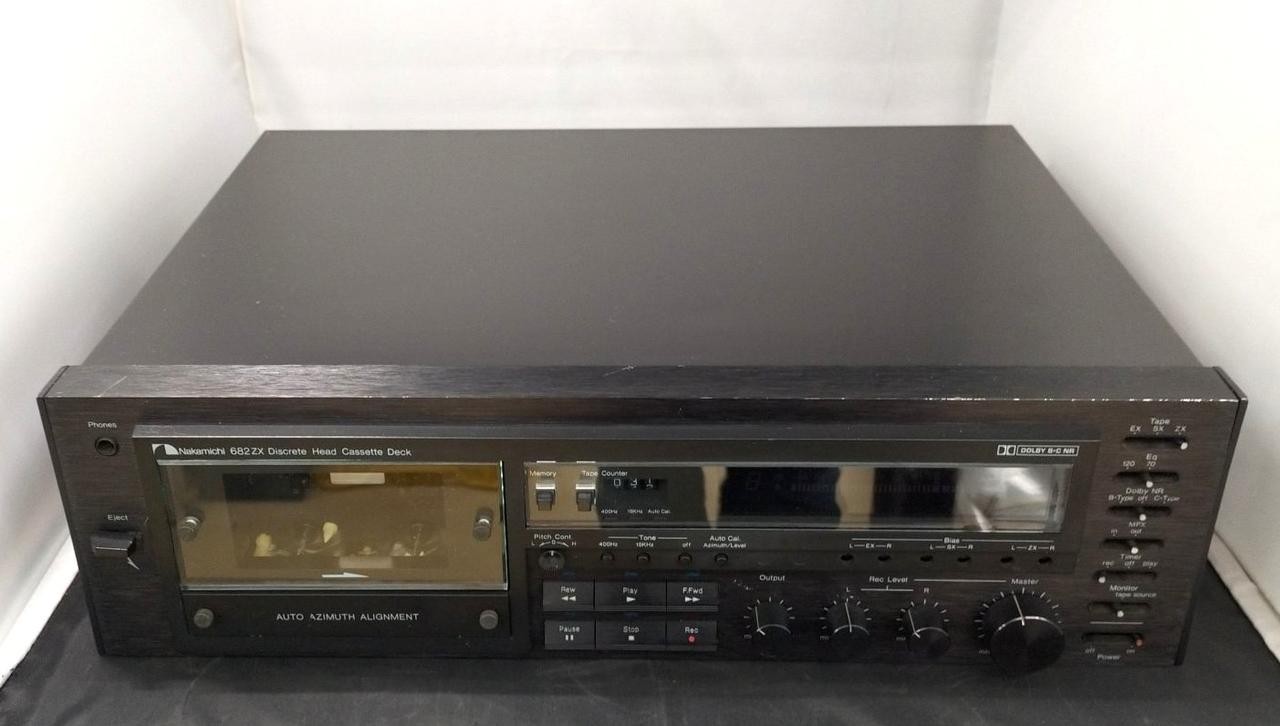
In the golden age of analog audio, few names commanded as much respect among audiophiles and engineers as Nakamichi. By the late 1970s and early 1980s, the Japanese manufacturer had already established itself as a pioneer in high-fidelity cassette technology, pushing the boundaries of what was possible with compact magnetic tape. The Nakamichi 682ZX, introduced around 1980, stands as a testament to the company’s relentless pursuit of perfection in tape reproduction. Though not as widely celebrated as the legendary Dragon or CR-7A, the 682ZX occupies a respected niche among vintage cassette enthusiasts — a sophisticated, no-compromise deck built for critical listening and professional-grade performance.
Positioned between the mid-tier 582 and the flagship models of its era, the 682ZX was engineered for those who demanded more than convenience — they demanded accuracy, stability, and sonic transparency. At a time when most manufacturers treated the cassette format as a portable compromise, Nakamichi treated it as a legitimate high-fidelity medium. The 682ZX embodied that philosophy, incorporating advanced mechanics, precision calibration, and meticulous component selection.
Technical Specifications
| Feature | Specification |
| Year Introduced | 1980 |
| Format | 4-Track, 2-Channel Stereo (Compact Cassette) |
| Tape Speed | 1⅞ ips (4.76 cm/s) |
| Heads | Three-head system (Record, Playback, Erase) |
| Head Type | Discrete Ferrite |
| Motor System | Dual direct-drive capstan motors |
| Wow and Flutter | < 0.07% (WRMS) |
| Frequency Response | 30Hz – 18kHz (with metal tape) |
| Signal-to-Noise Ratio | > 63 dB (Dolby C) |
| Total Harmonic Distortion | < 1.5% |
| Input/Output | Line In/Out (RCA), Mic In (¼") |
| Recording Equalization | 120 μs (Normal), 70 μs (Chrome/Metal) |
| Noise Reduction Support | Dolby B and C |
| Dimensions | 435 × 140 × 325 mm (W×H×D) |
| Weight | 11.5 kg (25.3 lbs) |
| Power Requirement | 120V / 60Hz or 220-240V / 50Hz (region-specific) |
Sound Characteristics and Performance
The Nakamichi 682ZX was designed with one goal: to make the cassette disappear. When properly calibrated and paired with high-quality tapes (especially Type II chrome or Type IV metal formulations), the 682ZX delivers a remarkably open, detailed, and dynamic sound that belies the format’s limitations.
Its three-head configuration allows for independent optimization of recording and playback, enabling real-time monitoring without generational loss — a feature prized by semi-professional users and home tapers alike. The deck’s frequency response is impressively flat across the audible spectrum, with a smooth roll-off at the extremes. Bass is tight and well-controlled, while the midrange remains neutral and articulate — ideal for vocal clarity and acoustic reproduction.
Treble extension is crisp without being harsh, a result of Nakamichi’s careful head gap tuning and tape-to-head contact pressure. With Dolby C engaged, the 682ZX achieves a signal-to-noise ratio that rivals early digital formats, making it suitable for archival transfers and critical listening environments.
One of the deck’s standout traits is its exceptional channel separation (typically exceeding 50 dB), which creates a spacious stereo image with precise instrument placement. Combined with ultra-low wow and flutter, the 682ZX offers a level of rhythmic stability and pitch accuracy that few contemporaries could match.
Notable Features and Innovations
The 682ZX wasn’t just another high-end cassette deck — it was a showcase of Nakamichi’s engineering prowess:
- Dual Direct-Drive Capstan Motors: Unlike belt-driven systems prone to slippage and wear, the 682ZX uses direct-drive motors for both supply and take-up reels. This ensures consistent tape tension and speed accuracy, critical for minimizing modulation noise and maintaining alignment.
- Three-Head Design with Manual Azimuth Adjustment: The separate playback head allows for independent calibration. Advanced users could fine-tune azimuth via a front-accessible screw, ensuring optimal high-frequency response — a feature rarely found outside professional decks.
- Fluorescent VU Meters: Large, easy-to-read VU meters provide real-time feedback on recording levels, helping users avoid distortion and under-modulation. The warm green glow also adds to the deck’s classic aesthetic.
- Logic-Controlled Transport: The 682ZX features an electronically controlled transport system with soft-touch buttons and automatic tape sensing. While not as flashy as later microprocessor-driven decks, it offered reliable, repeatable operation.
- Dolby C Integration: As one of the early adopters of Dolby C noise reduction, Nakamichi ensured the 682ZX could extract maximum fidelity from metal tapes. Dolby C offered improved high-frequency noise reduction over Dolby B, and the 682ZX implemented it with precision.
- Build Quality: The chassis is constructed from heavy-gauge steel with internal damping to reduce vibration. Rubber-isolated feet and a rigid head mounting system further enhance mechanical stability.
Common Issues and Maintenance
Like all vintage electronics, the Nakamichi 682ZX requires care to remain in top condition. While robustly built, several components are prone to aging:
- Capstan and Pinch Roller Degradation: The rubber pinch roller can harden or become sticky over time. Regular cleaning and replacement with a modern equivalent are essential for proper tape transport.
- Lubrication of Mechanical Parts: The direct-drive gear system and slide mechanisms require periodic lubrication. Dried grease can lead to sluggish operation or binding.
- Head Alignment and Wear: Though durable, the ferrite heads can wear or become misaligned after decades of use. A professional demagnetization and alignment are recommended before serious use.
- Capacitor Aging: Electrolytic capacitors in the power supply and signal path may dry out, leading to hum, channel imbalance, or failure. A full recapping is advisable for long-term reliability.
- Button and Switch Contact Issues: The logic-controlled buttons may develop intermittent contact. Cleaning with contact cleaner or replacing switches can restore functionality.
Owners are advised to service the deck every 500–1000 hours of use, including head cleaning, demagnetization, and calibration. Using high-quality tapes and avoiding abrasive or damaged cassettes will extend the life of the heads and transport.
Current Market Value and Collectibility
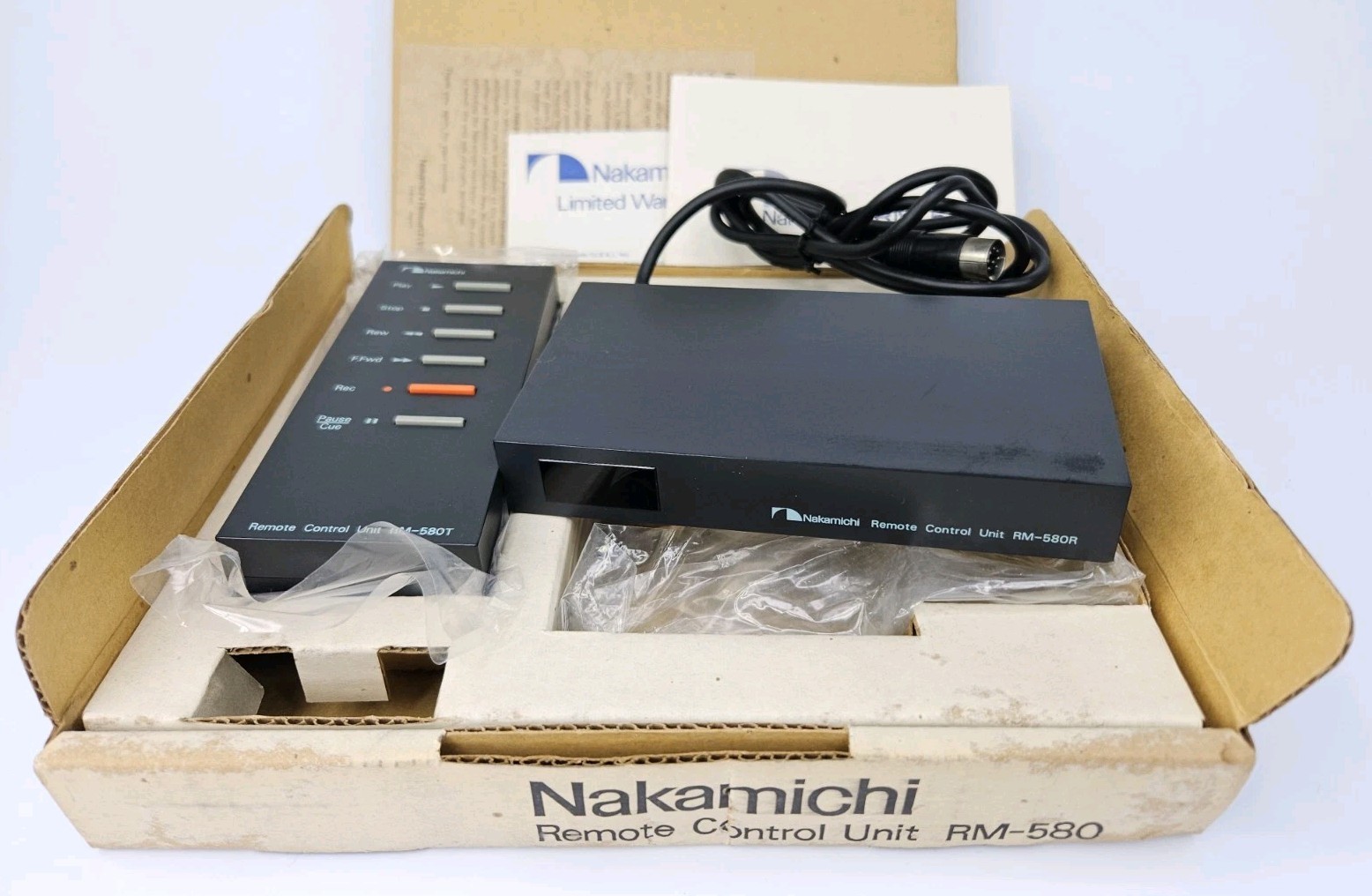
The Nakamichi 682ZX is not as widely collected as the Dragon or CR-1A, but it holds a quiet reverence among cassette connoisseurs. In working condition, units typically sell for $300–$500, depending on cosmetic condition, completeness (including original remote and manual), and calibration status. Fully refurbished models with new belts, recapped power supplies, and aligned heads may command higher prices.
Its value lies not in rarity, but in engineering integrity. For those building a vintage analog setup focused on tape mastering, duplication, or high-quality analog recording, the 682ZX offers a compelling blend of performance and reliability.
While overshadowed by Nakamichi’s more flamboyant models, the 682ZX represents the quiet evolution of the brand’s philosophy — refined, understated, and deeply competent.
Conclusion and Legacy
The Nakamichi 682ZX may not have the fame of its siblings, but it stands as a monument to analog precision. In an era when cassette decks were often seen as disposable, the 682ZX insisted on excellence — in design, in materials, and in sound.
It exemplifies Nakamichi’s core belief: that technology should serve the music, not the other way around. For today’s audiophiles rediscovering the warmth and texture of analog tape, the 682ZX offers a rare opportunity — a chance to experience the cassette format at its absolute peak.
Whether used for archiving vinyl collections, creating master tapes, or simply enjoying music with analog soul, the 682ZX remains a worthy centerpiece in any vintage audio system. It’s not just a cassette deck — it’s a statement of fidelity.
eBay Listings


As an eBay Partner, we earn from qualifying purchases. This helps support our independent vintage technology research.
Service Manuals & Schematics
- Manual — archive.org
- Service Manual — archive.org
- Manual — archive.org
- Manual — archive.org
Related Models
- Nakamichi 1000ZXL (1985)
- Nakamichi BX-150 (1983)
- Nakamichi CR-4 (1969)
- Nakamichi 1000-II (1974)
- Nakamichi 1000ZXL-LIMITED (1985)
- Sony TC-2050SD (1978)
- Aiwa AD-F990 (1993)
- Kenwood KX-3060 (1982)
- Sony TC-2130A (1974)
- Sony TC-2220 (1972)