Nakamichi 681ZX: The Pinnacle of High-End Cassette Engineering
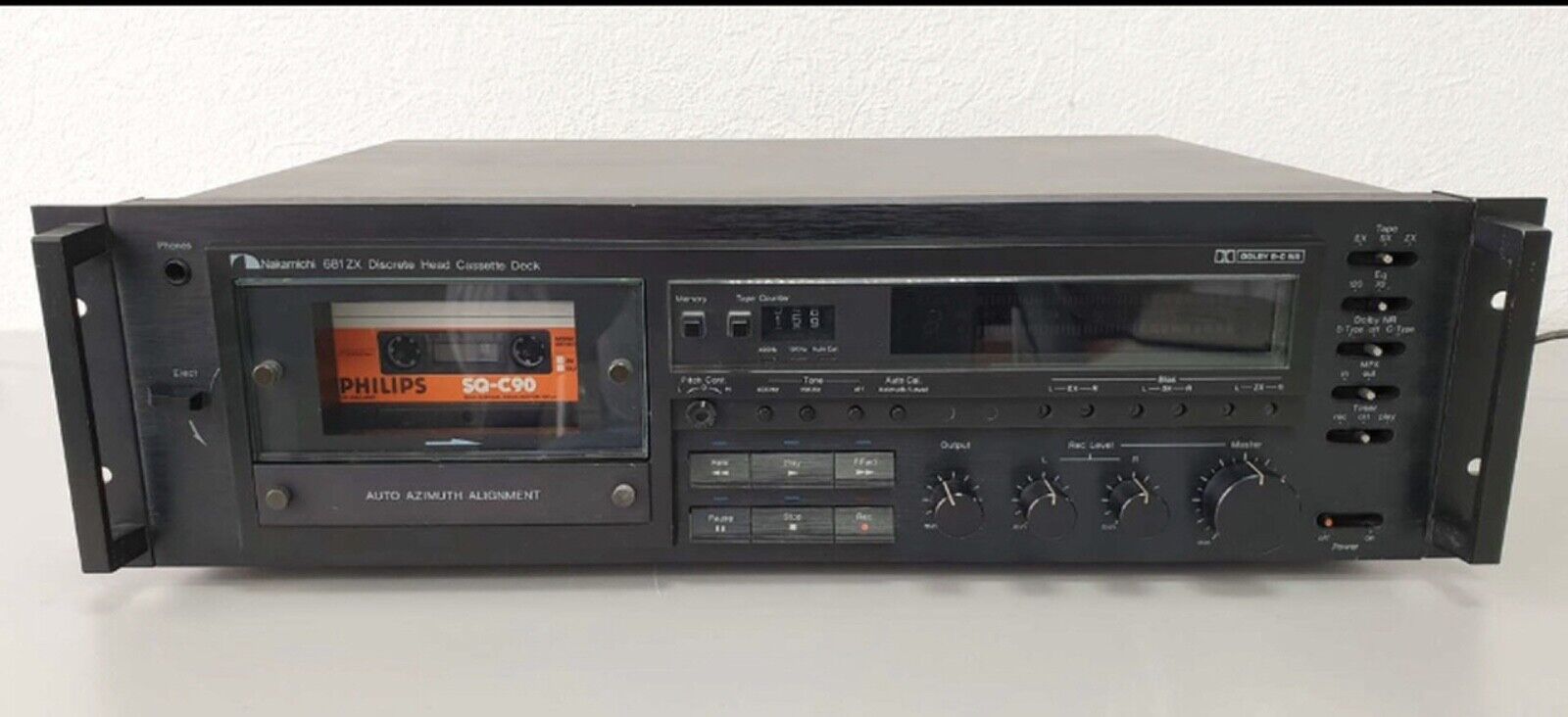
In the early 1980s, the cassette tape format reached its technical zenith, and few machines embodied this peak more completely than the Nakamichi 681ZX. Released in 1983, the 681ZX was not merely a cassette deck—it was a statement of engineering ambition, precision, and audiophile intent. As part of Nakamichi’s elite lineup, the 681ZX stood just below the legendary CR-7 and shared many of the same advanced technologies that made Nakamichi synonymous with high-fidelity cassette reproduction.
Though overshadowed in fame by the later Dragon or even the CR-1, the 681ZX represented a crucial evolutionary step in Nakamichi’s pursuit of perfect tape alignment, speed stability, and dynamic range. Designed for the discerning audiophile and semi-professional user, the 681ZX combined cutting-edge electronics with a robust mechanical design, making it one of the most capable cassette decks of its era.
Technical Specifications
| Feature | Specification |
| Year Introduced | 1983 |
| Type | 3-Head Cassette Deck |
| Tape Speed | 1⅞ ips (4.76 cm/s) |
| Heads | Separate Record, Playback, and Erase Heads |
| Motor System | Dual Direct-Drive Capstan Motors |
| Wow & Flutter | < 0.045% (WRMS) |
| Frequency Response | 20Hz – 20kHz (with metal tape) |
| Signal-to-Noise Ratio | 72 dB (Dolby C), 78 dB (Dolby C + Metal) |
| Dynamic Range | Up to 80 dB (with metal tape and Dolby C) |
| Azimuth Adjustment | Manual (via front panel knob) |
| Dolby Noise Reduction | Dolby B, C, and HX Pro |
| Input/Output | Line In/Out (RCA), Mic In (RCA), Headphone Out (¼") |
| Recording Modes | Normal, Chrome, Metal |
| Display | Fluorescent VU meters and status indicators |
| Dimensions | 440 × 140 × 335 mm (W×H×D) |
| Weight | 13.5 kg (29.7 lbs) |
Sound Characteristics and Performance
The Nakamichi 681ZX was engineered for transparency and neutrality—qualities that allowed it to reproduce source material with startling accuracy. Its three-head configuration (separate record, playback, and erase heads) enabled real-time monitoring during recording, a feature prized by musicians and home tapers alike. The dedicated playback head ensured optimal alignment and minimized wear, preserving both tapes and sound quality.
One of the 681ZX’s most celebrated features was its manual azimuth control, accessible via a front-panel knob. This allowed users to fine-tune the playback head angle to match the recording conditions of any tape, compensating for misalignment from other decks—a common issue in the cassette world. This feature alone made the 681ZX invaluable for archivists and collectors dealing with tapes recorded on various machines.
With Dolby C and HX Pro support, the 681ZX maximized the dynamic range and high-frequency response of metal tapes, pushing the cassette format to its physical limits. When paired with high-quality metal tapes and a good source, the 681ZX could deliver a listening experience that approached that of early digital formats—warm, detailed, and remarkably low in noise.
Notable Features and Innovations
The 681ZX was packed with audiophile-focused features that set it apart from even high-end consumer decks:
- Dual Direct-Drive Capstan Motors: Unlike belt-driven systems prone to slippage and wear, the 681ZX used direct-drive motors for both supply and take-up reels. This ensured exceptional speed stability and reduced wow and flutter to near-undetectable levels.
- Three-Head Design with Real-Time Monitoring: The separation of record and playback heads allowed for precise monitoring without relying on the record head’s compromised frequency response. This was especially important for musicians and engineers making live recordings.
- Dolby HX Pro (Headroom Extension): This intelligent biasing system dynamically adjusted the recording headroom based on the audio content, preventing high-frequency overload and improving clarity on metal and chrome tapes.
- Fluorescent VU Meters: Large, bright meters provided accurate visual feedback during recording, enhancing user control and precision.
- Metal Tape Capability: The 681ZX was optimized for use with metal-formulation tapes, which offered the highest fidelity available on cassette. Its record electronics were tuned to handle the higher bias and sensitivity requirements of metal tape.
- Heavy-Duty Chassis and Damping: The 681ZX featured a rigid, double-layer steel chassis with extensive internal damping to minimize vibration and external interference—hallmarks of Nakamichi’s no-compromise design philosophy.
Common Issues and Maintenance
As with any high-precision analog equipment from the 1980s, the Nakamichi 681ZX requires careful maintenance to perform at its best. Common issues include:
- Deterioration of Rubber Components: Although the capstan drive is direct, rubber idlers and pressure pads can harden over time, affecting tape contact and tension. Replacing these with modern equivalents is essential for reliable operation.
- Head Wear and Alignment: The heads, while durable, can become misaligned or worn after decades of use. A professional demagnetization and alignment service is highly recommended before regular use.
- Capacitor Aging: The power supply and signal path use electrolytic capacitors that may dry out over time. A full recapping by a qualified technician can restore optimal performance and prevent damage.
- Azimuth Knob Sensitivity: The manual azimuth control is precise but delicate. Rough handling can throw off calibration, so users should adjust it gently and infrequently.
Regular cleaning of the heads, capstan, and pinch roller with isopropyl alcohol is crucial, especially if playing older or poorly stored tapes. Using demagnetizing tools (properly) can also extend the life and fidelity of the deck.
Current Market Value and Collectibility
The Nakamichi 681ZX is not as widely collected as the Dragon or CR-7, but it holds a respected place among cassette connoisseurs. In working condition, with clean heads and stable mechanics, the 681ZX typically sells for $400 to $700 on the secondary market. Units with original packaging, manuals, or rare finishes may command higher prices, especially in Japan and Europe where cassette nostalgia runs deep.
Its value is bolstered by its technical rarity—few decks offered the same combination of three-head design, manual azimuth, and metal tape optimization at this level of build quality. While not as flashy as the auto-reversing Dragon, the 681ZX appeals to purists who value control, accuracy, and engineering integrity.
Conclusion and Legacy
The Nakamichi 681ZX stands as a testament to the golden age of analog tape—a time when engineers pushed the limits of magnetic recording to achieve near-perfect fidelity. Though cassette decks have long since been supplanted by digital formats, the 681ZX remains a benchmark of what was possible with analog technology.
For today’s vintage audio enthusiasts, the 681ZX offers more than nostalgia—it delivers a listening experience that is tactile, engaging, and sonically rich. Whether used for digitizing rare tapes, recording live music, or simply enjoying high-quality cassette playback, the 681ZX continues to earn its place in the pantheon of great audio machines.
In an era obsessed with convenience, the 681ZX reminds us that true fidelity requires care, precision, and a deep respect for the craft of sound. For those willing to maintain it, the reward is audio magic on tape.
eBay Listings


As an eBay Partner, we earn from qualifying purchases. This helps support our independent vintage technology research.
Service Manuals & Schematics
- Service Manual — archive.org
Related Models
- Nakamichi 1000ZXL (1985)
- Nakamichi BX-150 (1983)
- Nakamichi CR-4 (1969)
- Nakamichi 1000-II (1974)
- Nakamichi 1000ZXL-LIMITED (1985)
- Sony TC-2050SD (1978)
- Aiwa AD-F990 (1993)
- Kenwood KX-3060 (1982)
- Sony TC-2130A (1974)
- Sony TC-2220 (1972)