Nakamichi 600-II: The Pinnacle of Open-Reel Excellence
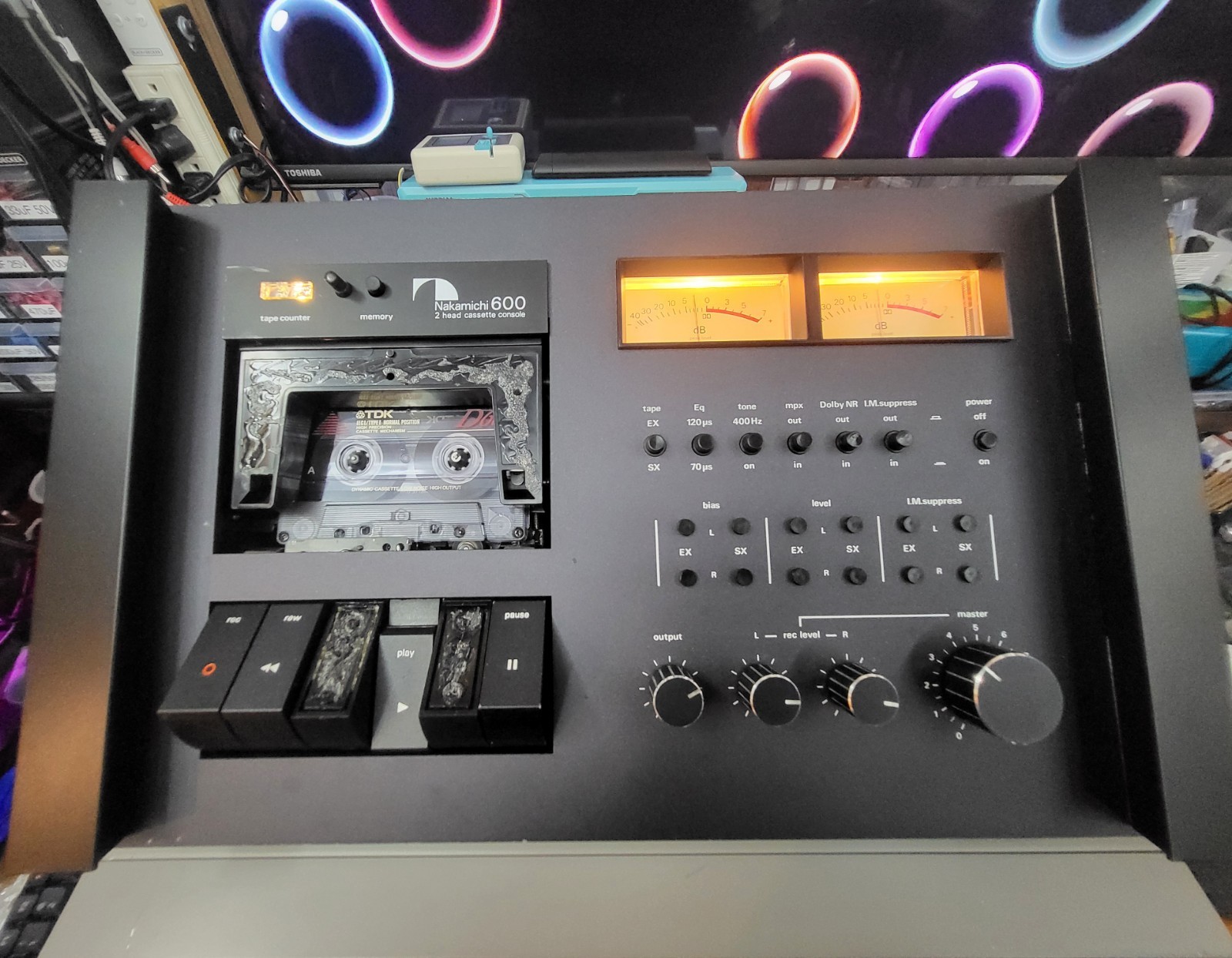
In the golden era of analog audio, few names commanded as much respect among audiophiles and recording engineers as Nakamichi. By the late 1970s, the Japanese manufacturer had already established itself as a leader in high-fidelity tape recording technology. The Nakamichi 600-II, introduced in 1977, stands as a landmark achievement in the evolution of consumer open-reel tape recorders. It wasn’t just another reel-to-reel deck—it was a statement of engineering ambition, precision, and sonic purity that set a new benchmark for home audio enthusiasts and semi-professional users alike.
At a time when cassette tapes were gaining popularity for their convenience, Nakamichi doubled down on the superior fidelity of 1/4-inch open-reel formats. The 600-II was not designed for casual listeners; it was built for those who demanded the utmost in audio accuracy, mechanical reliability, and long-term durability. With its elegant brushed aluminum faceplate, robust dual-capstan transport, and meticulous attention to detail, the 600-II represented the apex of what a consumer-grade tape deck could achieve.
Technical Specifications
| Specification | Detail |
| Model | Nakamichi 600-II |
| Year Introduced | 1977 |
| Format | 1/4-inch open-reel |
| Tape Speeds | 7.5, 15 ips (inches per second) |
| Tracks | 4-track, 2-channel stereo (full-track mono also supported) |
| Heads | Separate record, playback, and erase heads (ferrite) |
| Transport System | Dual capstan with DC servo motors |
| Motor Type | Hysteresis-synchronous motors (direct drive) |
| Frequency Response | 30Hz – 20kHz (±3dB) at 15 ips |
| Signal-to-Noise Ratio | >60 dB (Dolby B compatible) |
| Total Harmonic Distortion | <0.5% at 0 dB |
| Wow and Flutter | <0.15% (weighted, RMS) |
| Input/Output | Line in/out (RCA), mic in (1/4"), headphone out (1/4") |
| Recording Modes | Stereo, monophonic |
| Power Requirement | 120V AC, 60Hz (110–127V compatible) |
| Dimensions | 440 mm (W) × 145 mm (H) × 380 mm (D) |
| Weight | 16.5 kg (36.4 lbs) |
Sound Characteristics and Performance
The Nakamichi 600-II was engineered for sonic transparency. Its separate playback and record heads allowed for precise azimuth alignment, ensuring optimal high-frequency response and channel separation. The use of ferrite heads, known for their durability and excellent high-frequency reproduction, contributed to a clean, detailed sound signature that many describe as “effortless” and “lifelike.”
With a frequency response extending to 20kHz at 15 ips, the 600-II could capture and reproduce the full spectrum of audible sound, making it ideal for archiving vinyl records, mastering tapes, or recording live acoustic performances. The dual-capstan transport system—featuring precision-machined chrome rollers and tension arms—virtually eliminated tape slippage and speed variation, resulting in exceptionally low wow and flutter. This mechanical stability translated into a rock-solid stereo image and a sense of timing and rhythm that digital formats of the era couldn’t match.
Users often praise the 600-II for its warm yet accurate tonal balance, with a smooth midrange and extended highs. When paired with high-quality tape stock (such as Ampex 456 or BASF SM468), the deck could produce recordings that rival modern digital masters in dynamic expression and spatial depth.
Notable Features and Innovations
The 600-II was more than just a high-performance tape deck—it was a showcase of advanced engineering:
- Dual Capstan Transport: Unlike many consumer decks that used a single capstan and pinch roller, the 600-II employed two capstans (one at each reel) to maintain constant tape tension and speed. This design minimized tape flutter and ensured consistent head-to-tape contact.
- Three-Head Configuration: Separate record, playback, and erase heads allowed for real-time monitoring of recorded material without the need to stop and rewind. This was a feature typically found in professional studio recorders.
- Precision Mechanical Design: The chassis was constructed from heavy-gauge steel and damped with bituminous material to reduce resonance. The reel tables were machined from solid aluminum, and the tape path was designed for minimal friction and maximum stability.
- Dolby B Noise Reduction Compatibility: While not built-in, the 600-II was fully compatible with external Dolby B units, allowing users to reduce tape hiss without sacrificing high-frequency clarity.
- Manual Tape Selector and Level Calibration: The front panel included switches for tape type (normal, high bias) and a VU meter for precise level setting, giving users full control over the recording process.
Common Issues and Maintenance
As with any vintage electronic equipment, the Nakamichi 600-II requires careful maintenance to perform at its best. Common issues include:
- Deteriorated Rubber Components: The capstan tires and idler wheels can harden or crack over time. These should be replaced with modern equivalents to restore proper tape tension and speed accuracy.
- Dirty or Worn Heads: Oxide buildup and head wear can degrade sound quality. Regular cleaning with isopropyl alcohol and demagnetization are essential.
- Lubrication of Mechanical Parts: The transport mechanism relies on precision gears and bearings that may dry out after decades of inactivity. A full mechanical service by a qualified technician is recommended before extended use.
- Capacitor Aging: Electrolytic capacitors in the power supply and audio circuits may leak or lose capacitance. A “recap” can prevent damage and restore optimal performance.
Due to its modular design and high-quality construction, the 600-II is generally repairable and serviceable, with many units still operational today thanks to dedicated enthusiast support.
Current Market Value and Collectibility
The Nakamichi 600-II is highly sought after by analog audio collectors and reel-to-reel enthusiasts. In excellent working condition, units typically sell for $800 to $1,500, depending on completeness, cosmetic state, and service history. Fully restored models with new belts, cleaned heads, and recapped electronics command premium prices.
Its collectibility stems not only from its sound quality but also from its historical significance as a bridge between consumer and professional audio. While later Nakamichi models like the CR-7A and Dragon would push the boundaries of cassette fidelity, the 600-II remains a symbol of the company’s commitment to analog excellence.
Conclusion and Legacy
The Nakamichi 600-II is more than a vintage tape recorder—it’s a masterpiece of analog engineering. In an age increasingly dominated by digital convenience, the 600-II reminds us of the tactile joy and sonic richness of magnetic tape. It was built to last, designed to perform, and revered for its ability to capture music with startling realism.
For collectors, restorers, and analog purists, the 600-II represents the zenith of open-reel technology in the consumer market. It may lack the automation of modern gear, but in return, it offers a level of engagement and sonic authenticity that few machines can match. If you’re lucky enough to find one in good condition, treat it with care—it’s not just a piece of equipment, it’s a piece of audio history.
eBay Listings



As an eBay Partner, we earn from qualifying purchases. This helps support our independent vintage technology research.
Related Models
- Nakamichi BX-1 (1985)
- Nakamichi BX-2 (1983)
- Nakamichi CR-3 (1971)
- Nakamichi CR-7 (1971)
- Nakamichi MR-1 (1983)
- Akai AM-2850 (1975)
- Akai AP-206 (1975)
- Acoustic Research research-ar-17 (1978)
- Acoustic Research AR-19 (1994)
- Acoustic Research AR-1W (1954)