Nakamichi 580: The Precision Pioneer of Cassette Fidelity
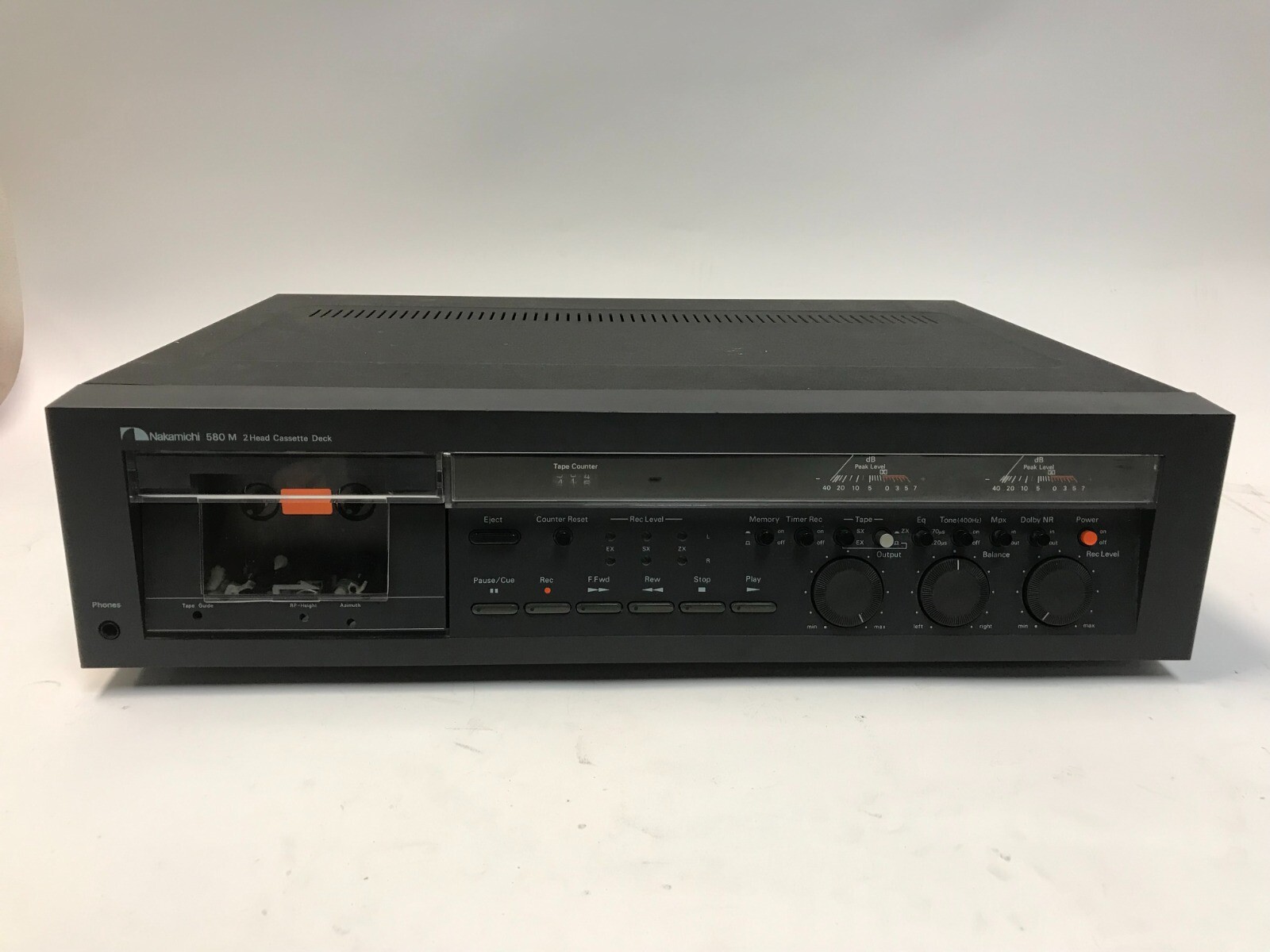
In the mid-1970s, as audiophiles debated the merits of vinyl versus emerging tape formats, Nakamichi quietly revolutionized the cassette medium with a series of precision-engineered decks that redefined what was possible in compact audio reproduction. Among these, the Nakamichi 580, introduced in 1975, stands as a landmark achievement—an early harbinger of the company’s relentless pursuit of tape perfection. Though overshadowed in fame by later flagships like the legendary Dragon, the 580 was instrumental in establishing Nakamichi’s reputation for uncompromising engineering and sonic excellence.
At a time when most cassette decks were seen as portable convenience machines or low-fidelity companions to home stereos, Nakamichi treated the cassette format with the seriousness of a high-end audio medium. The 580 was not just another tape deck—it was a statement of intent. Designed for critical listening and professional-grade recording, it brought laboratory-grade mechanics and audiophile-focused circuitry into the home, setting the stage for the golden age of cassette decks in the late 1970s and 1980s.
Technical Specifications
The Nakamichi 580 was engineered with meticulous attention to detail, combining advanced transport mechanics with high-quality electronics to deliver performance that far exceeded its contemporaries.
| Specification | Detail |
| Year Introduced | 1975 |
| Format | 1/4" Stereo Compact Cassette |
| Tape Speed | 1⅞ ips (4.76 cm/s) |
| Heads | Three-head system (separate record, playback, erase) |
| Motor System | Dual direct-drive capstan motors |
| Wow and Flutter | < 0.075% (WRMS) |
| Frequency Response | 30 Hz – 18 kHz (with CrO₂ tape) |
| Signal-to-Noise Ratio | 66 dB (Dolby B) |
| Total Harmonic Distortion | < 1.5% |
| Input/Output | Line in/out (RCA), mic in (¼") |
| Recording Equalization | 120 μs (normal), 70 μs (CrO₂) |
| Power Requirement | 120V AC, 60 Hz |
| Dimensions | 440 mm × 140 mm × 335 mm (W×H×D) |
| Weight | 11.5 kg (25.3 lbs) |
One of the 580’s most notable technical achievements was its three-head configuration, a rarity in consumer decks at the time. This allowed for independent optimization of recording, playback, and erasing functions, enabling real-time monitoring of recorded material with exceptional accuracy. The separate playback head ensured that users could verify their recordings without rewinding—a feature previously reserved for professional reel-to-reel machines.
Sound Characteristics and Performance
The Nakamichi 580 delivered a level of sonic clarity and dynamic range that stunned listeners in its era. Its frequency response extended well beyond that of typical cassette decks, capturing subtle high-frequency detail and deep, controlled bass. The use of chromium dioxide (CrO₂) tape calibration allowed the 580 to extract maximum fidelity from higher-grade tapes, making it one of the first consumer decks truly optimized for the evolving tape formulation landscape.
The deck’s low wow and flutter—measured at less than 0.075%—ensured pitch stability and a rock-solid stereo image. Combined with a wide dynamic range and low distortion, the 580 produced recordings that were remarkably close to the source, whether capturing live music, FM broadcasts, or vinyl transfers. When paired with Dolby B noise reduction, background hiss was effectively minimized, further enhancing the listening experience.
Audiophiles praised the 580 for its neutral, transparent sound signature—a hallmark of Nakamichi’s design philosophy. Unlike many decks that colored the sound with excessive brightness or muffled bass, the 580 aimed for accuracy, making it ideal for critical monitoring and archival recording.
Notable Features and Innovations
The Nakamichi 580 introduced several innovations that would become standard in high-end cassette decks:
- Dual Direct-Drive Capstan System: Unlike belt-driven transports prone to speed variation, the 580 used direct-drive motors for both the capstan and reel tables. This minimized mechanical slippage and ensured consistent tape tension and speed accuracy.
- Three-Head Design with Real-Time Monitoring: The separation of record and playback heads allowed users to monitor recordings instantly, a feature essential for musicians and broadcasters.
- Manual Azimuth Adjustment: The 580 featured user-accessible azimuth controls, enabling fine-tuning of head alignment for optimal high-frequency response—a feature almost unheard of in consumer decks.
- Precision Tape Path: The tape threading mechanism was engineered for minimal friction and consistent head-to-tape contact, reducing wear and maximizing signal transfer.
- Professional-Grade Build Quality: Housed in a rigid steel chassis with a brushed aluminum front panel, the 580 felt substantial and durable, built to last decades of daily use.
Common Issues and Maintenance
While the Nakamichi 580 is renowned for its durability, aging units today may require careful maintenance to restore peak performance:
- Deteriorating Rubber Components: The pinch roller and any internal rubber dampers may have hardened or cracked over time. Replacement with modern equivalents is essential for proper tape tension and speed stability.
- Head Alignment and Wear: After decades of use, the heads may be worn or misaligned. A professional demagnetization and alignment service can restore optimal performance.
- Capstan and Reel Motor Lubrication: The direct-drive motors are robust, but dried lubricants in the transport mechanism can cause binding or speed irregularities. A full mechanical service is recommended for decks that have been in long-term storage.
- Capacitor Aging: The analog circuitry relies on electrolytic capacitors that degrade over time. Replacing these can prevent channel imbalance, noise, or failure.
Given its age, finding a fully functional 580 in original condition is rare—but when properly restored, it performs remarkably well, even by modern standards.
Current Market Value and Collectibility
The Nakamichi 580 is not as widely collected as later models like the 700 or Dragon, but it holds a special place among vintage audio enthusiasts and tape format historians. Its status as an early high-end Nakamichi makes it a desirable piece for collectors of audio evolution.
In today’s market, a working, well-maintained Nakamichi 580 typically sells for $300 to $600, depending on condition and completeness. Units with original packaging, manuals, or rare accessories can command higher prices, especially in Japan and Europe where cassette deck collecting remains strong.
While not a mainstream collector’s item, the 580 is increasingly recognized as a pioneer of high-fidelity cassette technology—a bridge between the early days of compact audio and the precision engineering that would define Nakamichi’s legacy.
Conclusion and Legacy
The Nakamichi 580 may not have the name recognition of its more flamboyant successors, but its importance in audio history cannot be overstated. It was one of the first consumer cassette decks to treat the format with the respect it deserved, proving that cassettes could deliver true high-fidelity sound.
As a technological trailblazer, the 580 laid the groundwork for Nakamichi’s dominance in the high-end tape market throughout the 1980s. Its combination of precision mechanics, thoughtful design, and audiophile-grade performance set a benchmark that few could match.
Today, the 580 stands as a testament to an era when engineering excellence was pursued for its own sake. For vintage audio enthusiasts, restoring and using a Nakamichi 580 is not just about nostalgia—it’s about experiencing a pivotal moment in the evolution of recorded sound. In the quiet whir of its capstan motor and the clarity of its playback, the 580 reminds us that sometimes, the future of audio arrives on a small plastic shell, one revolution at a time.
eBay Listings


As an eBay Partner, we earn from qualifying purchases. This helps support our independent vintage technology research.
Related Models
- Nakamichi 1000ZXL (1985)
- Nakamichi BX-150 (1983)
- Nakamichi CR-4 (1969)
- Nakamichi 1000-II (1974)
- Nakamichi 1000ZXL-LIMITED (1985)
- Sony TC-2050SD (1978)
- Aiwa AD-F990 (1993)
- Kenwood KX-3060 (1982)
- Sony TC-2130A (1974)
- Sony TC-2220 (1972)