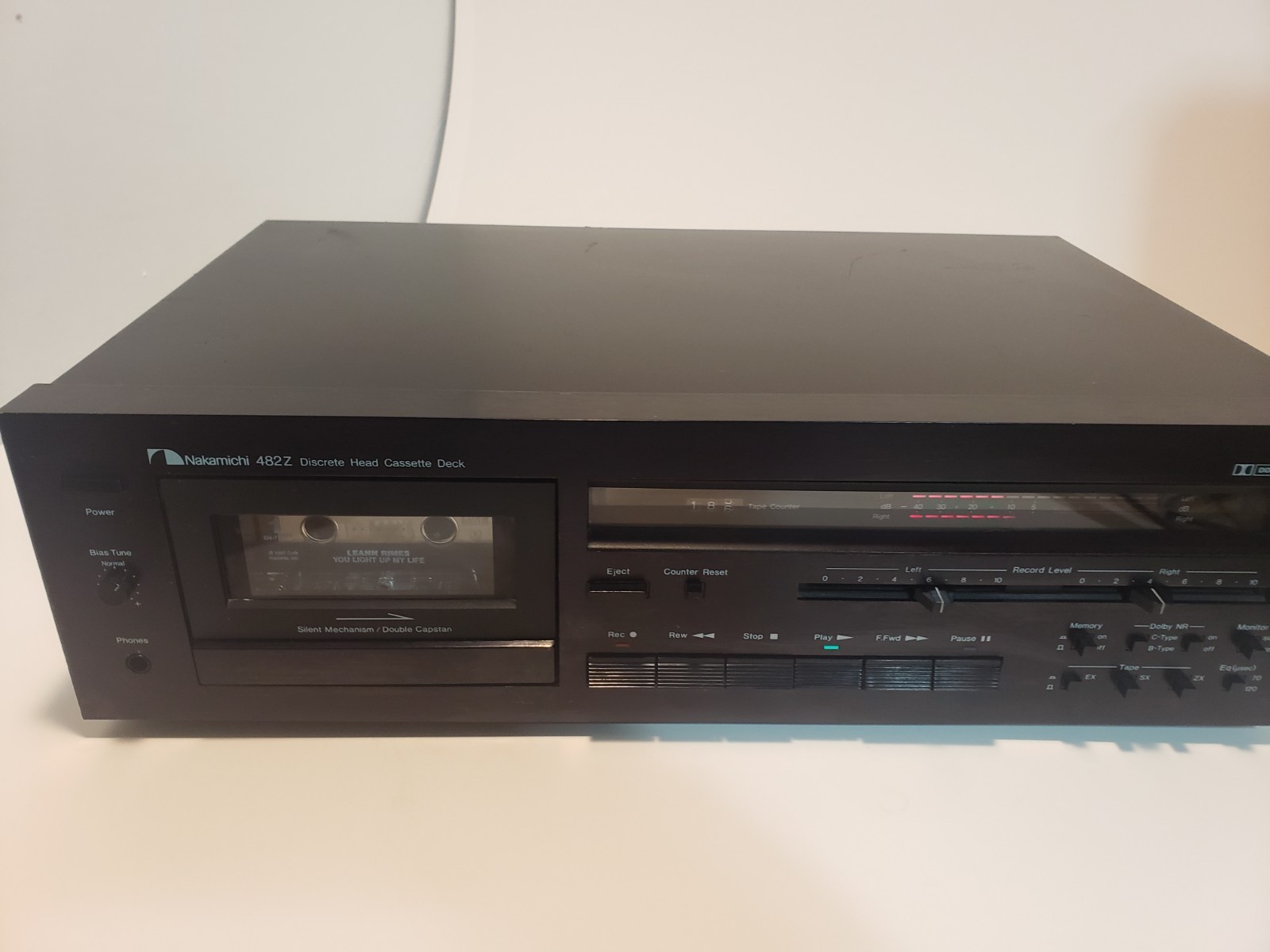
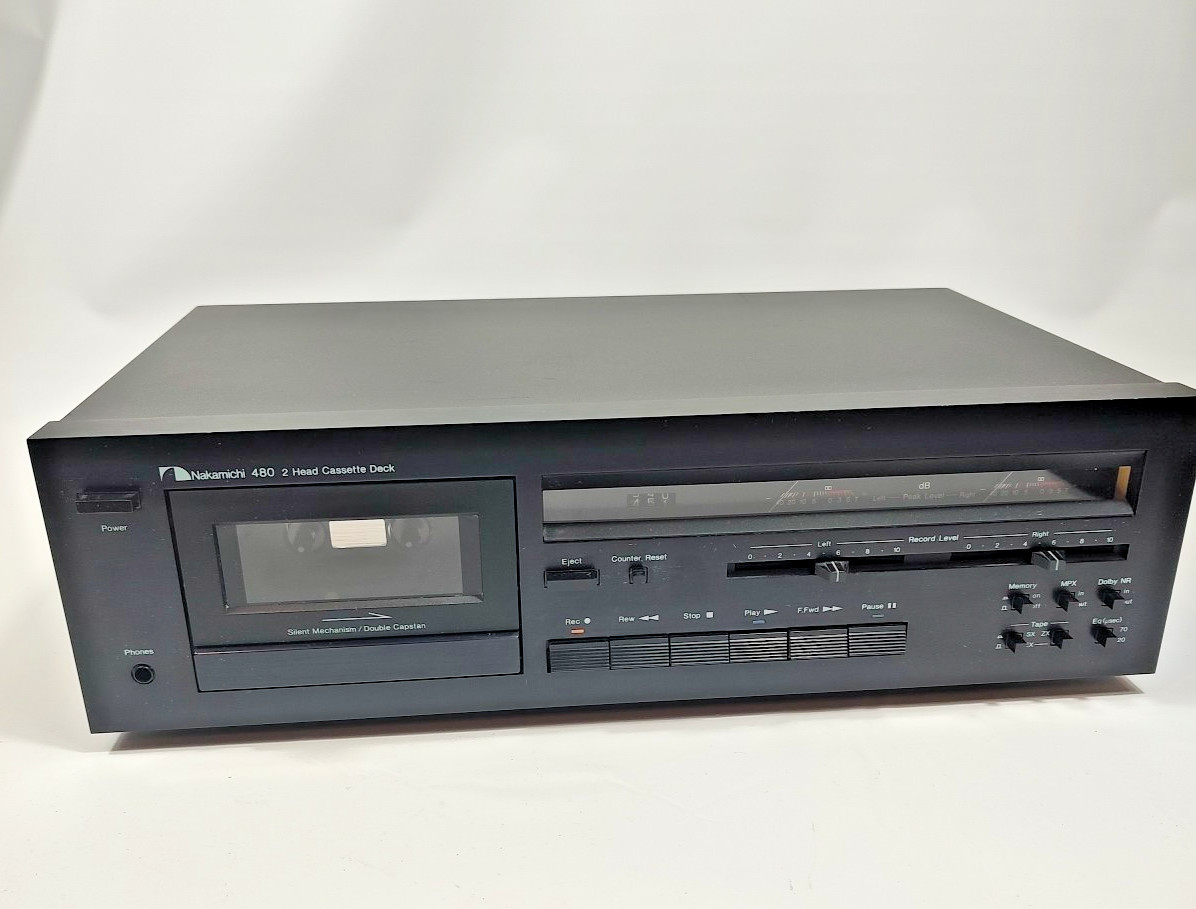
Nakamichi 482Z: The Precision-Built Cassette Deck from Nakamichi’s Golden Era
In the early 1980s, Nakamichi stood at the pinnacle of cassette deck engineering, producing machines that redefined what analog tape reproduction could achieve. Among these elite models was the Nakamichi 482Z, a high-performance cassette deck introduced in 1982 that bridged the gap between the legendary 580ZX and the soon-to-arrive CR-700 series. Though not as widely celebrated as the Dragon, the 482Z represented a significant step forward in mechanical precision, tape alignment, and user-focused design. It was engineered for serious audiophiles who demanded accuracy, consistency, and the highest fidelity from their cassette collections.
The 482Z arrived during a golden age for high-fidelity cassette technology—a time when manufacturers competed fiercely to extract every last nuance from the compact cassette format. Nakamichi, already renowned for its three-head designs and auto-azimuth correction, applied many of its flagship innovations to the 482Z, making it a standout in the company’s mid-to-high-tier lineup.
Technical Specifications
| Feature | Specification |
| Year Introduced | 1982 |
| Type | 3-Head, Full-Logic Auto-Reverse Cassette Deck |
| Tape Heads | Separate Record, Playback, and Erase Heads |
| Head Configuration | Fixed, Perpendicular (Non-Dynamic Azimuth) |
| Motor System | Dual Direct-Drive Capstan Motors (for both sides) |
| Wow & Flutter | < 0.075% (measured) |
| Frequency Response | 20Hz – 20kHz (with metal tape, +3/-3dB) |
| Signal-to-Noise Ratio | 72dB (Dolby C), 68dB (Dolby B) |
| Total Harmonic Distortion | < 1.5% |
| Input/Output | Line In/Out (RCA), Mic In (3.5mm), Headphone Out |
| Recording Equalization | 120µs (Normal), 70µs (Chrome), 50µs (Metal) |
| Tape Types Supported | Type I (Ferric), Type II (Chrome), Type IV (Metal) |
| Noise Reduction | Dolby B and Dolby C |
| Display | Dual VU Meters, LED indicators for mode/status |
| Dimensions | 440 mm × 140 mm × 335 mm (W×H×D) |
| Weight | 11.5 kg (25.3 lbs) |
Sound Characteristics and Performance
The Nakamichi 482Z delivers a remarkably transparent and dynamic sound signature, characteristic of Nakamichi’s top-tier engineering. With its three-head configuration—separate record, playback, and erase heads—the 482Z ensures optimal performance during both recording and playback. Unlike single or two-head decks, this design allows for real-time monitoring of the recorded signal, enabling precise level calibration and superior fidelity.
The fixed head alignment, while not featuring the auto-azimuth correction of the later Dragon, is meticulously aligned at the factory for excellent channel separation and stereo imaging. When paired with high-quality metal tapes and Dolby C noise reduction, the 482Z achieves a frequency response that rivals early CD players, with a smooth high end, tight bass, and a natural midrange.
Its dual direct-drive capstan motors ensure stable tape speed on both sides, minimizing wow and flutter to levels below 0.075%—a benchmark for professional-grade equipment at the time. The result is a deck that captures the warmth and depth of analog tape while maintaining impressive clarity and low distortion.
Notable Features and Innovations
The 482Z was designed with both performance and usability in mind. Among its standout features:
- Full-Logic Auto-Reverse: Unlike simple mechanical reversers, the 482Z uses logic-controlled tape direction sensing to prevent misalignment and ensure smooth, reliable flipping between sides.
- Dual VU Meters: Large, responsive VU meters provide real-time visual feedback for recording levels, essential for avoiding distortion and under-modulation.
- Dolby C Integration: One of the earlier consumer decks to include Dolby C noise reduction, which significantly improves high-frequency clarity and reduces tape hiss—especially on metal tapes.
- Metal Tape Compatibility: With selectable 50µs equalization and bias settings, the 482Z fully supports Type IV metal tapes, which were the premium choice for audiophiles seeking maximum dynamic range.
- Professional Build Quality: The chassis is constructed from heavy-gauge steel with reinforced mounting for the heads and capstan assembly, minimizing vibration and ensuring long-term stability.
While it lacks the exotic auto-azimuth adjustment of the Dragon, the 482Z compensates with robust construction, accurate calibration, and a user-friendly interface that made it a favorite among discerning home recordists and music archivists.
Common Issues and Maintenance
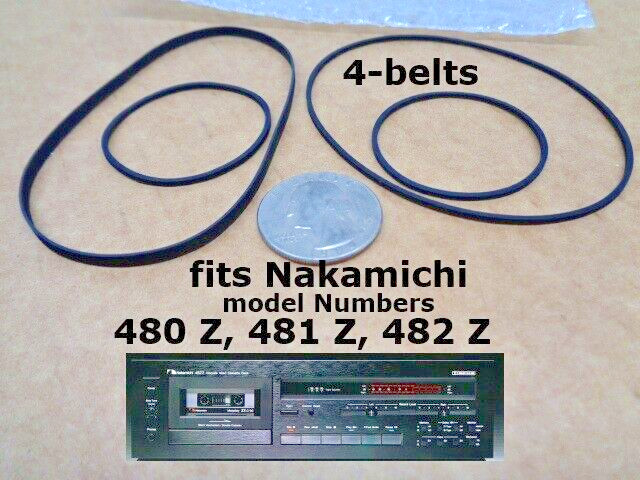
Like all high-precision tape decks from the 1980s, the Nakamichi 482Z requires regular maintenance to perform at its best. Over time, rubber components such as pinch rollers and drive belts (though minimal due to direct drive) can degrade, leading to speed instability or tape slippage. The capstan shafts should be cleaned regularly to prevent buildup that can affect tape speed and cause wear.
Head alignment, while factory-precise, can shift due to physical shock or long-term use. Realigning the heads—especially the azimuth—requires specialized tools and expertise. It’s recommended to have the deck serviced by a technician familiar with Nakamichi’s alignment procedures.
Another common issue is the deterioration of internal lubricants in the transport mechanism. If the auto-reverse function becomes sluggish or noisy, a full mechanical servicing with fresh lubrication is advisable. Additionally, the rubber rollers in the tape path should be inspected and replaced if hardened or cracked.
Owners should also be mindful of storing tapes properly, as degraded tapes can leave oxide residue on the heads and guides, affecting sound quality and potentially damaging the deck.
Current Market Value and Collectibility
The Nakamichi 482Z occupies a respected but somewhat under-the-radar position in the vintage audio market. While not as iconic or sought-after as the Dragon or the 1000ZXL, it is increasingly appreciated by cassette enthusiasts and analog purists for its excellent build quality and faithful sound reproduction.
In today’s market (as of 2024), a well-maintained Nakamichi 482Z typically sells for $400 to $700, depending on condition, included accessories, and whether it has been recently serviced. Fully restored units with new belts, cleaned heads, and calibrated electronics command higher prices, especially when paired with original packaging or documentation.
Its collectibility is bolstered by its historical significance as a bridge between Nakamichi’s early high-end decks and the digital-era innovations that followed. For those building a vintage analog setup, the 482Z offers a compelling balance of performance, reliability, and usability.
Conclusion and Legacy
The Nakamichi 482Z may not wear a crown like the Dragon, but it stands as a testament to Nakamichi’s unwavering commitment to excellence in analog audio. It embodies the technical rigor and audiophile sensibility that defined the brand during its peak years. With its three-head design, Dolby C support, and precision mechanics, the 482Z delivers a listening experience that remains impressive even by modern standards.
For collectors and analog enthusiasts, the 482Z is more than just a cassette deck—it’s a piece of audio history. It represents a time when engineers pushed the limits of magnetic tape to achieve near-perfect fidelity, and when home recording could rival professional studio quality. Whether used for digitizing rare tapes, creating high-fidelity mix tapes, or simply enjoying music the analog way, the Nakamichi 482Z continues to earn its place in the pantheon of great vintage audio equipment.
eBay Listings

As an eBay Partner, we earn from qualifying purchases. This helps support our independent vintage technology research.
Service Manuals & Schematics
- Service Manual — archive.org
Related Models
- Nakamichi 1000ZXL (1985)
- Nakamichi BX-150 (1983)
- Nakamichi CR-4 (1969)
- Nakamichi 1000-II (1974)
- Nakamichi 1000ZXL-LIMITED (1985)
- Sony TC-2050SD (1978)
- Aiwa AD-F990 (1993)
- Kenwood KX-3060 (1982)
- Sony TC-2130A (1974)
- Sony TC-2220 (1972)