Mission 700: The Speaker That Defined a Generation of British Hi-Fi
Introduction
The Mission 700, introduced in 1980, stands as a landmark in British loudspeaker design and a pivotal product in the history of the Mission brand. Launched during a golden era of hi-fi innovation, the 700 was one of the first models to emerge from Mission Electronics after its founding by Morgan Jones, a former engineer at IMF and Tannoy. With its bold design, advanced engineering, and exceptional value for money, the Mission 700 quickly gained acclaim and helped establish the company as a serious contender in the competitive world of high-fidelity audio. Produced from 1980 to 1985, the 700 was positioned as a high-performance bookshelf speaker that offered audiophile-grade sound without the premium price tag of larger floor-standing models. Its success laid the foundation for Mission’s future innovations and cemented its reputation for combining technical rigor with musicality.
Technical Specifications
| Specification | Value |
| Model | 700 |
| Category | Bookshelf Speakers |
| Years Produced | 1980-1985 |
| Power Output | Recommended amplifier power: 25-100W |
| Impedance | 8 ohms nominal |
| Frequency Response | 55Hz - 20kHz |
| Total Harmonic Distortion | < 1% at 90dB |
| Signal-to-Noise Ratio | Not specified by manufacturer |
| Dimensions | 220 x 340 x 250 mm (WxHxD) |
| Weight | 8.5 kg per speaker |
Design & Engineering
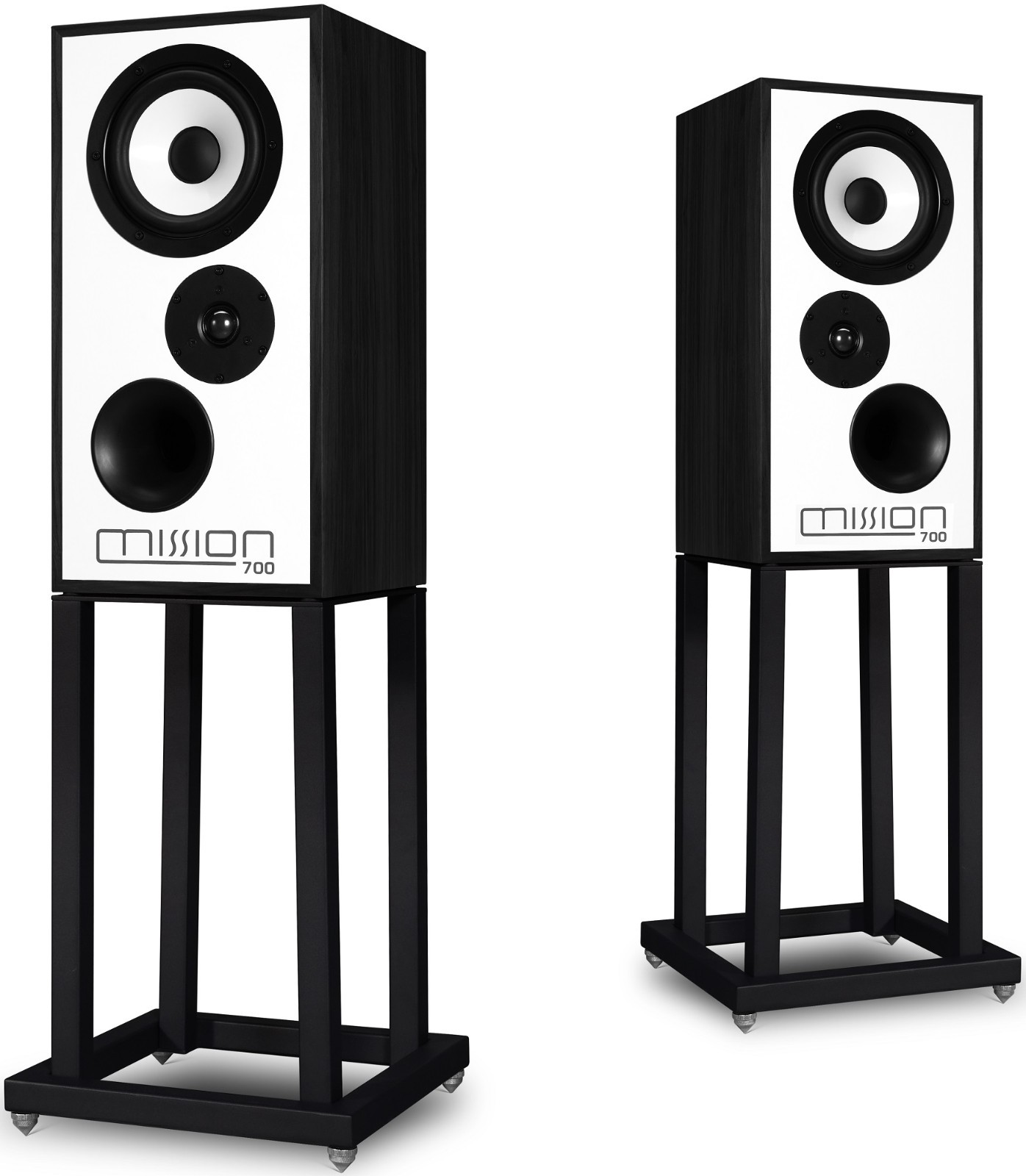
The Mission 700 was engineered with a clear focus on time coherence and low coloration—principles that were gaining traction in speaker design during the late 1970s and early 1980s. The cabinet features a distinctive sloped front baffle, a design choice that was both aesthetic and functional. This slope helped to time-align the tweeter and woofer acoustically, ensuring that sound waves from both drivers reached the listener’s ears simultaneously. This improved stereo imaging and created a more cohesive soundstage, a feature typically found in far more expensive speakers.
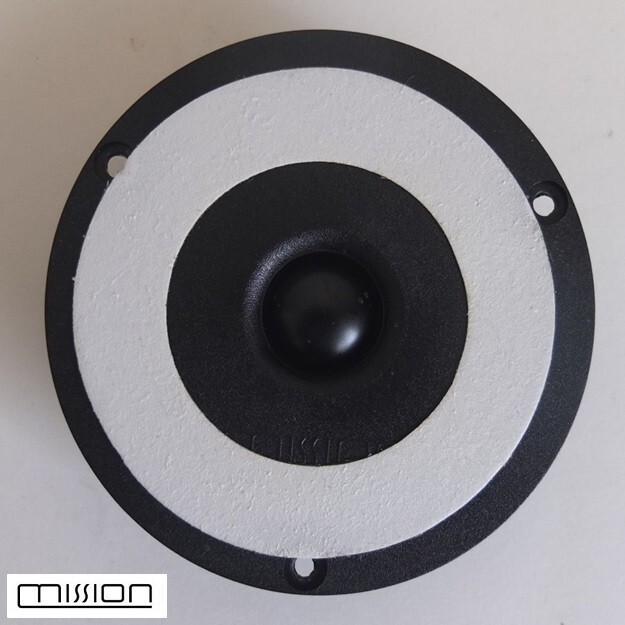
At the heart of the 700 is a 165mm (6.5-inch) polypropylene cone woofer, chosen for its excellent damping characteristics and low resonance. Paired with a 25mm soft dome tweeter, the two-way system delivers a balanced and natural tonal presentation. The tweeter, in particular, was praised for its smooth roll-off and lack of harshness, making the 700 a forgiving speaker even with lower-quality recordings.
The bass reflex port is located on the rear panel, tuned to extend low-frequency response down to 55Hz—remarkable for a speaker of its compact size. This allowed the 700 to deliver a surprising amount of bass weight, making it suitable for a wide range of music genres without the need for a subwoofer in modest-sized rooms.
Internally, the crossover network was carefully designed using high-quality components with low dielectric loss. The crossover point was set at around 3.5 kHz, a frequency chosen to minimize overlap and distortion between drivers. The cabinet itself was constructed from medium-density fiberboard (MDF) with extensive internal bracing to reduce panel resonance and cabinet coloration. Available in a smart walnut veneer finish, the 700 combined serious engineering with a classic, understated aesthetic that fit well in both modern and traditional listening environments.
Sound Characteristics
The sonic signature of the Mission 700 is best described as balanced, detailed, and musically engaging. It avoids the exaggerated bass or overly bright treble that plagued many budget speakers of the era. Instead, it delivers a neutral midrange that brings vocals and acoustic instruments to life with clarity and presence. The soft dome tweeter contributes to a smooth and non-fatiguing high end, ideal for extended listening sessions.
Bass response is tight and well-controlled, with the ported design adding depth without sacrificing speed. While not a substitute for a dedicated subwoofer in large rooms, the 700’s bass extension is impressive for its size and was often praised in contemporary reviews for its ability to convey the rhythm and pace of music with authority.
Stereo imaging is another standout feature. Thanks to the time-aligned drivers and well-executed crossover, the 700 creates a wide and stable soundstage. Instruments are precisely placed, and the speaker has a way of making even stereo recordings feel three-dimensional. This made the 700 a favorite among listeners who valued spatial realism and detail retrieval.
The speaker pairs well with a wide range of amplifiers, from modest solid-state receivers to higher-end tube amplifiers. Its 8-ohm impedance and 87dB sensitivity make it relatively easy to drive, though it benefits from a clean, well-regulated power supply to fully realize its dynamic potential.
Market & Collectibility
Today, the Mission 700 is regarded as a classic of early 1980s British speaker design. While not as widely collected as some of its contemporaries like the Bowers & Wilkins DM6 or Linn Kan, it holds a special place among vintage audio enthusiasts for its engineering integrity and musical performance. Well-preserved pairs in good working condition typically fetch between $200 and $400 on the second-hand market, depending on finish, originality, and geographic location.
When purchasing a used pair, it’s important to check the condition of the foam surround on the woofer, as this material tends to degrade over time. Many owners have had their speakers professionally re-foamed, which can restore performance and extend lifespan. The grilles are also prone to wear, and original ones with the Mission logo are becoming increasingly rare.
Restoration projects are common, and some audiophiles have upgraded the internal wiring or crossover components for improved performance. However, purists recommend maintaining originality, as the 700’s design was remarkably well-balanced from the factory.
eBay Listings

As an eBay Partner, we earn from qualifying purchases. This helps support our independent vintage technology research.
Related Models
- Mission 780 Argonaut (1985-1990)
- Akai AM-2850 (1975)
- Akai AP-206 (1975)
- Nakamichi BX-1 (1985)
- Acoustic Research research-ar-17 (1978)
- Acoustic Research AR-19 (1994)
- Acoustic Research AR-1W (1954)
- Acoustic Research AR-28S (1992)
- Acoustic Research AR-303a (1994)
- Acoustic Research AR-8BX (1983)