McIntosh MR87 FM Tuner (1973)
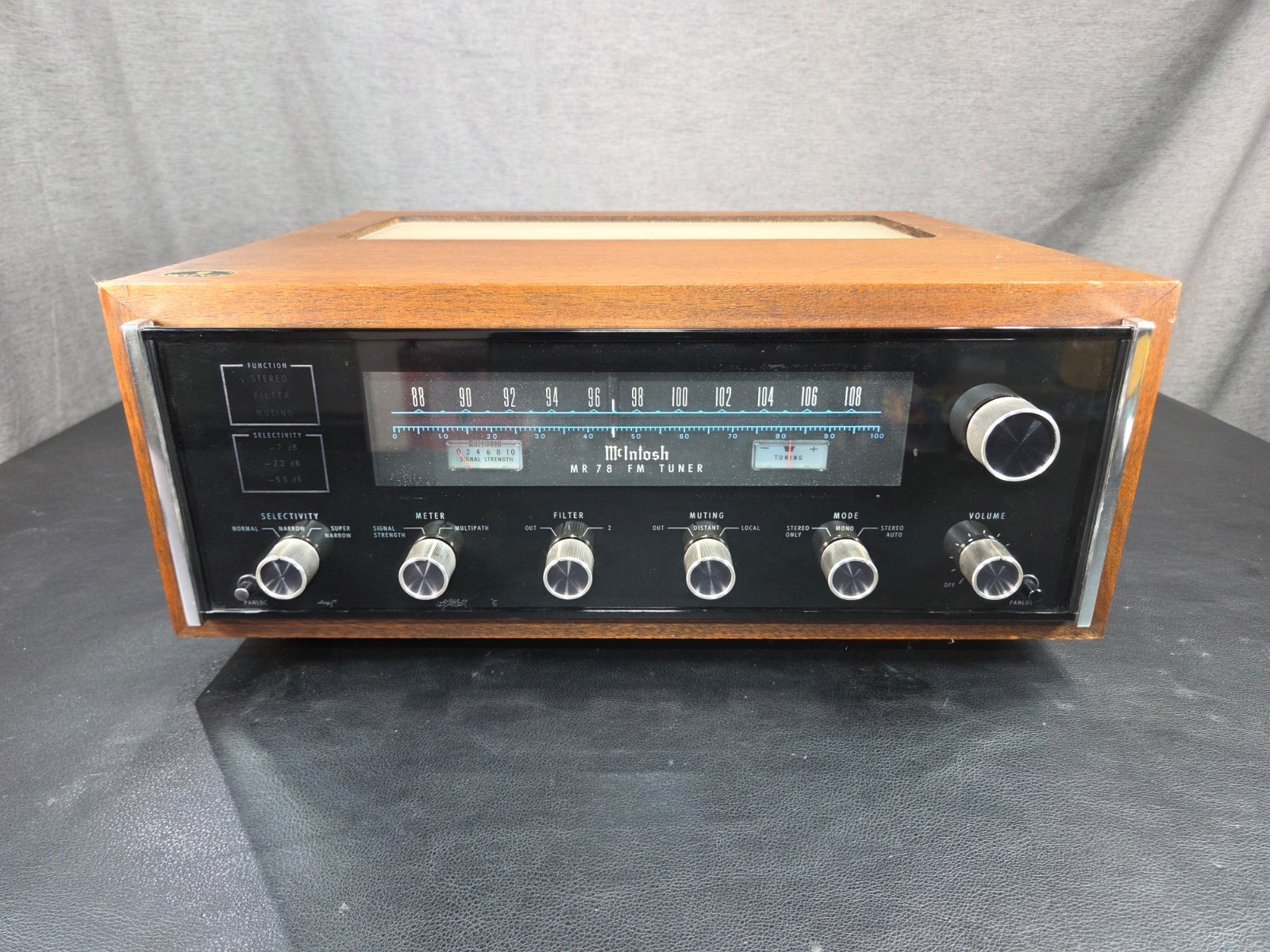
The McIntosh MR87 is a high-fidelity solid-state FM tuner introduced in 1973 as part of McIntosh Laboratory’s prestigious lineup of analog tuners. Revered for its exceptional FM reception, precision engineering, and iconic aesthetic, the MR87 exemplifies the golden era of broadcast listening. Though it lacks built-in amplification, its role as a front-end tuner in high-end audio systems made it a favorite among audiophiles seeking pristine signal clarity and musical accuracy.
Specifications
| Feature | Specification |
| Model | MR87 |
| Brand | McIntosh |
| Year of Release | 1973 |
| Production Period | 1973–1977 |
| Category | FM Tuner (Receiver Component) |
| Amplification | None (Preamp/Tuner only) |
| Tuning System | 4-gang precision tuning capacitor |
| FM Sensitivity | 1.8 μV for 20 dB quieting (FM mono) |
| Stereo Separation | Enhanced via multiplex filter |
| Output Impedance | Not typically specified |
| Construction | Solid-state circuitry |
| Key Components | McIntosh Unity Coupled output transformer, dual front-panel analog meters |
| Display | Signal strength and center-tune meters |
| Dimensions (W×H×D) | 17" × 6.5" × 15.5" |
| Weight | 22 lbs (10 kg) |
| Finish | Black glass front panel with brushed aluminum trim |
Key Features
- 4-Gang Tuning Capacitor: Ensures precise and stable station tuning with minimal drift.
- Front-Panel Meters: Dual analog meters display real-time signal strength and center-tune accuracy for optimal reception.
- Multiplex Filter: Improves stereo channel separation by reducing crosstalk, enhancing spatial imaging.
- Unity Coupled Output Transformer: A McIntosh hallmark, delivering balanced, low-distortion signal output with excellent impedance matching.
- Solid-State Design: Offers improved reliability and longevity over tube-based predecessors.
- High Selectivity and Sensitivity: Exceptional ability to pull in weak signals while rejecting adjacent channel interference.
Historical Significance
The MR87 was developed during the peak of analog FM broadcasting, a time when high-fidelity tuners were essential components of any serious audio system. As part of McIntosh’s elite tuner series, which included the legendary MR78 and MR68, the MR87 represented the company’s commitment to engineering excellence and sonic purity.
Unlike many tuners of the era that prioritized convenience over performance, the MR87 was designed for critical listening. Its precision mechanics, robust build quality, and advanced filtering made it a benchmark for FM reception. The inclusion of the Unity Coupled output transformer—a technology typically found in McIntosh amplifiers—underscored its high-end pedigree.
During its production run (1973–1977), the MR87 catered to audiophiles who valued accurate tuning, low noise, and musical transparency. It was often paired with other McIntosh components, such as the C26 preamplifier and MC240 amplifier, forming part of a reference-grade system.
Sound Signature
The MR87 delivers a clean, neutral, and highly detailed FM sound. Its low distortion and wide dynamic range allow music broadcasts to retain their original character and spatial depth. Stereo imaging is precise, thanks to the multiplex filter that minimizes channel crosstalk.
Users often praise the MR87 for its ability to extract subtle nuances from FM signals, even under marginal reception conditions. Its excellent noise rejection and strong immunity to interference make it a standout performer, especially when compared to contemporary tuners of the 1970s.
Maintenance and Tips
While the MR87 is known for its durability, age-related issues may arise after decades of service. Proper maintenance ensures optimal performance:
- Capacitor Replacement: Electrolytic capacitors degrade over time. A full recapping of the power supply and signal path is recommended for units that have not been serviced in 20+ years.
- Alignment Check: Tuner alignment can drift, affecting sensitivity and stereo separation. A qualified technician should perform a full alignment using proper test equipment.
- Meter Lamp Replacement: The analog meters use small incandescent lamps that may burn out. Replacement bulbs are available and easy to install with basic tools.
- Cleaning Controls: Use high-quality contact cleaner on tuning knobs, switches, and input jacks to prevent crackling or signal dropouts.
- Antenna Matching: For best reception, use a high-quality outdoor FM antenna with 300-ohm twin-lead or a balun adapter for 75-ohm coaxial input.
Collectibility and Market Value
The McIntosh MR87 holds a solid position among vintage audio collectors. With a collectibility rating of 7/10, it appeals to both McIntosh enthusiasts and analog purists who appreciate its engineering and sound quality.
- Market Value: $300–$600, depending on condition, originality, and functionality.
- Higher Value Units: Fully operational models with bright meters, clean faceplates, and service records command premium prices.
- Restoration Potential: Well-restored units can approach the upper end of the price range, especially when paired with matching McIntosh components.
While not as rare as the MR78, the MR87 remains a desirable piece of audio history, representing a time when FM radio was a primary source of high-fidelity music.
Conclusion
The McIntosh MR87 stands as a testament to 1970s audio engineering at its finest. With its precision tuning, elegant meters, and exceptional sound quality, it continues to deliver a listening experience that rivals modern digital tuners. For vintage audio aficionados, the MR87 is more than a tuner—it’s a gateway to the golden age of FM broadcasting.
eBay Listings


As an eBay Partner, we earn from qualifying purchases. This helps support our independent vintage technology research.
Related Models
- McIntosh MR510 (1972-1982)
- McIntosh MX112 (1971-1975)
- McIntosh MR500 (1972-1982)
- McIntosh MR55 (1960)
- McIntosh MR65A (1972-1982)
- Aiwa CS-250 (1978)
- Denon TU-1500RD (1995)
- Denon TU-280 (1976)
- Denon TU-501 (1977)
- Denon TU-550 (1978)