McIntosh MR55 FM/AM Tuner (1960–1963)
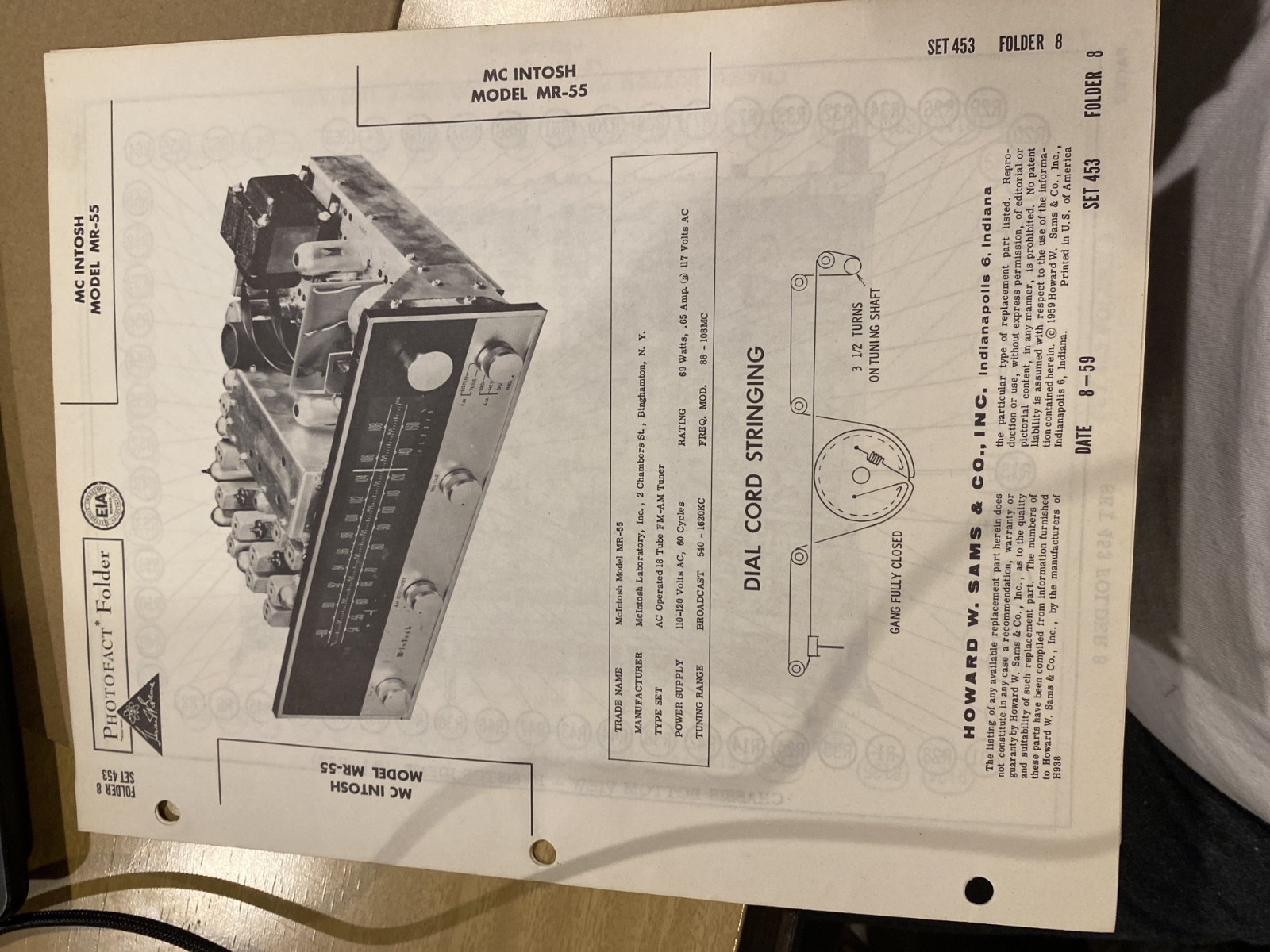
The McIntosh MR55 is a high-performance FM/AM tuner produced during the early 1960s, representing a pivotal moment in the evolution of high-fidelity audio. As one of McIntosh Laboratory’s first dedicated tuners, the MR55 was engineered to deliver exceptional FM reception during a time when FM broadcasting was emerging as the standard for high-quality audio transmission. Built with audiophile-grade components and classic tube circuitry, the MR55 remains a sought-after piece among vintage audio enthusiasts and collectors.
Specifications
| Feature | Specification |
| Model | MR55 |
| Manufacturer | McIntosh Laboratory |
| Production Years | 1960–1963 |
| Category | Tube Tuner (Receiver Component) |
| Tuning Bands | FM, AM |
| Power Output | N/A (No amplification stage) |
| Sensitivity (FM) | ~2.5 μV for 20 dB quieting |
| Output Impedance | High impedance (designed to drive tube amplifier inputs) |
| Tubes Used | 6AQ8, 6AU6, 6U8, 6BA6, 12AT7, 12AU7, 5U4GB rectifier |
| Key Circuitry | Unity Coupled® output transformer |
| Tuning Display | Front-panel analog meter with slide-rule dial |
| Dimensions | 19" W × 7" H × 10.5" D |
| Weight | ~25 lbs |
| Finish | Classic black chassis with brushed aluminum faceplate |
Historical Context
The McIntosh MR55 was introduced at a transformative time in audio history—the early 1960s—when FM radio was gaining recognition for its superior sound quality compared to AM. As stereo broadcasting began to take hold, high-fidelity tuners became essential components in audiophile systems. The MR55 was designed to meet this demand with precision engineering and McIntosh’s signature build quality.
Unlike integrated receivers of the era, the MR55 functioned solely as a tuner, emphasizing signal purity and minimal interference. Its use of the McIntosh Unity Coupled® output transformer ensured optimal impedance matching and signal transfer to external amplifiers, preserving audio integrity. The inclusion of a precision front-panel tuning meter and slide-rule dial provided users with accurate station selection and a visually striking interface.
The MR55 exemplifies McIntosh’s commitment to performance and reliability during the vacuum tube era. It laid the groundwork for future high-end tuners like the MR61 and MR70, cementing McIntosh’s reputation for excellence in tuner design.
Sound Signature
The MR55 delivers a warm, smooth, and detailed sound characteristic of well-designed tube-based tuners. Its FM reception is notably clear, with low distortion and excellent stereo separation for its time. The use of high-quality tubes and carefully tuned IF stages results in a rich, natural midrange and extended high-frequency response. When properly maintained, the MR55 can rival modern tuners in terms of musicality and presence, especially when paired with vintage McIntosh amplifiers.
Maintenance and Restoration Tips
Due to its age, the MR55 requires careful attention to ensure reliable operation and optimal performance. Common issues stem from aging components and long-term storage.
Common Issues:
- Aging Capacitors: Electrolytic and paper capacitors degrade over time and should be replaced during restoration to prevent noise, distortion, or component failure.
- Tube Wear: Tubes such as the 6AQ8, 12AT7, and 5U4GB may need replacement. Always test or replace tubes with known-good or NOS (New Old Stock) equivalents.
- Alignment Drift: The IF and RF stages may require realignment to restore peak sensitivity and selectivity. This should be performed by a technician experienced with vintage tube gear.
- Power Transformer: While generally robust, older transformers can develop issues. Check for overheating or low output voltages during servicing.
- Dust and Corrosion: Clean tube sockets, switches, and potentiometers with appropriate contact cleaner. Inspect for signs of corrosion or arcing.
Restoration Recommendations:
- Perform a full recapping (capacitor replacement) before powering up a non-working unit.
- Use a variac when powering up after long storage to avoid inrush current damage.
- Verify proper grounding and chassis integrity to maintain safety and reduce hum.
- Store in a dry, temperature-controlled environment to prevent future degradation.
Collectibility and Market Value
The McIntosh MR55 holds a collectibility rating of 7/10, appealing to vintage audio collectors and McIntosh enthusiasts. Its historical significance, build quality, and iconic design contribute to steady demand. Fully restored units in excellent cosmetic and operational condition typically command prices between $300 and $600. Originality, tube complement, and provenance (such as service records or original packaging) can increase value.
While not as rare as some limited-production McIntosh amplifiers, the MR55 remains a respected representative of the brand’s early tuner lineage and a functional piece of audio history.
Conclusion
The McIntosh MR55 is more than just a vintage tuner—it’s a testament to the golden age of tube audio and the rise of FM as a high-fidelity medium. With its precision engineering, elegant design, and warm sonic character, the MR55 continues to deliver an engaging listening experience. For collectors and restorers, it offers a rewarding project and a proud centerpiece in any classic audio system.
eBay Listings


As an eBay Partner, we earn from qualifying purchases. This helps support our independent vintage technology research.
Related Models
- McIntosh MR510 (1972-1982)
- McIntosh MX112 (1971-1975)
- McIntosh MR500 (1972-1982)
- McIntosh MR65A (1972-1982)
- McIntosh MR65B (1967)
- Aiwa CS-250 (1978)
- Denon TU-1500RD (1995)
- Denon TU-280 (1976)
- Denon TU-501 (1977)
- Denon TU-550 (1978)