McIntosh ML2M Loudspeaker System (Unknown)
You don’t just place these — you reckon with them.
Overview
The McIntosh ML2M Loudspeaker System isn’t something you casually inherit from an uncle’s attic. It’s a commitment. A declaration. When you see one, let alone a pair — or four — you know someone went all in on low-end authority back in the day. These aren’t the sleek bookshelf relics that blend into mid-century decor; they’re industrial-grade thump machines, built when “flat response to 20Hz” wasn’t a marketing bluff but an engineering dare. And yes, they came with their own equalizer just to make good on that promise. McIntosh didn’t mess around. Even if the world forgot about the ML2M for a while — missing from catalogs, buried in forum footnotes — those who’ve hauled them across basements know they’re real, they’re heavy, and they demand respect.
Specifications
| Manufacturer | McIntosh |
| Product Type | Loudspeaker System |
| Driver Size | 12" woofers |
Key Features
The EQ That Made It Whole
The ML2M wasn’t designed to fly solo. It was meant to be paired with a companion equalizer — a separate box that applied LF compensation precisely tuned to counteract the speaker’s natural low-end roll-off. That’s not just equalization; it’s calibration. The EQ’s curve was the inverse of the speaker’s behavior, which means McIntosh engineered this as a system, not just a box with a driver stuffed in it. You wanted that 20Hz extension? You used the EQ. Skip it, and you were leaving bass — real, room-shaking bass — on the table.
Foam That Matters
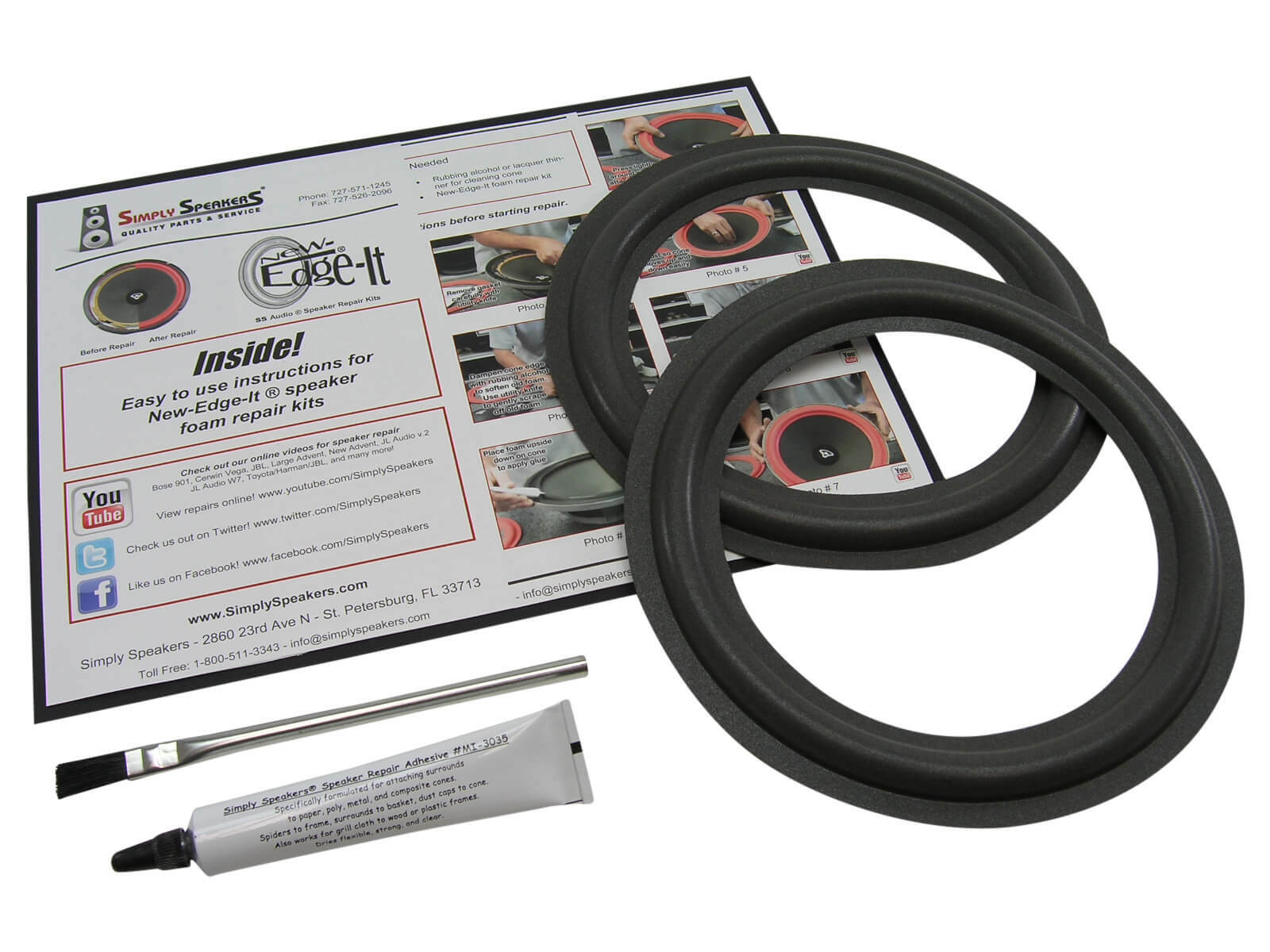
These 12" woofers came with foam surrounds, specifically a 3/4" roll design. That detail isn’t just trivia — it’s critical. The size of that roll affects how far the cone can move, which directly impacts low-frequency capability. Replace it with something smaller during refoaming, and you’ve neutered the speaker’s deep bass performance. Owners who care about authenticity and output know to source replacements that match the original 3/4" spec. This isn’t a “good enough” fix — it’s part of the design.
Stacked for Dominance
Some owners didn’t stop at a pair. They stacked them. Two high, four total — doubling cone area and seismic output. That wasn’t just for show; it was about maximizing cone coverage and low-frequency energy in large spaces. Given how massive and heavy the ML2Ms are, stacking them turns setup into an event. But if you were chasing the physical sensation of bass — not just hearing it, but feeling it in your ribs — this was one way to get there. One forum user called scoring four of them a “SCORE!!” and honestly? You can see why.
Collectibility & Value
Right now, the ML2M trades under the radar — partly because so few people know they exist, partly because they’re a project. One seller in 2023 was asking $60 for all four speakers. That’s less than the cost of refoaming them. And refoaming is almost guaranteed — the original foam surrounds degrade over time, a common failure point. At about $30 per speaker to refoam professionally, the real cost isn’t the purchase price; it’s the rebuild. But if you want a piece of McIntosh’s brute-force approach to bass, something outside the usual MC-and-C preamp-power amp narrative, the ML2M delivers. It’s not rare because it’s glamorous — it’s rare because it was specialized, heavy, and probably didn’t sell in volume. But for the right person, four of these in a stack aren’t clutter. They’re a monument.
eBay Listings


As an eBay Partner, we earn from qualifying purchases. This helps support our independent vintage technology research.
Related Models
- Heathkit AA-2010 (1975)
- Sony MDR-4 (1978)
- Sony MDR-80 (1975)
- Sony MDR-A60 (1975)
- Accuphase DG-28
- Accuphase G-18
- Altec 804A
- Alpine 3402
- Bang & Olufsen 900K (1975)
- ADC Sound Shaper III Paragraphic