MCI JH-110A
A quarter-inch stereo deck that studios reached for when the multitrack was full and the mix had to be right.
Overview
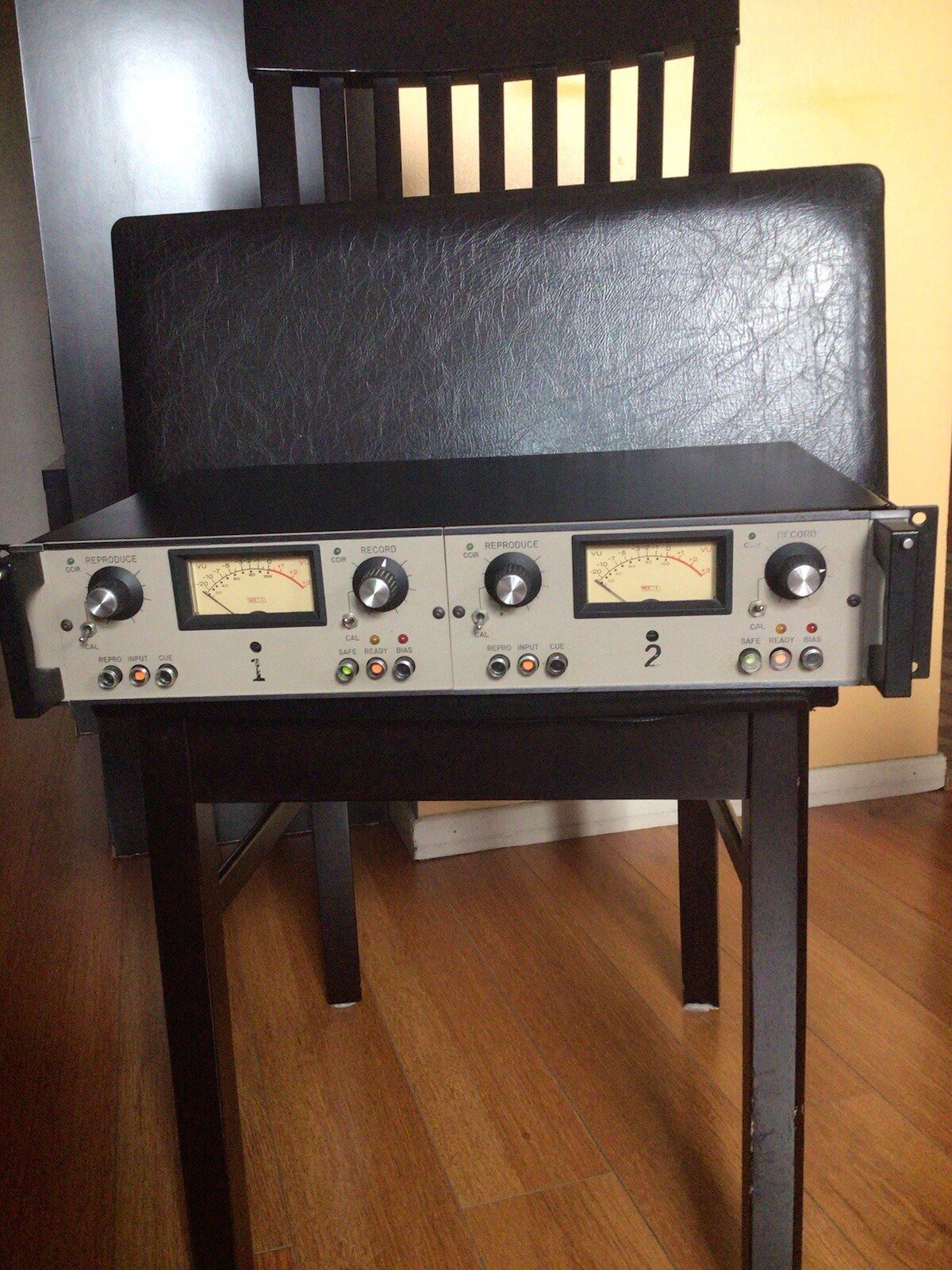
The JH-110A is a quarter-inch stereo recorder/reproducer from MCI, the company whose tape transports and consoles anchored a generation of professional rooms. It was the two-track companion to the multitracks. A studio rolled it for mixdown, for safety copies, and for the stereo master that actually left the building. The spec sheet MCI circulated puts the head assembly at 150 ohms balanced on the mic input and 10 kohms on the line input, with a signal-to-noise figure of -72 dB and a normal output level of +4 dBm above 0 VU. Maximum output is +20 dBm, headroom is +16 dBm, and equivalent input noise is -127 dBm. Those are professional numbers. The deck sat at the end of a console chain where +4 dBm operating level was the house standard.
The transport is where the JH-110A earned its keep. MCI's DC servo tape handling and crystal-controlled capstan servo systems, the same architecture used in the company's 16- and 24-track machines, carried over to the quarter-inch deck. Chunk 1 of the Recording-Engineer material describes the JH-110A/8HP, the one-inch eight-track variant built on the same JH-110A transport, as a scaled-down version of the 2" multitracks for applications where quality and track conformity could not be compromised but budget mattered. That applies just as well to the quarter-inch machine. The tape path and servo logic were not the place MCI cut corners.
Owners of the JH-110A lived with a few quirks. The article describes the frustration plainly: finishing a tricky mix and only then realizing the VSO switch was still on, meaning everything was recorded at the wrong tape speed. That kind of omission dates the design.
The transport needs regular attention. The shield gate rides on a Teflon block that, after considerable use, gets mired with crud. The service guidance in the Recording-Engineer material suggests backing off the air dash pot to test the gate's travel, cleaning the bar and block with alcohol, then lubricating with a Teflon-based product like Tri-Flow before readjusting for a brisk but not violent return. The tape lifter has three separate adjustment points - non-engaged rest position, engaged extension position, and rate of outward travel - set by eccentric disks under the deck.
Studio-Sound (June 1978, p.34) covered the machine's ergonomics when it was current. The variable-profile cabinet lets the deck tilt through 22 degrees across seven steps. A tape counter reads minutes and seconds in real time and could be paired with the JH-36 Return-to-Zero function for precise electronic editing.
The Recording-Engineer studio profiles of the period show where the JH-110A sat in a working facility. One facility listed a quarter-inch JH-110A alongside two ½-inch JH-110B machines used for mixdown, with the quarter-inch deck handling the final stereo master. Digital mixdown, if wanted, went through a pair of Sony PCM converters and U-Matic video recorders. Another studio, in Mexico City, ran MCI JH-24 multitracks with a JH-110A in the same room. The 110A was the two-track that sat next to the big machine, not a substitute for it.
MCI's own advertising in Studio-Sound (June 1977, p.119) framed the model's arrival in terms of its predecessor. The company noted that the original JH-110, its first quarter-inch machine, had been an instant success. It pitched the JH-110A as a refined, quieter version of the JH-100, and pointed to DJM Studios' selection of the deck for a new studio complex as early proof. That's marketing, but the quieter-machine claim lines up with the -72 dB signal-to-noise figure on the spec sheet.
By 1980 MCI was bundling the JH-110A into package deals aimed at smaller rooms. A Studio-Sound (October 1980, p.55) advertisement offered a system built around a JH-618 console, a JH-110A-8 one-inch eight-track, and a JH-110B-2-VP stereo deck for under £22,000 — explicitly aimed at studios that assumed MCI was out of reach. The quarter-inch JH-110A was the machine that got a facility onto the MCI ladder without buying a 24-track.
Replacement parts kept the fleet alive long after production ended. Sprague Magnetics sold ¼-inch and half-inch replacement tape heads for JH-110A and JH-110B machines, manufactured by Woelke in West Germany, at $180 for quarter-inch erase, record, or replay heads and $380 for half-inch. A full line of erase heads covered Studer, Otari, and MCI decks as well. A Recording-Engineer classified from 1991 lists a single MCI JH-110A among a batch of outboard gear for sale, and parts brokers advertising MCI modules and heads were still working the phones a decade after the deck's introduction.
The JH-110A is a professional quarter-inch two-track with real servo transport engineering and a documented service culture behind it. It is the same transport family that carried MCI's multitracks. It is not a plug-and-play consumer deck. The varispeed indicator omission is real, the shield gate and tape lifter need periodic attention, and head wear is a fact of life on any machine this old, which is why the Sprague/Woelke replacement heads mattered. The deck's +4 dBm operating level, +20 dBm maximum output, and +16 dBm headroom are professional figures, and the tilting cabinet and real-time counter show a design thought through for the people who used it.
eBay Listings



As an eBay Partner, we earn from qualifying purchases. This helps support our independent vintage technology research.