Magnavox HIGH-END-CONSOLE-SERIES: The Golden Age of Living Room Hi-Fi
In the late 1960s and early 1970s, home audio wasn’t just about sound—it was about presence. The Magnavox HIGH-END-CONSOLE-SERIES epitomized this era, offering families a complete high-fidelity experience wrapped in the elegance of handcrafted cabinetry. These consoles were more than just audio systems; they were centerpieces of mid-century modern living rooms, symbols of technological sophistication and domestic pride. As part of Magnavox’s premium furniture-integrated audio lineup, the HIGH-END-CONSOLE-SERIES brought together AM/FM radio, reel-to-reel tape, turntables, and powerful amplification in a single, stately unit.
While not as widely documented as standalone receivers from brands like Marantz or Sansui, the Magnavox HIGH-END-CONSOLE-SERIES holds a special place among vintage audio enthusiasts for its craftsmanship, warm sound, and timeless design. These consoles were often marketed toward affluent households seeking both performance and aesthetic harmony in their home entertainment systems. Though Magnavox is perhaps better known today for its later television and consumer electronics, its foray into high-end audio furniture during the stereo boom of the 1960s and 70s deserves recognition.
Technical Specifications
The HIGH-END-CONSOLE-SERIES was not a single model but rather a range of custom-configurable console systems, typically built around a core of Magnavox’s premium internal electronics. Units varied in exact configuration, but most shared a common suite of high-quality components housed in richly finished walnut, rosewood, or teak cabinets. Below is a representative specification table based on surviving models and service manuals from the era.
| Feature | Specification |
| Manufacturer | Magnavox (U.S.) |
| Production Years | 1968–1975 (approximate) |
| Console Type | Floor-standing furniture console |
| Tuner | Dual-band AM/FM with digital dial (for era), 10–15 station presets |
| Turntable | 3-speed (33⅓, 45, 78 RPM), belt or direct drive, magnetic cartridge |
| Reel-to-Reel Deck | ¼-inch tape, 3¾ and 7½ IPS, 2- or 4-track stereo |
| Amplifier Type | Hybrid (early models: tube preamp + solid-state output; later: all solid-state) |
| Output Power | 25–40 watts total (RMS), depending on model |
| Speaker Configuration | 2–4 way systems with dual woofers, midrange, and tweeters |
| Speaker Impedance | 8 ohms nominal |
| Inputs | Phono (MM), Auxiliary, Tape In |
| Outputs | Tape Out, External Speaker (on some models) |
| Power Supply | 120V AC, 60Hz |
| Dimensions (approx.) | 48" H × 24" W × 18" D |
| Weight | 80–120 lbs, depending on components |
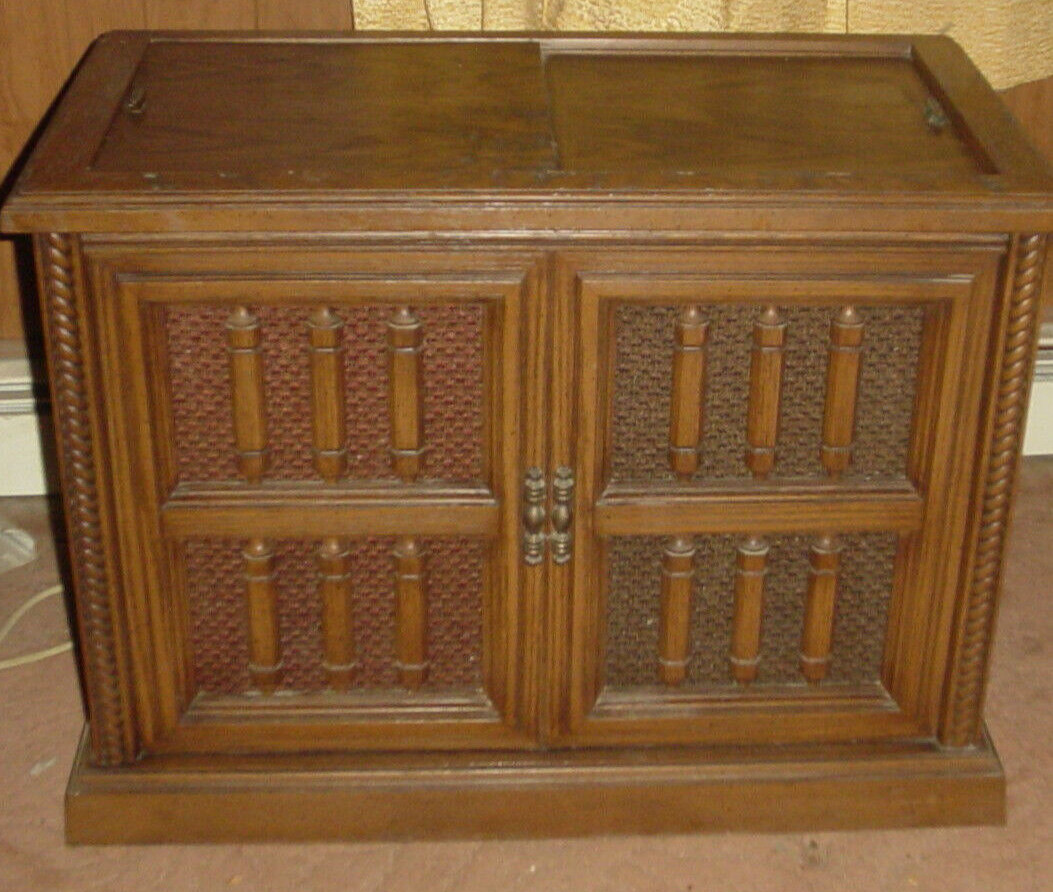
These consoles often featured hand-rubbed finishes, brass hardware, and smoked glass or plexiglass control panels, making them as much furniture as audio gear. Internally, they used a mix of proprietary Magnavox circuitry and licensed designs, with some models incorporating technology derived from Magnavox’s professional audio and military divisions.
Sound Characteristics and Performance
The sonic signature of the Magnavox HIGH-END-CONSOLE-SERIES leans toward warmth and musicality, especially in earlier hybrid (tube/solid-state) models. The tube-based preamplifier stages—common in units from 1968 to 1972—impart a smooth, slightly rounded high end and rich midrange, ideal for vocal jazz, classical, and acoustic recordings. Bass response is robust, thanks to large, ported speaker enclosures built into the cabinet.
Later all-solid-state versions (post-1973) offer tighter bass and improved clarity but sometimes at the expense of the "lush" character audiophiles associate with the earlier builds. The integrated reel-to-reel decks are a standout feature, providing a level of analog warmth and dynamic range that rivals standalone tape machines of the era. When properly maintained, these decks can deliver excellent playback and even respectable recording quality.
The speakers, typically dual 8" or 10" woofers paired with dome tweeters and sometimes a midrange driver, are designed for room-filling sound rather than pinpoint imaging. They excel in casual listening environments and are surprisingly efficient, requiring little power to achieve high volume levels.
Notable Features and Innovations
What set the HIGH-END-CONSOLE-SERIES apart was its holistic design philosophy. Unlike component systems that required separate placement and cabling, these consoles offered a plug-and-play luxury experience. Key innovations and features include:
- Modular Component Bays: Slide-out trays allowed easy access to the turntable, tape deck, and tuner, facilitating maintenance and cleaning.
- Furniture-Quality Construction: Built by cabinetmakers using solid hardwoods and veneers, these consoles were meant to last generations.
- Integrated Lighting: Some models featured soft incandescent lighting under the glass lid or around the control panel, enhancing the visual appeal.
- Remote Control Options: A rare feature for the time, select late-model consoles included infrared remotes for tuning and volume.
- Custom Acoustic Tuning: The speaker enclosures were specifically tuned to the cabinet’s internal volume, resulting in a cohesive sound profile.
Magnavox also partnered with interior designers to ensure the consoles complemented contemporary home decor, offering custom finishes and fabric speaker grilles.
Common Issues and Maintenance
Like all vintage electronics, the HIGH-END-CONSOLE-SERIES requires attention to remain functional. Common issues include:
- Dried Capacitors: Electrolytic capacitors in the power supply and audio circuits degrade over time, leading to hum, distortion, or failure. A full recapping is recommended for units that have been dormant.
- Worn Belts: Turntable and reel-to-reel motors often rely on rubber belts that harden and crack after decades. Replacement is straightforward but essential.
- Dusty Controls: Pots and switches accumulate oxidation; cleaning with contact cleaner can restore smooth operation.
- Speaker Foam Decay: The foam surrounds on older woofers commonly disintegrate. Re-foaming or reconing is necessary for full-range sound.
- Tube Replacement: In hybrid models, tubes such as the 6AU6 or 12AX7 may need replacement or biasing.
Due to their size and complexity, these consoles are not beginner-friendly restoration projects—but for dedicated collectors, the reward is a fully functional piece of audio history.
Current Market Value and Collectibility
The HIGH-END-CONSOLE-SERIES is gaining attention in the vintage audio community, particularly among collectors of mid-century design and integrated systems. Units in excellent, fully operational condition can fetch between $800 and $2,500, depending on model, finish, and included components. Rare configurations with working reel-to-reel decks or original Magnavox tube preamps command premium prices.
Factors that increase value include:
- Originality (unmodified internals)
- Working condition
- High-gloss wood finishes
- Complete accessories (dust covers, remote controls)
While not as sought-after as Fisher or Scott consoles, Magnavox’s HIGH-END-CONSOLE-SERIES offers exceptional value for those who appreciate form and function in equal measure.
Conclusion and Legacy
The Magnavox HIGH-END-CONSOLE-SERIES stands as a testament to an era when audio equipment was designed to be seen and admired, not hidden away. It represents a moment when high fidelity met high design, and families gathered around their stereo as much as their television. Though overshadowed by more famous component brands, these consoles deliver a unique blend of performance, craftsmanship, and nostalgic charm.
Today, they are more than relics—they are conversation pieces, functional art, and a warm reminder of a time when technology was built to last and to inspire. For the vintage audio enthusiast with space and passion, the Magnavox HIGH-END-CONSOLE-SERIES is not just a system—it’s a statement.
eBay Listings

As an eBay Partner, we earn from qualifying purchases. This helps support our independent vintage technology research.
Related Models
- Magnavox ASTRO-SONIC SERIES (1955)
- Magnavox Component Systems (1972)
- Magnavox MICROMATIC Series (1958)
- Magnavox OTHER-CONSOLE-MODELS (1955)
- Magnavox SPEAKER-SYSTEMS (1970)
- Akai AM-2850 (1975)
- Akai AP-206 (1975)
- Nakamichi BX-1 (1985)
- Acoustic Research research-ar-17 (1978)
- Acoustic Research AR-19 (1994)