Luxman MQ-68C (1978–1983)
That rare Japanese tube amp that doesn’t just sing—it growls with authority, built like a vault and wired by hand for a reason.
Overview
You don’t just plug in the Luxman MQ-68C—you engage with it. This isn’t some plug-and-play relic from the late '70s; it’s a serious, hand-built stereo tube power amplifier from a moment when Luxman was doubling down on vacuum tubes while the rest of the world was going solid-state. Introduced around 1978 (with some sources citing production into 1982–1983), the MQ-68C emerged when tube gear was already on life support, making its existence something of a quiet rebellion. It wasn’t just built to last—it was engineered to prove that tubes still had fire in their belly.
And fire it has. The MQ-68C delivers either 25 or 30 watts per channel into 8 ohms—sources disagree, but both figures point to a muscle amp that can drive demanding speakers with authority. Its sound is consistently described as lush, warm, and dynamically explosive, a signature shaped by the quality of its internal transformers and the purity of its point-to-point wiring. But this isn’t a soft, polite vintage amp. It’s got grip, it’s got speed, and it’s got a presence that fills a room without begging for attention.
What makes the MQ-68C especially fascinating is that it was part of Luxman’s bold push into the American high-end market during the late 1970s and early 1980s. This wasn’t just another reissue or minor update—it was a full-throated declaration that Japanese engineering could stand toe-to-toe with the best from the West. And with its proprietary 50CA10 output tubes, co-developed with NEC, Luxman wasn’t playing by the rules. They were rewriting them.
Today, these amps are a rare find in the U.S., and when they do surface, they command respect—and a price to match. They’re not for the faint of heart or the casually curious. This is gear for people who understand that real tube magic comes not from nostalgia, but from obsessive engineering and a refusal to compromise.
Specifications
| Manufacturer | Luxman |
| Model | MQ-68C |
| Year of Release | 1978 - 1981 (some sources: 1982-83) |
| Type | Stereo tube power amplifier |
| Power Output | 30 watts per channel at 8 Ohms |
| Frequency Response | 10Hz to 60kHz |
| Total Harmonic Distortion | 0.05% |
| Damping Factor | 14.5 |
| Input Sensitivity | 0.88V |
| Signal to Noise Ratio | 105dB |
| Output Impedance | 8 Ohms |
| Dimensions (W×H×D) | 15.75" x 6" x 6.5" |
| Weight | about 30 lbs |
Key Features
Hand-Built with No Shortcuts
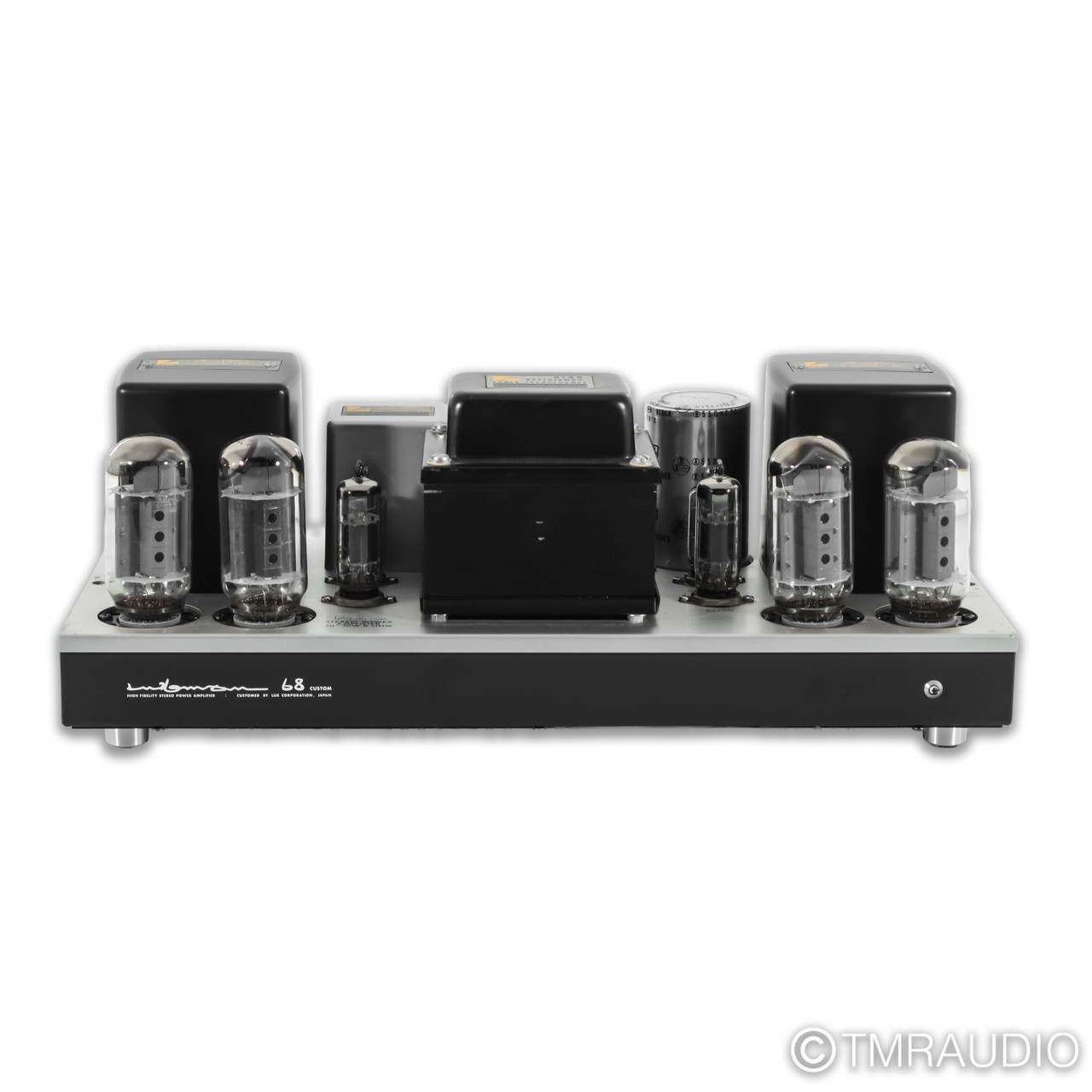
Every MQ-68C was hand made in Japan using point-to-point wiring—no printed circuit boards, no mass production tricks. This isn’t just a marketing slogan; it’s visible the moment you lift the top plate. The internal layout is clean, deliberate, and built to last, using high-grade resistors, capacitors, and a choke to stabilize the power supply. The coupling capacitors are all mylar, a choice that contributes to the amp’s clarity and longevity. And the transformers? They’re not just functional—they’re a core part of the sound, with owners noting that the amp benefits greatly from their quality, delivering a warm yet dynamic presentation that feels both rich and controlled.
Proprietary Tubes, Serious Performance
At the heart of the MQ-68C are the Luxman/NEC 50CA10G output tubes—rare, triode-connected sweep tubes with a 12-pin button base, similar in construction to a 6LF6. These aren’t off-the-shelf tubes you can grab at any audio shop. They were designed specifically for Luxman’s high-performance amps, and while they’re still findable, they require effort and come at a premium. And beware: Chinese-made versions exist, but their quality is questionable. The input stage uses a pair of 6240G and 6267/EF86 tubes, with Luxman recommending the 6CG7 as a suitable substitute for the 6240G if needed.
Safety and Serviceability
The amp features a clever safety switch activated by the machined aluminum top plate—lift the cover, and the power cuts off. It’s a small detail, but one that speaks to Luxman’s respect for both the user and the high voltages inside. On the rear panel, you’ll find gold-plated RCA input jacks, input level controls, a fuse holder, robust speaker terminals, a power-on switch, and a negative feedback switch for fine-tuning the damping and tonal balance. Biasing isn’t automatic, though: owners must adjust four trimmers by measuring voltage at two designated test points, a ritual that demands patience and a good multimeter.
Historical Context
The MQ-68C didn’t appear out of nowhere. It follows in the footsteps of the Luxman MB-3045 mono amplifiers, which were critically acclaimed and received encomium from the high-end press. That legacy is evident in the MQ-68C’s design philosophy: point-to-point wiring, triode-connected output tubes, and the same input tube complement. At a time when tube production was in steep decline, Luxman doubled down, developing proprietary tubes in partnership with NEC. This wasn’t nostalgia—it was a statement. The company was entering the American high-end market with an aggressive new line of tube components, aiming to compete with the very best in the world.
Collectibility & Value
Finding a Luxman MQ-68C in the U.S. is no easy task—they’re a rare find, and when they do surface, they’re often already spoken for. On the secondary market, prices reflect both rarity and demand: listings have appeared at $2,595 (The Music Room), ¥152,727 (Hifido), and as high as PLN 12,000 (AudioStereo). These aren’t just collector’s items—they’re working amplifiers, but they come with real ownership costs.
The proprietary 50CA10 tubes are much more expensive than common types like EL34 or KT88, and while NOS supplies exist, they’re dwindling. Worse, the original bias potentiometers are notorious for failing—their plastic housings can snap apart after decades, causing an instant loss of bias. Owners report that replacing these pots is often the first job upon acquisition. Likewise, the B+ capacitors should be replaced as part of any serious restoration; they’ve been holding charge for 40+ years, and their failure could take other components with them.
Some units have been modified to run on more common 6L6GC or KT88 tubes, thanks to a known conversion. While this eases tube sourcing, it alters the amp’s character and reduces originality—a trade-off collectors weigh carefully. For purists, an unmodified, fully serviced MQ-68C in working order is the holy grail.
eBay Listings
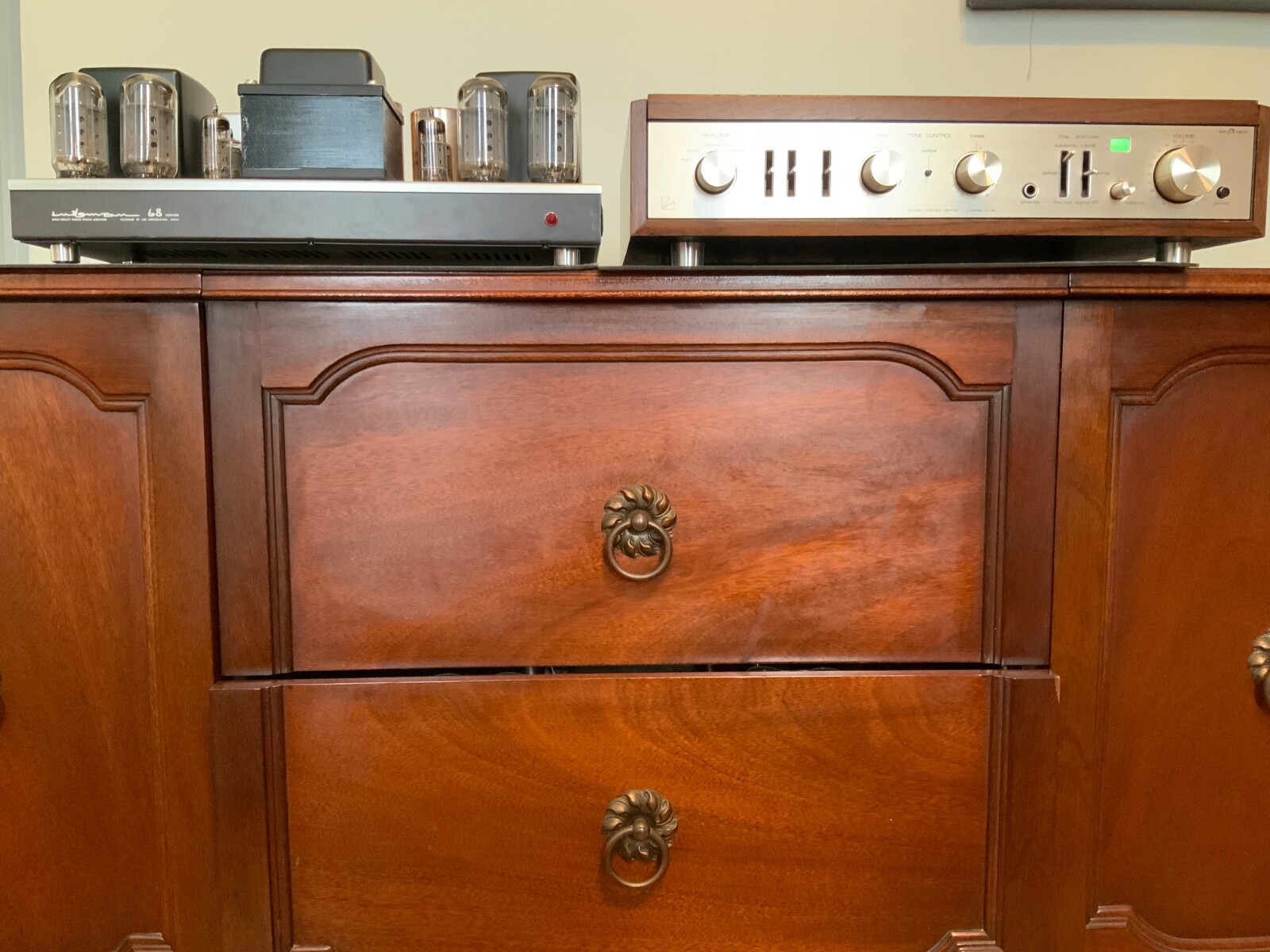
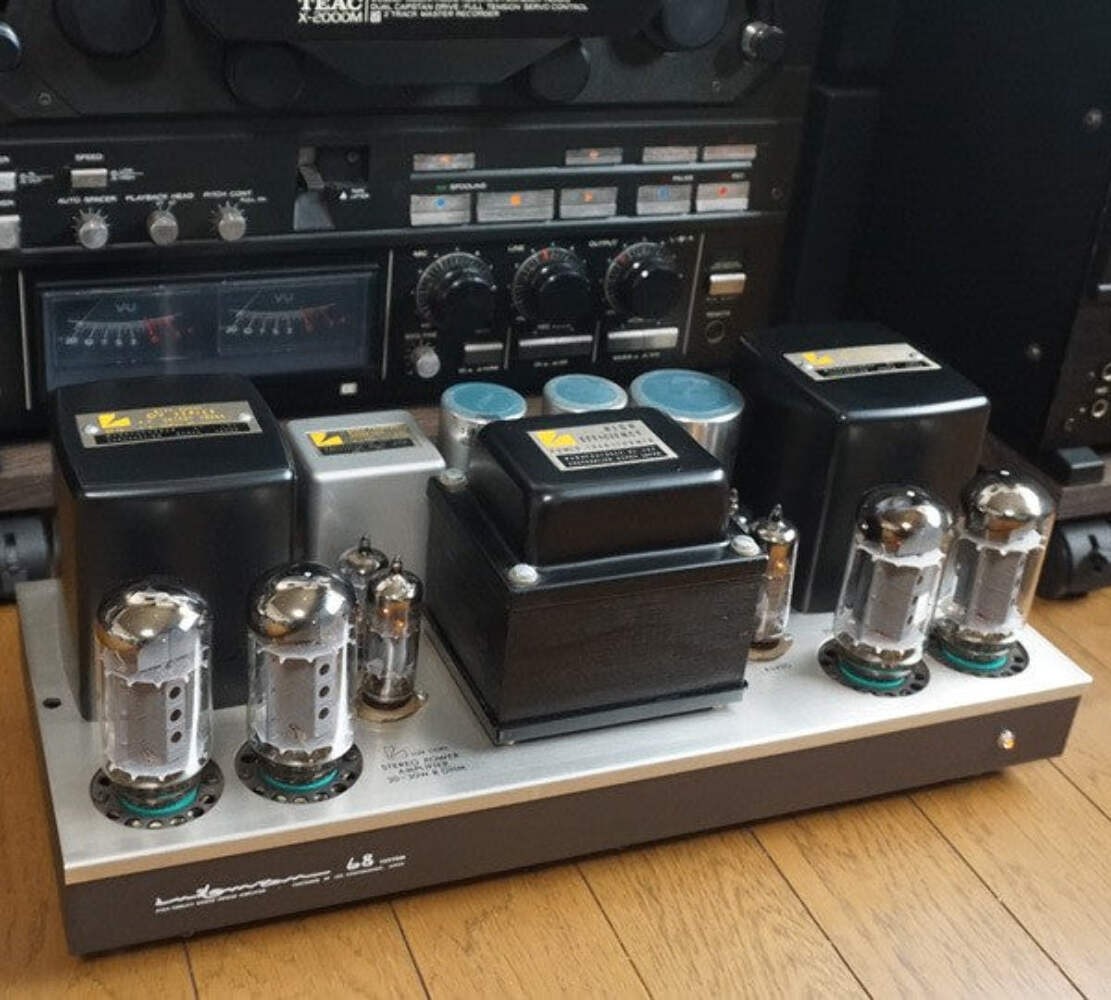
As an eBay Partner, we earn from qualifying purchases. This helps support our independent vintage technology research.
Related Models
- Luxman L-530 (1975)
- Luxman R-404 (1975)
- Luxman RV-371 (1975)
- Luxman SQ-38U (1975)
- Luxman T-14 (1972)
- Luxman T-530 (1975)
- Luxman TX-101 (1975)
- Denon DRA-800 (1985)
- Denon PMA-350Z (1980)
- Denon POA-1500 (1979)