Luxman M-300: The Pinnacle of Japanese Solid-State Engineering
In the late 1970s, Japanese audio manufacturers were rapidly gaining global recognition for their ability to combine cutting-edge engineering with refined sonic performance. Among these, Luxman stood apart—not just for technical excellence, but for a philosophy rooted in musical fidelity and analog purity. The Luxman M-300, introduced in 1978, is a shining example of this ethos. As a monoblock power amplifier, the M-300 was designed for audiophiles who demanded the ultimate in channel separation, power delivery, and sonic transparency. Though not as widely known as some of its contemporaries, the M-300 has earned a cult following among vintage audio enthusiasts and remains a benchmark of high-end Japanese solid-state design.
Historical Context: Luxman in the 1970s
The 1970s marked a golden era for Luxman. Having already established a reputation for high-quality tube amplifiers in the 1950s and 1960s, the company transitioned into solid-state technology with remarkable finesse. Unlike many manufacturers who prioritized power ratings and flashy features, Luxman focused on circuit purity, component quality, and musical accuracy. The M-300 emerged during a period when high-end audio systems were increasingly adopting bi-amping and monoblock configurations to minimize crosstalk and maximize dynamic control.
As a monoblock, the M-300 was not intended for the average consumer. It was a statement piece—a component for discerning listeners who valued performance over convenience. Paired with Luxman’s preamplifiers like the C-05 or C-1000, the M-300 formed the backbone of some of the most refined systems of its time. Its production run was limited, and surviving units are now rare, adding to its collectibility.
Technical Specifications
The Luxman M-300 was engineered with a no-compromise approach. Its dual-mono construction ensures complete electrical isolation between channels (when used as a stereo pair), reducing interference and improving stereo imaging. The amplifier employs a discrete transistor output stage with no global feedback in the signal path—a design choice that contributes to its natural, open sound.
| Specification | Detail |
| Model | Luxman M-300 |
| Year Introduced | 1978 |
| Category | Monoblock Power Amplifier |
| Configuration | Solid-State, Class AB |
| Power Output | 60W into 8Ω (1kHz, 0.7% THD) |
| Frequency Response | 20Hz – 20kHz (+0, -0.5dB) |
| Total Harmonic Distortion | <0.7% (at full power) |
| Input Sensitivity | 0.8V (for rated output) |
| Input Impedance | 47kΩ |
| Damping Factor | 80 (at 1kHz, 8Ω) |
| Speaker Outputs | A/B terminals, gold-plated binding posts |
| Dimensions (W×H×D) | 430 × 145 × 370 mm |
| Weight | 22 kg per unit |
| Finish | Black or Silver front panel |
Notably, the M-300 features a toroidal power transformer for clean, efficient power delivery and low mechanical hum—advanced for its time. The circuit layout emphasizes short signal paths and high-quality passive components, including metal-film resistors and polypropylene capacitors in critical areas.
Sound Characteristics and Performance
The Luxman M-300 is not an amplifier that shouts; it speaks with clarity, poise, and emotional depth. Its sound signature is best described as refined, balanced, and effortlessly dynamic. Unlike many solid-state amplifiers of the era that leaned toward clinical precision, the M-300 retains a subtle warmth and liquidity—qualities often associated with tube designs—without sacrificing detail or control.
- Midrange: Exceptionally transparent and natural, making it ideal for vocal and acoustic recordings.
- Treble: Smooth and extended, free from harshness or glare.
- Bass: Tight, well-damped, and articulate, with excellent pitch definition.
- Soundstage: Wide, deep, and precisely layered, with pinpoint imaging.
When driving high-sensitivity speakers or demanding electrostatics, the M-300 reveals its true strength: effortless control and microdynamic nuance. It doesn’t just amplify the signal—it interprets it with a rare sense of musicality.
Notable Features and Innovations
Several design elements set the M-300 apart from its peers:
- True Monoblock Design: Each unit is a single-channel amplifier, eliminating inter-channel crosstalk and allowing for optimized power supply per channel.
- Discrete Circuitry: No integrated circuits in the signal path; all amplification stages use discrete transistors for superior linearity.
- High Damping Factor: At 80, the M-300 exerts excellent control over speaker cones, particularly beneficial for complex loads.
- Gold-Plated Binding Posts: Ensures low-resistance, corrosion-resistant speaker connections.
- Dual Speaker Terminals: Allows bi-wiring or connection to multiple speaker pairs (though intended for single use per unit).
- Minimalist Front Panel: Features only a power indicator and Luxman’s elegant logo—no meters, switches, or gimmicks.
The M-300 also reflects Luxman’s commitment to long-term reliability. Over-engineered heatsinks, robust power supplies, and conservative operating margins contribute to its longevity when properly maintained.
Common Issues and Maintenance
While the Luxman M-300 is renowned for its build quality, age-related issues can arise:
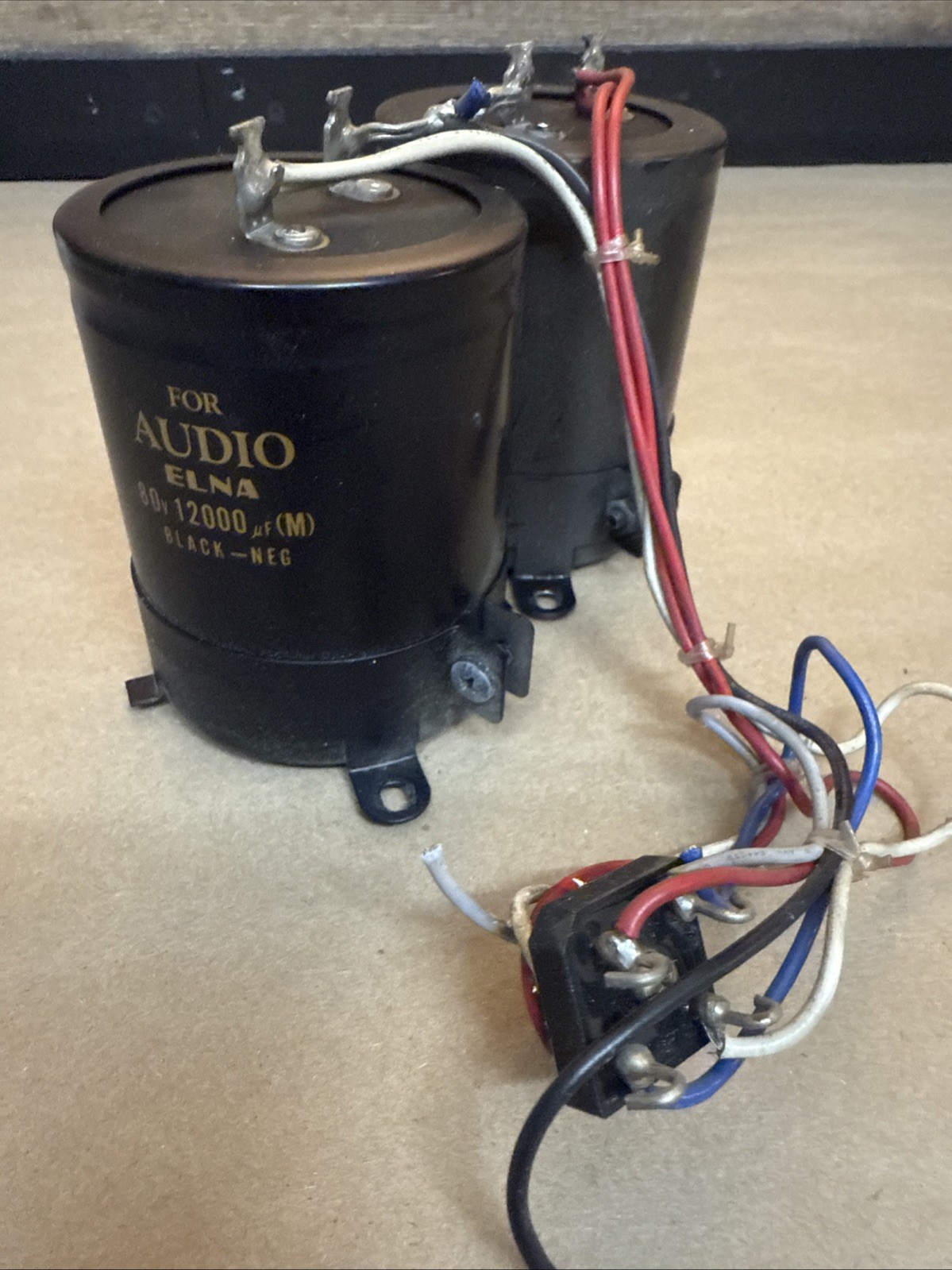
- Capacitor Aging: The electrolytic capacitors in the power supply and signal path may degrade over 40+ years, leading to hum, reduced output, or instability. A full recapping by a qualified technician is recommended for units that haven’t been serviced.
- Thermal Stress: Though well-ventilated, the output transistors can suffer from thermal fatigue. Checking bias settings and replacing thermal paste is prudent.
- Oxidized Controls: Input jacks and internal connectors may develop oxidation. Cleaning with contact cleaner can restore optimal performance.
- Power Switch Wear: The original switches may become noisy or intermittent. Replacement with modern equivalents is possible but should maintain original aesthetics.
Regular servicing every 10–15 years ensures the M-300 continues to perform at its best. Given its collectible status, preserving originality is key—modifications should be avoided unless necessary for safety or function.
Current Market Value and Collectibility
The Luxman M-300 is a rare and sought-after amplifier on the vintage market. Complete matched pairs in good working condition typically command $2,500 to $4,000 USD, with exceptional examples fetching more. Factors influencing value include:
- Original finish and condition
- Service history
- Presence of original packaging and documentation
- Matching serial numbers (for pairs)
Collectors prize the M-300 not only for its sound but as a historical artifact of Luxman’s engineering heritage. It represents a bridge between the tube era and the high-fidelity solid-state revolution, embodying Japanese precision with a distinctly musical soul.
Conclusion: A Legacy of Fidelity
The Luxman M-300 is more than a power amplifier—it’s a testament to a philosophy of audio reproduction that values truth, elegance, and emotional connection. In an age of ever-increasing power ratings and digital processing, the M-300 reminds us that greatness lies in refinement, not excess.
For the vintage audiophile, restoring or acquiring a pair of M-300s is not just an investment in sound quality, but in a legacy of craftsmanship. Whether driving classic Japanese speakers like Tannoys or modern high-efficiency designs, the M-300 continues to deliver a listening experience that is as moving today as it was in 1978.
If you encounter a Luxman M-300 in the wild, treat it with respect. You’re not just holding an amplifier—you’re holding a piece of audio history.
eBay Listings


As an eBay Partner, we earn from qualifying purchases. This helps support our independent vintage technology research.
Related Models
- Luxman L-530 (1975)
- Luxman R-404 (1975)
- Luxman RV-371 (1975)
- Luxman SQ-38U (1975)
- Luxman T-14 (1972)
- Luxman T-530 (1975)
- Luxman TX-101 (1975)
- Denon DRA-800 (1985)
- Denon PMA-350Z (1980)
- Denon POA-1500 (1979)