Luxman LMC-5 (2022)
A hand-built moving-coil cartridge that reads vinyl with the precision of a master engraver and the soul of a jazz trio at midnight.
Overview
You can feel the weight of four decades in the Luxman LMC-5—four decades of waiting, refining, and listening. When Luxman finally re-entered the phono cartridge arena in 2022 with the LMC-5, it wasn’t with a tentative step, but a full-bodied statement: this is how a Japanese engineering giant reclaims its analog legacy. After 40 years since their last original cartridge design, Luxman didn’t rush. They spent two years perfecting a moving-coil transducer that doesn’t just track grooves—it interprets them. And what it hears, it delivers with a rare balance of clinical accuracy and musical warmth, like a high-resolution photograph developed in analog chemistry.
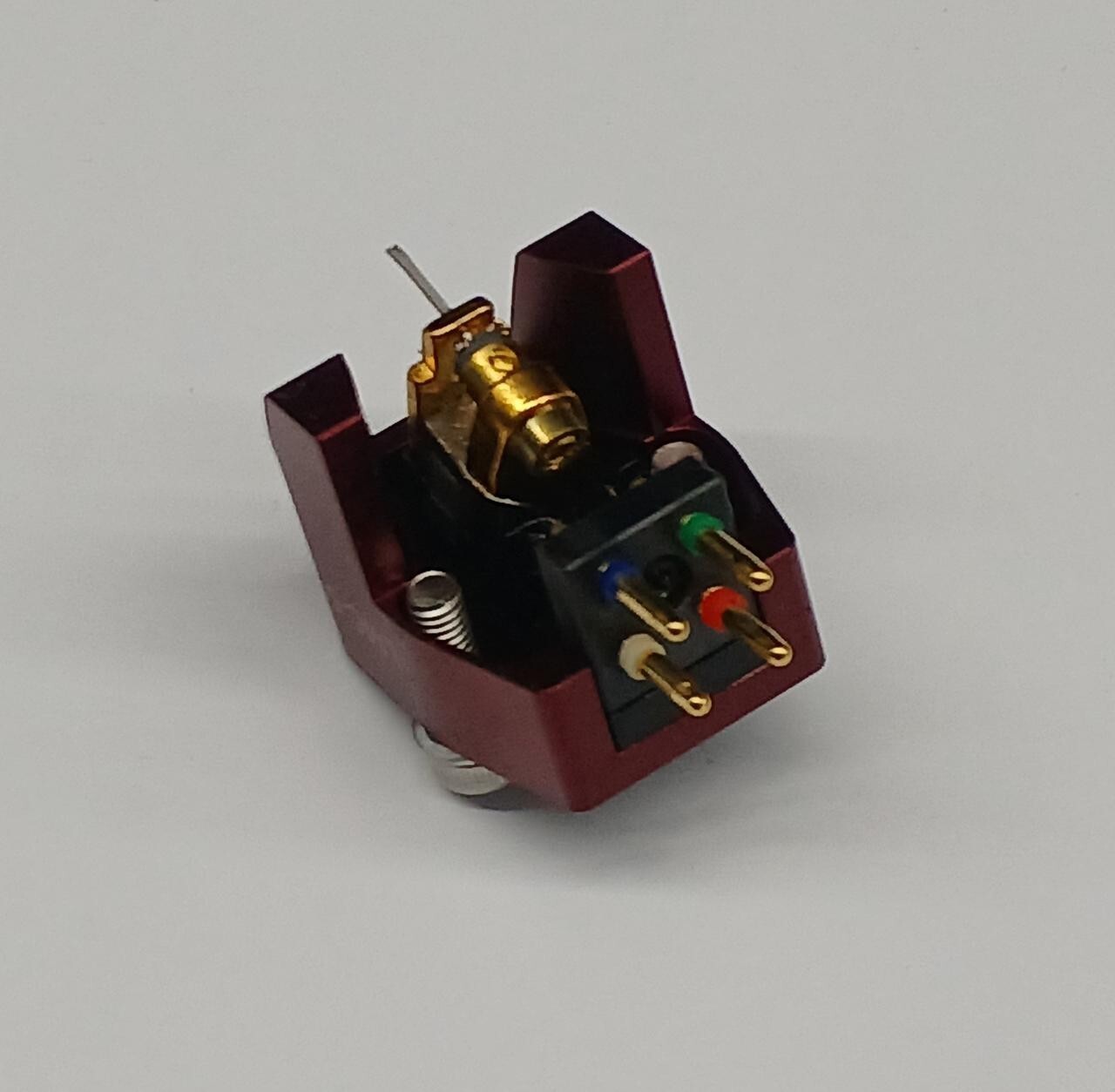
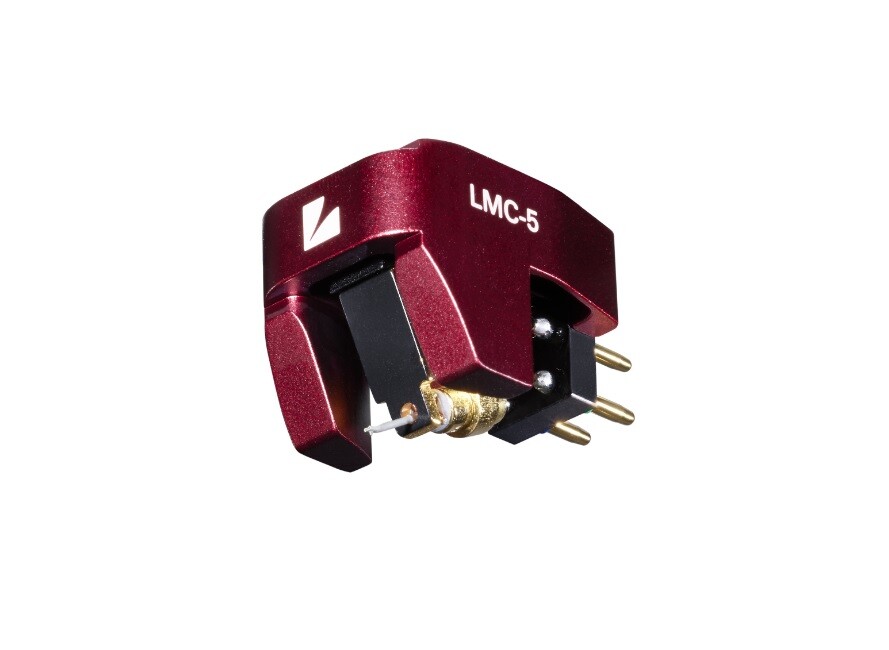
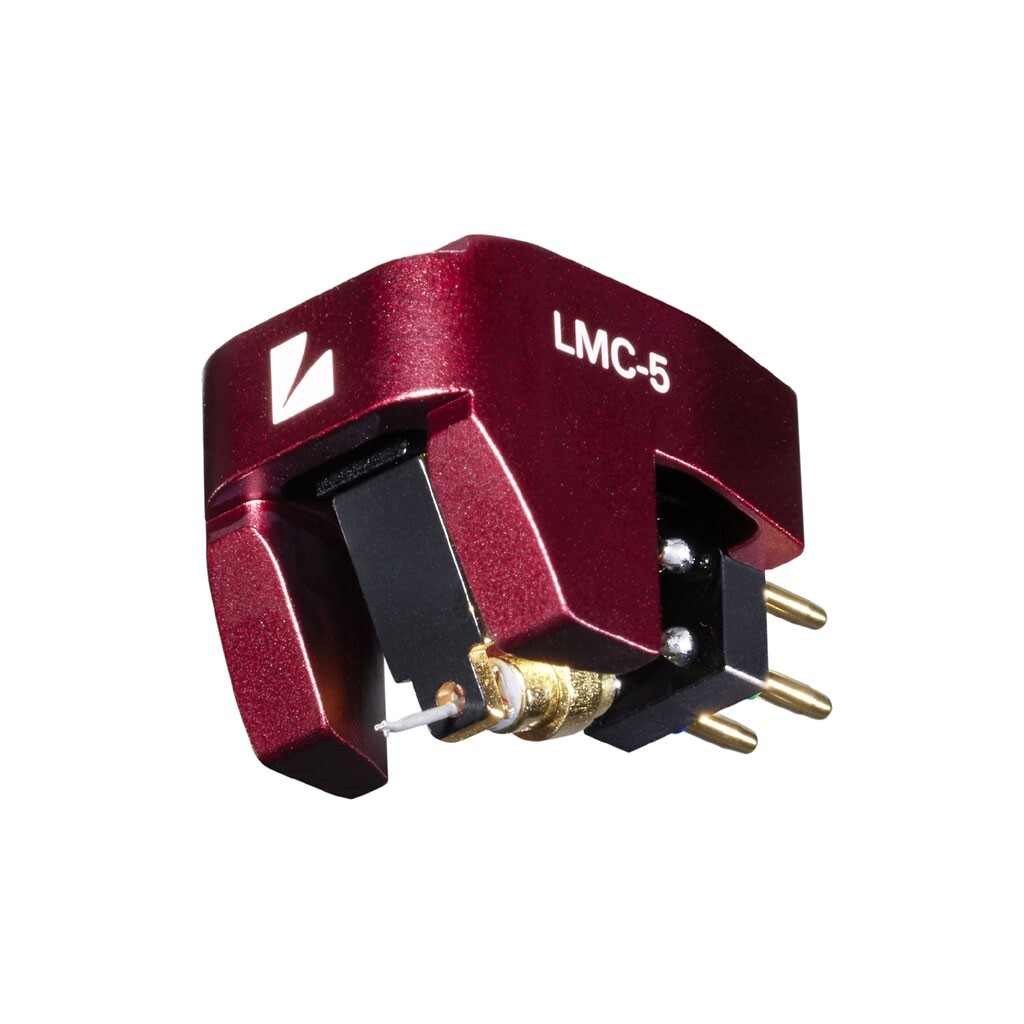
The LMC-5 isn’t trying to be flashy. It doesn’t need to. Its deep red anodized aluminum body—LUXMAN’s signature hue—sits low and compact on the headshell, an inverted egg shape that’s as much about damping internal reflections as it is about aesthetics. At just 8.5 grams, it’s featherlight, yet every millimeter of its A6063 aluminum housing feels intentional, machined to minimize resonance and maximize rigidity. This is not a mass-market component; each unit is hand-assembled by a team of Japanese artisans who treat cartridge building like a craft bordering on ritual. The result? A cartridge that doesn’t just play records—it communes with them.
Its performance lands in that elusive sweet spot between transparency and engagement. Some high-end MC cartridges err on the side of sterility, revealing every flaw in a pressing like a forensic report. Others lean too warm, softening edges until the music feels nostalgic rather than immediate. The LMC-5 splits the difference: it’s detailed without being clinical, smooth without being veiled. Whether it’s the breath behind a vocal, the decay of a piano note, or the subtle shift in bow pressure on a cello, the LMC-5 renders it with startling presence. It doesn’t shout its virtues; it whispers them, and you lean in to listen.
Specifications
| Manufacturer | Luxman Corporation, Japan |
| Production Years | 2022–present |
| Original Price | $2,995 USD |
| Type | MC (Moving Coil) |
| Internal Impedance | 4.7Ω (1kHz) |
| Output Voltage | 0.4mV (1kHz, 3.54cm/s) |
| Frequency Response | 10Hz – 35kHz |
| Channel Separation | 28dB (1kHz) |
| Channel Balance | 0.5dB (1kHz) |
| Tracking Force | 2.1–2.3g (2.2g recommended) |
| Dynamic Compliance | 8 × 10⁻⁶ cm/dyne (100Hz) |
| Recommended Load Impedance (Head Amp) | 40Ω or more |
| Recommended Load Impedance (Step-Up Transformer) | 2.5–10Ω |
| Stylus Type | Solid Diamond, Shibata |
| Cantilever | Φ0.5mm Aluminum |
| Vertical Tracking Angle | 25° |
| Magnet | Samarium-Cobalt, BH20 |
| Coil | 30μm UEW |
| Material of Magnetic Circuit | Pure Iron |
| Terminals | Φ1.2mm, Color-Coded (White, Blue, Red, Green) |
| Body Material | Aluminum A6063 |
| Dimensions (W×H×D) | 17.0 × 18.3 × 21.3mm (excluding terminals) |
| Weight | 8.5g |
| Threaded Holes | M2.6mm × 2 |
| Accessories | Manual, Washers (x2), Screws (M2.6: 5mm, 8mm, 10mm ×2 each), Hex Wrench, Stylus Cover |
Key Features
The Cross-Mounted Iron Core and Symmetrical Coils
At the heart of the LMC-5’s design is its cross-mounted iron core, a configuration where the coils for the left and right channels are wound symmetrically around a central core. This isn’t just about balance—it’s about minimizing phase distortion and crosstalk. By ensuring both channels experience identical magnetic environments, Luxman achieves exceptional channel separation (28dB at 1kHz) and near-perfect balance (within 0.5dB). The compact magnetic structure, using pure iron and a samarium-cobalt magnet, further reduces external noise intrusion, a common issue in high-output MC designs. The result is a signal path so clean it feels like the cartridge isn’t there at all—just the music, unmediated.
Aluminum Cantilever and Shibata Stylus
The choice of a 0.5mm aluminum cantilever paired with a Shibata diamond stylus is deliberate and performance-driven. Aluminum offers an ideal stiffness-to-mass ratio, allowing the stylus to follow high-frequency modulations without inertia-induced lag. The Shibata profile, with its elliptical tip and extended contact area, digs deeper into the groove walls than a standard elliptical stylus, retrieving more high-frequency information—especially in older or heavily modulated pressings. It’s a combination that delivers extended highs without glare, capturing the “air” around instruments while maintaining excellent groove contact. Reviewers consistently note its ability to resolve fine textures: the grain of a violin bow, the rasp of a brushed snare, the subtle reverb in a studio space—all rendered with lifelike clarity.
One-Point “Piano Wire” Support System
One of the LMC-5’s most innovative features is its fulcrum design: a single-point “piano wire” suspension that supports the entire vibration system. This low-distortion pivot minimizes energy loss and mechanical resonance, allowing the cantilever to move with near-frictionless precision. Unlike traditional jeweled bearings that can introduce micro-reflections or damping artifacts, this wire suspension acts like a taut string, transmitting only the essential vibrational energy to the coils. It’s a design that prioritizes signal integrity over mechanical convenience, and it pays off in a blacker background and more dynamic expression. The downside? It demands careful setup—any misalignment or excessive tracking force can compromise performance. But for those willing to take the time, the payoff is a level of detail retrieval that borders on the revelatory.
Historical Context
The LMC-5 isn’t just a new product; it’s a homecoming. Luxman, founded in 1925, built its reputation on tube amplifiers and high-end preamps, but its analog roots run deep—particularly with its PD-series turntables and E/EQ-series phono preamplifiers. Yet for four decades, the company stayed out of the cartridge game, focusing instead on electronics and digital playback. The return with the LMC-5 in 2022 was a strategic reassertion of their commitment to the full analog signal chain. At a time when vinyl has seen a renaissance—not just as nostalgia, but as a high-resolution format—Luxman positioned the LMC-5 as the missing link in an all-Luxman system. Pair it with a PD-151 Mk2 turntable, a CL-1000 preamp, and a MQ-300 tube amp, and you’ve got one of the few complete, vertically integrated analog front ends in high-end audio.
It also arrived in a market crowded with elite MC cartridges from Ortofon, Denon, and Koetsu, where prices routinely exceed $10,000. The LMC-5’s $2,995 price point makes it a relative value, not a budget option, but a serious contender for those who want flagship-level performance without the stratospheric cost. It competes directly with cartridges like the Ortofon Cadenza Black and the Denon DL103R, offering a different sonic signature—less forward than the Ortofon, more detailed than the Denon—while matching them in build quality and technical refinement.
Collectibility & Value
The LMC-5 is not a vintage model in the traditional sense—production began in 2022—but it’s already being treated as a modern classic. Its limited production runs, hand assembly, and symbolic return to cartridge design have made it a collector’s item almost immediately. In the used market, prices remain close to retail, with well-maintained units fetching $2,500–$2,800, a testament to its perceived longevity and desirability. Unlike older cartridges that degrade over time, the LMC-5’s robust construction and conservative tracking force (2.2g) suggest excellent lifespan, assuming proper care.
However, it’s not without ownership considerations. The Shibata stylus, while excellent for detail retrieval, is more fragile than a conical or fine-line profile and requires precise alignment. Azimuth, VTA, and anti-skate must be dialed in carefully—this isn’t a plug-and-play cartridge. And because the stylus is fixed (not replaceable), any damage means a trip to an authorized service center, where recantilevering or full replacement could cost upwards of $800. Buyers should inspect used units for signs of misalignment or stylus wear, ideally using a high-magnification microscope. Also, its low output (0.4mV) demands a high-quality MC preamp or step-up transformer; pairing it with a low-gain or noisy phono stage will waste its potential.
For those building a high-end analog system, the LMC-5 offers a rare combination: proven engineering, exquisite build, and a sound that’s both technically flawless and emotionally engaging. It’s not the last word in raw excitement, but it might be the last word in balance. And in a world of audio extremes, that’s a rare and valuable thing.
eBay Listings

As an eBay Partner, we earn from qualifying purchases. This helps support our independent vintage technology research.
Related Models
- Luxman L-530 (1975)
- Luxman R-404 (1975)
- Luxman RV-371 (1975)
- Luxman SQ-38U (1975)
- Luxman T-14 (1972)
- Luxman T-530 (1975)
- Luxman TX-101 (1975)
- Denon DRA-800 (1985)
- Denon PMA-350Z (1980)
- Denon POA-1500 (1979)