Luxman L-590A: The Pinnacle of Analog Refinement
In the pantheon of high-fidelity audio equipment, few names command as much reverence as Luxman. Hailing from Japan, Luxman has long been synonymous with meticulous craftsmanship, sonic purity, and a deep commitment to analog excellence. Among its distinguished lineup of vintage components, the L-590A stands as a quiet masterpiece—a preamplifier that embodies the brand’s philosophy of musicality over measurement, and elegance over excess.
Introduced in 1995, the L-590A emerged during a golden era for Japanese high-end audio, a time when companies like Accuphase, Audio Research (Japan), and Sansui were producing gear that blended cutting-edge engineering with a profound respect for the listening experience. The L-590A was not designed to shout; instead, it whispered with authority—offering audiophiles a preamp that delivered transparency, warmth, and an uncanny ability to render the emotional content of music.
While Luxman is often associated with tube amplifiers and OTL designs, the L-590A represents a refined evolution of their tube-hybrid philosophy. It combines the best of solid-state reliability with the sonic richness typically associated with vacuum tubes. This hybrid approach—using discrete FETs in the input stage and tube buffering in the output stage—gives the L-590A its signature “tube glow” without sacrificing control or dynamics.
Technical Specifications
The L-590A is a stereo line preamplifier designed for discerning audiophiles who value both performance and longevity. Its construction reflects Luxman’s obsessive attention to detail, from the hand-selected components to the massive, resonance-resistant chassis.
| Specification | Detail |
| Model | L-590A |
| Year Introduced | 1995 |
| Type | Line Preamplifier (Tube-Hybrid) |
| Gain | Approximately 10 dB |
| Frequency Response | 10 Hz – 100 kHz (+0/-1 dB) |
| Total Harmonic Distortion | < 0.03% (1 kHz, rated output) |
| Input Impedance | 47 kΩ |
| Output Impedance | 100 Ω |
| Inputs | 4 (RCA) |
| Outputs | 1 Main (RCA), 1 Tape Out (RCA) |
| Phono Input | No (preamp only) |
| Volume Control | High-quality Alps blue potentiometer |
| Tone Controls | Yes (Bass and Treble, ±8 dB at 100 Hz / 10 kHz) |
| Power Supply | Dual-mono toroidal transformer |
| Tubes | 2 × 6DJ8 / ECC88 (used in cathode follower output stage) |
| Dimensions (W×H×D) | 440 × 145 × 385 mm |
| Weight | 13.5 kg (approx. 30 lbs) |
| Finish | Silver or Black (brushed aluminum front panel) |
The use of a dual-mono power supply with separate windings for left and right channels minimizes crosstalk and ensures a wide, stable soundstage. The Alps blue potentiometer—a favorite among audiophiles for its smooth taper and durability—controls volume with precision, while the discrete FET input stage ensures low noise and high input impedance for compatibility with a wide range of sources.
Sound Characteristics and Performance
The Luxman L-590A is not a clinical, hyper-detailed preamp. Instead, it offers a musical, organic presentation that draws listeners into the performance. Its hybrid circuitry imparts a subtle warmth and liquidity to the midrange—particularly noticeable with vocals and acoustic instruments—while maintaining excellent clarity and extension at both frequency extremes.
Bass response is tight and well-controlled, never bloated or slow, thanks to the solid-state input stage. The tube output stage, however, adds a touch of harmonic richness that softens digital harshness and enhances analog sources. The result is a preamp that can tame aggressive recordings while still revealing fine detail and spatial cues.
Stereo imaging is precise and stable, with instruments placed convincingly within a deep and layered soundstage. The L-590A excels at conveying the ambience and texture of a recording, making it an ideal partner for high-resolution analog sources like turntables and reel-to-reel decks.
Many users report that the L-590A pairs exceptionally well with high-efficiency speakers and tube power amplifiers, creating a system that feels alive and emotionally engaging. However, it also drives modern solid-state amps with authority, proving its versatility across different setups.
Notable Features and Innovations
What sets the L-590A apart from its contemporaries is not just its sound, but its engineering philosophy:
- Hybrid Circuit Design: The marriage of FET input and tube output stages provides the best of both worlds—speed and precision from solid-state, with the harmonic richness of tubes.
- High-Quality Internal Wiring: Luxman used oxygen-free copper wiring throughout, minimizing signal loss and preserving integrity.
- Heavy-Duty Chassis: The thick aluminum front panel and reinforced steel chassis reduce vibration and electromagnetic interference.
- Tone Controls with Bypass Option: While many high-end preamps omit tone controls, Luxman included them but ensured they could be fully bypassed for purist listening.
- Tube Buffering: The 6DJ8 tubes operate in a cathode follower configuration, improving current delivery and lowering output impedance for better cable and amplifier compatibility.
These features reflect Luxman’s belief that a preamp should be both functional and musical—a tool for enjoyment, not just technical perfection.
Common Issues and Maintenance
As with any 30-year-old tube-hybrid gear, the L-590A benefits from careful maintenance:
- Tube Replacement: The 6DJ8/ECC88 tubes should be checked every 5–7 years or if you notice a drop in output, increased noise, or channel imbalance. NOS (New Old Stock) tubes from Philips, Siemens, or Amperex are highly recommended for optimal performance.
- Capacitor Aging: While Luxman used high-quality film and electrolytic capacitors, some may need replacement after decades of use, particularly in the power supply.
- Potentiometer Cleaning: The Alps volume pot is robust but can develop轻微 noise over time. Use a high-quality contact cleaner (non-residue) sparingly.
- Binding Post Tightening: The gold-plated RCA jacks and binding posts may loosen with repeated use; periodic inspection is advised.
Finding a well-maintained L-590A is key. Units that have been stored properly and powered on regularly tend to perform flawlessly even today.
Current Market Value and Collectibility
The Luxman L-590A is not as widely known as some of its contemporaries (like the Accuphase C-200 series), but it has developed a cult following among vintage audio enthusiasts. Its value has been steadily rising, especially in Japan and Europe, where demand for high-quality Japanese gear remains strong.
As of 2024, a fully functional L-590A in good cosmetic condition typically sells for $1,200–$1,800 USD, with mint, boxed examples fetching higher prices. Its collectibility is enhanced by its limited production run and the fact that Luxman has not produced a direct successor, making it a true piece of audio history.
Conclusion and Legacy
The Luxman L-590A is more than just a preamplifier—it’s a statement. A statement that high fidelity isn’t just about specs, but about emotion, timbre, and presence. In an age increasingly dominated by digital processing and streaming, the L-590A reminds us of the beauty of analog circuitry, carefully chosen components, and the pursuit of musical truth.
It may not have the flashy badges or the massive power output of some competitors, but in the quiet moments—when the lights are low and the music flows—the L-590A reveals its genius. For those seeking a preamp that blends refinement, warmth, and engineering excellence, the Luxman L-590A remains a timeless choice.
If you're lucky enough to find one in good condition, treat it well. It’s not just a component—it’s a legacy.
eBay Listings

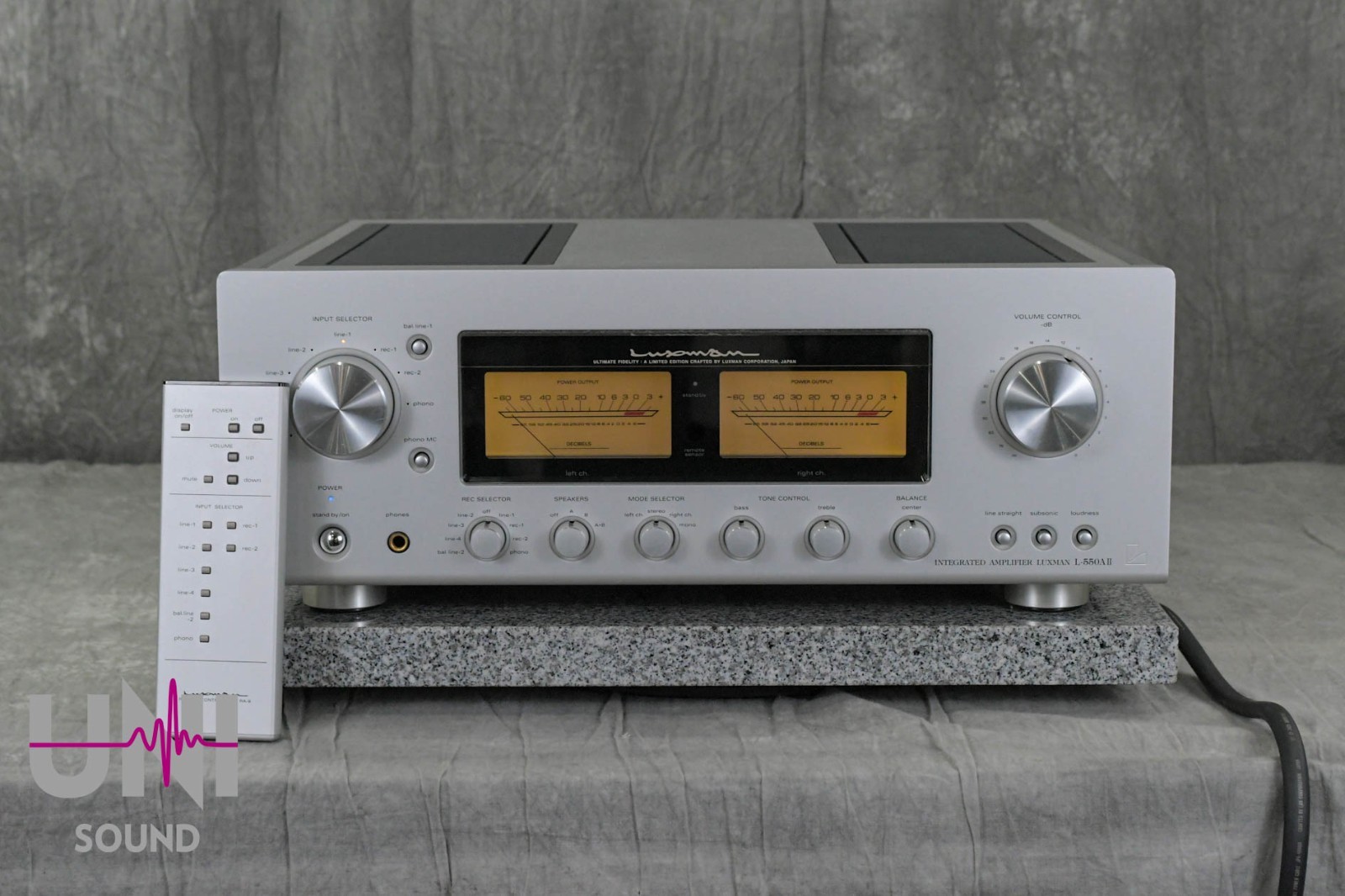


As an eBay Partner, we earn from qualifying purchases. This helps support our independent vintage technology research.
Related Models
- Luxman L-530 (1975)
- Luxman R-404 (1975)
- Luxman RV-371 (1975)
- Luxman SQ-38U (1975)
- Luxman T-14 (1972)
- Luxman T-530 (1975)
- Luxman TX-101 (1975)
- Denon DRA-800 (1985)
- Denon PMA-350Z (1980)
- Denon POA-1500 (1979)