Luxman L-215 (1985–1988)
A cult-favorite integrated amp from Luxman’s golden era, blending the legendary Duo Beta circuit with a warm, musical character—and a few well-known quirks.
Overview
You don’t buy a Luxman L-215 because it’s flashy. You buy it because it sings. This isn’t some faceless box of transistors—it’s a 1980s Japanese integrated amplifier with soul, built during a time when Luxman was quietly perfecting their craft. Officially known as the Duo Beta Stereo Integrated Amplifier, the L-215 carries a circuit design that’s become something of a legend among those who’ve heard it: the Duo Beta topology. It’s not just marketing jargon; this architecture was engineered to deliver low distortion and a rich, dynamic sound that feels alive, not clinical.
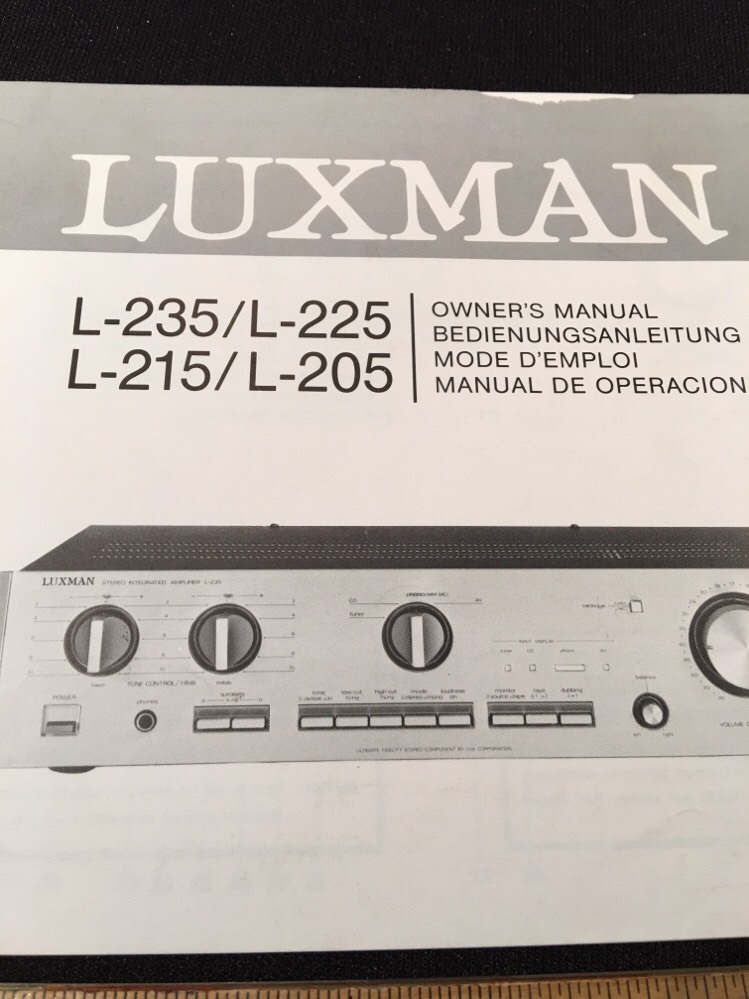
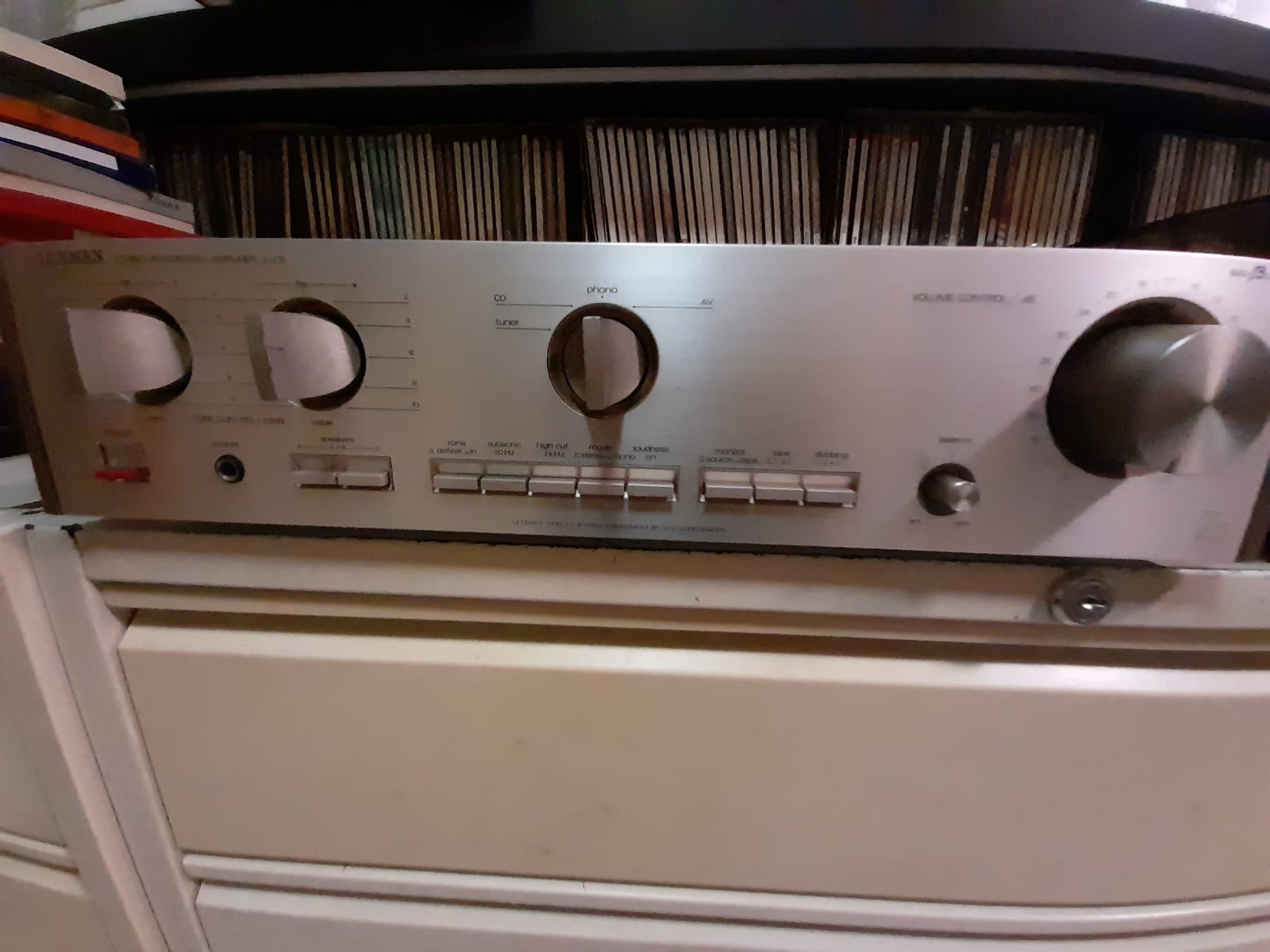
Built between 1985 and 1988—though some sources cite 1984 to 1987—the L-215 emerged when integrated amplifiers were hitting their stride, offering serious performance without demanding a separate preamp and power amp. Luxman didn’t overcomplicate it. No remote control, no digital inputs, no gimmicks. Just solid build quality, a clean front panel in champagne with a matte brushed finish, and a focus on getting the music right. It’s made in Japan, weighs a respectable 7.5 kg (though one source says 6.3 kg), and measures 453 x 111 x 317 mm—compact enough for a shelf, hefty enough to feel substantial.
Owners report it sounds “great,” with one calling it a “great sounding Luxman Integrated amplifier,” and another simply saying, “I really like the look and the sound of this little amplifier.” That’s not hyperbole—it’s the kind of gear that pulls you in with its natural tonality, whether you’re spinning vinyl or feeding it from a line-level source. It’s not the loudest or most powerful amp on the block, but with 50 watts per channel into 8Ω, it can drive a wide range of speakers with ease, especially in smaller to mid-sized rooms.
But here’s the thing: the L-215 isn’t trouble-free. It’s vintage, and like many of its era, it comes with a known Achilles’ heel—one that every buyer should know about before plugging it in.
Specifications
| Manufacturer | Luxman |
| Model | L-215 |
| Type | Integrated amplifier |
| Years | 1985–1988 |
| Power output | 50 watts per channel into 8Ω (stereo) |
| Frequency response | 10Hz to 100kHz |
| Total harmonic distortion | 0.02% |
| Signal to noise ratio | 90dB (MM), 107dB (line) |
| Input sensitivity | 1.8mV (MM), 160mV (line) |
| Power consumption | 125 W |
| Dimensions | 453 x 111 x 317 mm (WxHxD) |
| Weight | 7.5 kg |
| Color | Champagne, matt brushed |
| Remote control | no |
| Made in | Japan |
Key Features
Duo Beta Circuitry: The Heart of the Sound
The L-215’s defining feature is its Duo Beta circuit—a design Luxman developed to reduce distortion and improve linearity in the output stage. While the fact sheet doesn’t detail how it works, the results are audible: a smooth, engaging presentation with a touch of tube-like warmth, even though it’s solid-state. It’s the kind of amplifier that makes you forget about specs and just listen. The frequency response stretches from 10Hz to 100kHz, well beyond the audible range, and with a THD of just 0.02%, it’s technically competent without sounding sterile.
Build and Internal Layout
Inside, the L-215 is laid out across three main boards: a function switch PCB, a main board, and a tone control board. It uses variable pots and switches that, when clean and functioning, offer smooth operation. The amplifier section includes LEDs that indicate when it’s powered and active—a small but useful detail. A full service manual exists, which is a godsend for restorers and technicians. That manual covers chassis and electrical details, including wiring diagrams, making repairs more feasible than with many vintage units.
The Pilot Lamp Circuit: A Known Weak Spot
Here’s where things get dicey. The original pilot lamp runs on 24V and is part of a circuit that includes zener diode D112 (HZ20-3), resistor R153 (300Ω 3W), and capacitor C133 (47µF 35V). This setup has a reputation for trouble. Owners report that D112 can overheat, often failing and leaving a visible black spot on the board. When that happens, the lamp goes out, and if left unattended, it can lead to further issues. Resistor R153 is also known to run hot, and capacitor C133 can degrade over time.
The good news? There’s a well-documented fix. Many owners replace the 24V lamp with an LED, remove D112, and swap R153 with a higher-value resistor—somewhere between 1.5kΩ and 5.6kΩ, 2W. One user measured 23.9V and 112.4mA before the mod, and after installing a 2.7kΩ resistor and removing the zener, saw voltage rise to 44.3V but current drop to 15.6mA—much safer for an LED. Another solution involves replacing the zener with a higher-wattage (1.3W) version and using a modern 24V lamp drawing only 20–50mA. A more advanced repair used a blue LED driven by an NSI45020 constant-current driver, with C133 removed entirely. The takeaway? This mod isn’t optional if you want long-term reliability—it’s practically standard practice among owners.
Collectibility & Value
The L-215 trades in a quiet corner of the vintage audio market. It’s not as famous as Luxman’s C-05 preamp or M-9000 power amp, but it has a loyal following. Prices vary widely by region and condition. Recent listings show €180 on tori.fi, CZK 6,999 on Bazos and Sbazar, PLN 800 on OLX Poland, and DKK 1,099 on Den Blå Avis. In other markets, it’s gone for AUD $285 on StereoNET and $265.28 on eBay. These figures suggest it’s still affordable—especially compared to other vintage Luxmans—but prices may rise as working units become scarcer.
Condition is everything. A unit with unmodified pilot circuitry should be viewed with caution. Look for signs of the D112 mod or at least a clean, reflowed board. Bad solder joints on the main and tone control boards are another red flag—common in older gear, but fixable. Dirty pots and switches can cause crackling and should be cleaned or replaced. But if it’s been serviced, the L-215 is a rewarding listen: musical, detailed, and built to last another 40 years with proper care.
eBay Listings

As an eBay Partner, we earn from qualifying purchases. This helps support our independent vintage technology research.
Related Models
- Luxman L-530 (1975)
- Luxman R-404 (1975)
- Luxman RV-371 (1975)
- Luxman SQ-38U (1975)
- Luxman T-14 (1972)
- Luxman T-530 (1975)
- Luxman TX-101 (1975)
- Denon DRA-800 (1985)
- Denon PMA-350Z (1980)
- Denon POA-1500 (1979)