Luxman L-11 (Late 1970s–Early 1980s)
A solid-state sleeper that slipped through the cracks—until you hear it.
Overview
You won’t find the Luxman L-11 in every vintage catalog, and you definitely won’t spot it in glossy retrospectives. That’s part of its charm. This is the kind of integrated amplifier that flew under the radar in its day—a “middle-of-the-road unit,” as one owner put it—yet somehow ended up with the build quality, circuit ambition, and sonic character that make it quietly legendary among those who’ve actually used one. Built as a solid-state DC-coupled integrated amplifier during the late 1970s or early 1980s, the L-11 wasn’t trying to scream for attention with flashing meters or excessive features. It just aimed to deliver clean, detailed sound with a level of refinement that punched above its market position.
And punch it did. Despite being described as mass-produced and never widely distributed—especially absent in places like Australia—it found a foothold in Scandinavia and had a brief run in North America as part of Luxman’s broader lineup. Owners report a machine that feels substantial, both in weight and construction, with a no-nonsense front panel and a reputation for being “rather well made.” It wasn’t a flagship, but it carried the DNA of Luxman’s higher-end designs, built with care and an eye toward signal integrity. If you’re hunting for something that sounds more expensive than it was, the L-11 fits the bill—assuming you can find one that hasn’t been left to rot in a damp basement for 30 years.
Specifications
| Manufacturer | Luxman |
| Model | L-11 |
| Type | Integrated Amplifier |
| Output Power | 100 watts per channel into 8 ohms (stereo) |
| Frequency Response | 10Hz to 90kHz |
| Total Harmonic Distortion | 0.02% |
| Input Sensitivity | 2.5mV (MM), 150mV (line) |
| Signal to Noise Ratio | 92dB (MM), 100dB (line) |
| Output | 150mV (line), 1.6V (Pre output) |
| Size | 438 x 395 x 125 mm |
| Weight | 18.5 kg |
| Voltage | 120v |
Key Features
Innovative Real-Time DC Design
The Luxman L-11 is billed as an “innovative real-time DC integrated amplifier,” a label that hints at its technical ambition. DC coupling means the signal path avoids capacitors between stages, eliminating phase shifts and roll-off at the frequency extremes. The result, in theory and often in practice, is a wider, more coherent soundstage with tighter bass and extended highs—backed up by that 10Hz–90kHz frequency response. This wasn’t just marketing fluff; it was a real engineering choice that set the L-11 apart from many contemporaries still relying on AC coupling and tone controls.
No Tone Controls—Just Signal Purity
One thing you won’t find on the front panel: tone controls. That’s not an oversight. The L-11 omits them entirely, a design decision that speaks volumes. Luxman trusted the source material and the listener’s system to handle tonal balance, focusing instead on preserving the integrity of the original signal. It’s a purist move, and one that aligns with the amplifier’s overall philosophy: minimal intervention, maximum transparency.
Discrete Op-Amp Architecture
While the L-11’s internal topology isn’t fully documented, commentary on similar models like the L-10 suggests a discrete operational amplifier in the front end of the power amp stage. These weren’t off-the-shelf ICs but custom-assembled circuits built from individual transistors and resistors—offering better performance and longevity, in theory. However, as one owner noted about the L-10, the originals were potted and nearly impossible to repair. Whether the L-11 uses the same module isn’t confirmed, but the shared design language across Luxman’s range at the time makes it plausible.
A Puzzle in a Silver Chassis
Owners warn: this thing is “assembled like Chinese puzzles.” That’s not a compliment to the serviceability. The dense internal layout and tight packaging mean repairs aren’t for the faint of heart. Combined with the fact that it’s “fussy with epoxy-dipped low-value caps”—especially the blue ones, apparently—this amplifier demands respect from anyone cracking the case. If you’re not comfortable with point-to-point inspection and meticulous reassembly, you’ll want a technician who’s seen one before.
Historical Context
The Luxman L-11 existed in a curious market niche. It was never widely sold in Australia, and outside of a few Scandinavian strongholds like Finland, it remained relatively obscure. Yet within those regions, it was common enough to be considered a mass-produced, middle-of-the-road offering. For a brief period, it also appeared in North America as part of a broader Luxman lineup, suggesting the company saw potential beyond its home market. Despite its modest positioning, the L-11 carried engineering hallmarks of more expensive gear—likely because, as one observer noted, Luxman tended to spread similar technology across its product range at any given time. Today, it’s listed as discontinued on Luxman’s official site, a quiet footnote in a catalog now dominated by modern high-end separates.
Collectibility & Value
The L-11’s collectibility is a tale of two timelines. In 2006, working units sold for under $250, with one asking price at CDN$450. At the time, one owner bluntly noted that the resale value of a working unit was often less than the cost of professional repair—making the economics of fixing a broken one “not really viable.” That said, a unit listed more recently with a cosmetic condition rated 6/10 (good, but with visible wear and dings) was described as fully tested with no functional issues. Given the age, most surviving examples will need recapping after approximately 35 years, and owners are advised to check DC offset and bias settings after long periods of inactivity. While not a blue-chip collector’s item, the L-11 has cult appeal—especially among those who value clean, detailed sound and appreciate its rarity. One seller called it “very rare and desirable,” a sentiment that may gain traction as interest in understated Japanese classics grows.
eBay Listings


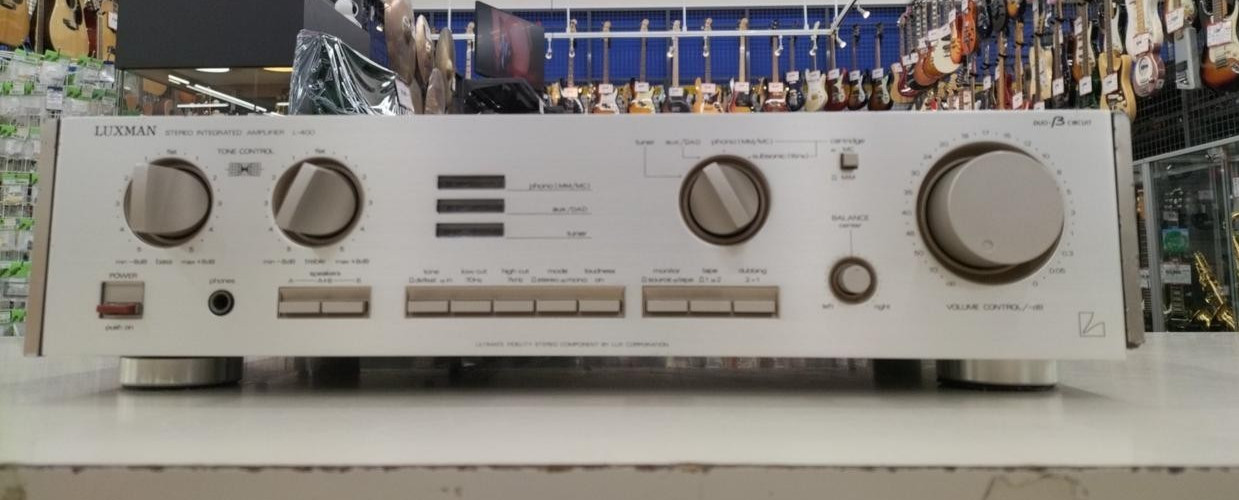
As an eBay Partner, we earn from qualifying purchases. This helps support our independent vintage technology research.
Related Models
- Luxman L-530 (1975)
- Luxman R-404 (1975)
- Luxman RV-371 (1975)
- Luxman SQ-38U (1975)
- Luxman T-14 (1972)
- Luxman T-530 (1975)
- Luxman TX-101 (1975)
- Denon DRA-800 (1985)
- Denon PMA-350Z (1980)
- Denon POA-1500 (1979)