Luxman JPP-10000: The Jewel of Analog Preamplification
In the pantheon of vintage high-fidelity audio equipment, few names command as much reverence as Luxman—the Japanese manufacturer renowned for its meticulous craftsmanship, elegant design, and unwavering commitment to analog purity. Among its storied lineup, the JPP-10000 stands as a rare and opulent masterpiece: a phono preamplifier that transcends mere function to become a statement of audiophile philosophy. Introduced in 1989, during the twilight of analog’s golden age, the JPP-10000 was not just another component—it was a declaration that vinyl, when treated with the utmost respect, could deliver a listening experience bordering on the spiritual.
Though overshadowed in popularity by Luxman’s more widely known integrated amplifiers like the L-505 or the C-05 preamp, the JPP-10000 occupies a unique niche. It was designed for the discerning collector and the ultimate vinyl enthusiast—a hand-built, no-compromise phono stage meant to extract every nuance from a record groove. With its limited production run and exquisite build quality, the JPP-10000 remains one of the most sought-after phono preamplifiers from the late 1980s.
Technical Specifications
| Specification | Detail |
| Model | JPP-10000 |
| Manufacturer | Luxman Corporation, Japan |
| Year of Release | 1989 |
| Type | Moving Magnet / Moving Coil Phono Preamplifier |
| Gain (MM/MC) | 40 dB / 60 dB (approximate) |
| RIAA Accuracy | ±0.5 dB (within 20Hz–20kHz) |
| Frequency Response | 10Hz – 50kHz (±1dB) |
| Input Impedance (MC) | Adjustable (via internal DIP switches) |
| Input Sensitivity (MC) | 0.3 mV (nominal) |
| Output Impedance | 100 Ω |
| Output Level | 250 mV (at 5cm/s, 1kHz) |
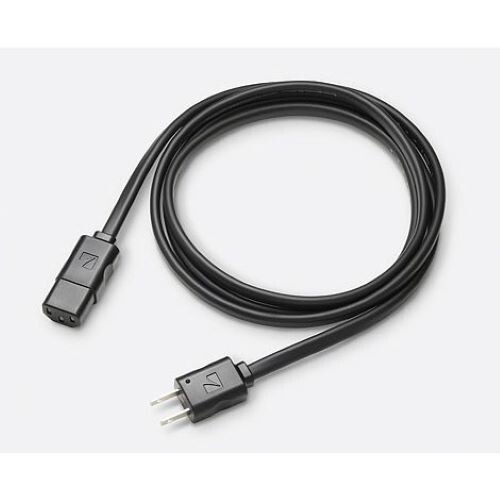
| Power Supply | External AC adapter (12V DC) |
| Dimensions (W×H×D) | 440 × 115 × 355 mm |
| Weight | 12.5 kg (27.5 lbs) |
| Finish | Champagne gold with rosewood side panels |
The JPP-10000 supports both Moving Magnet (MM) and Moving Coil (MC) cartridges, with selectable input impedance and capacitance—critical for optimizing cartridge performance. Its internal circuitry is based on discrete components rather than integrated circuits, a hallmark of Luxman’s high-end philosophy. The use of direct-heated dual-triode tubes in the signal path (reportedly based on the 6N1P or similar) contributes to its legendary warmth and three-dimensionality.
Sound Characteristics and Performance
The sonic signature of the Luxman JPP-10000 is nothing short of magical. It delivers a rich, organic tonality that many describe as “liquid” or “tubelike,” yet with a clarity and precision that belies its vintage status. Bass is deep and controlled, mids are lush and present, and highs shimmer with air and detail without ever becoming harsh.
What sets the JPP-10000 apart is its ability to recreate the spatial dimension of a recording. Instruments are placed with uncanny accuracy, and the soundstage extends far beyond the physical boundaries of the speakers. This is particularly evident with well-recorded acoustic jazz or classical LPs, where the sense of space, decay, and harmonic richness is breathtaking.
It excels with low-output MC cartridges, providing ample gain without introducing noise—a common challenge in phono stages of this era. The careful shielding, point-to-point wiring, and high-quality internal transformers minimize hum and interference, resulting in a velvety black background against which even the faintest musical details emerge.
Notable Features and Innovations
The JPP-10000 was not merely a phono stage—it was a statement of engineering ambition. Among its most notable features:
- Dual-mono design: Fully independent left and right channels with separate power regulation minimize crosstalk and preserve stereo imaging.
- Adjustable loading: Front-panel switches allow users to tailor input impedance and capacitance for optimal cartridge matching—a rarity in consumer-grade phono preamps of the time.
- Hand-wired construction: Each unit was assembled with meticulous care, using high-purity copper wiring and premium capacitors.
- Luxurious aesthetics: The champagne-gold chassis, complemented by real rosewood side panels, gives the JPP-10000 a presence that feels more like fine furniture than electronic equipment.
- External power supply: Reduces noise and vibration transmission, preserving signal purity.
Luxman also employed proprietary winding techniques in its internal transformers, designed to reduce electromagnetic interference and enhance dynamic range. The circuit layout avoids ground loops and prioritizes signal integrity, reflecting the company’s deep understanding of analog circuit behavior.
Common Issues and Maintenance
Given its age and complexity, the JPP-10000 requires careful attention from current owners. While built to last, several issues may arise:
- Tube degradation: The internal tubes may need replacement after decades of use. While not microphonic, they can lose clarity or develop hum over time. Replacing them with high-quality NOS (New Old Stock) or modern equivalents is recommended.
- Capacitor aging: Electrolytic capacitors in the power supply and signal path may dry out, leading to noise or reduced performance. A professional recapping is often advised for units that haven’t been serviced.
- Dust and oxidation: The DIP switches for impedance selection can accumulate dust, causing intermittent connections. Regular cleaning with contact cleaner is essential.
- Power supply reliability: The external adapter is prone to failure. Some owners opt for modern regulated replacements to ensure stable voltage delivery.
Due to its rarity, finding service technicians familiar with the JPP-10000 can be challenging. However, the vintage audio community—particularly in Japan and Europe—has begun to document restoration efforts, making parts and knowledge more accessible.
Current Market Value and Collectibility
The Luxman JPP-10000 is extremely rare. It was never mass-produced, and few units were exported outside Japan. As a result, it has become a holy grail for Luxman collectors and analog purists.
In recent years, working examples in good condition have fetched between $3,000 and $5,000 USD on the secondary market, with pristine, unmodified units commanding even higher prices. Its value is driven not only by performance but by its historical significance and artisanal build.
Unlike many vintage components that have been modded or "improved," originality is highly prized in the JPP-10000. Collectors seek units with original tubes, untouched circuitry, and complete accessories (including the original power supply and remote gain switch, if applicable).
Conclusion and Legacy
The Luxman JPP-10000 is more than a phono preamplifier—it is a monument to analog excellence. Born at a time when digital audio was beginning to dominate, it stood as a defiant affirmation of the warmth, depth, and emotional resonance that only vinyl and tube-based electronics can provide.
While Luxman has since re-entered the phono stage market with modern offerings like the EQL-500, none have captured the romantic engineering spirit of the JPP-10000. It remains a symbol of a bygone era when audio was crafted, not manufactured—a time when every solder joint was placed with intention, and every note was meant to move the soul.
For the collector, the restorer, or the true vinyl devotee, the JPP-10000 is not just a component. It is a piece of audio history, a golden link in the chain of analog perfection. And for those lucky enough to hear it, it remains one of the most beautiful-sounding phono stages ever made.
eBay Listings



As an eBay Partner, we earn from qualifying purchases. This helps support our independent vintage technology research.
Related Models
- Luxman L-530 (1975)
- Luxman R-404 (1975)
- Luxman RV-371 (1975)
- Luxman SQ-38U (1975)
- Luxman T-14 (1972)
- Luxman T-530 (1975)
- Luxman TX-101 (1975)
- Denon DRA-800 (1985)
- Denon PMA-350Z (1980)
- Denon POA-1500 (1979)