Luxman E-12: The Quiet Masterpiece of Japanese Tube Craftsmanship
In the late 1960s, as high-fidelity audio began to capture the imagination of discerning listeners around the world, Japanese manufacturers like Luxman quietly established themselves as purveyors of exceptional quality and understated elegance. Among their early offerings, the Luxman E-12 stands as a rare and refined example of analog preamplification at its most artisanal. Though not as widely known as later Luxman solid-state legends like the C-05 or the L-505, the E-12 occupies a special place in the hearts of tube enthusiasts and vintage audio collectors for its exquisite build, musical transparency, and historical significance as one of Luxman’s earliest dedicated preamplifiers.
Produced in 1968, the E-12 emerged during a golden era when vacuum tube technology was still the dominant force in high-end audio. At a time when many manufacturers were beginning to experiment with transistors, Luxman remained committed to the warmth, richness, and harmonic integrity that only tubes could deliver. The E-12 was not designed for the mass market—it was a statement piece for the serious audiophile, built with meticulous attention to detail and an almost obsessive focus on sonic purity.
Technical Specifications
The Luxman E-12 is a dual-mono, vacuum tube preamplifier featuring a minimalist yet highly effective circuit design. It offers two line-level inputs, a tape loop, and a single output, emphasizing simplicity and signal integrity. Its circuitry is based on a classic differential amplifier configuration, a hallmark of high-end Japanese designs of the era, which contributes to its low noise and excellent channel separation.
| Specification | Detail |
| Model | Luxman E-12 |
| Year of Manufacture | 1968 |
| Type | Tube Preamplifier (Line Stage) |
| Tubes Used | 2x 6DJ8 (ECC88), 2x 6SN7GT |
| Gain | Approximately 10 dB |
| Frequency Response | 10 Hz – 60 kHz (±1 dB) |
| Input Impedance | 100 kΩ |
| Output Impedance | 10 kΩ |
| Inputs | 2x RCA (Line), Tape In |
| Outputs | 1x RCA (Main Out), Tape Out |
| Power Supply | Internal linear transformer, tube rectified |
| Power Consumption | 40W |
| Dimensions (W×H×D) | 340 × 145 × 260 mm |
| Weight | 8.5 kg (18.7 lbs) |
| Finish | Brushed aluminum front panel, black chassis |
The use of the 6SN7GT dual triode for the output stage and 6DJ8 (ECC88) for the input/driver stage was a deliberate choice, reflecting Luxman’s preference for proven, high-transconductance tubes known for their linearity and low distortion. The 6SN7GT, in particular, was a favorite among Japanese and American designers for its robust construction and smooth, natural tonal character.
Sound Characteristics and Performance
The Luxman E-12 delivers a sound that is best described as effortless, organic, and deeply musical. It doesn’t shout its presence; instead, it invites the listener into a spacious, three-dimensional soundstage where instruments are rendered with lifelike texture and placement. The midrange is lush and transparent—perfect for vocal recordings and acoustic instruments—while the highs are extended without being bright or fatiguing.
Bass response is tight and well-controlled, a testament to the quality of the power supply and output coupling design. Unlike some tube preamps that can sound “bloomy” or loose in the lower registers, the E-12 maintains excellent authority and definition, making it a surprisingly good match for dynamic speakers and even early electrostatics.
Its differential amplifier topology contributes to a quiet background and excellent rejection of common-mode noise, which was particularly important in an era when home electrical environments were less stable. The result is a preamplifier that disappears from the signal path, allowing the source and speakers to shine.
Notable Features and Innovations
While the E-12 may appear simple by modern standards, it embodies several design philosophies that would become hallmarks of Luxman’s engineering:
- Point-to-point wiring: Every connection is hand-soldered, with no printed circuit boards. This approach, while labor-intensive, ensures the highest signal integrity and ease of servicing.
- High-quality passive components: Luxman used only premium capacitors and resistors, many of which were custom-made or sourced from trusted Japanese suppliers like Rubycon and CDE.
- Dual-mono power supply: Though not fully separated, the power supply is carefully regulated and filtered to minimize crosstalk and hum.
- Elegant mechanical design: The brushed aluminum front panel, heavy steel chassis, and precise rotary switches reflect a commitment to both function and aesthetics.
One of the most distinctive features is the use of toggle switches for input selection and tape monitoring—robust, tactile, and built to last decades of use. The volume control is a high-quality Alps potentiometer, known for its smooth operation and durability.
Common Issues and Maintenance
As with any 50+ year-old tube equipment, the Luxman E-12 requires careful attention to ensure reliable operation. Common issues include:
- Tube degradation: The 6SN7GT and 6DJ8 tubes should be tested or replaced if the unit has been idle for years. NOS (New Old Stock) tubes from RCA, Telefunken, or Mazda are ideal for authenticity and performance.
- Capacitor aging: Electrolytic and coupling capacitors may need recapping, especially if the unit exhibits hum, channel imbalance, or low output.
- Oxidized switches and pots: The toggle switches and volume control can develop crackling or intermittent contact. Cleaning with contact cleaner (non-residue type) is recommended, though replacement may be necessary in extreme cases.
- Transformer health: The power and output transformers are generally robust, but should be checked for insulation breakdown or overheating.
Given its rarity, it’s advisable to have the E-12 serviced by a technician experienced with vintage Japanese gear. Original parts should be preserved whenever possible to maintain collector value.
Current Market Value and Collectibility
The Luxman E-12 is a rare find on the vintage market. Few units were produced, and even fewer have survived in working condition. When one does appear—typically on Japanese auction sites, audiophile forums, or European vintage dealers—it often commands a premium.
As of 2024, a fully serviced and authentic E-12 in excellent cosmetic and functional condition can fetch between $2,500 and $4,000 USD, depending on provenance and accessories. Units with original boxes, manuals, or factory test records are especially desirable.
Collectors value the E-12 not only for its sound but as a historical artifact—a bridge between Luxman’s early craftsmanship and the high-end legacy it would build in the 1970s and beyond. It represents a time when audio equipment was built to last, not to obsolesce.
Conclusion and Legacy
The Luxman E-12 is more than just a preamplifier—it’s a testament to the art of analog audio in its purest form. In an age of digital precision and mass production, the E-12 reminds us of the beauty of hand-wired circuits, the warmth of vacuum tubes, and the joy of music as an emotional experience.
Though overshadowed by later Luxman models, the E-12 laid the groundwork for the brand’s reputation for sonic excellence and meticulous engineering. For the collector, restorer, or tube aficionado, owning an E-12 is like holding a piece of audio history—quiet, elegant, and profoundly musical.
If you’re fortunate enough to encounter one, don’t let it pass. The Luxman E-12 is not just a component. It’s a legacy.
eBay Listings


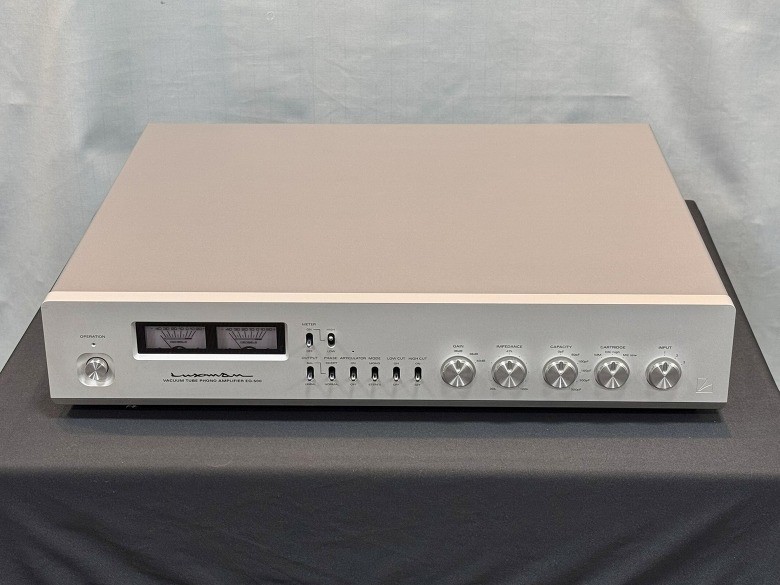

As an eBay Partner, we earn from qualifying purchases. This helps support our independent vintage technology research.
Related Models
- Luxman L-530 (1975)
- Luxman R-404 (1975)
- Luxman RV-371 (1975)
- Luxman SQ-38U (1975)
- Luxman T-14 (1972)
- Luxman T-530 (1975)
- Luxman TX-101 (1975)
- Denon DRA-800 (1985)
- Denon PMA-350Z (1980)
- Denon POA-1500 (1979)