Luxman C-1000: The Pinnacle of Japanese Tube Preamplifier Craftsmanship
In the golden era of high-fidelity audio during the late 1970s, Japanese manufacturers like Luxman, Accuphase, and Sansui were pushing the boundaries of analog excellence. Among the most revered pieces from this period stands the Luxman C-1000, a fully tube-based preamplifier that has since achieved near-mythical status among audiophiles and vintage audio collectors. Released in 1978, the C-1000 was not just a preamp—it was a statement of engineering philosophy, emphasizing musicality, refinement, and meticulous build quality over raw specifications.
As part of Luxman’s elite lineup, the C-1000 represented the company’s commitment to vacuum tube technology at a time when solid-state designs were beginning to dominate the market. Where many brands were transitioning to transistors for efficiency and reliability, Luxman doubled down on tubes, believing in their unmatched ability to reproduce the warmth, texture, and emotional depth of live music. The C-1000 remains one of the most celebrated expressions of that philosophy.
Technical Specifications
The Luxman C-1000 is a dual-monaural, fully balanced, all-tube preamplifier designed for the most discerning listeners. Its circuitry avoids global negative feedback, a design choice that contributes to its open, natural sound. The use of high-quality components—such as custom-wound transformers, precision resistors, and film capacitors—reflects Luxman’s attention to detail and long-term reliability.
| Specification | Detail |
| Model | C-1000 |
| Year of Release | 1978 |
| Type | Tube Preamplifier |
| Configuration | Dual-Monaural, Fully Balanced |
| Tubes Used | 6 × 6DJ8 / ECC88 (2 for phono, 4 for line) |
| Inputs | 3 Line, 1 MM Phono |
| Outputs | 1 Main (RCA), 1 Tape Out (RCA) |
| Frequency Response | 20Hz – 20kHz (±0.5dB) |
| Total Harmonic Distortion | < 0.3% (1kHz, rated output) |
| Signal-to-Noise Ratio | > 80dB (A-weighted) |
| Input Impedance | 47kΩ (Line), 47kΩ / 100pF (Phono MM) |
| Output Impedance | 1kΩ |
| Power Supply | Dual-mono power transformers |
| Power Consumption | 60W |
| Dimensions (W×H×D) | 435 × 148 × 375 mm |
| Weight | 18.5 kg (approx. 40.8 lbs) |
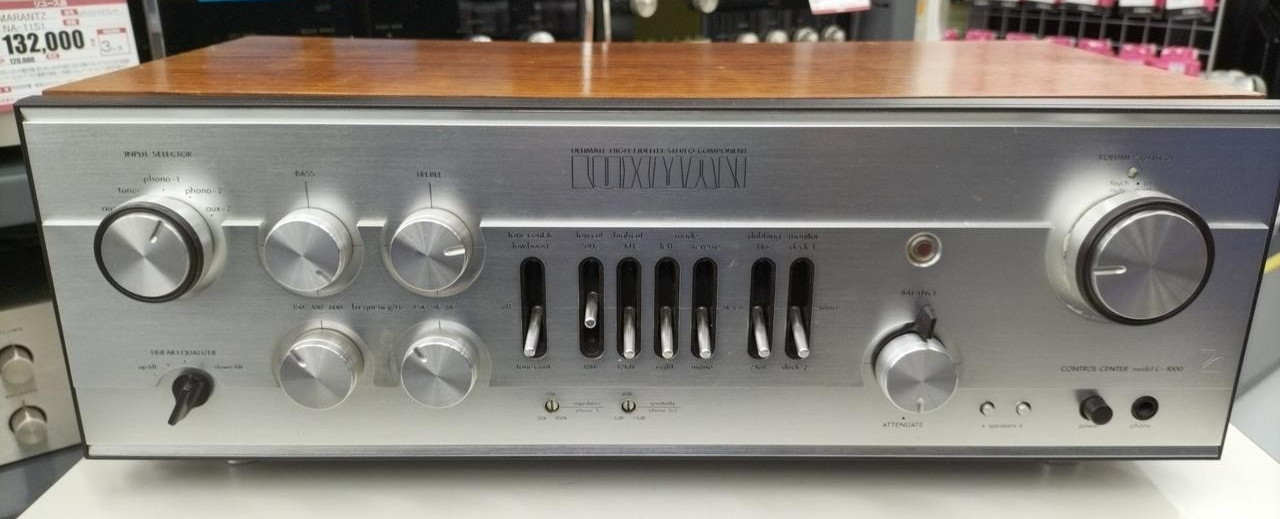
| Finish | Silver faceplate with black accents, rosewood side panels |
Sound Characteristics and Performance
The sonic signature of the Luxman C-1000 is often described as lush, three-dimensional, and profoundly musical. It delivers a midrange that is exceptionally rich and lifelike—perfect for vocal performances, acoustic instruments, and orchestral recordings. The treble is smooth and extended without being harsh, while the bass remains tight and well-controlled, a rarity among tube preamps of the era.
One of the C-1000’s most praised attributes is its spacious soundstage. Instruments are precisely placed in a wide, deep acoustic space, giving recordings a sense of realism that few preamps—vintage or modern—can match. Its balanced, dual-monaural design ensures excellent channel separation and low crosstalk, contributing to its holographic imaging.
The built-in MM phono stage is another standout feature. Unlike many tube preamps that treat phono sections as an afterthought, the C-1000’s phono stage is fully discrete and optimized for low noise and accurate RIAA equalization. When paired with a high-quality moving magnet cartridge, it delivers a warm, dynamic vinyl experience that many still consider reference-grade.
Notable Features and Innovations
The Luxman C-1000 was engineered with several advanced features that set it apart from its contemporaries:
- Dual-Monaural Architecture: Each audio channel has its own dedicated power supply and amplification path, minimizing interference and crosstalk.
- Balanced Circuit Design: Fully differential signal paths from input to output reduce noise and improve common-mode rejection.
- No Global Negative Feedback: This design choice preserves harmonic integrity and transient response, resulting in a more natural sound.
- High-Quality Transformers: Custom-wound power and output transformers ensure clean power delivery and optimal signal transfer.
- Elegant Build Quality: The heavy chassis, thick aluminum faceplate, and luxurious rosewood side panels reflect Luxman’s dedication to both function and aesthetics.
The front panel is minimalist yet functional, featuring large rotary knobs for volume and input selection, a balance control, and a mute switch. The glowing tubes visible through the top vents add a touch of vintage charm, making the C-1000 as much a visual centerpiece as an audio component.
Common Issues and Maintenance
As with any 45-year-old tube equipment, the Luxman C-1000 requires careful maintenance to perform at its best. While famously reliable for its age, several issues may arise:
- Tube Wear: The 6DJ8/ECC88 tubes should be checked and replaced if microphonic or noisy. NOS (New Old Stock) tubes from Philips, Amperex, or Siemens are highly recommended for optimal performance.
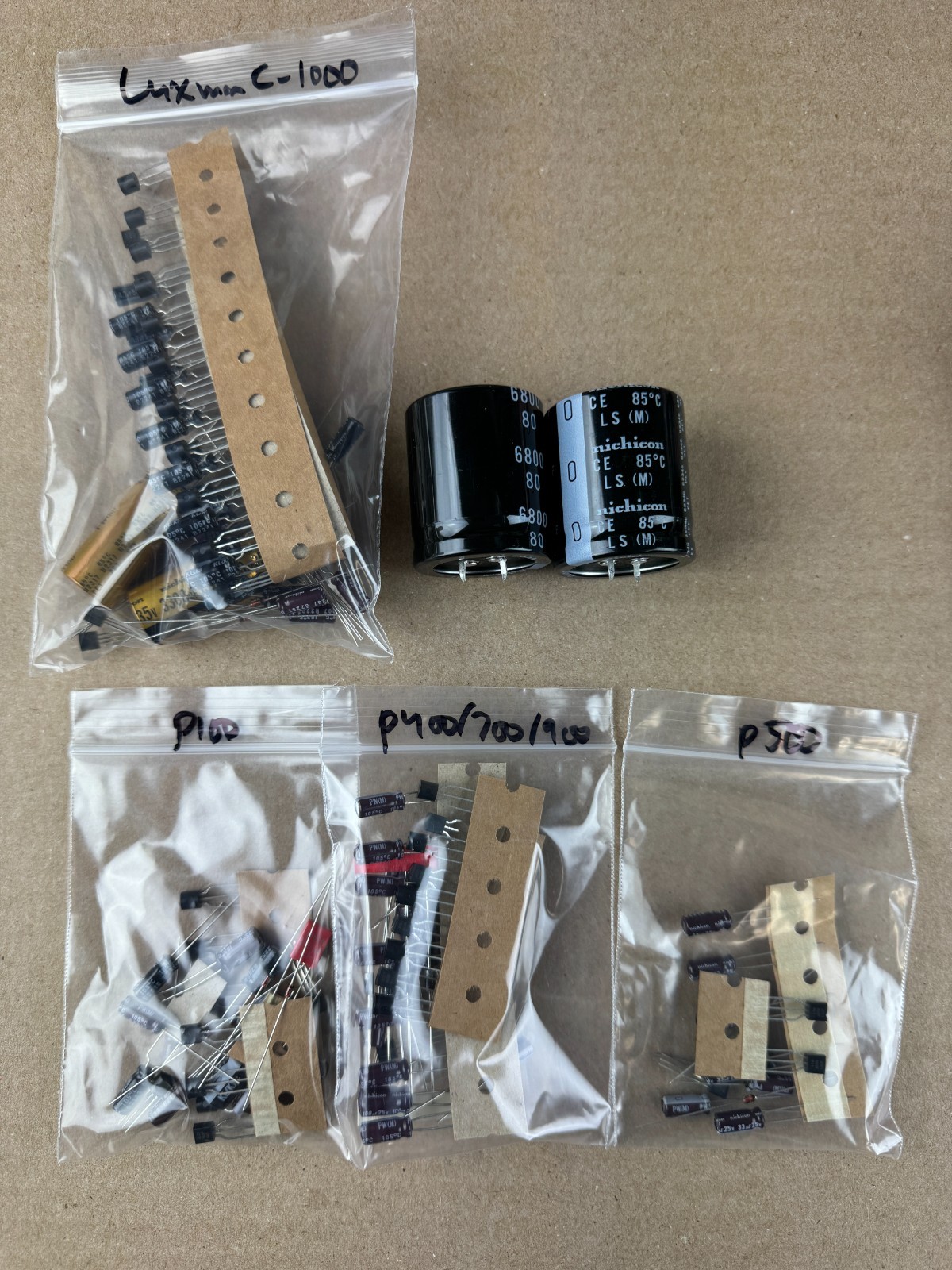
- Capacitor Aging: Electrolytic capacitors in the power supply may dry out over time. A professional recapping is often advised for units that haven’t been serviced in decades.
- Contact Cleaning: The rotary switches and potentiometers can develop crackling or channel imbalance. Deoxit or similar contact cleaners can help, but disassembly by a qualified technician is recommended.
- Transformer Health: While Luxman’s transformers are robust, any hum or overheating should be investigated immediately.
Given its complexity and value, the C-1000 should only be serviced by technicians experienced with vintage tube gear. Regular use (at least once a month) helps keep internal components conditioned and prevents oxidation.
Current Market Value and Collectibility
The Luxman C-1000 is a highly sought-after collector’s item. In excellent working condition, it typically sells for $3,000 to $5,000 USD, with pristine, fully serviced units sometimes commanding even higher prices. Its rarity—fewer units were produced compared to mass-market models—and its reputation among tube aficionados contribute to its strong resale value.
Collectors prize the C-1000 not only for its sound but also as a symbol of Japanese high-end audio at its peak. It often appears on “Holy Grail” lists alongside the Audio Research SP-3, McIntosh C22, and Sony TC-377. Original packaging, manuals, and documentation can significantly increase its value.
Conclusion and Legacy
The Luxman C-1000 is more than a preamplifier—it is a masterpiece of analog design and a testament to the belief that audio equipment should serve the music, not just the measurements. In an era increasingly dominated by digital precision, the C-1000 reminds us of the emotional power of tubes, craftsmanship, and thoughtful engineering.
Today, it remains a benchmark for tube preamp performance and a favorite among those who value sonic beauty over clinical accuracy. Whether used as the centerpiece of a vintage system or preserved as a collector’s gem, the Luxman C-1000 continues to inspire awe and admiration. For the true audiophile, owning a C-1000 isn’t just about having great gear—it’s about owning a piece of audio history.
eBay Listings


As an eBay Partner, we earn from qualifying purchases. This helps support our independent vintage technology research.
Service Manuals & Schematics
- Manual — archive.org
Related Models
- Luxman L-530 (1975)
- Luxman R-404 (1975)
- Luxman RV-371 (1975)
- Luxman SQ-38U (1975)
- Luxman T-14 (1972)
- Luxman T-530 (1975)
- Luxman TX-101 (1975)
- Denon DRA-800 (1985)
- Denon PMA-350Z (1980)
- Denon POA-1500 (1979)