Leak TROUGH-LINE: The Quiet Pioneer of Passive Preamp Design
In the golden age of British high-fidelity audio, few names carried the prestige of Leak, a company renowned for its engineering rigor and musical transparency. While best known for amplifiers like the iconic Leak TL/12 and Stereo 60, Leak also made a subtle but profound contribution to audio history with the TROUGH-LINE—a passive control unit that defied convention and quietly influenced the trajectory of preamplifier design.
Introduced in 1958, the TROUGH-LINE was not an amplifier in the traditional sense. It was a passive preamplifier—a rare concept at the time—designed to manage source selection and volume control without active gain stages. This minimalist approach, grounded in the belief that less circuitry meant purer sound, positioned the TROUGH-LINE as a radical alternative to the increasingly complex active preamps emerging in the late 1950s.
Though it never achieved the fame of its powered siblings, the TROUGH-LINE has since gained a cult following among audiophiles and vintage audio enthusiasts who appreciate its elegant simplicity and uncolored signal path. Today, it stands as a testament to Leak’s commitment to sonic integrity and a milestone in the evolution of high-end audio electronics.
Technical Specifications
| Specification | Detail |
| Manufacturer | H. Leak & Co. Ltd., England |
| Model | TROUGH-LINE |
| Year Introduced | 1958 |
| Type | Passive Preamplifier / Control Unit |
| Inputs | 2 x Line (typically 77kΩ impedance) |
| Output | 1 x Main Output (to power amplifier) |
| Volume Control | Dual-gang logarithmic potentiometer |
| Tone Control | None (pure passive design) |
| Source Selection | Rotary switch (2 or 3 sources, depending on variant) |
| Impedance | High input impedance (77kΩ), low output |
| Power Requirement | None (passive operation) |
| Construction | Point-to-point wiring, metal chassis |
| Dimensions (approx.) | 30 cm (W) × 18 cm (D) × 8 cm (H) |
| Weight | ~2.5 kg |
The TROUGH-LINE’s circuitry is astonishingly simple: no valves, no power supply, no active components. Instead, it relies on a high-impedance, dual-gang potentiometer to attenuate the signal from line-level sources (such as turntables with external phono stages or FM tuners) before sending it to a power amplifier. This design philosophy—removing gain stages to preserve signal purity—was ahead of its time and foreshadowed the modern resurgence of passive preamps in high-end audio systems.
Sound Characteristics and Performance
The sonic signature of the TROUGH-LINE is best described as transparent, neutral, and direct. Without valves or transistors to color the sound, the unit acts as a near-invisible conduit between source and amplifier. Listeners often report a remarkable clarity, with excellent spatial imaging and a natural tonal balance.
Because it lacks gain, the TROUGH-LINE performs best when paired with high-output sources and sensitive power amplifiers—such as Leak’s own TL/12 or Stereo 20 valve amps. When properly matched, the system delivers a cohesive, dynamic presentation with a lifelike midrange and smooth treble.
Bass response is tight and well-controlled, though not artificially enhanced—another hallmark of its honest, uncolored character. The absence of tone controls reinforces Leak’s design ethos: the music should be heard as it was recorded, not reshaped by the electronics.
Notable Features and Innovations
The TROUGH-LINE’s most striking feature is its radical minimalism. In an era when audio gear was becoming more complex, Leak chose to strip things back. This was not due to cost-cutting, but rather a deliberate engineering choice rooted in the belief that fewer components equal better sound.
Key innovations and design elements include:
- High-impedance input (77kΩ): Carefully matched to the output characteristics of contemporary valve amplifiers and tuners, minimizing loading effects and preserving frequency response.
- Precision potentiometer: A high-quality, dual-gang volume control ensuring balanced stereo attenuation—a critical factor in maintaining channel symmetry.
- Robust metal chassis: Typical of Leak’s build quality, the chassis provides excellent shielding and mechanical stability.
- No power supply or valves: Eliminates hum, noise, and distortion associated with active stages.
The TROUGH-LINE was often used in conjunction with Leak’s VARISLOPE equalizer or external phono stages, forming part of a modular high-fidelity system. Its passive nature made it an ideal partner for systems where purity of signal path was paramount.
Common Issues and Maintenance
Given its passive design, the TROUGH-LINE is remarkably reliable. With no valves, power supply, or active electronics, there are few points of failure. However, age-related issues can arise:
- Worn or noisy potentiometer: The most common problem. Decades of use can cause crackling or channel imbalance. Cleaning with contact cleaner may help, but replacement with a modern high-quality pot (e.g., Alps or Audio Note) is often recommended.
- Oxidized switch contacts: The source selector switch can develop intermittent connections. Regular use and occasional cleaning with deoxidizer can prevent this.
- Loose connectors or wiring: Vibration and aging can loosen internal connections. A careful inspection and re-soldering of terminals may be necessary.
- Cosmetic wear: Original paint, knobs, and labeling may show signs of aging. While not affecting performance, restoration can enhance both appearance and resale value.
Because the circuit is so simple, repairs are generally straightforward for experienced technicians. However, purists often prefer to preserve original components to maintain authenticity.
Current Market Value and Collectibility
The Leak TROUGH-LINE is a rare and sought-after item among vintage audio collectors, particularly those building period-correct British hi-fi systems. While not as widely recognized as Leak’s amplifiers, its historical significance and unique design have elevated its status in recent years.
In good working condition, a TROUGH-LINE typically sells for £250–£450 (approximately $300–$550 USD), depending on condition, originality, and included accessories. Fully restored units with upgraded pots may command higher prices, especially when paired with other Leak components.
Its collectibility is driven by several factors:
- Association with the golden era of British audio
- Rarity and historical importance as an early passive preamp
- Compatibility with classic Leak amplifier systems
- Growing interest in minimalist, high-fidelity designs
Units with original packaging, manuals, or provenance (e.g., from a famous studio or broadcaster) can be especially valuable.
Conclusion and Legacy
The Leak TROUGH-LINE may not have been a commercial blockbuster, but its influence on audio design is undeniable. As one of the earliest commercially available passive preamplifiers, it demonstrated that high fidelity could be achieved through simplicity rather than complexity.
Today, the TROUGH-LINE is appreciated not just as a functional component, but as a philosophical statement—a reminder that sometimes, the best electronics are the ones you don’t hear. Its legacy lives on in the modern passive preamp movement, where audiophiles seek transparency by eliminating active stages altogether.
For collectors and enthusiasts, the TROUGH-LINE represents a quiet revolution in a metal box: a testament to Leak’s engineering integrity and a timeless example of less being more. In a world of ever-increasing audio complexity, the TROUGH-LINE remains a beacon of sonic purity.
eBay Listings


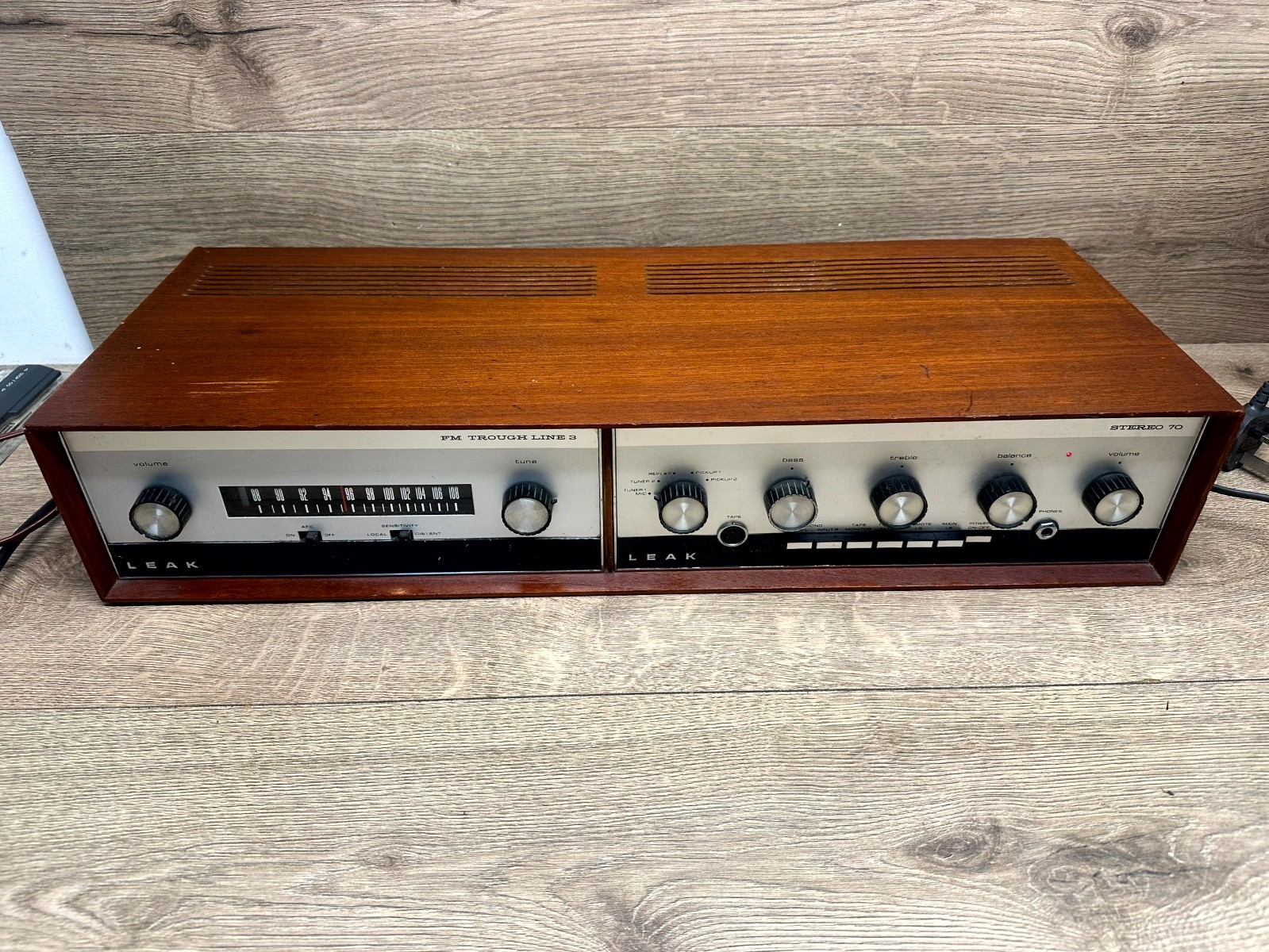
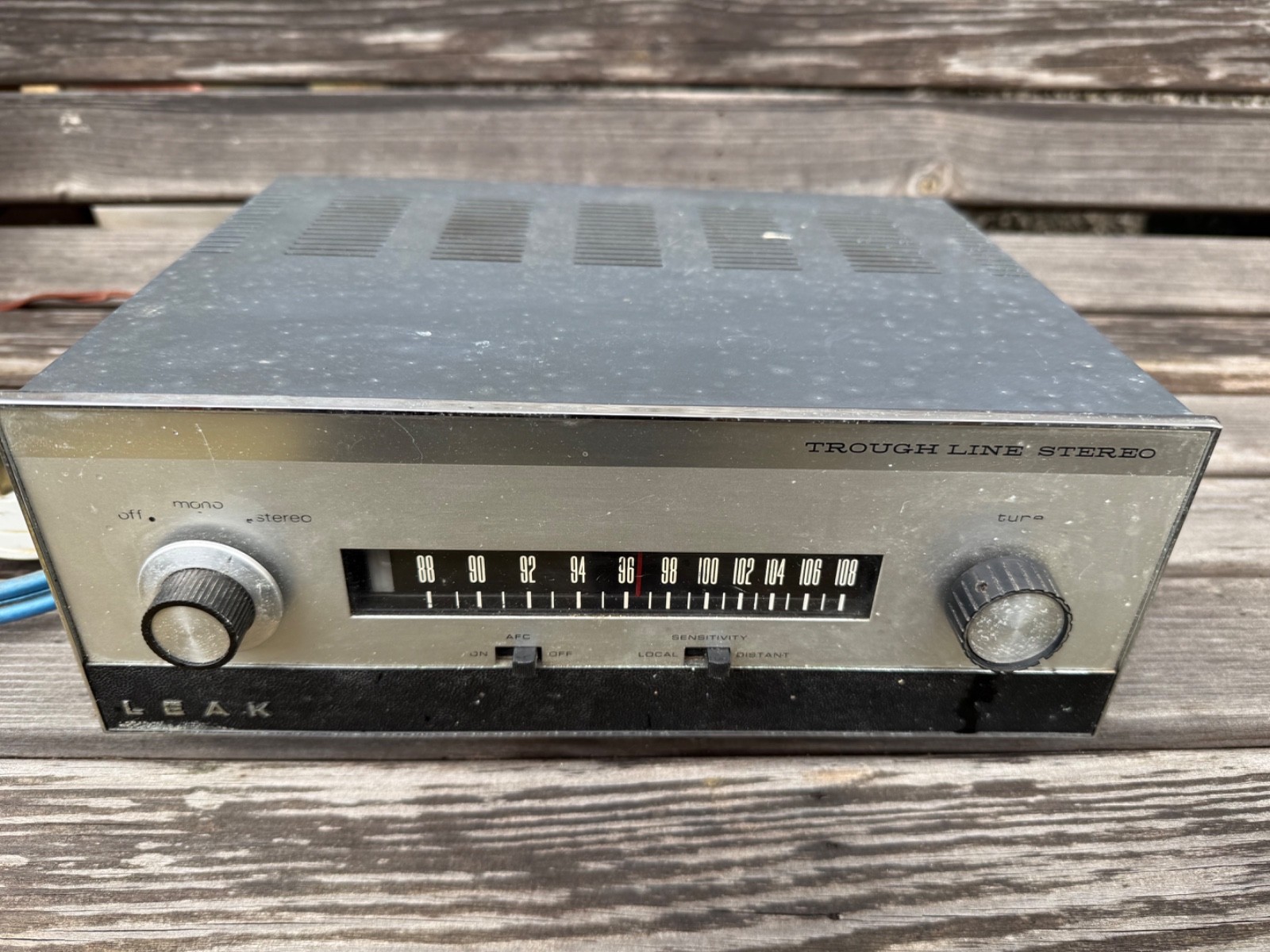
As an eBay Partner, we earn from qualifying purchases. This helps support our independent vintage technology research.
Related Models
- Leak TL/10 (1959)
- Leak 2060 (1958)
- Leak POINT-ONE-PLUS (1972)
- Leak POINT-ONE-STEREO (1957)
- Leak RC/PA (1952)
- Luxman L-530 (1975)
- Luxman R-404 (1975)
- Luxman RV-371 (1975)
- Luxman SQ-38U (1975)
- Luxman T-14 (1972)