Klipsch Klipschorn (K-Horn): The Timeless Icon of High-Fidelity Sound
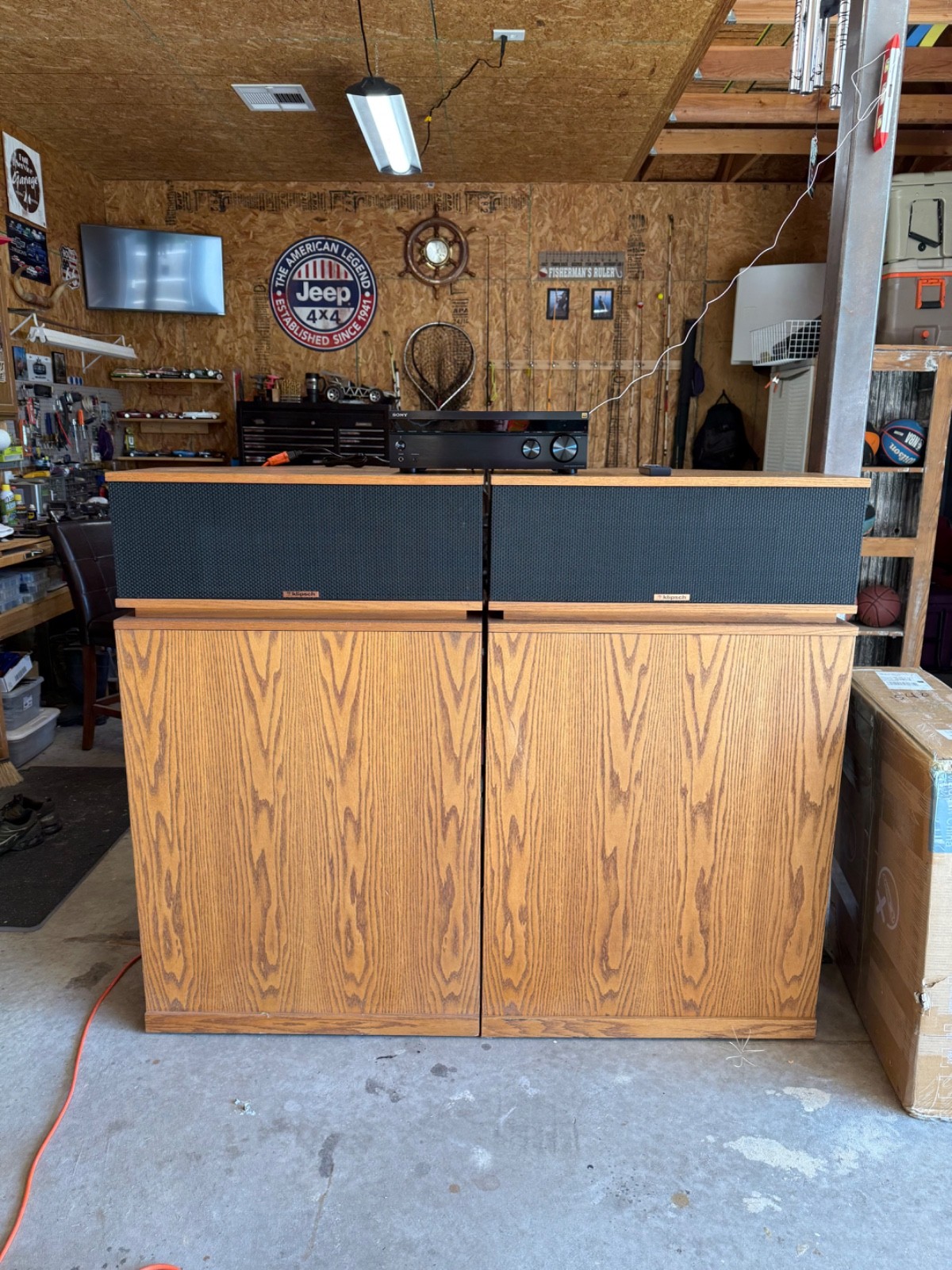
Few loudspeakers in the history of audio carry the legacy, reverence, and enduring presence of the Klipsch Klipschorn, affectionately known as the K-Horn. First introduced in 1946 by audio pioneer Paul W. Klipsch, this floor-standing corner-horn speaker is not merely a product—it’s a milestone in high-fidelity audio engineering. Still in continuous production today with minimal changes, the Klipschorn stands as a testament to timeless design, acoustic efficiency, and sonic authenticity. For audiophiles, collectors, and vintage audio enthusiasts, the K-Horn represents the gold standard of horn-loaded loudspeaker performance.
Historical Context: A Revolution in Sound
Paul W. Klipsch, a brilliant engineer with a background in acoustics and physics, designed the Klipschorn during a time when most home audio systems struggled with low efficiency and poor dynamics. In the post-World War II era, amplifiers were typically low-powered—often under 10 watts—so speaker efficiency was critical. Klipsch’s solution was revolutionary: a folded horn design that used the corner of a room as an acoustic coupler to extend bass response and increase efficiency.
Debuted in Hope, Arkansas (where Klipsch & Associates was founded), the Klipschorn was one of the first speakers to achieve 95 dB sensitivity, meaning it could produce high sound pressure levels with minimal amplifier power. This made it ideal for use with vacuum tube amplifiers of the era. In 1947, it became the first loudspeaker to be inducted into the Audio Hall of Fame, cementing its status as a landmark achievement in audio engineering.
Technical Specifications
| Specification | Detail |
| Manufacturer | Klipsch & Associates (now Klipsch Group, Inc.) |
| Model | Klipschorn (K-Horn) |
| Year Introduced | 1946 |
| Type | Three-way, horn-loaded, corner cabinet |
| Sensitivity | 95 dB (1W/1m) |
| Frequency Response | 31 Hz – 20 kHz (±3 dB) |
| Nominal Impedance | 8 ohms |
| Recommended Amp Power | 1–50 watts (optimal with low-power tube amps) |
| Crossover Frequencies | 500 Hz (woofer to midrange), 3.5 kHz (midrange to tweeter) |
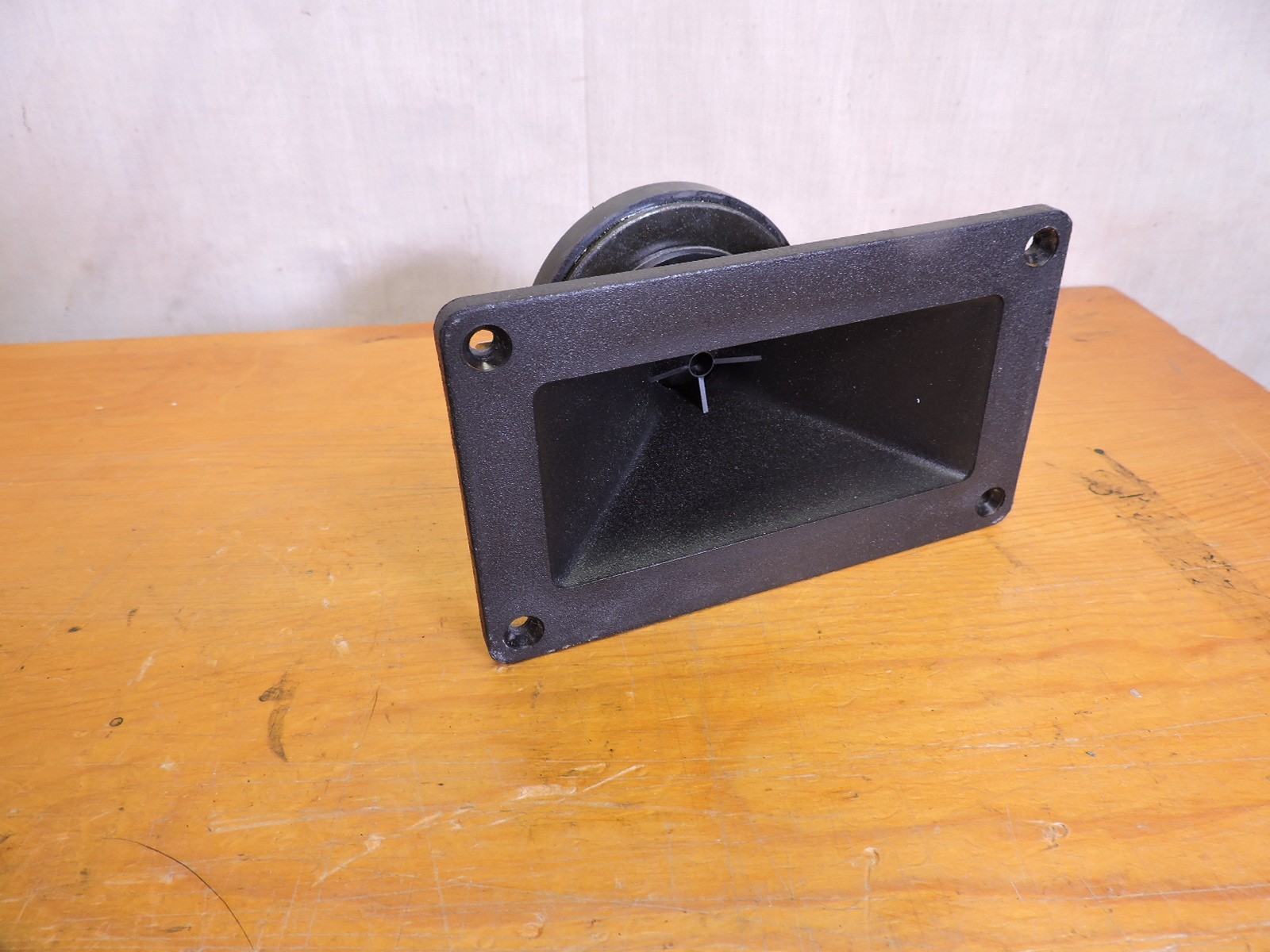
| Drivers | 15" woofer (horn-loaded), 2" throat compression driver (midrange), 1" tweeter (high-frequency compression driver) |
| Enclosure | Folded plywood horn, designed for corner placement |
| Dimensions (H×W×D) | 41.5" × 21.5" × 18.5" (varies slightly by version) |
| Weight | ~120 lbs per speaker |
| Finish Options | Walnut veneer (original), later options include ebony, piano black, and custom woods |
Sound Characteristics and Performance
The Klipschorn’s sound is nothing short of authoritative, dynamic, and emotionally engaging. Thanks to its horn-loaded design, it delivers exceptional transient response and low distortion, allowing instruments and voices to emerge with startling clarity and presence. The 15-inch woofer, folded into a bass horn that uses the room corner as an extension, produces deep, articulate bass that belies the speaker’s relatively modest footprint.
Midrange performance is where the Klipschorn truly shines. The horn-loaded midrange driver delivers a lifelike vocal presence—a hallmark of vintage horn speakers—that many modern designs still strive to emulate. The high-frequency response is crisp and detailed without being harsh, thanks to the well-integrated compression tweeter.
Due to its high sensitivity, the K-Horn pairs beautifully with low-powered tube amplifiers, such as those from McIntosh, Audio Research, or Western Electric. It can also handle modern solid-state gear, though its character is best revealed with amplification that complements its dynamic nature. The speaker’s 90-degree dispersion pattern (designed to match typical room corners) creates a focused, holographic soundstage when properly positioned.
Notable Features and Innovations
The Klipschorn was groundbreaking for several reasons:
- Corner-Horn Design: By using the room’s corner as an acoustic extension, Klipsch effectively doubled the length of the bass horn, allowing for deep bass response from a relatively compact cabinet.
- Tractrix Horn Geometry: Klipsch employed a mathematically derived Tractrix horn profile, which minimizes internal reflections and improves sound wave propagation for smoother frequency response.
- Three-Way Crossover with Time Alignment: The drivers are time-aligned so that sound from each reaches the listener simultaneously—a rare feature in its era and still impressive today.
- Handcrafted Construction: Early models were built by hand in Hope, Arkansas, using multi-ply birch and mahogany. Even today, Klipschorns are largely hand-assembled, preserving their artisanal quality.
Over the decades, Klipsch has released several iterations—such as the Heritage Series Klipschorn—which retain the original design while incorporating modern materials and improved drivers. Despite these updates, the core acoustic principles remain unchanged.
Common Issues and Maintenance
While the Klipschorn is built to last, vintage units (especially those from the 1950s–1970s) may require attention:
- Surround Rot: The foam or cloth surrounds on the 15" woofer can degrade over time, leading to flapping or distortion. Re-foaming or full reconing is a common restoration step.
- Crossover Components: Old capacitors and inductors in the passive crossover may drift in value or fail. Upgrading to modern audiophile-grade components can improve performance and reliability.
- Cabinet Integrity: Check for warping or separation in the plywood cabinet, especially in humid environments. The structural integrity is crucial for proper horn loading.
- Grille Fabric: Original perforated cloth grilles may be brittle or discolored. Replacement kits are available from specialty audio restoration suppliers.
Because of their robust design, many original Klipschorns from the 1950s still perform exceptionally well with proper care. Regular dusting and placement away from direct sunlight help preserve their finish and internal components.
Current Market Value and Collectibility
The Klipschorn is highly collectible and remains in active production, bridging the gap between vintage treasure and modern high-end audio. On the vintage market:
- Original 1950s–1970s models in good condition can fetch $2,500–$5,000 per pair, with rare finishes or early serial numbers commanding higher prices.
- Refurbished units with reconed drivers and updated crossovers often sell for $3,000–$6,000.
- New Heritage Series Klipschorns retail for around $7,000–$8,000 per pair, reflecting their hand-built quality and enduring demand.
Collectors value the K-Horn not only for its sound but also for its historical significance and design purity. It’s a rare example of a product that has remained fundamentally unchanged for over 75 years—a true icon in the world of audio.
Conclusion: A Legacy That Resonates
The Klipsch Klipschorn is more than a speaker—it’s a sonic monument. Its marriage of acoustic innovation, engineering precision, and musical expressiveness has earned it a permanent place in the pantheon of audio greats. Whether you’re a vinyl enthusiast running a pair with a 10-watt SET amplifier or a collector preserving a mid-century classic, the K-Horn delivers an experience that is both powerful and profoundly musical.
In an age of digital everything, the Klipschorn stands as a reminder that great sound doesn’t require complexity—just brilliant design, executed with passion. For over seven decades, it has brought recordings to life with unmatched clarity and emotion. And as long as there are audiophiles who value the truth of sound, the Klipschorn will continue to echo through living rooms, listening spaces, and history itself.
eBay Listings


As an eBay Partner, we earn from qualifying purchases. This helps support our independent vintage technology research.
Related Models
- Klipsch Forte III
- Klipsch KLF-20
- Klipsch KG-2 (1990-1995)
- Klipsch Belle (1985)
- Klipsch Cornwall (1959) (1959)
- Akai AM-2850 (1975)
- Akai AP-206 (1975)
- Nakamichi BX-1 (1985)
- Acoustic Research research-ar-17 (1978)
- Acoustic Research AR-19 (1994)