Klipsch KG-1: The Pinnacle of High-Efficiency American Hi-Fi
The Klipsch KG-1 stands as a landmark in American loudspeaker design—a bold, uncompromising floor-standing speaker that captured the essence of Paul W. Klipsch’s lifelong pursuit of high-fidelity sound through efficiency, dynamics, and horn-loaded engineering. Introduced in 1985 and produced until 1991, the KG-1 was named in honor of Klipsch’s wife, Kitty Gray Klipsch, affectionately known as “KG.” More than just a tribute, the KG-1 was a statement piece: a flagship speaker that combined cutting-edge horn technology with deep bass extension and a level of realism that few speakers of its era could match.
Historical Context and Legacy
The 1980s were a transformative decade for high-end audio. While many manufacturers embraced sealed enclosures and soft-dome tweeters, Klipsch remained steadfast in its commitment to horn-loaded designs. The KG-1 emerged during a period when the company was reasserting its dominance in the high-efficiency speaker market, following the success of the legendary Klipschorn (launched in 1946). Positioned as the new flagship, the KG-1 was designed to deliver full-range performance with exceptional sensitivity—ideal for use with low-powered tube amplifiers, a favorite among audiophiles.
Paul Klipsch, then in his 80s, was directly involved in the development of the KG-1. His philosophy—“Efficiency is everything”—was embodied in the speaker’s 105 dB sensitivity, allowing it to produce concert-hall volume levels with just a few watts of input. The KG-1 was not merely a commercial product; it was a testament to Klipsch’s belief that speakers should reproduce music with lifelike dynamics and minimal distortion.
Technical Specifications
| Feature | Specification |
| Type | 3-way, floor-standing |
| Sensitivity | 105 dB @ 1W/1m |
| Nominal Impedance | 8 ohms |
| Frequency Response | 35 Hz – 20 kHz |
| Crossover Frequencies | 500 Hz (woofer to midrange), 3.5 kHz (midrange to tweeter) |
| Tweeter | 1" titanium diaphragm compression driver with Tractrix horn |
| Midrange | 5.25" fiber cone with horn-loaded chamber |
| Woofer | 12" long-throw, front-firing |
| Enclosure Type | Bass reflex with dual rear-firing ports |
| Dimensions (H x W x D) | 42" x 14" x 18" |
| Weight | 78 lbs per speaker |
| Recommended Amplifier Power | 20 – 200 watts |
| Finish Options | Walnut, rosewood, and black ash veneer |
Sound Quality Characteristics
The KG-1’s sound is nothing short of dramatic. Its 105 dB sensitivity ensures effortless volume and explosive dynamics, making it ideal for reproducing live music, orchestral works, and jazz with startling realism. The Tractrix horn-loaded tweeter delivers exceptional clarity and detail without harshness, offering a smooth high-frequency response that extends cleanly to 20 kHz. The horn-loaded midrange ensures vocal transparency and instrumental timbre accuracy, with a presence that places singers and soloists front and center.
The 12-inch woofer, coupled with a tuned bass reflex enclosure, provides deep, articulate bass down to 35 Hz—remarkable for a speaker of its size and era. Unlike many horn speakers that sacrifice bass performance for efficiency, the KG-1 achieves a rare balance: tight, fast bass that integrates seamlessly with the midrange. This makes it equally adept at reproducing pipe organ music and rock bass lines.
Critically, the KG-1’s high efficiency means it thrives with low-powered amplifiers, especially tube amps in the 10–50 watt range. Its 8-ohm nominal impedance ensures compatibility with a wide range of equipment, though its reactive load demands a well-designed amplifier for optimal control.
Notable Features and Innovations
The KG-1 introduced several design innovations that set it apart:
- Tractrix Horn Technology: The 90° x 90° square-mouth Tractrix horn on the tweeter improved high-frequency dispersion and reduced diffraction, enhancing imaging and soundstage depth.
- Horn-Loaded Midrange: Unlike most speakers that use direct-radiating midrange drivers, the KG-1 employs a horn-loaded chamber to boost efficiency and reduce distortion in the critical vocal range.
- Modular Crossover Design: The internal crossover uses high-quality components and is modular for easier servicing—a rarity in vintage speakers.
- Dual Rear Ports: The bass reflex system uses two rear-firing ports to reduce port noise and increase bass output without chuffing.
Market Value and Collectibility
Today, the Klipsch KG-1 is a sought-after collector’s item, particularly in good condition with original grilles and finish. Prices typically range from $1,200 to $2,500 per pair, depending on condition, finish, and provenance. Rosewood models are especially prized and often command a premium. Fully restored pairs with reconed woofers and refreshed crossovers can exceed $3,000.
The KG-1’s collectibility stems from its status as a transitional flagship—bridging the classic Klipschorn legacy with modern high-efficiency design. It is also appreciated for its historical significance as one of the last speakers personally overseen by Paul Klipsch.
Common Issues and Maintenance
While robustly built, KG-1s from the 1980s require attention after decades of use:
- Woofer Surround Deterioration: The foam surrounds on the 12" woofers often degrade over time, leading to flaking and loss of bass response. Re-coning or surround replacement is a common and recommended service.
- Capacitor Aging: The crossover capacitors, especially electrolytic types, may dry out or drift in value, affecting tonal balance. A full recapping by a qualified technician can restore original performance.
- Grille Fabric Wear: Original acoustically transparent grille cloth may tear or discolor. Replacement fabric is available from specialty audio restoration suppliers.
- Veneer Care: The wood veneer is durable but can be damaged by sunlight or improper cleaning. Use of non-silicone-based wood polish is recommended.
Owners are advised to have vintage KG-1s inspected by a speaker technician familiar with Klipsch designs before heavy use.
Comparison to Similar Models
| Model | Sensitivity | Bass Extension | Horn-Loaded Mid? | Era | Notes |
| Klipschorn (KH/KH-11) | 105 dB | 31 Hz | Yes (harp) | 1946–present | Corner-loaded, larger, more bass, less flexible placement |
| JBL L100 Century | 91 dB | 45 Hz | No | 1970s | Classic studio monitor, softer dynamics, lower efficiency |
| Altec 604E | 99 dB | 50 Hz | No | 1970s | Studio standard, excellent midrange, less bass |
| Klipsch Cornwall | 102 dB | 45 Hz | Yes | 1970s–now | Smaller, more compact, slightly less bass than KG-1 |
| Klipsch La Scala | 103 dB | 45 Hz | Yes | 1963–now | Three-way, similar design, slightly less bass extension |
The KG-1 stands apart for combining the full-range capability of the Klipschorn with the freestanding convenience of a floor speaker. Unlike the corner-hung Klipschorn, the KG-1 can be placed in free space, making it more adaptable to modern rooms.
Final Thoughts
The Klipsch KG-1 is more than a vintage speaker—it’s a piece of audio history. Its combination of blistering sensitivity, horn-loaded clarity, and deep bass makes it a favorite among tube amp enthusiasts and purists who value dynamic realism over clinical neutrality. While it demands care and occasional restoration, a well-maintained KG-1 delivers a listening experience that remains competitive with modern high-end speakers.
For collectors and audiophiles alike, the KG-1 is a worthy heirloom: a monument to Paul Klipsch’s genius and a shining example of American high-fidelity engineering at its most passionate and uncompromising.
eBay Listings
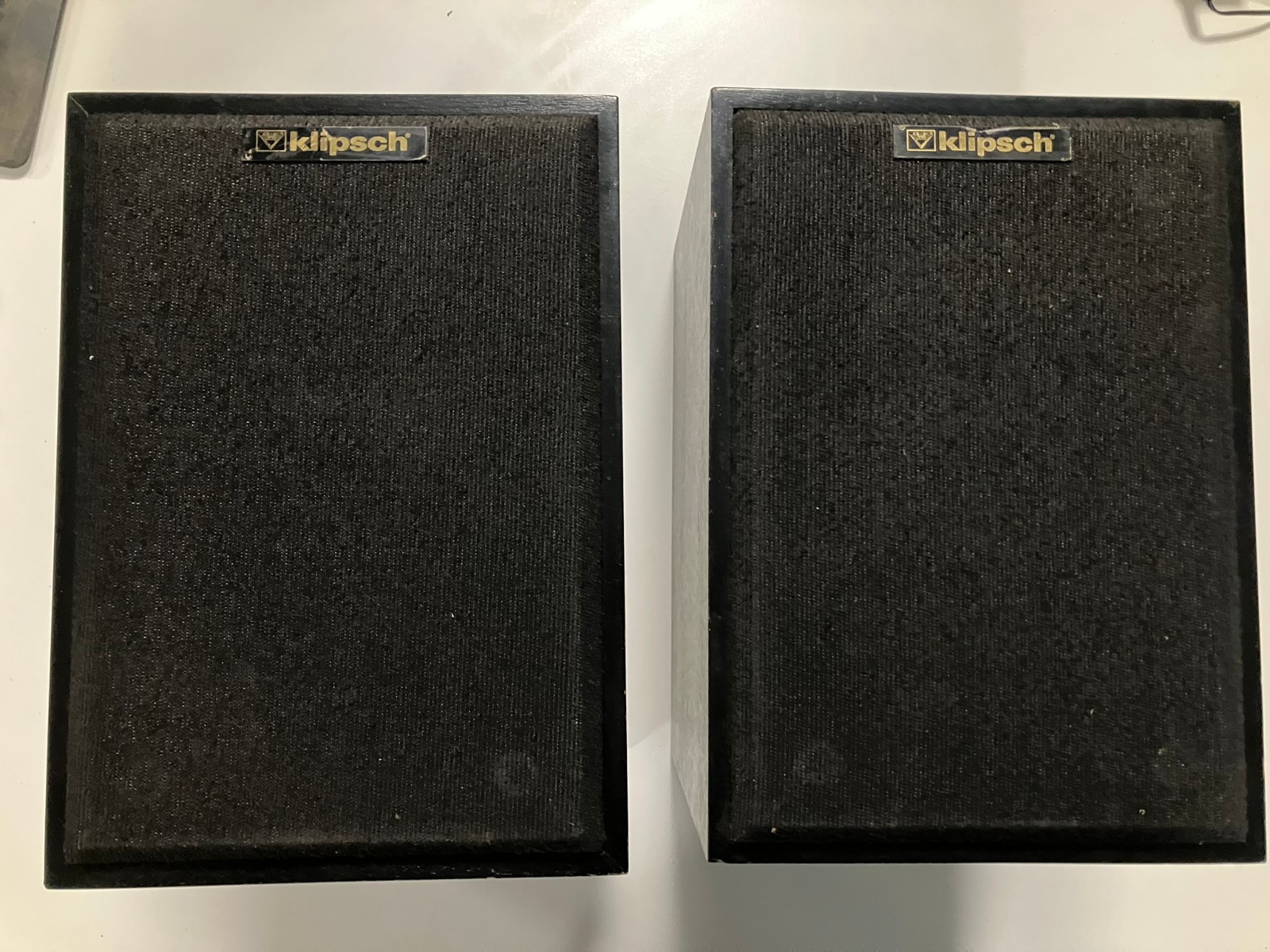


As an eBay Partner, we earn from qualifying purchases. This helps support our independent vintage technology research.
Related Models
- Klipsch Forte III
- Klipsch KLF-20
- Klipsch KG-2 (1990-1995)
- Klipsch Belle (1985)
- Klipsch Cornwall (1959) (1959)
- Akai AM-2850 (1975)
- Akai AP-206 (1975)
- Nakamichi BX-1 (1985)
- Acoustic Research research-ar-17 (1978)
- Acoustic Research AR-19 (1994)